A straight-talk FAQ on how CloudApper hrPad supports cross-skilling in automotive manufacturing — digitized training records and floor-level self-service, without overselling what the AI actually does.
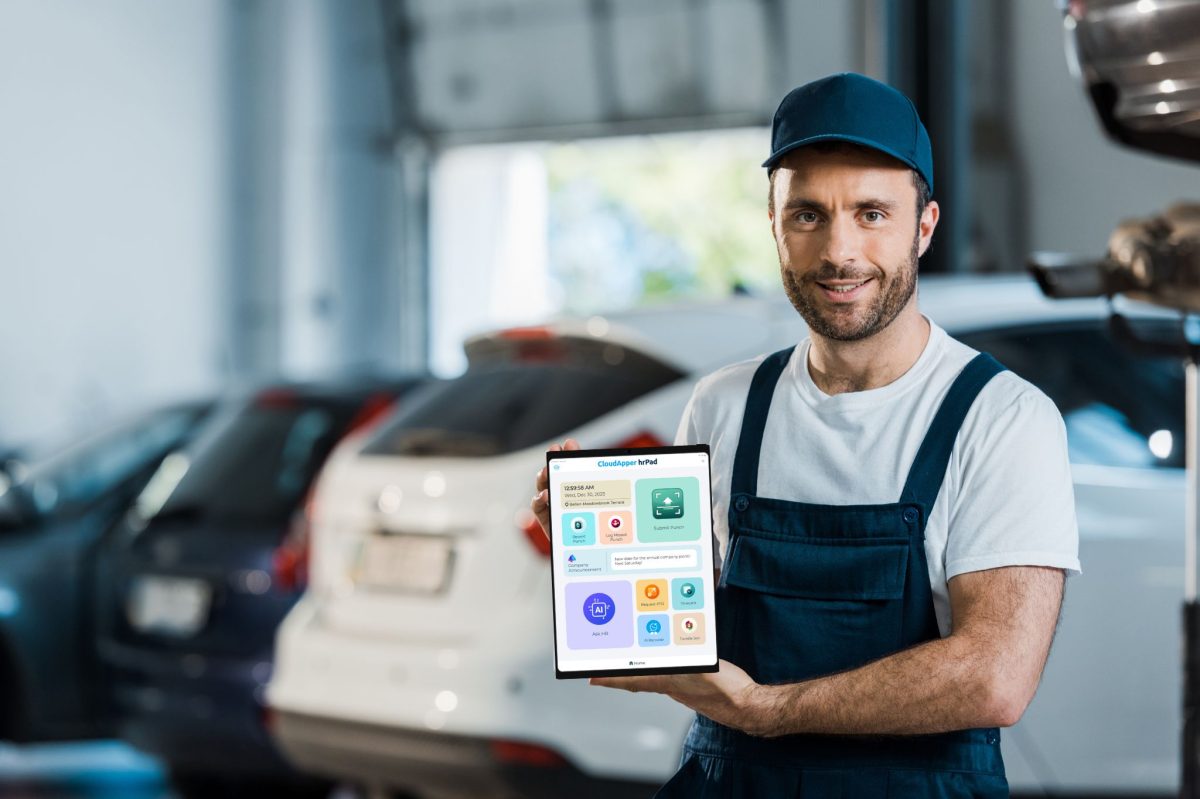
Table of Contents
- Why does cross-skilling matter in automotive manufacturing?
- How does CloudApper hrPad support cross-skilling programs?
- What role does AI play here, specifically?
- What outcomes should a factory expect?
- What does a typical rollout look like?
- How does this affect shift flexibility specifically?
- Does this work for unionized or highly regulated automotive plants?
Cross-skilling matters in automotive manufacturing because downtime is expensive and demand shifts fast — a workforce that can only run one station is a workforce that creates bottlenecks the moment volume changes. Here’s a straight answer to the FAQs, based on what CloudApper hrPad actually does.
Why does cross-skilling matter in automotive manufacturing?
Automotive production lines deal with constantly evolving techniques, new equipment, and shifting demand. A workforce trained across multiple stations gives supervisors the flexibility to reassign people on short notice instead of stopping a line because one specialized role is short-staffed. In an industry where downtime carries a real cost, that flexibility is a direct efficiency lever, not just a workforce-development nicety.

How does CloudApper hrPad support cross-skilling programs?
Most factories still track training and certifications on paper or in spreadsheets that live outside the systems where scheduling actually happens. hrPad replaces that with a tablet-based self-service kiosk on the floor where workers can:
- Complete and acknowledge training modules or certifications as digital records, instead of paper sign-off sheets
- Access their own training history and current certifications directly, without going through a supervisor or HR for a status check
- Submit feedback on training sessions through hrPad’s configurable survey tools
Because these records live in hrPad’s system rather than on paper, supervisors get visibility into who’s certified for which stations without manually cross-referencing separate spreadsheets.
What role does AI play here, specifically?
To be precise about scope: hrPad’s AI assistant answers workers’ questions about their training records and policies in real time, and the platform digitizes and centralizes training documentation. It does not run automated skills-gap analysis or algorithmically recommend specific courses or certifications — those decisions stay with supervisors and training coordinators, using the visibility hrPad’s digitized records provide.
What outcomes should a factory expect?
The realistic expectation is operational, not a guaranteed percentage: less time spent tracking down paper training records, faster visibility into who’s certified for which role, and less administrative overhead for supervisors managing cross-skilling rotations. Results will vary by how manual your current process is today.
How do workers actually use the system day to day?
Through hrPad’s self-service interface on the shop-floor tablet, workers can view their own training status, complete assigned modules, and give feedback on training sessions — all without leaving the floor or waiting on a supervisor.
What does a typical rollout look like?
Most factories start by digitizing the training records they already track on paper — certifications, safety sign-offs, station qualifications — onto hrPad’s kiosk. From there, supervisors get a live view of who’s qualified for which stations, which is usually the first noticeable change: cross-skilling assignments stop depending on someone remembering who’s trained on what, or digging through a binder to check.
How does this affect shift flexibility specifically?
Once training records are digitized and visible, supervisors can make faster reassignment decisions when a station is short-staffed or demand shifts mid-shift. The constraint moves from “can we find someone qualified” to “who’s the best qualified person available right now” — a meaningfully different problem to solve, and a faster one.
Does this work for unionized or highly regulated automotive plants?
hrPad’s no-code configuration means training and certification rules can be set up to match specific plant requirements, including regulatory or union-negotiated certification structures, without requiring custom software development for each facility.
See hrPad’s self-service kiosk for manufacturing, or book a demo to discuss your cross-skilling program.

What is CloudApper AI Platform?
CloudApper AI is an advanced platform that enables organizations to integrate AI into their existing enterprise systems effortlessly, without the need for technical expertise, costly development, or upgrading the underlying infrastructure. By transforming legacy systems into AI-capable solutions, CloudApper allows companies to harness the power of Generative AI quickly and efficiently. This approach has been successfully implemented with leading systems like UKG, Workday, Oracle, Paradox, Amazon AWS Bedrock and can be applied across various industries, helping businesses enhance productivity, automate processes, and gain deeper insights without the usual complexities. With CloudApper AI, you can start experiencing the transformative benefits of AI today. Learn More
- Useful Links:
- Agentic AI
- No-Code/Low-Code
- Custom Software
- HCM Personalization
- iPaaS
- FedRAMP
Brochure
CloudApper hrPad
Empower Frontline Employees with an AI-Powered Tablet/iPad Solution
Download Brochure
CloudApper AI Solutions for HR

- Works with






- and more.
Similar Posts
Certified Payroll Compliance: Why Davis-Bacon Failures Start at the Time…
Shift Swap Pay Rate Accuracy: Confirming Who Actually Worked Before…