As workforce environments become more diverse, standardized HCM experiences don’t always reflect how employees actually work. While platforms like UKG provide a strong, consistent foundation, frontline, shift-based, and regulated roles often require more flexibility at the experience layer. This article explores why complex workforce environments need HCM personalization—and how solutions like CloudApper AI help organizations adapt employee experiences without replacing their core HCM system.

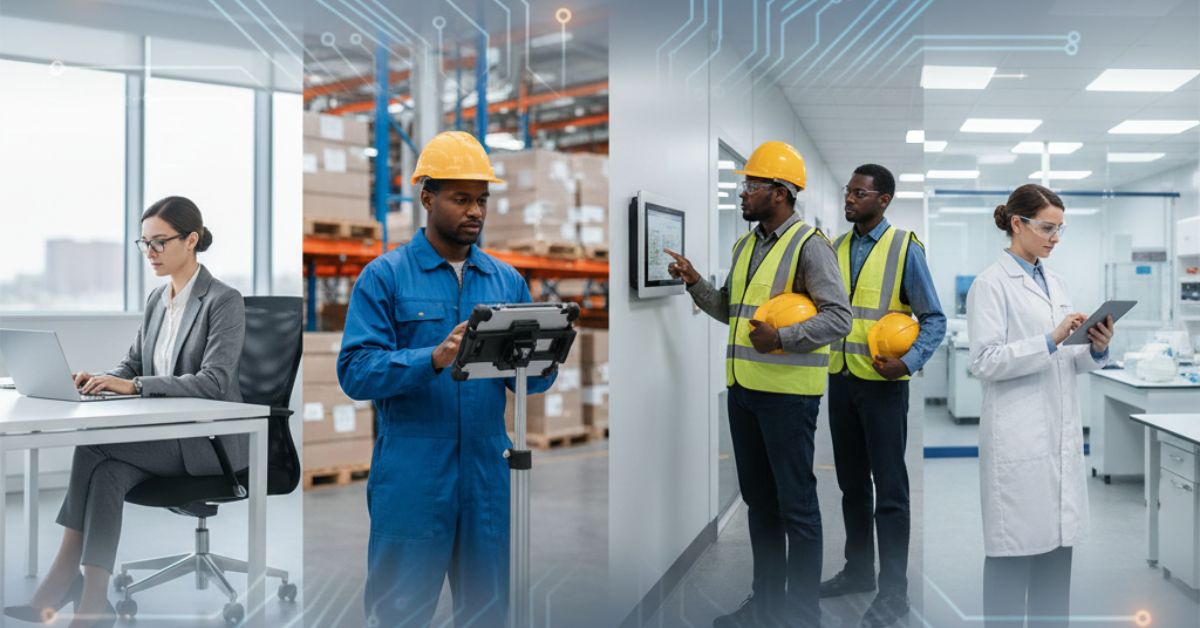
Table of Contents
- The Shift From Standardization to Workforce Diversity
- Why the Challenge Isn’t Features or Functionality
- What HCM Personalization Really Means
- Introducing CloudApper AI for HCM Extensibility & Personalization
- Where Standard HCM Experiences Start to Feel Strained
- From One Experience to Many—Without Losing Control
- Why Workforce Complexity Requires a Different Approach
Modern HCM platforms like UKG, Workday, Dayforce, etc. are designed to deliver consistency at scale—and that consistency remains one of their greatest strengths. But as workforce environments become more diverse, many organizations are discovering that a single, standardized experience doesn’t always reflect how different employees actually work. This is where HCM personalization becomes essential. Solutions like HCM Extensibility and Personalization help organizations adapt the HCM experience to different roles, locations, and work conditions—without altering or replacing the core system.

But as workforce environments grow more complex, many HR and HRIS leaders are realizing that a single, standardized HCM experience doesn’t always reflect how work actually happens on the ground. This isn’t a failure of the HCM. It’s a sign that workforce realities have evolved faster than one-size-fits-all experiences can adapt.
The challenge today isn’t choosing the right HCM. It’s ensuring that the HCM you already trust can flex to support very different employee realities.
The Shift From Standardization to Workforce Diversity
For years, HR technology focused on unifying processes. One system of record. One interface. One way to access information. That approach made sense when work environments were more uniform and connectivity was a given.
Today’s workforce looks very different.
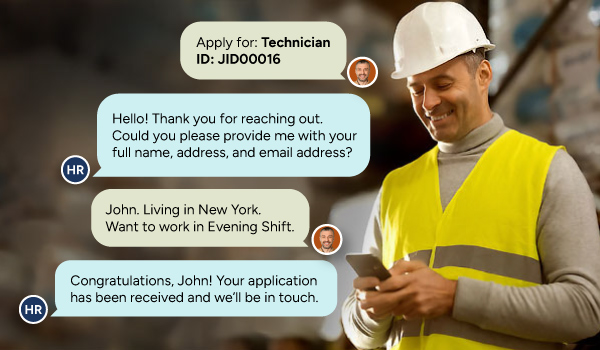
Frontline employees, shift-based roles, regulated environments, and distributed operations introduce variables that standard HCM experiences were never meant to fully absorb. Employees may work in connectivity-limited areas, share devices, rotate across roles, or operate under strict labor and compliance rules. Some don’t have corporate email addresses. Others can’t use personal phones while on the job.
In these environments, the question becomes less about access and more about fit.
Why the Challenge Isn’t Features or Functionality
Most enterprise HCM platforms already offer deep functionality. Time, scheduling, payroll, benefits, and compliance are well-covered. When friction appears, it’s rarely because something is missing.
Instead, the issue is how those capabilities surface for different employee groups.
A standardized experience that works perfectly for a desk-based employee may feel restrictive or impractical for a frontline worker. Over time, this mismatch leads to workarounds, manual interventions, and uneven adoption—placing additional strain on HR teams.
This is where the conversation naturally shifts from features to HCM personalization.
What HCM Personalization Really Means
HCM personalization doesn’t mean changing or replacing your core system. It means shaping how employees interact with it based on their role, environment, and constraints.
In practice, personalization can involve different access methods, tailored workflows, environment-aware interactions, or alternative interfaces that better align with how work is performed—all while keeping the HCM as the system of record.
That’s where platforms like CloudApper AI come into play.
Introducing CloudApper AI for HCM Extensibility & Personalization
CloudApper AI is designed specifically to help organizations personalize their HCM experience without disrupting their existing investment. Rather than competing with major systems, CloudApper AI operates as a personalization layer, adapting how employees interact with the HCM based on real-world context.
CloudApper AI allows HR and HRIS teams to:
- Tailor employee experiences by role, location, or work environment
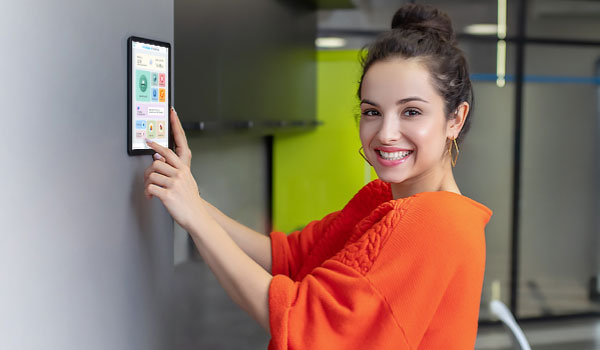
- Introduce alternative access points for frontline or shared-device scenarios
- Support offline or constrained environments without compromising data integrity
- Adjust workflows without custom development or long implementation cycles
HCM systems remain the foundation. CloudApper AI makes that foundation workforce-aware.
Where Standard HCM Experiences Start to Feel Strained
In complex environments, standardized experiences can feel limiting—not because they are poorly designed, but because they are intentionally generalized.
For example, shared workstations may require different identity verification methods than personal mobile access. Connectivity-limited environments benefit from offline-capable interactions. Compliance-heavy roles may require contextual prompts or attestations tied directly to operational events.
These scenarios don’t point to a broken HCM. They highlight the need for environment-aware personalization layered on top of it.
From One Experience to Many—Without Losing Control
The most effective organizations don’t fragment their HR technology landscape. They maintain a strong core HCM while allowing experiences at the edge to vary.
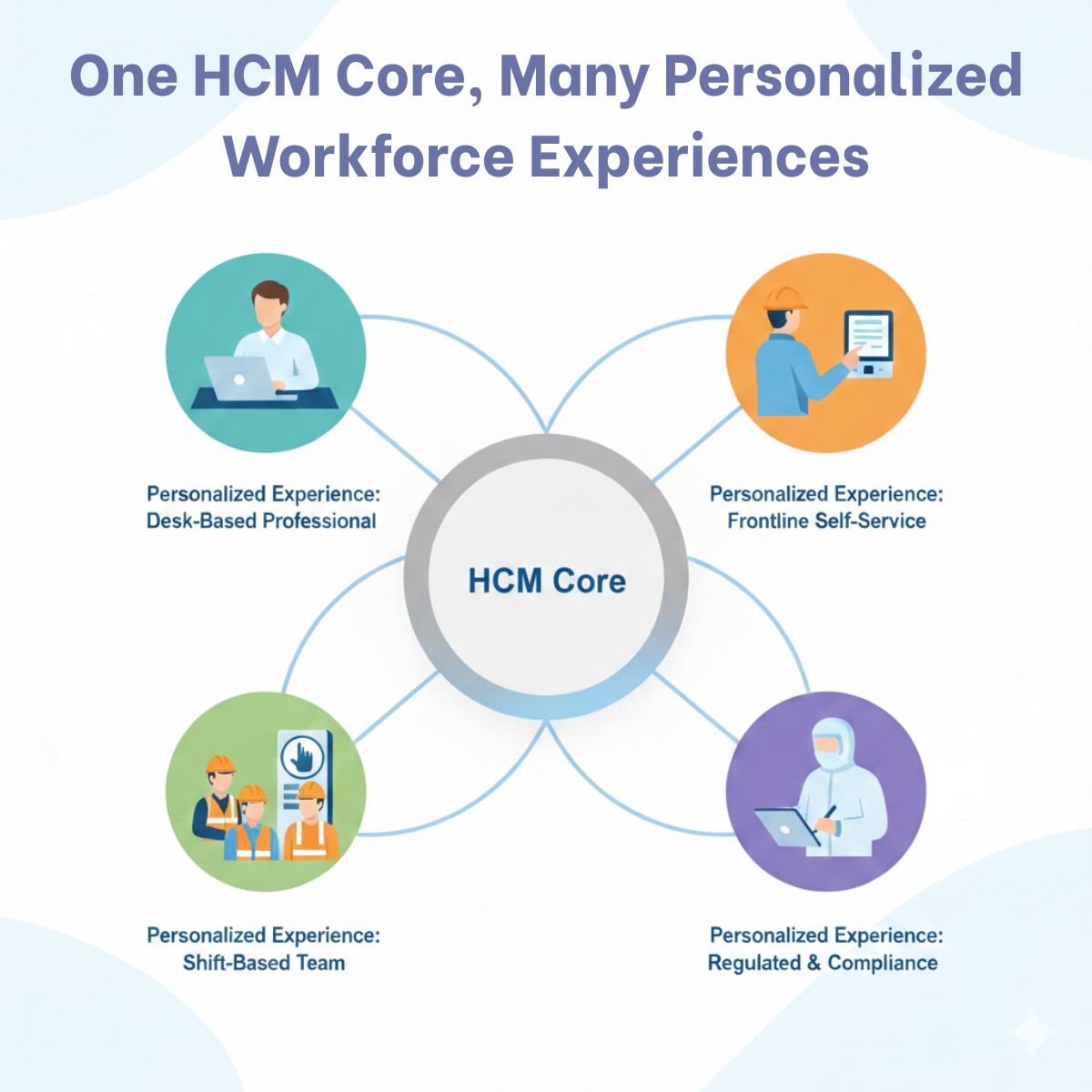
This approach preserves:
- Data consistency
- Governance and compliance
- Reporting accuracy
- Long-term scalability
At the same time, it gives employees an experience that fits their reality rather than forcing them into a generic mold.
CloudApper AI enables this balance by allowing organizations to personalize interactions while keeping HCM systems firmly in control.
Why Workforce Complexity Requires a Different Approach
As workforce environments continue to diversify, the success of an HCM strategy will depend less on standardization alone and more on adaptability.
HCM systems provide the structure and reliability organizations need. HCM extensibility and personalization platforms like CloudApper AI provide the flexibility to extend that structure across different workforce contexts.
The future of workforce technology isn’t about choosing between standardization and personalization. It’s about enabling both—so every employee can engage with the HCM in a way that reflects how they actually work.
If your workforce includes environments where a single HCM experience doesn’t fit everyone, book a short conversation to explore how CloudApper AI personalizes HCM systems without replacing it.
What is CloudApper AI Platform?
CloudApper AI is an advanced platform that enables organizations to integrate AI into their existing enterprise systems effortlessly, without the need for technical expertise, costly development, or upgrading the underlying infrastructure. By transforming legacy systems into AI-capable solutions, CloudApper allows companies to harness the power of Generative AI quickly and efficiently. This approach has been successfully implemented with leading systems like UKG, Workday, Oracle, Paradox, Amazon AWS Bedrock and can be applied across various industries, helping businesses enhance productivity, automate processes, and gain deeper insights without the usual complexities. With CloudApper AI, you can start experiencing the transformative benefits of AI today. Learn More
- Useful Links:
- Agentic AI
- No-Code/Low-Code
- Custom Software
- HCM Personalization
- iPaaS
- FedRAMP
CloudApper AI Solutions for HR
- Works with







- and more.
Similar Posts

Auto-Clear Timesheets Using API Workflows: Save HR Hours
How School Districts Are Solving Substitute Management Without Changing Their…