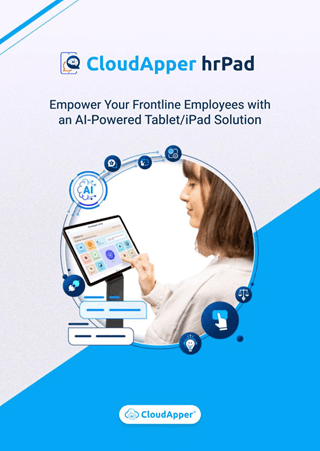
Hotels often struggle with tip pooling, leading to compliance issues and dissatisfied employees. CloudApper’s Self-Service Kiosk, hrPad, offers a game-changing solution with automated tip distribution, customizable rules, and real-time tracking to ensure smooth operations and happier staff.

In the hospitality industry, tips are more than just extra income—they are a core part of employee compensation. Yet many hotel chains continue to struggle with one critical operational issue: tip pooling management.
The reality is simple: one of the biggest Mistakes Hotels Make with Tip Pooling is assuming their existing HCM or payroll system will automatically handle the complexity.
It rarely does.
Instead, hotels often rely on spreadsheets, manual adjustments, or inconsistent POS exports to manage tip distribution. These workarounds create confusion, employee disputes, compliance risks, and administrative headaches for HR teams.
But it doesn’t have to be this way.
CloudApper hrPad provides a smarter approach—extending existing HCM systems and capturing the operational data hotels actually need to manage tips fairly, transparently, and automatically.
Why Tip Pooling Is So Difficult for Hotel Chains
In large hotel operations—especially those with restaurants, bars, banquet services, and room service—tips often need to be shared across multiple roles.
Employees involved in a single service interaction may include:
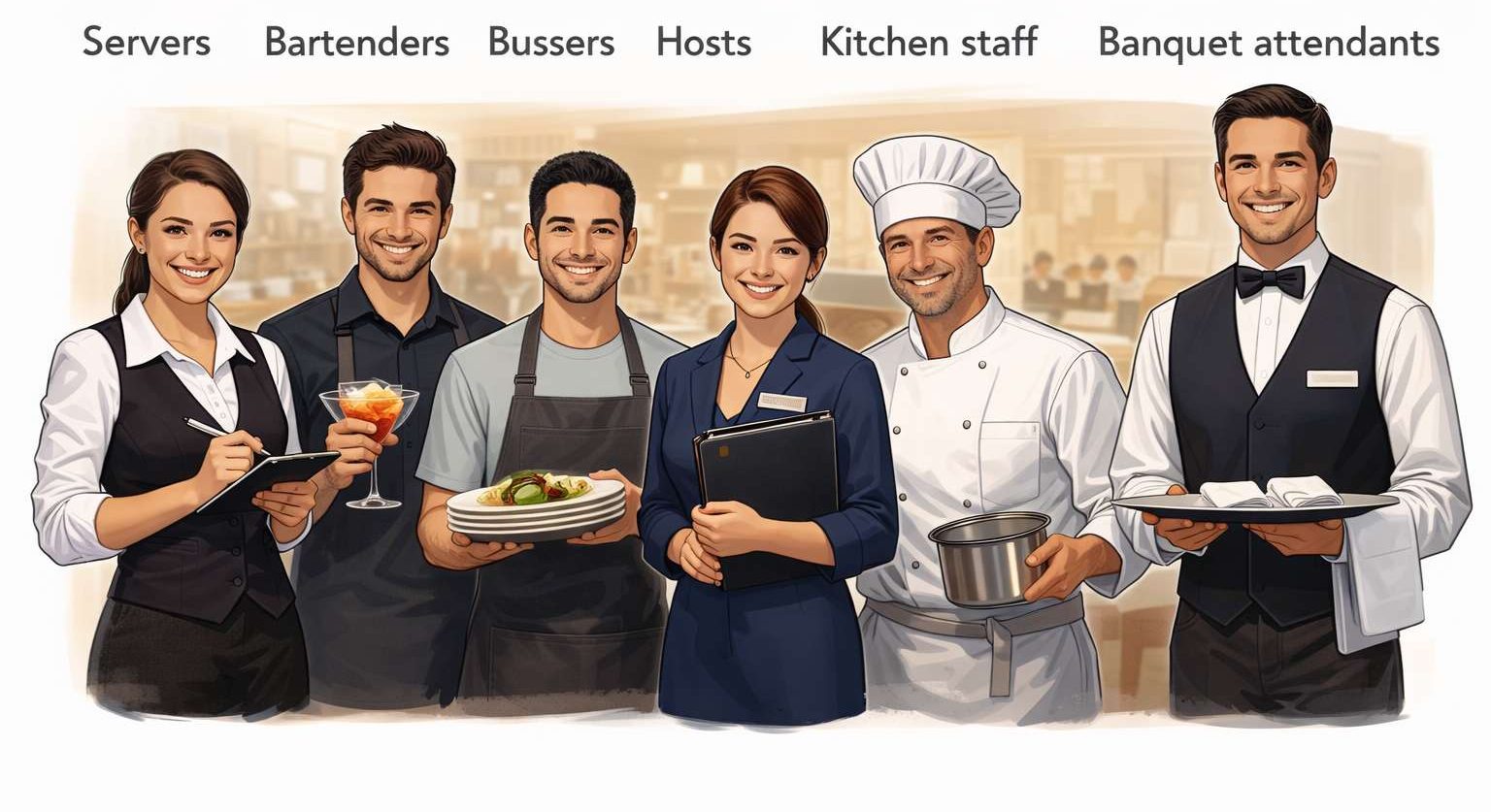
Because multiple employees contribute to the guest experience, tip pooling becomes necessary. But distributing those tips correctly requires answering several questions:
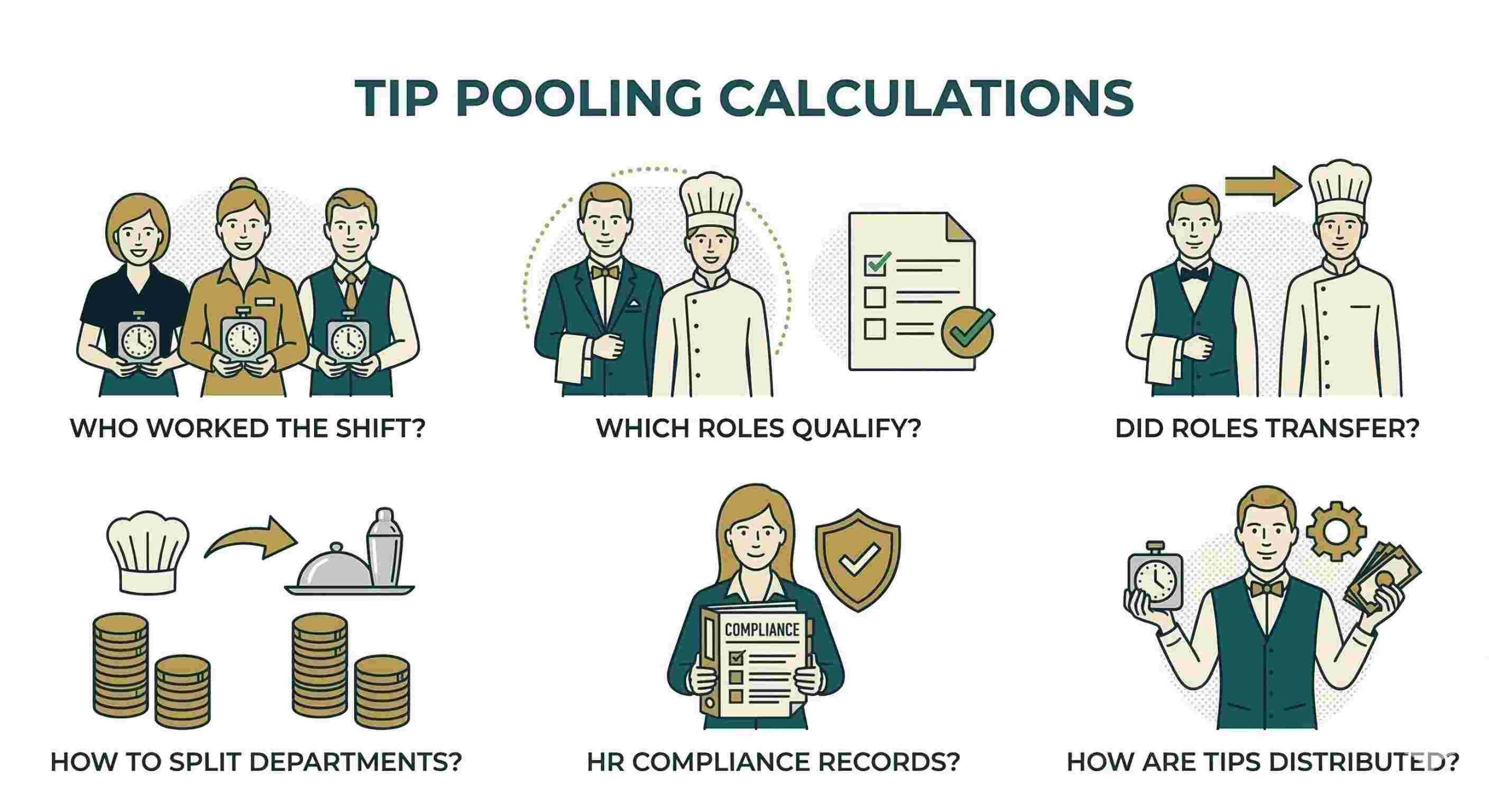
This complexity is exactly why Mistakes Hotels Make with Tip Pooling often lead to payroll inaccuracies and employee frustration.
You might also like to read: Free Restaurant Tip Calculator — And Why Your Team Shouldn’t Be Doing This Math by Hand
Real-Life Scenario: Gratuity vs Tip Pooling
To understand how complicated this can become, let’s look at a common hospitality scenario.
Scenario: A Hotel Banquet Event
A hotel hosts a corporate banquet for 60 guests.
The final bill includes an 18% automatic gratuity, which totals $1,500.
Now management must distribute that gratuity among the staff working the event.
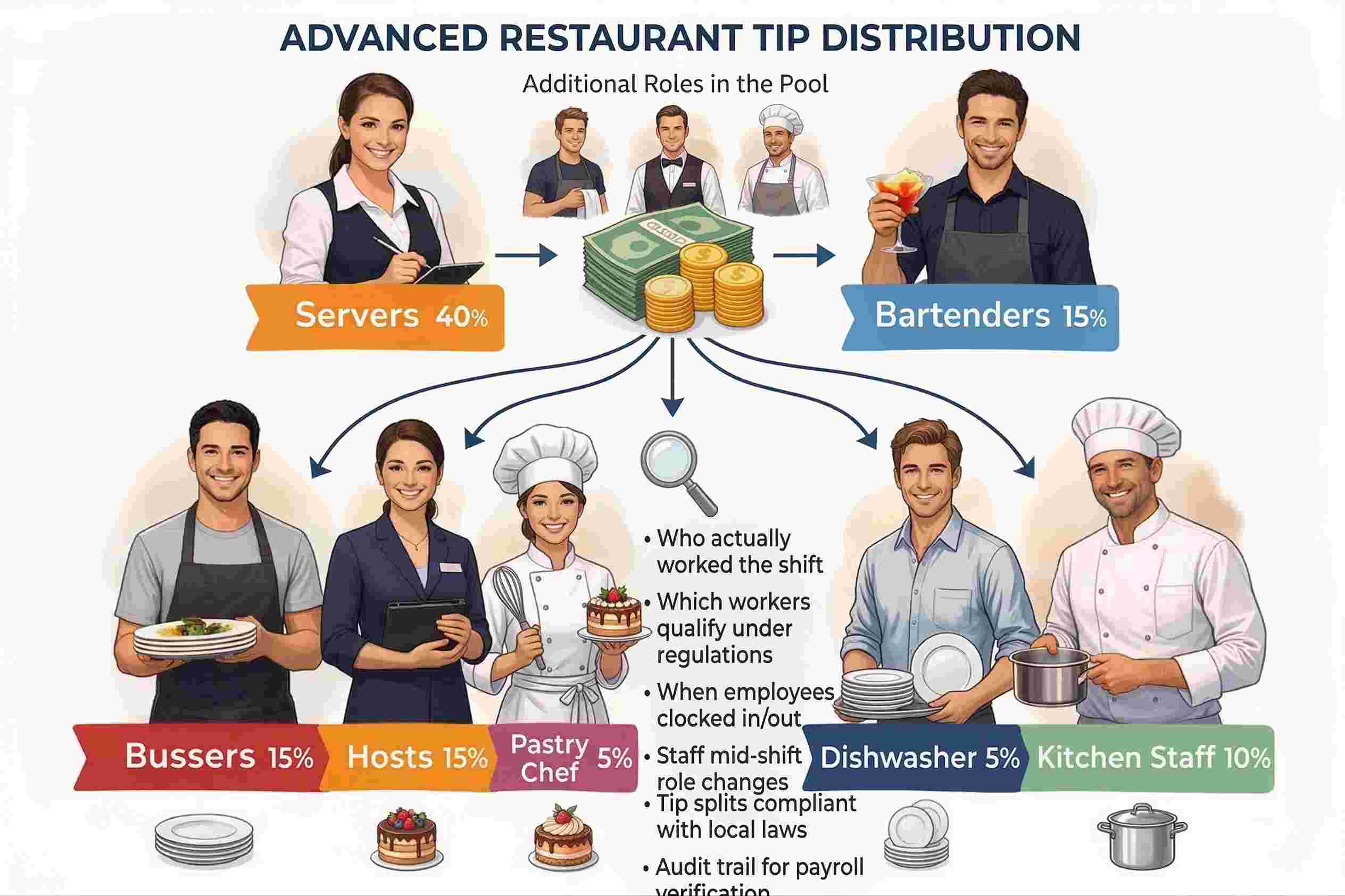
A typical distribution structure might look like this:
| Role | Distribution |
|---|---|
| Servers | 50% |
| Bartenders | 15% |
| Bussers | 20% |
| Kitchen Staff | 15% |
But the real challenge begins when managers must determine:
-
Which employees actually worked the shift
-
When employees clocked in or out
-
Whether staff changed roles mid-shift
-
Which workers qualify under labor regulations
Without automation, these calculations quickly turn into manual guesswork.
And when tip distribution is unclear, employees begin to question the fairness of the system.
This is one of the most damaging Mistakes Hotels Make with Tip Pooling relying on manual processes to manage something that should be automated.
The Real Problem: HCM Systems Weren’t Built for Tip Pooling
Most hotels use powerful workforce platforms like Workday, UKG, or other HCM systems.
These systems are excellent at:
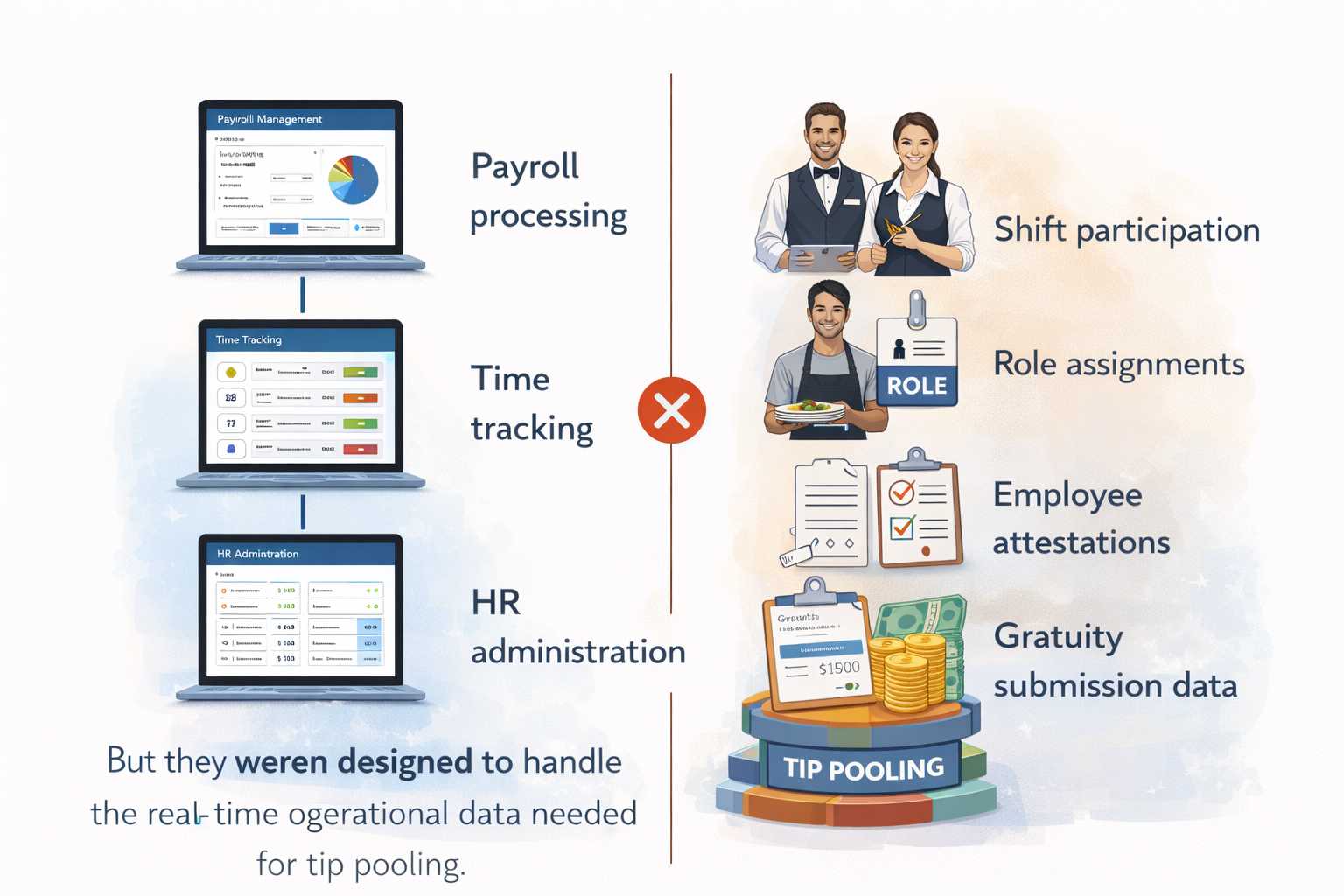
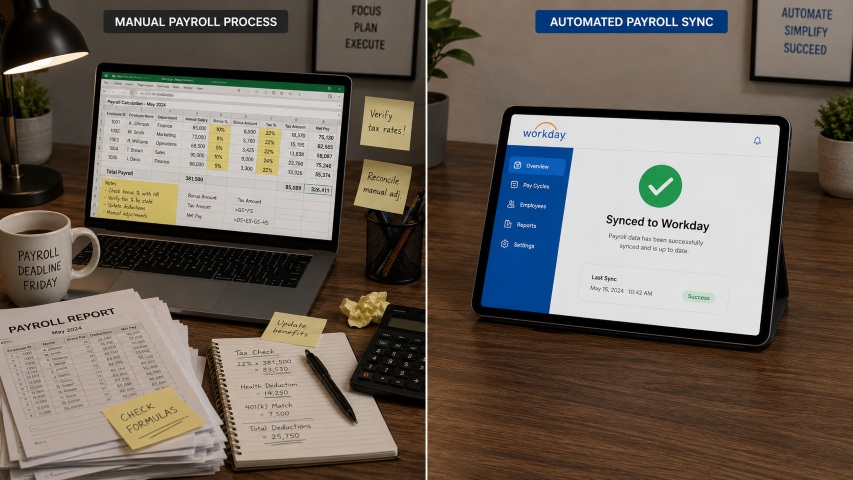
Without capturing this information at the source, HR teams are forced to reconcile everything later.
That’s where CloudApper hrPad changes the game.
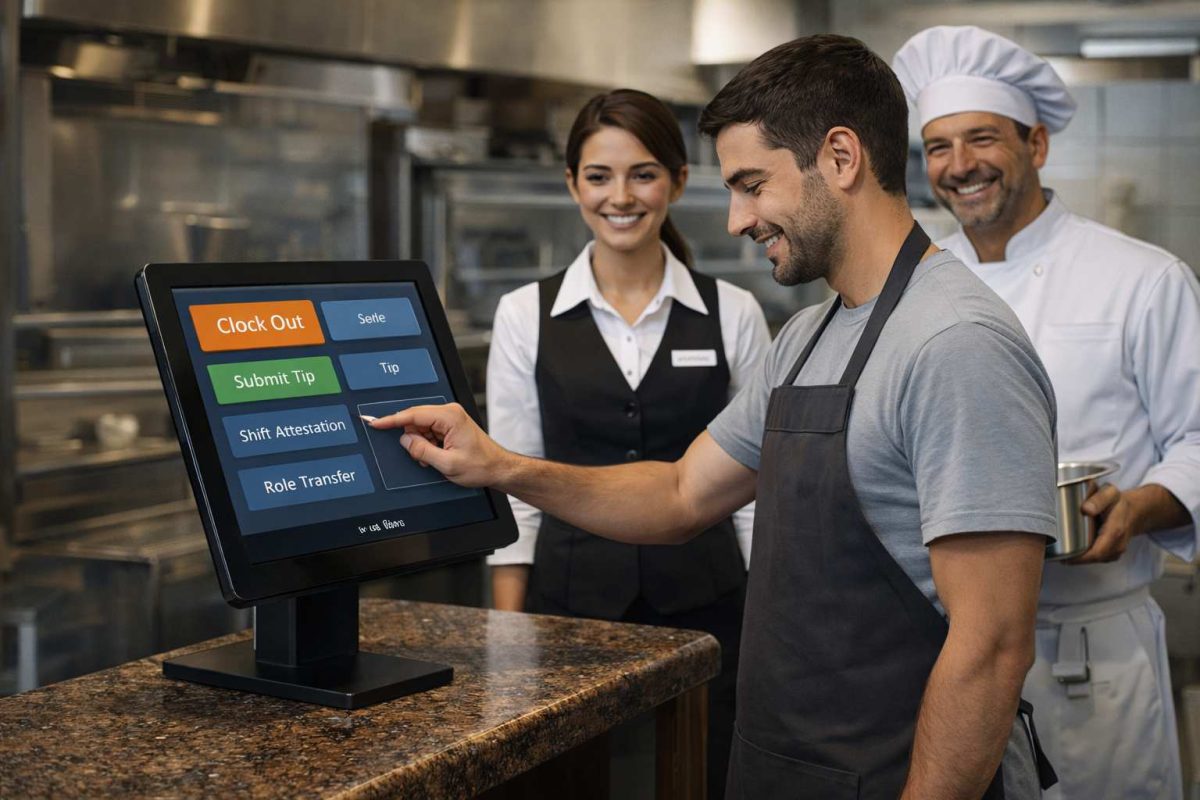
CloudApper hrPad is a tablet-based employee experience kiosk that integrates with existing HCM systems and allows organizations to capture operational workforce data directly from employees.
Instead of relying on post-shift calculations, hrPad collects the information during the shift itself.
How CloudApper hrPad Fixes Tip Pooling
CloudApper hrPad transforms any tablet or kiosk into a workforce management hub that captures key operational data in real time.
Employees can:
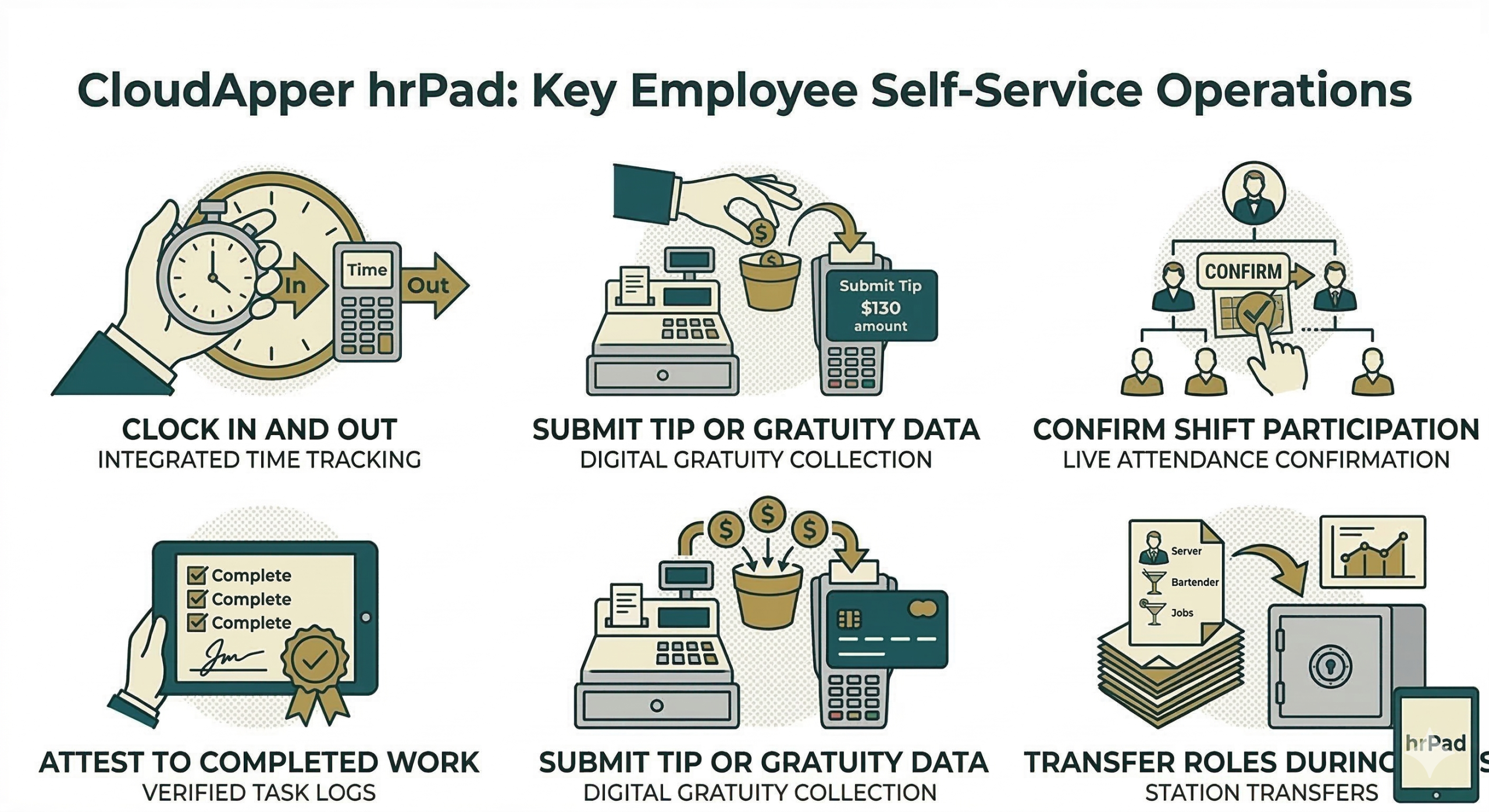
Managers can then automatically identify who qualifies for a tip pool and apply distribution rules accurately.
Because hrPad integrates with existing HCM systems, the captured data flows directly into payroll and workforce management workflows.
This eliminates the most common operational problems:
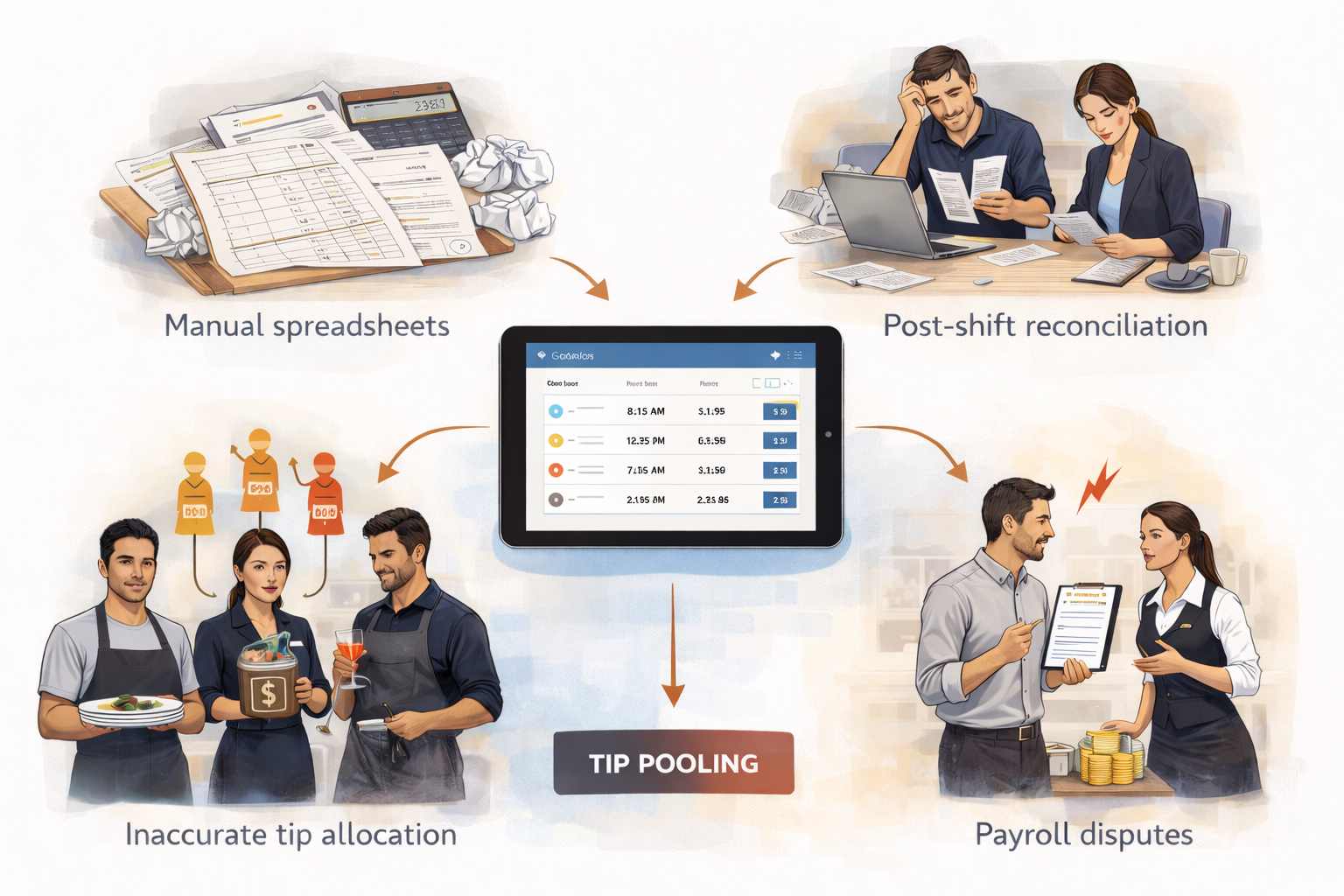
The result is a transparent and auditable system that both employees and HR teams can trust.
Why Transparency Matters in Tip Distribution
Tip-related disputes can quickly damage morale in hospitality environments.
When employees feel that tip distribution is unclear or inconsistent, trust in management declines.
CloudApper hrPad improves transparency by providing clear records of:
-
shift participation
-
role assignments
-
tip submissions
-
distribution rules
Employees can verify how tips are distributed, and HR teams can maintain detailed records for compliance purposes.
This level of visibility eliminates one of the most frequent Mistakes Hotels Make with Tip Pooling—lack of transparency.
Why hrPad Is Better Than Traditional Tip Tracking Tools
Many hospitality organizations try to manage tips using POS exports or manual payroll adjustments.
These approaches fail because they don’t capture operational workforce data in real time.
CloudApper hrPad works directly where employees operate—on the floor.
The system can:
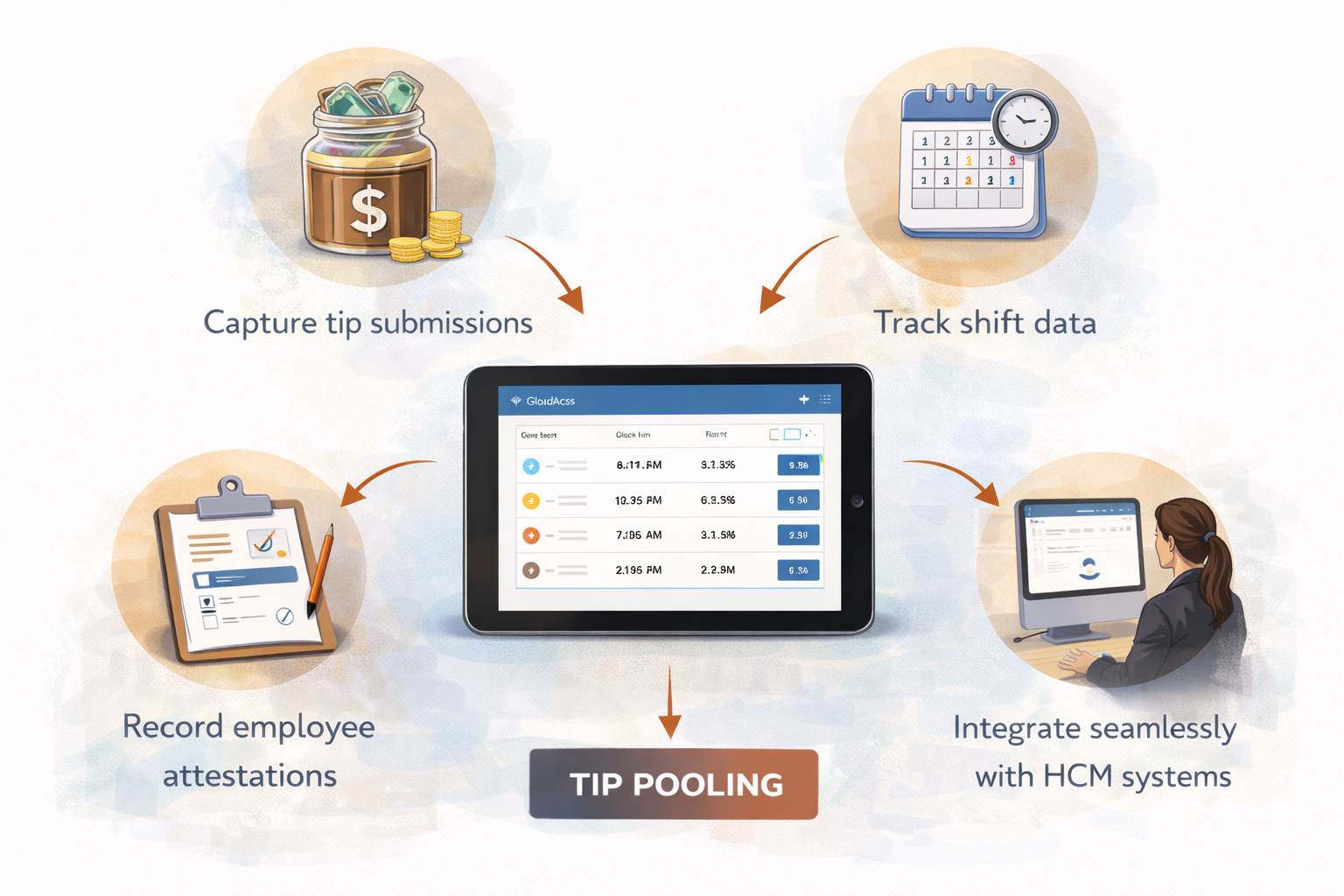
Because hrPad runs on standard tablets or iPads, it also reduces hardware costs compared to traditional time clock solutions while providing flexible workforce management tools.
FAQs
What is tip pooling?
Tip pooling is a system where tips collected during service are shared among employees who contributed to the guest experience, such as servers, bartenders, and support staff.
What is the difference between gratuity and tip pooling?
Gratuity is typically an automatic service charge added to a bill, often for large groups or events.
Tip pooling refers to the method used to distribute those collected tips among eligible employees.
Why is tip pooling difficult for hotels?
Tip pooling requires accurate tracking of employee roles, shift participation, and distribution rules. Without automation, hotels must rely on manual processes that often lead to errors and disputes.
Can HCM systems manage tip pooling automatically?
Most HCM systems focus on payroll and time tracking, not operational tip distribution workflows. Solutions like CloudApper hrPad extend HCM capabilities by capturing the necessary workforce data directly from employees.
How does CloudApper hrPad help hotels manage tips?
CloudApper hrPad allows hotels to capture shift data, tip submissions, and employee attestations through a tablet-based kiosk that integrates with their existing HCM system.
Conclusion
Tip pooling isn’t just a payroll issue—it’s a complex operational challenge that affects employees, HR teams, and compliance.
Yet many organizations continue to rely on manual processes that introduce errors, disputes, and inefficiencies.
One of the most common Mistakes Hotels Make with Tip Pooling is assuming their existing systems already solve the problem.
CloudApper hrPad provides a better solution by extending HCM platforms with a real-time employee experience kiosk that captures the workforce data needed for accurate tip distribution.
With hrPad, hotel chains can finally manage tip pooling fairly, transparently, and automatically without the manual chaos.