This recruitment KPI framework explains eight essential hiring metrics, their formulas, and how to diagnose funnel bottlenecks. It also shows how CloudApper AI Recruiter supports automated workflow tracking, recruitment analytics, candidate engagement, and faster, more informed hiring decisions at scale.


Table of Contents
- TL;DR
- What Is a Recruitment KPI?
- Build KPIs Around the Recruitment Funnel
- Eight Recruitment KPIs Worth Tracking
- How to Diagnose Recruitment Problems With KPIs
- What a Recruitment KPI Dashboard Should Show
- How CloudApper AI Recruiter Supports Recruitment KPI Improvement
- Frequently Asked Questions
- Turn Recruitment KPIs Into Better Hiring Decisions
Recruitment teams collect more data than ever, but having more numbers does not always lead to better hiring decisions. A recruitment KPI becomes valuable only when it answers a specific business question: Where are qualified candidates getting stuck? Which sources produce successful hires? Why are offers being rejected? Are faster hiring decisions affecting quality?
The solution is to build a focused recruitment KPI framework that connects hiring goals with consistent definitions, reliable data, clear ownership, and specific actions. Platforms such as CloudApper AI Recruiter can support this framework by automating recruitment workflows and capturing candidate activity across screening, communication, and scheduling. This guide explains which KPIs matter, how to calculate them, and how AI-supported analytics can help teams identify and address hiring bottlenecks.
TL;DR
- Recruitment KPIs should connect hiring activity with measurable business outcomes.
- Time-to-fill, stage conversion, offer acceptance, cost-per-hire, and quality-of-hire provide different views of performance.
- Funnel metrics help teams identify exactly where candidates are delayed or lost.
- Every KPI needs a consistent definition, data source, target, and owner.
- CloudApper AI Recruiter can automate hiring workflows and capture data that supports faster, more informed decisions.
What Is a Recruitment KPI?
A recruitment key performance indicator measures whether a hiring process is achieving a defined objective, such as filling critical roles on time, reducing candidate drop-off, improving offer acceptance, or making successful hires.
A metric, by comparison, is any measurable activity or result. The number of applications received is a metric. It becomes a KPI only when application volume is connected to a meaningful target and used to guide decisions.

For example, receiving 1,000 applications may appear positive. If only 20 meet the requirements, qualified-applicant rate provides more useful information than application volume.
For more on automation, see how AI can help recruiters meet recruitment KPIs without burning out. Technology works best after the organization defines what success means.
Build KPIs Around the Recruitment Funnel
Instead of placing unrelated metrics on one dashboard, organize recruitment KPIs around the stages of the hiring journey.
| Hiring stage | Business question | Useful KPIs |
|---|---|---|
| Attraction | Are we reaching suitable candidates? | Qualified-applicant rate, source quality, application completion |
| Screening | Are qualified candidates being identified efficiently? | Screening time, screening-to-interview conversion, time in stage |
| Interviewing | Is the selection process moving consistently? | Interview-to-offer conversion, scheduling time, withdrawal rate |
| Offer | Are selected candidates accepting? | Offer acceptance, offer turnaround time, decline reasons |
| Post-hire | Are recruitment decisions producing successful employees? | Quality-of-hire, early retention, hiring-manager satisfaction |
This structure prevents teams from treating “slow hiring” as one problem when the cause may be sourcing, screening, scheduling, feedback, or offer approval.
Eight Recruitment KPIs Worth Tracking
Every KPI should lead to a response. These five ways to meet recruitment KPIs offer additional workflow-improvement ideas.
1. Time-to-Fill
Time-to-fill measures the number of calendar days between opening or approving a requisition and a candidate accepting the offer.
Formula: Time-to-fill = Offer acceptance date − Requisition opening date
Segment time-to-fill by role, location, department, and hiring volume because a company-wide average can hide important differences.
SHRM’s 2026 recruiting benchmark reported a median of 39 calendar days for nonexecutive positions. Use external benchmarks for context and internal comparisons for action.
2. Time-to-Hire
Time-to-hire measures how long an individual candidate spends in the recruitment process.
Formula: Time-to-hire = Offer acceptance date − Candidate entry date
Time-to-fill evaluates the vacancy; time-to-hire evaluates the candidate journey. High time-to-fill with normal time-to-hire suggests a sourcing problem. If both are high, several stages may be delayed.
By automating screening, communication, and scheduling, CloudApper AI Recruiter captures timestamps that help teams locate delays.
3. Stage Conversion Rate
Stage conversion rate shows the percentage of candidates who progress from one hiring stage to the next.
Formula: Stage conversion rate = Candidates advancing ÷ Candidates entering the stage × 100
An unusual decline between application, screening, assessment, interview, offer, or hire can reveal unclear requirements, restrictive criteria, inconsistent evaluations, or a poor experience.
A high screening-to-interview rate is not positive if interviewers repeatedly find that candidates lack essential qualifications.
4. Candidate Drop-Off Rate
Candidate drop-off rate measures the percentage of candidates who abandon or withdraw from the process before completing a stage.
Formula: Candidate drop-off rate = Candidates abandoning a stage ÷ Candidates entering it × 100
High application abandonment may indicate a long form or poor mobile experience. Interview-stage withdrawal may point to scheduling delays, limited communication, compensation misalignment, or a faster competing employer.
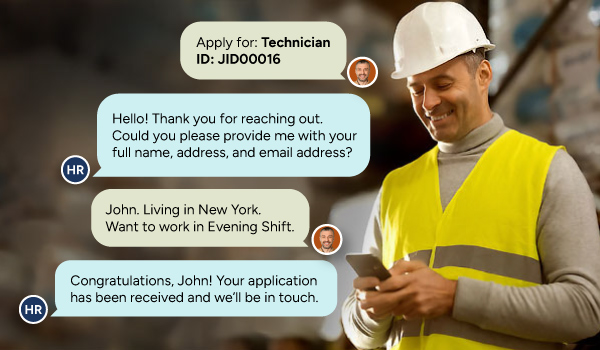
CloudApper AI Recruiter can address operational causes through conversational applications, automated updates, reminders, and self-scheduling. Recruiters should still review withdrawal reasons to uncover problems with communication, compensation, process design, or the role.
5. Offer Acceptance Rate
Offer acceptance rate measures the percentage of formal offers accepted by candidates.
Formula: Offer acceptance rate = Accepted offers ÷ Total offers issued × 100
A declining rate can indicate compensation, decision-speed, flexibility, or expectation problems. Capture structured decline reasons instead of relying on informal notes.
6. Source Quality
Source quality evaluates which recruitment channels produce qualified candidates and successful hires—not merely the most applications.
Compare qualified applicants, interview conversion, offer acceptance, cost, and retention by source. A smaller source may provide greater value if its candidates advance and succeed.
7. Cost-per-Hire
Cost-per-hire measures the average recruitment expense associated with each completed hire.
Formula: Cost-per-hire = Total internal and external recruitment costs ÷ Number of hires
Costs may include advertising, agency fees, assessments, recruiter labor, referral incentives, technology, events, and background checks. Use a consistent cost policy.
Interpret cost alongside quality and speed. Lower cost is not an improvement if vacancies last longer or early turnover increases.
8. Quality-of-Hire
Quality-of-hire evaluates whether new employees deliver the outcomes expected from the recruitment process. Unlike time-to-fill, there is no universal formula.
An organization might combine first-year performance, hiring-manager satisfaction, new-hire retention, and time-to-productivity. For example:
Quality-of-hire score = (Performance + Retention + Hiring-manager satisfaction) ÷ 3
Keep the inputs, measurement period, and scoring scale consistent. HR and business leaders should define what success means for each role.
How to Diagnose Recruitment Problems With KPIs
A KPI should lead to a question and an action. Use combinations of metrics to distinguish symptoms from likely causes.
| KPI pattern | Possible interpretation | What to investigate |
| High application volume and low qualified-applicant rate | Targeting problem | Requirements, advertising channels, job-title clarity |
| Long time-to-fill and normal time-to-hire | Sourcing starts too slowly | Talent pools, sourcing capacity, approval delays |
| Normal screening speed and slow interview stage | Scheduling bottleneck | Calendar availability, interview structure, feedback deadlines |
| Strong interview conversion and low offer acceptance | Offer problem | Compensation, flexibility, expectations, decision speed |
| Fast hiring and poor early retention | Selection quality may be suffering | Assessments, job previews, onboarding, role alignment |
| Low mobile completion | Candidate experience problem | Form length, usability, unnecessary fields |
Treat these as diagnostic prompts. Review the records and speak with candidates, managers, and new employees before making major changes.
CloudApper AI Recruiter can consolidate stage movement, communications, scheduling, scores, and hiring metrics, helping recruiters see where candidates are waiting or leaving.
What a Recruitment KPI Dashboard Should Show
A useful dashboard should help a viewer decide what requires attention. It should not display every field stored in the ATS.
Recruiter dashboards might show active requisitions, time in stage, overdue feedback, drop-off, source conversion, and pending offers. Leadership views should focus on workforce-plan progress, time-to-fill, cost, acceptance, quality, and recurring bottlenecks.
Each KPI should display its result, target, trend, owner, and segment. Keep executive and recruiter views separate when they serve different decisions.
This comparison of manual and automated recruitment KPI tracking covers differences in accuracy, timeliness, scalability, and effort.
How CloudApper AI Recruiter Supports Recruitment KPI Improvement
AI is most useful when it improves the recruitment process and its data. CloudApper AI Recruiter works alongside existing ATS, HRIS, and talent acquisition systems rather than replacing them.
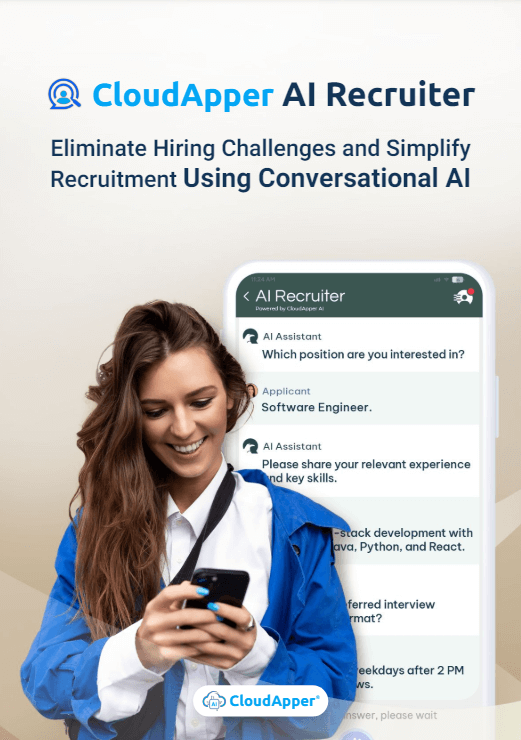
Candidates may enter through a careers page, job board, QR code, text message, or conversational application. CloudApper AI Recruiter can screen resumes, ask role-specific questions, score applicants, communicate with candidates, and coordinate interviews. Candidate information, statuses, scores, summaries, and scheduling events can sync with the existing hiring system, reducing duplicate entry.
These capabilities support recruitment KPIs in several practical ways:
- Automated screening and scheduling can reduce avoidable time between stages.
- Conversational applications and timely follow-ups can help address preventable candidate drop-off.
- Consistent workflow events create clearer data for time-to-hire and stage-conversion analysis.
- Candidate-source and funnel data help teams determine which channels produce qualified applicants.
- Recruiter dashboards provide visibility into candidates waiting for action, upcoming interviews, scores, notes, and hiring metrics.
- Customizable no-code workflows allow teams to adapt stages and rules for different roles, locations, or business units.
CloudApper AI Recruiter also includes an Analytics Agent that provides metrics, dashboards, and insights. Teams can monitor activity while candidates are still moving through the funnel and respond to delays or backlogs sooner.
For example, if time-to-hire rises because candidates wait several days for an interview, automated calendar coordination can address the operational delay. If applicants repeatedly leave before completing an application, conversational workflows can offer a more accessible experience. The KPI identifies the problem; CloudApper AI Recruiter helps teams act on it.
Automation does not remove the need for judgment. Recruiters should validate insights, review scoring criteria, monitor outcomes, and retain human oversight over employment decisions.
Frequently Asked Questions
What are the most important recruitment KPIs?
Core KPIs include time-to-fill, time-to-hire, stage conversion, drop-off, offer acceptance, source quality, cost-per-hire, and quality-of-hire. The right selection depends on current goals and bottlenecks.
What is the difference between time-to-fill and time-to-hire?
Time-to-fill runs from opening a requisition to an accepted offer. Time-to-hire measures the selected candidate’s journey. Together, they distinguish sourcing delays from workflow delays.
How often should recruitment KPIs be reviewed?
Review operational KPIs daily or weekly. Strategic KPIs such as cost, quality, and retention are generally more meaningful monthly or quarterly.
Can AI automatically track recruitment KPIs?
AI can collect and analyze screening, scheduling, communication, stage movement, and response-time data. Consistent definitions and human review remain necessary.
How does CloudApper AI Recruiter support recruitment analytics?
CloudApper AI Recruiter works with existing ATS and HR systems to support screening, scoring, scheduling, outreach, and workflow tracking. Its Analytics Agent and dashboards help teams monitor hiring metrics and identify stages requiring attention.
Turn Recruitment KPIs Into Better Hiring Decisions
Recruitment KPIs should do more than summarize past activity. A focused framework shows where hiring is slowing down, why candidates disengage, which sources deliver value, and whether completed hires succeed after joining.
Start with business-critical questions, define each KPI consistently, and connect every result with an owner and an action. CloudApper AI Recruiter can help automate the workflows that generate recruitment data, provide greater visibility into the hiring funnel, and give teams the information needed to act sooner.
Schedule a CloudApper AI Recruiter demo to explore how AI-supported recruitment analytics can strengthen your existing hiring process.
What is CloudApper AI Platform?
CloudApper AI is an advanced platform that enables organizations to integrate AI into their existing enterprise systems effortlessly, without the need for technical expertise, costly development, or upgrading the underlying infrastructure. By transforming legacy systems into AI-capable solutions, CloudApper allows companies to harness the power of Generative AI quickly and efficiently. This approach has been successfully implemented with leading systems like UKG, Workday, Oracle, Paradox, Amazon AWS Bedrock and can be applied across various industries, helping businesses enhance productivity, automate processes, and gain deeper insights without the usual complexities. With CloudApper AI, you can start experiencing the transformative benefits of AI today. Learn More
- Useful Links:
- Agentic AI
- No-Code/Low-Code
- Custom Software
- HCM Personalization
- iPaaS
- FedRAMP
CloudApper AI Solutions for HR


- Works with







- and more.
Similar Posts

How to Stop Losing Shortlisted Candidates During a Hiring Surge…

Recording Candidate Video Interviews in Illinois: Consent, Retention, and Deletion…