Combatting Candidate Drop-Off in Technical Recruiting is essential for hiring developers. Learn how to calculate your pipeline's drop-off rates and discover how AI tools like CloudApper eliminate friction, automate communication, and keep talent engaged until the final offer.

Table of Contents
- TL;DR:
- What Exactly is Candidate Drop-Off?
- How to Calculate Your Candidate Drop-Off Rate
- Top Reasons Behind Candidate Drop-Offs in Tech Recruiting — and How AI Turns It Around
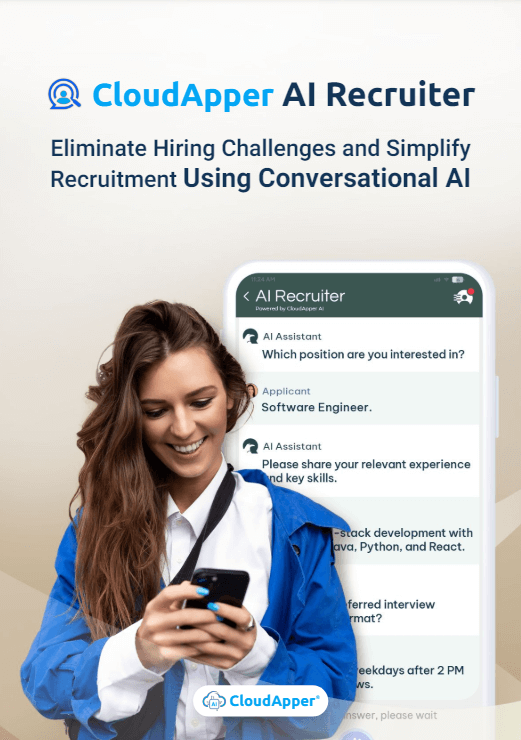
If you’re hiring for tech roles, you’ve probably seen candidates not submitting their assessment tasks, not attending interviews, or worse, not completing the job applications. Candidate drop-off is a major frustration in tech recruiting because you invest time in screening and scheduling, only for top talent to vanish mid-process. While some drop-off is normal, too much of it slows down hiring. The good news? You can eliminate candidate drop-off in technical recruiting with AI recruitment tools like CloudApper AI Recruiter.
TL;DR:
-
Candidate drop-off occurs when developers abandon the hiring process due to friction, slow communication, or clunky systems.
-
Tracking stage-specific metrics (application, assessment, and interview drop-off rates) is critical to pinpointing exactly where your recruitment funnel is leaking.
-
Slow feedback is a dealbreaker; nearly 47% of candidates withdraw from the hiring process due to poor communication and unclear next steps.
-
AI recruitment tools like CloudApper solve this by automating real-time updates and personalizing the candidate experience at scale.
What Exactly is Candidate Drop-Off?
Before we dive into why top tech talent is vanishing from your pipeline, let’s get clear on exactly what we’re dealing with.

Candidate drop-off happens when job seekers begin your hiring process but abandon it before a final decision is made. In technical recruiting, this isn’t just about people ignoring emails. It looks like a senior engineer starting an application but closing the tab when they see a clunky portal, a developer ignoring a take-home coding challenge, or a candidate ghosting you right before the final technical interview.
While a tiny amount of attrition is natural, a high drop-off rate is a flashing warning sign. It tells you that there is friction in your candidate experience, driving top developers straight to your competitors.
How to Calculate Your Candidate Drop-Off Rate
To fix a leaky tech recruitment funnel, you first need to measure the damage. Calculating your overall candidate drop-off rate is straightforward.
The Overall Formula:
| Candidate Drop-Off Rate | = |
Number of Drop-Offs
Total Candidates Who Started
|
× 100 |
For example, if 200 developers enter your pipeline for a backend role and 60 of them voluntarily withdraw or ghost you, your overall drop-off rate is 30% [(60 / 200) x 100].
However, an overall number only tells you that you have a problem, not where the problem is. To get actionable data, you need to calculate drop-off by stage. Here are the three most critical rates to track:
1. Application Abandonment Rate
This measures how many candidates start filling out your application but leave before clicking submit.
1. Application Abandonment Rate
| Application Abandonment Rate | = |
Number of Incomplete Applications
Total Started Applications
|
× 100 |
The Tech Context: If this number is high, your application process is likely too long or tedious. Developers hate manually typing out their work history when they’ve already provided a resume or a GitHub link.
2. Assessment/Test Drop-off Rate
This measures how many candidates are sent a technical screening or coding challenge but fail to complete it.
2. Assessment/Test Drop-off Rate
| Assessment/Test Drop-off Rate | = |
Number of Incomplete Assessments
Total Candidates Sent an Assessment
|
× 100 |
The Tech Context: A spike here usually means your coding tests are too generic, take too much unpaid time, or feel irrelevant to the actual job duties.
3. Interview Drop-off Rate
This measures candidates who withdraw after initial screenings but before the final interview stages are complete.
3. Interview Drop-off Rate
| Interview Drop-off Rate | = |
Number of Withdrawals During Interviews
Total Candidates Invited to Interview
|
× 100 |
The Tech Context: If developers are dropping out here, your hiring timeline is likely moving too slowly, meaning they’ve already accepted offers elsewhere, or they are experiencing poor communication between stages.
Once you know exactly where candidates are jumping ship, you can deploy targeted solutions—like AI—to plug the gaps.
Top Reasons Behind Candidate Drop-Offs in Tech Recruiting — and How AI Turns It Around
Now that we’ve covered what candidate drop-off is and how to calculate candidate drop-off rates in technical recruiting, let’s explore the specific reasons behind it. Here are the four most common reasons candidates lose interest — and how CloudApper AI Recruiter helps fix each one.
Poor Communication and Delayed Feedback
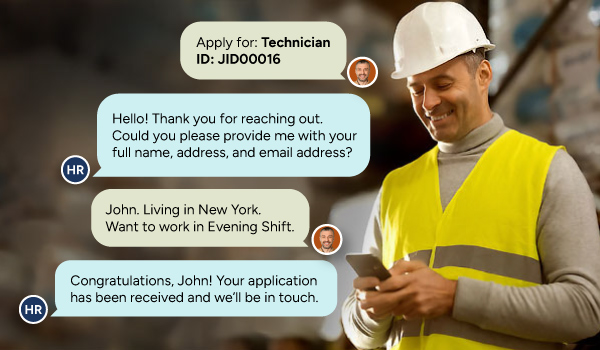
Silence is a dealbreaker. Candidates today expect fast, clear updates — especially in technical recruiting, where most are juggling multiple offers. When updates are delayed or missing altogether, candidates feel forgotten and move on. CloudApper AI Recruiter solves this by handling communication in real time. Whether it’s confirming an application, sending reminders, or sharing interview feedback, the AI does it all instantly. You stay responsive without needing to manually follow up every time.
Study
According to a recent study, nearly 47% of candidates withdraw from recruitment due to poor communication, including a lack of updates and unclear next steps.
Cumbersome or Irrelevant Assessments
Long, generic coding tests are a major reason for candidate drop-off. Developers are busy, and they don’t want to waste time on tasks that don’t reflect the actual job. If your assessments feel out of touch, candidates simply stop participating. CloudApper’s AI recruiting tool helps you avoid this. It tailors assessments to the role using smart workflows. Instead of puzzles that don’t apply, candidates get project-based tasks that match what they’d actually do on the job — like reviewing code or debugging a real scenario.
Mismatch Between Job Description and Interview Process
Another common cause of candidate drop-offs in technical recruiting is misalignment. The job description says one thing, but the interview focuses on something else. That creates confusion and disappointment — especially when a candidate prepares for one kind of role and is assessed for another. CloudApper AI for Talent Acquisition keeps everything consistent. It syncs with your job data and automatically adjusts questions, tasks, and conversations to reflect the actual job requirements. Candidates experience a smooth, predictable process that matches what they applied for.
Lack of Human Connection
Even in tech, people want to feel heard and valued. If the entire hiring process feels cold or robotic, it’s easy for candidates to lose interest — especially if no one takes time to build a relationship. CloudApper’s AI recruiting solution bridges that gap. While automated, it communicates in a friendly, human tone. It remembers past interactions, personalizes responses, and guides candidates with empathy and clarity. It’s like having a helpful coordinator on call at all times.
Frequently Asked Questions
What is a normal candidate drop-off rate in technical recruiting?
While rates vary by company and role, an overall drop-off rate of 10% to 20% is generally considered normal. If your rate climbs above 25% to 30%, it is a strong indicator of friction in your recruitment funnel that requires immediate attention.
How can I lower my application abandonment rate?
Keep your application forms short, intuitive, and mobile-friendly. Avoid asking developers to manually type out their work history if they are already uploading a resume or providing a GitHub link. Using AI to parse resumes automatically can drastically reduce early drop-off.
Why do developers abandon standard coding assessments?
Top technical talent often views generic, lengthy coding puzzles as a waste of unpaid time—especially if the tests don’t reflect the actual day-to-day duties of the role. Replacing standard tests with highly relevant, project-based assessments keeps candidates engaged.
How does AI improve candidate communication?
AI recruitment tools automate the follow-up process by sending instant application confirmations, real-time status updates, and interview reminders. This ensures candidates receive the fast feedback they expect, completely eliminating the feeling of being ghosted.
Can AI improve the candidate experience without feeling robotic?
Yes. Modern AI talent acquisition platforms, like CloudApper, utilize conversational AI to communicate in a friendly, empathetic tone. By remembering past interactions and personalizing responses, AI maintains a human touch while handling administrative tasks at scale.
Conclusion
Reducing candidate drop-offs in technical recruiting doesn’t require a complete overhaul — just a smarter process. Whether it’s improving communication, using better assessments, or staying aligned with job expectations, CloudApper AI Recruiter helps you keep candidates engaged every step of the way. From the first touchpoint to the final decision, it simplifies the work while making the experience better for everyone. Contact us today to get a free demo.

What is CloudApper AI Platform?
CloudApper AI is an advanced platform that enables organizations to integrate AI into their existing enterprise systems effortlessly, without the need for technical expertise, costly development, or upgrading the underlying infrastructure. By transforming legacy systems into AI-capable solutions, CloudApper allows companies to harness the power of Generative AI quickly and efficiently. This approach has been successfully implemented with leading systems like UKG, Workday, Oracle, Paradox, Amazon AWS Bedrock and can be applied across various industries, helping businesses enhance productivity, automate processes, and gain deeper insights without the usual complexities. With CloudApper AI, you can start experiencing the transformative benefits of AI today. Learn More
- Useful Links:
- Agentic AI
- No-Code/Low-Code
- Custom Software
- HCM Personalization
- iPaaS
- FedRAMP
CloudApper AI Solutions for HR

- Works with







- and more.
Similar Posts

Verify Required Certifications and Licenses Without Slowing Down Screening
How to Standardize Candidate Selection Across Regional Hiring Teams