Hiring for hospitals is tougher than ever, and polished resumes no longer guarantee real experience. This article explains how AI Contextual Analysis—powered by CloudApper AI Recruiter—helps hospitals verify genuine clinical skills, catch AI-written applications, and filter out unqualified candidates long before they reach your hiring managers.


Table of Contents
- Why This Matters Right Now
- AI Recruiter Steps In
- The Power of AI Contextual Analysis in Healthcare Recruiting
- How AI Contextual Analysis Strengthens Every Step of the Hiring Funnel
- Real Examples of Contextual Analysis Saving Hospitals Time
- Why Recruiters Love the System
- The Future of Safe, Reliable Healthcare Hiring
Hiring for healthcare roles has always been high-stakes. When you’re responsible for filling positions that directly impact patient safety, there’s no room for guesswork. And yet, recruiters and HR leaders constantly face an uphill battle: polished resumes, generic statements, rehearsed interview answers, and now AI-written applications make it harder than ever to see who’s truly qualified. That’s exactly why AI contextual analysis is becoming a must-have for hospitals that want to move fast without compromising quality.
Why This Matters Right Now
Healthcare staffing has reached a point where the smallest oversight can lead to major risks. A candidate may look perfect on paper but crumble in real patient-facing scenarios. Another might list credentials that sound impressive but don’t align with real clinical experience. With competition increasing and time-to-hire shrinking, hospitals need a way to spot mismatch early—before an unqualified applicant slips into the workflow. That’s where contextual analysis changes everything.
AI Recruiter Steps In
CloudApper AI Recruiter uses AI contextual analysis to help you verify whether someone has real experience or just good wording. Unlike basic keyword screening, it examines the meaning behind what candidates say. In the first minutes of an application, AI Recruiter instantly screens, scores, and ranks candidates. Then, it pushes the process forward with automated scheduling, reminders, and follow-ups 24/7 so qualified talent stays engaged.
Most importantly, it protects hospitals from unqualified or misaligned candidates by testing their real understanding of healthcare scenarios—not just their resume writing skills. It handles the early screening load so your team can focus on candidates who actually meet your standards.
The Power of AI Contextual Analysis in Healthcare Recruiting
Healthcare roles require accuracy, empathy, fast decision-making, and hands-on experience. But resumes rarely tell you which candidates have those qualities. AI contextual analysis digs deeper by evaluating context, intent, and consistency in what applicants share during screening.
Below are the biggest ways it protects hospitals from costly hiring mistakes.
1. It Spots Resume Inflation Instantly
Resumes today are more polished than ever. With online templates and AI-writing tools, even inexperienced candidates can produce something that looks professional. But hospitals don’t need “professional”—they need real and reliable.
AI Recruiter solves this by:

- Reading resumes for meaning, not just keywords
- Checking if claims match real-world context
- Identifying vague or generic statements
- Catching inconsistencies in timelines or responsibilities
- Flagging skills that don’t align with job requirements
For example, if a candidate claims “experience with triage,” the AI will ask a tailored scenario during pre-screening like:
“A patient arrives with respiratory distress and a history of asthma. What are your first steps?”
A real clinician answers naturally. An inflated resume falls apart. That’s the power of contextual analysis in action.

2. It Detects AI-Written Resumes and Automated Answers
AI-written resumes aren’t always dishonest—but they often lack depth. When someone relies heavily on tools like ChatGPT or a resume generator, their application may be polished but not accurate.
CloudApper’s AI Recruiter uses contextual signals to identify:
- AI-enhanced sections
- Overly generic experience summaries
- Buzzword-heavy descriptions with no real detail
- Missing narrative consistency
- Statements that contradict answers during screening
If something looks suspicious, the AI automatically adjusts the screening flow to probe deeper. Instead of asking surface-level questions, it switches to scenario-based or clarifying questions that require genuine experience.
This is where it becomes extremely difficult for unqualified candidates to fake competence.
3. It Verifies Real Clinical Experience Through Smart Questions
Hospitals don’t just need people with “knowledge”—they need people who can act quickly and correctly.
AI Recruiter evaluates this through personalized, scenario-driven questions:
- How they adapt to sudden changes
- How they prioritize patients
- How they communicate with nurses or physicians
- How they respond to difficult or emotional patients
- How they handle medication errors or near-misses
- How they apply protocols under stress
What makes the process so effective is that the follow-up questions are dynamic. If the candidate gives a shallow or learned-by-heart answer, the AI reacts and asks something more specific:
“You mentioned checking vitals. In this exact situation, which vital sign would you monitor first, and why?”
This forces applicants to think, not guess.
4. It Prevents Real-Time AI Coaching During Interviews
With real-time AI tools appearing everywhere, candidates can cheat during live interviews or assessments by reading suggestions or copied answers. But hospitals need authentic communication—not AI-enhanced improvisation.
CloudApper’s Assessment Agent detects red flags such as:
- Sudden shifts in language style
- Overly polished explanations
- Delayed responses typical of AI copy-paste
- Answers with no personal examples
- Inconsistent reasoning across follow-up questions
Instead of grading only the final answer, it evaluates:
- How candidates think
- Whether their reasoning stays consistent
- Whether they can adapt when variables change
- Whether they can explain step-by-step decisions
This type of contextual evaluation is incredibly hard to fake—even with a real-time AI assistant helping.
5. It Reduces Patient Risk by Catching Red Flags Early
Every healthcare recruiter has experienced this:
A candidate who sounds amazing in the interview crumbles when actually put on the floor.
AI Recruiter helps avoid this by identifying red flags such as:
- Overconfidence paired with vague answers
- Claims that don’t align with licensing requirements
- Missing real-world examples
- Weak situational awareness
- Inability to explain proper protocol
- Contradictions between resume and pre-screen responses
By catching these issues early, hospitals prevent:
- Poor patient care
- Medication errors
- Compliance risks
- High turnover
- Staffing disruptions
- Higher onboarding costs
In short, it protects both patients and employers.
How AI Contextual Analysis Strengthens Every Step of the Hiring Funnel
Let’s break down how contextual analysis improves each phase of the hiring process.
Resume Analysis
It identifies surface-level applications and flags those that require deeper review. It also spots AI-written inconsistencies that recruiters might miss.
Pre-Screening
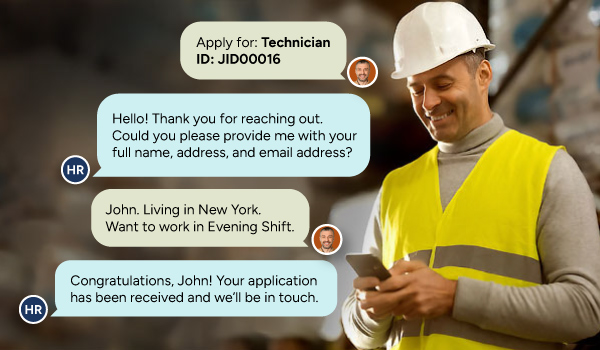
The conversational AI chatbot engages candidates instantly through SMS or web chat. It verifies authenticity by asking personalized questions that require real experience.
Scenario-Based Evaluation
This is where unqualified candidates get filtered out. By asking “what would you do if…” questions, the AI exposes knowledge gaps early.
Interview Preparation
AI Recruiter passes only strong, verified, and relevant candidates to your team. Recruiters go into interviews with confidence and a detailed report of each candidate’s performance.
Candidate Engagement
Qualified talent stays engaged through automated follow-ups, reminders, and flexible scheduling—ensuring they don’t drop off out of frustration.
Real Examples of Contextual Analysis Saving Hospitals Time
Here are a few real-world-style scenarios that recruiters instantly recognize:
Example 1: The Over-Polished Nurse Resume
A candidate lists five years of ICU experience. But during pre-screening, they can’t explain how to handle a Code Blue. AI flags the mismatch instantly.
Example 2: The Generic Medical Assistant Answer
An MA applicant writes perfect descriptions of EMR experience—but can’t describe how to chart a routine vaccine administration. The AI catches the lack of practical experience.
Example 3: The Rehearsed Interview
A candidate answers every question flawlessly but stumbles when follow-up questions change the scenario slightly. The AI detects inconsistency and marks it as a risk.
Example 4: The AI-Written Resume
Beautiful formatting, perfect grammar, impressive keywords. But when the AI asks about specific protocol steps, the answers become vague. Red flag.
Each time, the hospital avoids wasted interview time—and potential risk.
Why Recruiters Love the System
Healthcare HR teams often say the same things after adopting CloudApper AI Recruiter:
- “It saves us hours every day.”
- “We only talk to real candidates now.”
- “It gave us confidence again.”
- “Our no-show rate dropped drastically.”
- “We finally stopped second-guessing resumes.”
And because the AI handles screening instantly at any time of day, candidates stay warm and engaged. No delays, no backlog, no lost applicants.
The Future of Safe, Reliable Healthcare Hiring
Hospitals can’t afford to make mistakes with frontline roles. The right hire saves lives. The wrong hire causes problems that often stay hidden until it’s too late.
With AI contextual analysis, healthcare recruiters strengthen every decision. It reduces risk, increases hire quality, and helps your team stay confident—even in today’s chaotic hiring landscape.
If you want a way to:
- catch resume inflation
- prevent AI-enhanced cheating
- evaluate real clinical competence
- reduce no-shows
- identify top talent quickly
- keep candidates engaged 24/7
CloudApper AI Recruiter does that seamlessly. Ready to Hire Safer, Faster, and With More Confidence?
What is CloudApper AI Platform?
CloudApper AI is an advanced platform that enables organizations to integrate AI into their existing enterprise systems effortlessly, without the need for technical expertise, costly development, or upgrading the underlying infrastructure. By transforming legacy systems into AI-capable solutions, CloudApper allows companies to harness the power of Generative AI quickly and efficiently. This approach has been successfully implemented with leading systems like UKG, Workday, Oracle, Paradox, Amazon AWS Bedrock and can be applied across various industries, helping businesses enhance productivity, automate processes, and gain deeper insights without the usual complexities. With CloudApper AI, you can start experiencing the transformative benefits of AI today. Learn More
- Useful Links:
- Agentic AI
- No-Code/Low-Code
- Custom Software
- HCM Personalization
- iPaaS
- FedRAMP
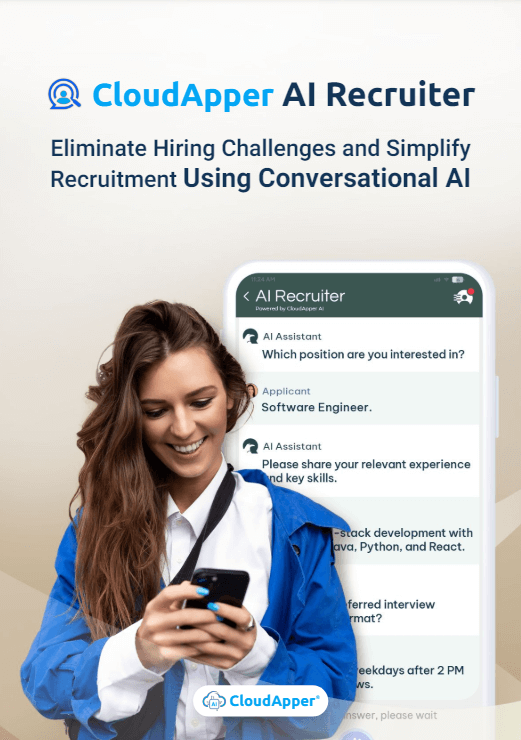
CloudApper AI Solutions for HR
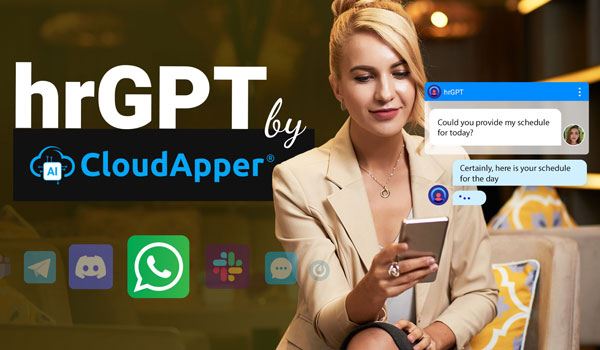

- Works with







- and more.
Similar Posts

How to Stop Losing Shortlisted Candidates During a Hiring Surge…
Recording Candidate Video Interviews in Illinois: Consent, Retention, and Deletion…