Hiring Store Managers faster starts with asking the right questions. Discover 10 crucial Store Manager interview questions that assess P&L management, leadership skills, and team development—plus learn how CloudApper AI Recruiter automates screening via SMS, engages candidates 24/7, and reduces time-to-hire by 60% for retail organizations.
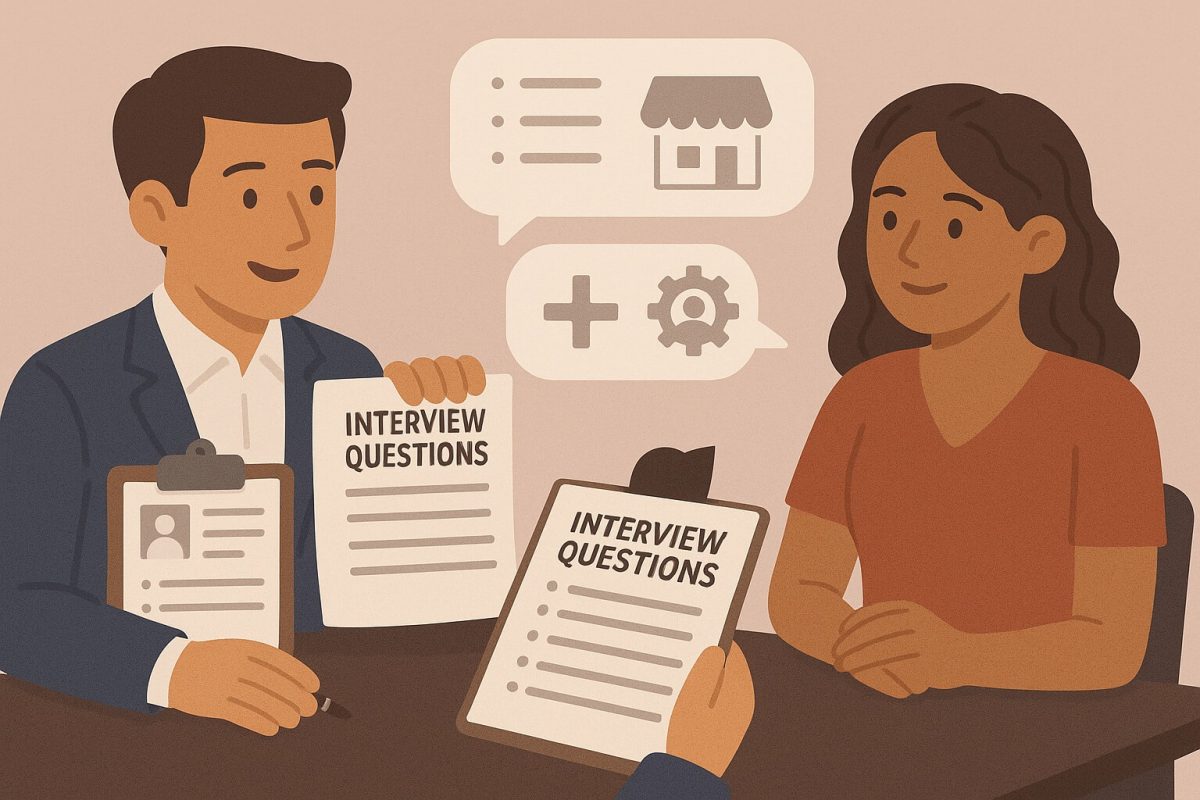
Table of Contents
- Why These Questions Matter for Store Managers & Assistant Store Managers
- Top 10 Crucial Store Manager & Assistant Store Manager Interview Questions (With Sample Strong Answers)
- How CloudApper AI Recruiter Makes Hiring Store Managers & Assistant Store Managers Effortless
- Stop Losing Store Leadership Talent to Slow Hiring
Hiring Store Managers and Assistant Store Managers has become increasingly complex and costly for retail organizations. According to recent industry research, the average cost to replace a Store Manager now exceeds $20,000 when factoring in lost sales, recruitment expenses, training, and productivity losses during the transition period. Time-to-hire for retail management positions has stretched to 45-60 days, and the stakes couldn’t be higher—a single bad management hire can lead to increased turnover, declining sales, poor customer experiences, and cultural deterioration across an entire location.
The challenge is compounded by a critical talent shortage. Retail is experiencing a leadership gap as experienced managers retire or leave the industry, while fewer employees are pursuing traditional store management career paths. Meanwhile, the skills required for effective store leadership have expanded dramatically: today’s Store Managers need P&L management expertise, omnichannel strategy execution, digital transformation leadership, data analytics interpretation, employee engagement capabilities, and crisis management skills that weren’t in the job description five years ago.

But here’s what’s truly crushing retail talent acquisition teams: high-quality candidate engagement and assessment. With strong Store Manager candidates often employed and passively exploring opportunities, traditional hiring processes—posting jobs and waiting for applications, conducting multiple interview rounds over weeks—simply don’t work. The best candidates are off the market before you’ve even completed initial phone screens.
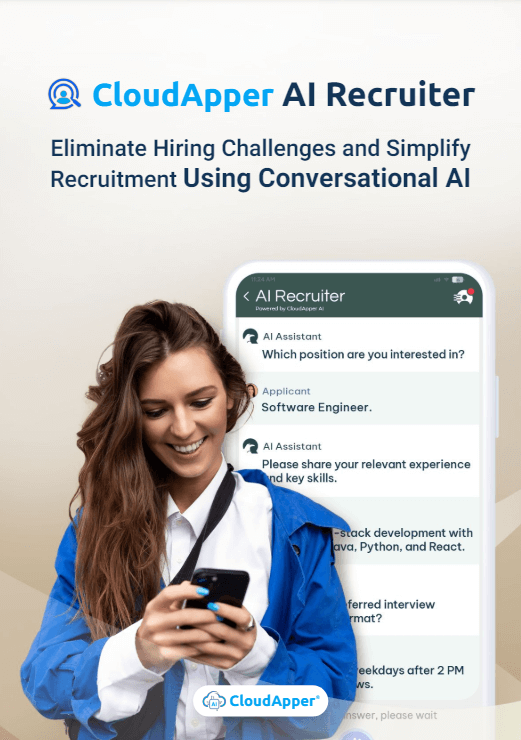
Enter CloudApper AI Recruiter: our conversational AI chatbot that transforms store management hiring. It engages both active and passive candidates instantly via SMS or web chat, conducts intelligent behavioral and situational screening interviews 24/7, assesses leadership competencies through scenario-based questions, and eliminates up to 90% of initial screening work—all while removing unconscious bias and providing consistent candidate evaluation.
In this guide, we’ll give you the exact interview questions you need to identify exceptional Store Managers and Assistant Store Managers who’ll drive results, develop teams, and elevate your brand. Then we’ll show you how CloudApper AI Recruiter handles the heavy lifting, transforming your management hiring from months to weeks.
Why These Questions Matter for Store Managers & Assistant Store Managers
The Store Manager and Assistant Store Manager roles have evolved from operational supervisors to strategic business leaders. Today’s retail managers aren’t just running registers and managing schedules—they’re driving six-figure or multi-million dollar P&Ls, executing omnichannel strategies, analyzing sales data to optimize performance, building cultures that retain talent in a 60%+ turnover environment, managing complex inventory across channels, ensuring compliance, and serving as the local face of your brand.
They’re navigating labor shortages, implementing new technologies, responding to competitive threats, handling crisis situations, developing future leaders, and balancing corporate directives with local market realities—all while maintaining operational excellence and delivering exceptional customer experiences.
Old-school questions like “What’s your management style?” or “Tell me about your background” barely scratch the surface. You need to assess P&L accountability and business acumen, people leadership in high-turnover environments, problem-solving under ambiguity, change management and technology adoption, conflict resolution skills, results orientation balanced with team development, and cultural fit with your brand values.
With Store Manager turnover averaging 30-40% annually in many retail segments, and with each location’s performance directly tied to its leadership, asking the right questions upfront isn’t optional—it’s business-critical. A great Store Manager can transform an underperforming location; a poor one can destroy a profitable store. These questions will help you identify candidates who possess the strategic thinking, operational excellence, and leadership capabilities to succeed in modern retail management.
Top 10 Crucial Store Manager & Assistant Store Manager Interview Questions (With Sample Strong Answers)
1. Tell me about a time when you turned around an underperforming store or department. What was your approach, and what were the results?
Why ask this?
This reveals strategic thinking, problem-solving methodology, data analysis skills, and ability to drive measurable business results—core competencies for retail leadership.
Sample Strong Answer:
“I inherited a store that was 15% below sales plan with the highest shrink in the district and significant turnover. I started by analyzing the data—which categories were underperforming, what our traffic patterns looked like, and where we were losing inventory. I also conducted stay interviews with remaining team members to understand cultural issues. I discovered we had weak merchandising execution, inconsistent opening/closing procedures creating shrink opportunities, and low morale from constant turnover. My turnaround plan had three priorities: rebuilding the team by hiring for cultural fit and training thoroughly, implementing stronger operational standards with accountability, and improving merchandising to drive conversion. Within six months, we were 8% above plan, shrink dropped by 40%, and turnover decreased significantly. The key was using data to diagnose root causes rather than making assumptions, then executing a focused plan with clear accountability.”
2. How do you balance meeting corporate goals and directives with the specific needs of your local market and team?
Why ask this?
Store Managers must navigate the tension between corporate strategy and local execution. This tests judgment, adaptability, and communication skills both up and down.
Sample Strong Answer:
“I see my role as translating corporate strategy into local execution while providing feedback upward about what’s working and what isn’t. For example, corporate might launch a promotional strategy, but I need to adapt the execution based on my customer demographics and competitive landscape. I keep my district manager informed about local challenges and opportunities, using data to support my perspective. When directives don’t make sense for my market, I raise concerns respectfully with alternative suggestions rather than just complaining. But ultimately, once a decision is made, I commit fully and lead my team to execute it well. The worst thing a Store Manager can do is undermine corporate initiatives with their team—that creates confusion and disengagement.”
3. Describe your approach to reducing turnover and building a high-performing team in a high-turnover industry.
Why ask this?
People leadership and retention are critical challenges. This reveals team development philosophy, engagement strategies, and understanding of what drives retention.
Sample Strong Answer:
“I focus on three things: hire right, develop intentionally, and create a culture people want to stay in. During hiring, I’m selective and involve my team—I’d rather operate short-staffed temporarily than hire the wrong person who’ll cause drama or leave quickly. Once someone’s hired, I invest in comprehensive onboarding and training because people who feel competent and confident are more engaged. I also create clear development paths—I tell my associates what it takes to become a key holder, and key holders what’s needed for assistant manager. I recognize good work publicly and address issues privately and quickly. I also do regular one-on-ones to understand what matters to each person—for some it’s scheduling flexibility, others want more hours or advancement opportunities. When people feel valued, developed, and part of something bigger than a paycheck, they stay. In my last role, my store had 25% turnover while the company average was 55%.”
4. Walk me through how you manage your store’s P&L. What metrics do you track daily, and how do you use data to drive decisions?
Why ask this?
Business acumen and data literacy are essential for modern Store Managers. This assesses financial understanding and analytical thinking.
Sample Strong Answer:
“I start each day reviewing sales performance against plan, traffic counts, conversion rates, and average transaction value—that tells me where we stand and where opportunities exist. I track labor as a percentage of sales daily to ensure we’re productive, and I review shrink indicators weekly. For merchandising, I monitor sell-through rates by category to identify what needs markdowns or reorders. I use this data to make decisions—if traffic is strong but conversion is weak, we need better engagement or merchandising. If average transaction is low, we need to focus on add-on selling. I also compare performance to last year and similar stores in the district to contextualize results. Monthly, I review the full P&L with my assistant manager to understand gross margin, controllable expenses, and net contribution. I see data as my diagnostic tool—it tells me what’s happening so I can figure out why and what to do about it.”
5. Tell me about a time you had to have a difficult conversation with an employee—performance issue, policy violation, or termination. How did you handle it?
Why ask this?
Difficult conversations are inevitable in leadership. This reveals courage, communication skills, empathy balanced with accountability, and professionalism.
Sample Strong Answer:
“I had an assistant manager who was technically strong but had become negative and was complaining about company decisions to the team, which was creating toxicity. I scheduled a private conversation and came prepared with specific examples. I used a direct but respectful approach: ‘I need to talk about something serious. I’ve noticed you’ve been expressing frustration about corporate decisions in front of the team, and it’s creating negativity. Help me understand what’s going on.’ I listened to her concerns—she felt unheard and overwhelmed. I acknowledged her feelings but was clear that undermining leadership to the team wasn’t acceptable. We discussed constructive ways to share concerns, and I committed to being more available for her to vent appropriately. I also documented the conversation. Her behavior improved significantly. The keys were being specific, curious about root causes, clear about expectations, and following through. Difficult conversations get worse the longer you avoid them.”
6. How do you handle the stress and demands of retail management—long hours, last-minute call-outs, corporate pressure, customer issues, and constant problem-solving?
Why ask this?
Retail management is demanding. This assesses resilience, stress management, self-awareness, and realistic understanding of the role.
Sample Strong Answer:
“I thrive in fast-paced, dynamic environments, but I’m also realistic that retail management is demanding. I manage stress by staying organized—I use lists and prioritize ruthlessly so I’m not constantly in reactive mode. I also build a strong team I can delegate to and trust, rather than trying to do everything myself. When unexpected issues happen—call-outs, customer escalations—I stay calm because my team takes cues from my energy. I’ve also learned to set boundaries when possible; I don’t check email obsessively on my days off unless there’s a real emergency. I maintain perspective by remembering why I love retail—the variety, the people, the challenge of improving results. And honestly, I’ve learned that taking care of myself through exercise and downtime makes me a better leader. Burnout helps no one.”
7. Describe your experience with implementing new technology, processes, or initiatives in your store. How do you drive adoption with your team?
Why ask this?
Change management is constant in retail. This reveals adaptability, technology comfort, and ability to lead teams through transitions.
Sample Strong Answer:
“In my last role, we implemented a new mobile POS system and clienteling app. My approach was to first ensure I thoroughly understood the ‘why’ and ‘how’ so I could confidently communicate it. I positioned it positively to my team—focusing on benefits like faster checkouts and better customer service rather than just ‘corporate says we have to.’ I identified early adopters on my team and empowered them as champions who could help others. I provided hands-on training, was patient with the learning curve, and celebrated small wins. I also gave constructive feedback when I saw people avoiding the new tools. Change always has resistance, but I’ve learned that clarity, positivity, patience, and accountability drive adoption. Within a month, my store had the highest usage rates in the district because my team saw the value and felt supported through the transition.”
8. Tell me about a time when you had to make a difficult business decision with incomplete information or under time pressure.
Why ask this?
Store Managers constantly make judgment calls. This assesses decision-making ability, risk tolerance, and accountability for outcomes.
Sample Strong Answer:
“We had a major storm forecast, and I had to decide whether to close early or stay open. Closing meant lost sales during a critical weekend; staying open risked safety and potential overtime. I didn’t have perfect information about timing or severity. I called our district manager, checked weather updates, and made the call to close two hours early while paying the team for their scheduled shifts. We ended up getting hit harder than expected, and other stores that stayed open had associates stuck or unable to make it safely home. My DM appreciated that I prioritized safety and communicated clearly. I’ve learned that when you can’t have perfect information—which is most of the time in retail—you gather what you can, consult when possible, make the most responsible decision, and own the outcome. Indecision is often worse than an imperfect decision.”
9. How do you develop Assistant Managers and other team members for future leadership roles?
Why ask this?
Great leaders develop other leaders. This reveals commitment to succession planning, coaching ability, and long-term thinking.
Sample Strong Answer:
“I see developing future leaders as one of my most important responsibilities. With my Assistant Manager, I intentionally delegate leadership opportunities—running morning meetings, handling scheduling, conducting performance conversations with coaching afterward. I explain my thinking behind decisions so they understand the ‘why,’ not just the ‘what.’ I also give honest, developmental feedback regularly, not just during reviews. For associates with potential, I identify specific skills they need to develop and create opportunities to practice them—like leading a project or training new hires. I’ve had three former team members promoted to Store Manager roles, which I’m incredibly proud of. When you develop people well, you create a pipeline for your own advancement too, because your boss knows your store won’t fall apart if you’re promoted.”
10. Why do you want to be a Store Manager for our company specifically, and what would success look like in your first year?
Why ask this?
This reveals research, cultural fit, motivation, and strategic thinking about the role. Strong candidates will have thoughtful, specific answers.
Sample Strong Answer:
“I’m drawn to your company because of your reputation for developing leaders internally and your commitment to customer experience over just transactions—that aligns with my values. I’ve also researched your growth plans and see real opportunity for advancement. In terms of success in year one, I’d focus on three priorities: building a stable, engaged team by reducing turnover, achieving or exceeding sales and profit targets consistently, and earning the trust of my district manager by being proactive, communicative, and solving problems independently. I’d also focus on understanding your culture and expectations deeply before trying to change things—too many new managers come in trying to prove themselves immediately rather than learning first. By end of year one, I’d want my store performing in the top tier of the district and my team feeling developed and engaged.”
How CloudApper AI Recruiter Makes Hiring Store Managers & Assistant Store Managers Effortless
Now imagine transforming your retail management hiring from a lengthy, resource-intensive process into a streamlined, intelligent system that identifies leadership talent quickly while providing better assessment quality than traditional methods. That’s precisely what CloudApper AI Recruiter delivers for retail organizations hiring store-level leadership.
Here’s the reality of traditional Store Manager hiring: You post the position and wait for applications, but the strongest candidates—often currently employed Store Managers exploring opportunities—are passive and won’t apply through standard job boards. You manually screen resumes, which tells you little about leadership capability. You conduct multiple phone screens and interviews over weeks, coordinating schedules with candidates who have demanding retail hours. By the time you’re ready to make an offer, top candidates have accepted positions elsewhere or stopped exploring.
CloudApper eliminates these inefficiencies while dramatically improving assessment quality.
How It Works:
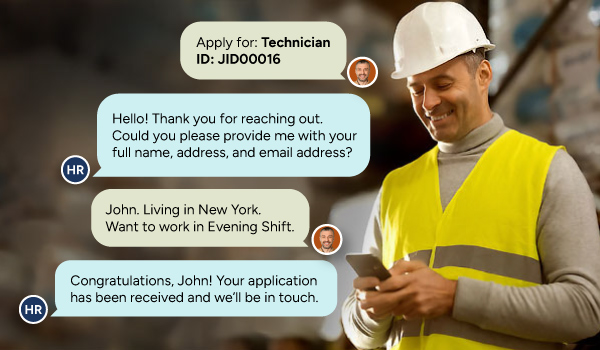
CloudApper’s conversational AI chatbot engages candidates instantly—whether they apply through your careers site, LinkedIn, Indeed, or via SMS to a text-to-apply number. For management roles, the AI conducts sophisticated screening conversations that assess both technical qualifications and leadership competencies.
The AI asks customized behavioral and situational questions like those above—evaluating P&L understanding, people leadership philosophy, change management experience, problem-solving approaches, and cultural fit. It can present complex scenarios: “Your assistant manager and a key department lead are in ongoing conflict that’s affecting team morale. Walk me through how you’d address this.” The AI evaluates responses for depth, strategic thinking, and alignment with your leadership values.
Key Features That Transform Store Management Hiring:
- 24/7 Intelligent Screening Conversations: CloudApper conducts in-depth screening interviews any time—critical when your candidates are currently managing stores and only have time to engage outside their work hours. The AI never gets tired, never has bias, and maintains consistently high-quality assessment.
- Leadership Competency Assessment: The AI evaluates candidates across customizable leadership dimensions—strategic thinking, people development, business acumen, adaptability, communication, results orientation—providing scored assessments that help you compare candidates objectively.
- Behavioral & Situational Questions: CloudApper asks STAR-format behavioral questions and presents realistic retail management scenarios, evaluating responses for quality, specificity, and demonstration of required competencies—far more predictive than resume screening.
- Passive Candidate Engagement: For hard-to-fill markets, CloudApper can engage passive candidates through text outreach campaigns, having personalized conversations about the opportunity and pre-qualifying interest before your team invests interview time.
- Automated Reference & Background Coordination: Once candidates progress, the AI coordinates reference checks and background screening, collecting information and scheduling conversations automatically—eliminating weeks of scheduling gymnastics.
- Multi-Location Hiring Visibility: For retail organizations hiring Store Managers across regions, CloudApper provides centralized visibility into all searches—who’s in-process, where bottlenecks exist, and which locations need support—enabling better resource allocation.
- Seamless ATS Integration: All candidate data, screening assessments, interview notes, and hiring decisions sync automatically with your existing ATS (Workday, Greenhouse, iCIMS, etc.), maintaining your workflow without duplicate data entry.
Real-World Impact:
A regional specialty retail chain with 80 stores implemented CloudApper AI Recruiter for their Store Manager and Assistant Store Manager hiring and reduced average time-to-hire from 58 days to 22 days. By engaging candidates immediately, conducting intelligent screening 24/7, and providing hiring teams with pre-assessed, qualified candidates, they cut recruiter workload by 60% while improving quality-of-hire metrics.
Their VP of Operations shared: “We were losing great Store Manager candidates because we couldn’t move fast enough—by the time we scheduled interviews, they’d accepted other offers. CloudApper changed everything. The AI screens candidates thoroughly, and we’re only interviewing people who’ve already demonstrated leadership thinking and cultural fit. Our District Managers are thrilled because they’re spending interview time with genuinely qualified candidates, not wasting hours on people who shouldn’t have made it past initial screening.”
Another national retail brand used CloudApper to fill 25 Store Manager positions across their expansion markets in under 90 days—something that previously would have taken six months and required external recruiting agency support. The AI handled initial screening for hundreds of applicants, presented the most qualified candidates to regional leaders, and maintained consistent assessment standards across all locations.
Ready to transform your Store Manager hiring? Explore CloudApper AI Recruiter here and see how retail organizations are identifying leadership talent faster and more effectively than ever before.
Stop Losing Store Leadership Talent to Slow Hiring
In retail management hiring, timing is everything. The best Store Managers and Assistant Store Managers—those with proven track records, strong business acumen, and excellent people leadership—are hired within 3-4 weeks of beginning their search. If your hiring process involves delayed responses, multiple interview rounds stretched over months, and poor candidate communication, you’re consistently losing top leadership talent to retailers who move faster.
CloudApper AI Recruiter gives you the competitive advantage. It delivers enterprise-grade recruiting automation with sophisticated leadership assessment capabilities, enabling you to identify and secure exceptional store leadership before your competitors even complete initial phone screens.
Your stores deserve leaders who drive results, develop teams, and elevate your brand. Your District Managers deserve qualified, pre-assessed candidates who are worth their interview time. And your talent acquisition team deserves technology that eliminates repetitive screening work so they can focus on relationship-building and strategic hiring.
Book a demo today and see how our AI can start screening Store Manager candidates within 48 hours. Let us show you how leading retailers are transforming their leadership hiring—one intelligent conversation at a time.
What’s your biggest challenge when hiring Store Managers or Assistant Store Managers? Drop a comment below—our team would love to hear from you and share proven strategies that are working for retail organizations facing similar leadership hiring challenges.
FAQ
Frequently Asked Questions About Store Manager Interview Questions & AI Recruiting
Q1: What are the most important Store Manager interview questions to ask?
A: The most important Store Manager interview questions assess business acumen, people leadership, problem-solving, and change management. Key questions include asking candidates to describe turning around underperforming stores, balancing corporate directives with local needs, reducing turnover and building teams, managing P&L and using data for decisions, handling difficult employee conversations, managing stress in demanding roles, implementing new technology and processes, making decisions under pressure, developing future leaders, and articulating motivation for the specific role. These questions reveal strategic thinking, operational excellence, and leadership capabilities essential for retail management success.
Q2: How can AI help with hiring Store Managers and Assistant Store Managers?
A: AI recruiting tools like CloudApper AI Recruiter automate and enhance Store Manager hiring through conversational chatbots that engage candidates 24/7 via SMS or web chat. The AI conducts sophisticated screening interviews with behavioral and situational questions, assesses leadership competencies like strategic thinking and people development, presents realistic retail management scenarios, engages passive candidates through personalized outreach, coordinates reference checks and background screening automatically, and provides centralized visibility across multi-location hiring. This reduces time-to-hire from 58 days to 22 days on average while improving quality-of-hire through consistent, bias-free assessment.
Q3: What should I look for in a strong Store Manager candidate’s answers?
A: Strong Store Manager answers demonstrate specific examples with measurable results, data-driven decision-making, strategic thinking balanced with operational execution, accountability for outcomes, people development focus, adaptability to change, clear communication skills, problem-solving methodology, cultural alignment with your brand values, and realistic understanding of retail management demands. Look for candidates who use metrics to describe performance improvements, take ownership of both successes and failures, show empathy balanced with accountability, and articulate clear approaches to common retail management challenges. The best answers reveal both business acumen and genuine leadership capability.
Q4: How long does it typically take to hire a Store Manager?
A: Traditional Store Manager hiring takes 45-60 days on average, but retail organizations using AI recruiting automation like CloudApper reduce this to 20-25 days. The biggest delays in traditional hiring come from slow candidate engagement (especially with passive candidates), multiple interview rounds stretched over weeks, scheduling difficulties with employed candidates, and manual coordination of references and background checks. AI eliminates these bottlenecks by engaging candidates instantly, conducting thorough initial screening 24/7, automating scheduling and coordination, and presenting only pre-qualified candidates to hiring teams.
Q5: Can CloudApper AI Recruiter assess leadership competencies for management roles?
A: Yes, CloudApper AI Recruiter is specifically designed to assess leadership competencies through sophisticated behavioral and situational interview questions. The AI evaluates candidates across customizable dimensions including strategic thinking, P&L management, people development, change management, problem-solving, communication, and cultural fit. It presents realistic retail management scenarios and evaluates response quality, depth, and alignment with your leadership values. Candidates receive scored assessments that enable objective comparison, and hiring teams receive detailed summaries showing strengths and potential concerns before investing interview time.
Q6: What’s the biggest challenge in Store Manager recruitment right now?
A: The biggest challenges are competing for passive candidates (most strong Store Managers are currently employed and not actively job-seeking), lengthy time-to-hire causing candidate drop-off, difficulty assessing true leadership capability through resumes alone, high cost-of-hire ($20,000+ including lost sales and training), leadership skills gap as experienced managers retire, and balancing speed with quality assessment. Traditional hiring processes can’t engage passive candidates effectively or move quickly enough to secure top talent before competitors. Additionally, poor Store Manager hires have outsized negative impact—affecting entire store performance, team turnover, and customer experience.
Q7: Does AI screening remove the personal touch from Store Manager hiring?
A: No—AI enhances rather than replaces the personal touch by handling time-consuming initial screening so your leadership team can focus on meaningful, in-depth conversations with pre-qualified candidates. CloudApper AI conducts the first-level assessment with consistent, thorough questioning that many recruiters don’t have time for given high requisition loads. Your District Managers, Regional Directors, and HR leaders then conduct personal interviews with candidates who’ve already demonstrated baseline qualifications and leadership thinking. This makes the process more efficient and more personal—candidates get immediate engagement from AI, then meaningful human interaction at appropriate stages. The result is better candidate experience and better hiring outcomes.
Q8: How does CloudApper AI Recruiter ensure fair, unbiased Store Manager screening?
A: CloudApper AI asks every candidate identical questions in the same conversational tone, evaluating responses based purely on content—leadership competency demonstration, business acumen, strategic thinking, and cultural fit indicators—not on subjective factors like appearance, gender, age, accent, or interviewer mood. This creates more equitable assessment while maintaining compliance with EEOC guidelines. The AI focuses on what candidates have accomplished, how they think about retail management challenges, and how they articulate their leadership approach. All assessments are documented and auditable, providing transparency throughout the hiring process. This bias-free screening often surfaces strong candidates who might be overlooked in traditional resume-screening processes.

What is CloudApper AI Platform?
CloudApper AI is an advanced platform that enables organizations to integrate AI into their existing enterprise systems effortlessly, without the need for technical expertise, costly development, or upgrading the underlying infrastructure. By transforming legacy systems into AI-capable solutions, CloudApper allows companies to harness the power of Generative AI quickly and efficiently. This approach has been successfully implemented with leading systems like UKG, Workday, Oracle, Paradox, Amazon AWS Bedrock and can be applied across various industries, helping businesses enhance productivity, automate processes, and gain deeper insights without the usual complexities. With CloudApper AI, you can start experiencing the transformative benefits of AI today. Learn More
- Useful Links:
- Agentic AI
- No-Code/Low-Code
- Custom Software
- HCM Personalization
- iPaaS
- FedRAMP
CloudApper AI Solutions for HR
- Works with








- and more.
Similar Posts

How to Assess Candidate Communication Skills Before the First Interview
How to Reduce Interview Rounds Without Lowering Your Hiring Standards