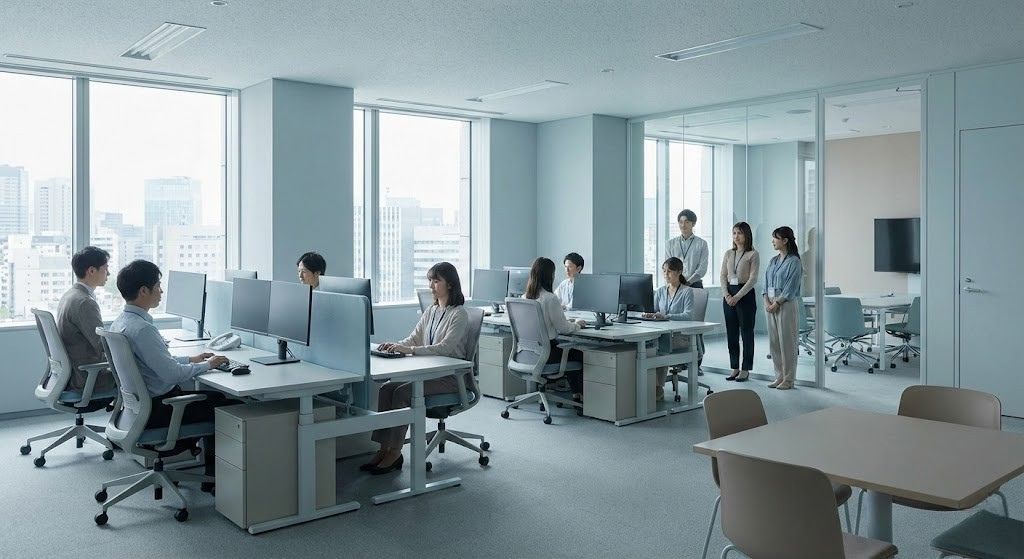
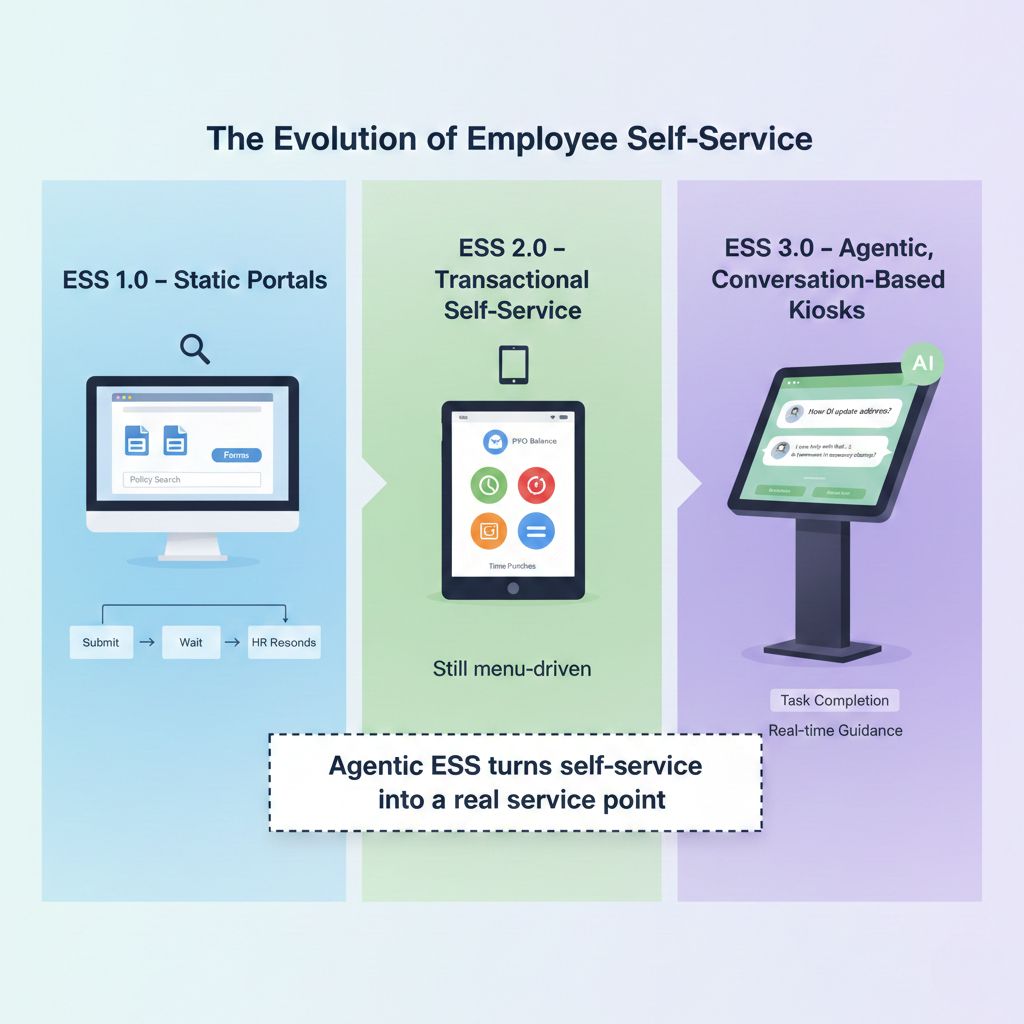
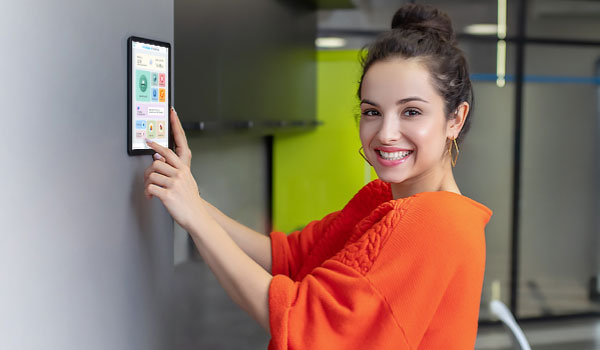
Employee self-service is shifting from search-based portals to conversation-driven, agentic kiosks that guide employees through real HR decisions in real time. This change is especially critical for deskless workers in manufacturing and retail, where access and timing matter most. CloudApper hrPad brings this model to life by turning shared devices into secure, AI-powered HR service delivery points.

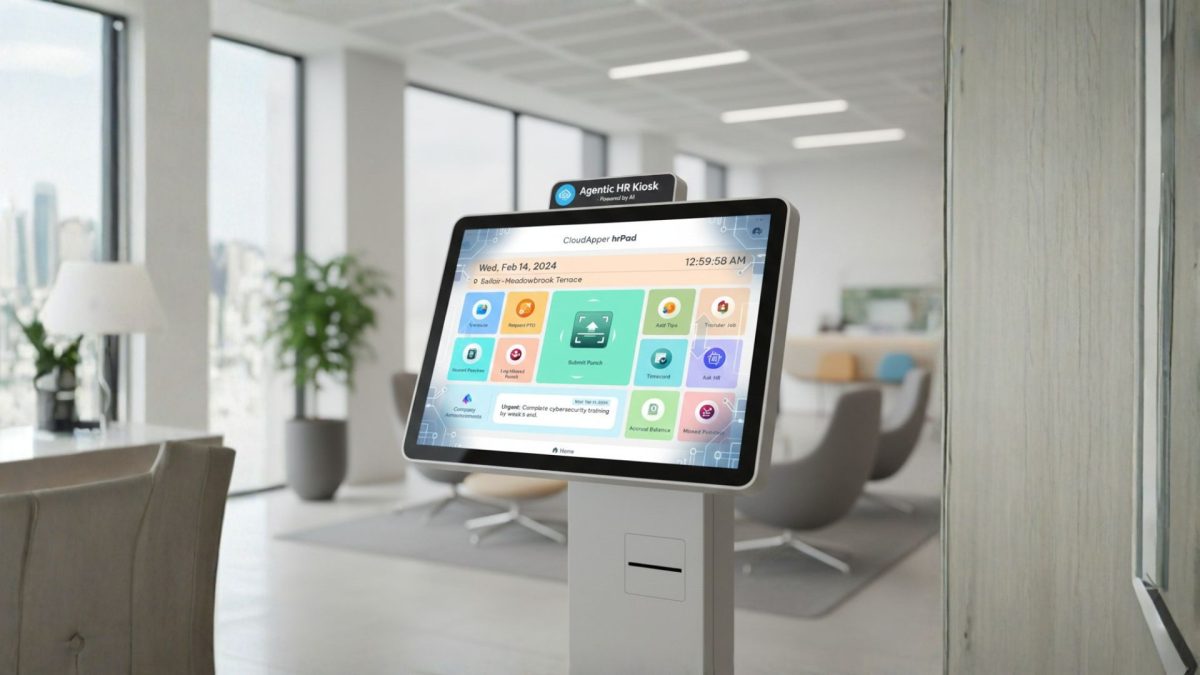
Table of Contents
- What is an “agentic” employee self-service kiosk?
- Why is this trend accelerating in manufacturing and retail
- The HR impact: from ticket handling to talent strategy
- What “agentic” looks like in real employee moments
- Why “conversation-based” beats “search-based” for deskless teams
- Implementation checklist for HR and Ops
- Closing thought
Employee self-service (ESS) is changing fast. For years, “self-service” mostly meant a portal where employees searched for policies, filled out forms, and waited for HR to respond. Now the model is shifting toward conversation-based, agentic self-service kiosks that can proactively guide employees through decisions in real time, using natural language instead of menus and PDFs. This matters most in manufacturing and retail, where deskless employees need quick answers at the point of work, not an email thread.

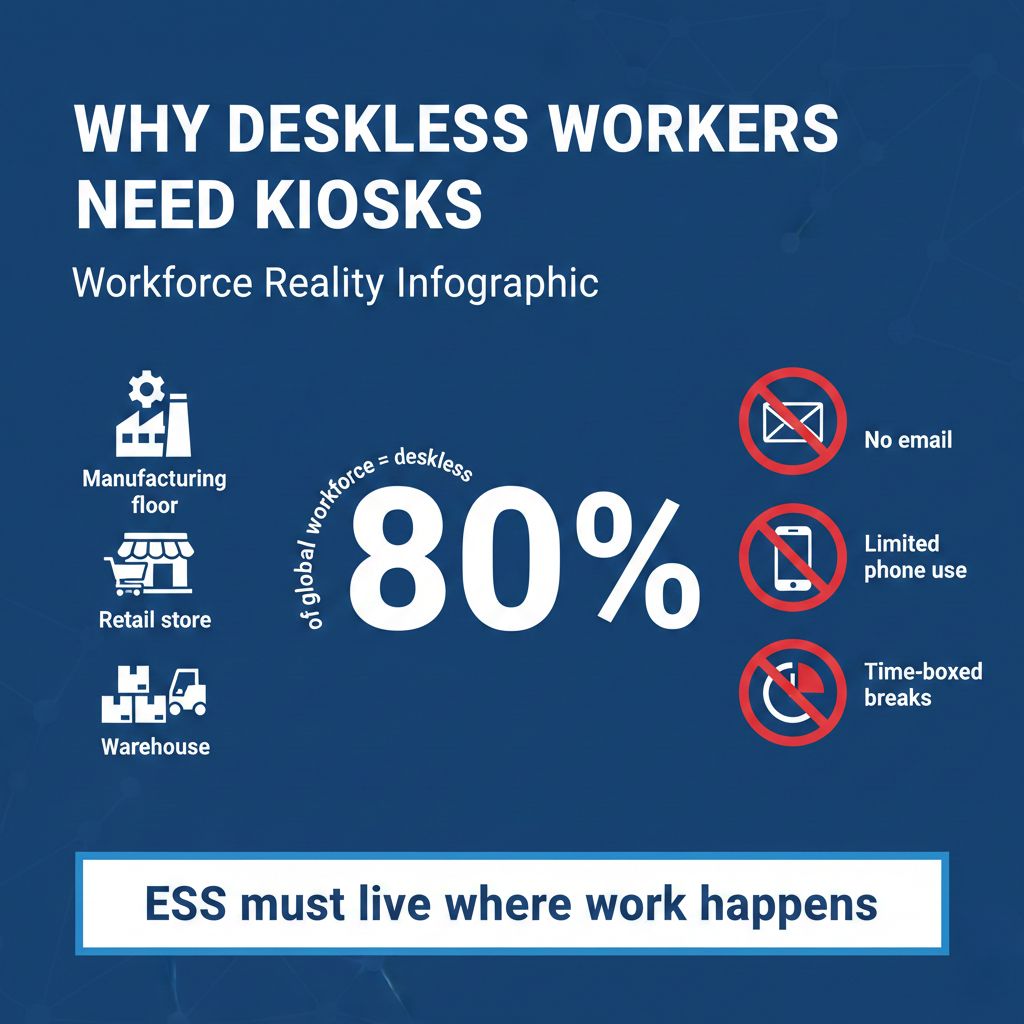
And it’s not a niche problem. Many sources estimate that deskless workers make up roughly 80% of the global workforce, meaning most employees don’t sit at a desk with a corporate portal open all day.
This is precisely where CloudApper hrPad shows up naturally: it turns everyday tablets (and other shared devices) into a secure employee self-service kiosk with AI Agents for HR service delivery (HRSD), so frontline teams can clock in, request PTO, manage shifts, and get HR answers without waiting on HR.
What is an “agentic” employee self-service kiosk?
An agentic ESS kiosk is a kiosk that does more than display options. It can:
- Understand an employee’s question in plain language.
- Ask follow-up questions if something is unclear.
- Apply your rules and policies to that employee’s situation.
- Guide them to the right action (request, form, workflow).
- Complete the task end-to-end, or route it with the proper context.
Think of the difference like this:
- Search-based kiosk: “Here are 14 PTO articles. Good luck.”
- Conversation-based kiosk: “You want to save 1 week for December. How many hours do you currently have, and do you mean paid vacation or personal time?”
hrPad is built around that “conversation-first” experience, with AI-based HR assistance and configurable workflows so the kiosk becomes a real service point, not just a screen on the wall.
Why is this trend accelerating in manufacturing and retail
Frontline environments have three realities that office-first ESS tools often miss:
- Employees need answers in the moment.
Shift starts, break windows, overtime thresholds, and attendance rules don’t wait until “HR office hours.” A kiosk placed near entrances, break rooms, or back offices makes help available where work happens. - Access is uneven.
Many deskless workers don’t have corporate email, don’t have time to navigate portals, or may not be allowed to use personal phones on the floor. A shared kiosk levels access across the workforce. - The questions are repetitive, but the context is not.
PTO, benefits after life events, schedule swaps, missed punches, and policy questions come up constantly. The topic is repetitive, but the employee’s scenario changes. That’s where conversation + policy logic is far more helpful than a FAQ list.
The HR impact: from ticket handling to talent strategy
When ESS becomes conversation-based and task-completing, HR shifts from being the “help desk” to being the owner of higher-value work: coaching managers, improving retention, and strengthening workforce planning.
A standard efficiency benchmark in ESS discussions is that self-service can materially reduce HR admin time. For example, Tellent notes that administrative activities can consume a large share of HR time and that employee self-service can reduce workload significantly in many organizations.
CloudApper frames hrPad’s impact similarly: hrPad is positioned to reduce repetitive inquiries and routine workload by moving everyday actions (PTO checks, schedule visibility, HR Q&A) to a kiosk experience that employees can use independently.
You also referenced “up to 75%” reduction. hrPad’s own product page makes a closely related claim about cost savings compared to other kiosk approaches, noting that organizations “can save up to 75% compared to other HR kiosks,” which aligns with the broader theme that modern kiosk models reduce administrative friction and costs.
What “agentic” looks like in real employee moments
Here are a few examples that show why agentic kiosks feel fundamentally different than traditional ESS:
Example 1: PTO planning (the one employees actually ask)
Employee: “How much PTO can I take if I want to save a week for December?”
An agentic kiosk can:
- Check the accrual balance and the upcoming accrual schedule (based on your system/policy)
- Clarify what “a week” means (hours, workweek definition, shift pattern)
- Recommend a PTO plan (“You can take up to X hours now and still keep 40 hours for December, assuming no additional requests.”)
- Offer the button to submit the request immediately
.
hrPad supports the underlying mechanics employees need here: PTO balance checks, accrual visibility, and time-off requests, designed for kiosk self-service.
Example 2: Benefits after a life event
Employee: “What are my benefits options after a life event?”
A strong agentic flow can:
- Ask what changed (marriage, child, loss of coverage)
- Confirm timing windows.
- Show the following steps and required documentation.
- Route the request with the correct details.
Even when your benefits system lives elsewhere, the kiosk can still become the guided entry point, reducing confusion and back-and-forth.
Example 3: Overtime questions that usually become payroll disputes
Employee: “If I stay late today, will I hit overtime?”
hrPad highlights overtime and complex payroll calculations as a core self-service automation area, which is precisely what employees ask for before they commit to extra hours.
The “agentic kiosk” feature set HR should actually care about
If you’re evaluating this trend, here’s what tends to matter in practice (not just in demos):
1) Identity verification that fits frontline reality
Agentic kiosks are only helpful if they’re secure and personalized. hrPad supports identity verification, including touchless Face ID, plus options like QR codes, barcodes, NFC, and more—helpful for both accuracy and privacy.
2) Workflow completion, not just answers
Employees don’t just want an explanation. They want the kiosk to help them finish the task. hrPad emphasizes configurable workflows for time capture, PTO requests, shift actions, forms, and more.
3) Shift and attendance actions where delays hurt operations
hrPad explicitly supports shift workflows like bid, swap, and confirm shifts, which are daily needs in retail and manufacturing.
4) Location-aware rules for multi-site operations
In the real world, policies differ by location, cost center, or job role. hrPad includes geofencing to automate cost-center transfers and increase accountability, which is especially relevant in distributed frontline environments.
5) Integrations that don’t force you to replace your HR stack
A kiosk shouldn’t create a second “source of truth.” hrPad positions itself as HR-system-agnostic and lists integrations across common HCM ecosystems (UKG, ADP, Workday, SAP, Oracle, and more).
Why “conversation-based” beats “search-based” for deskless teams
Search-based ESS assumes:
- Employees know the right keyword
- They have time to read
- They can interpret policy language
- They won’t give up halfway
Conversation-based ESS assumes:
- Employees will ask naturally
- The system should guide them
- The answer must fit their scenario
- The next step should be one tap away
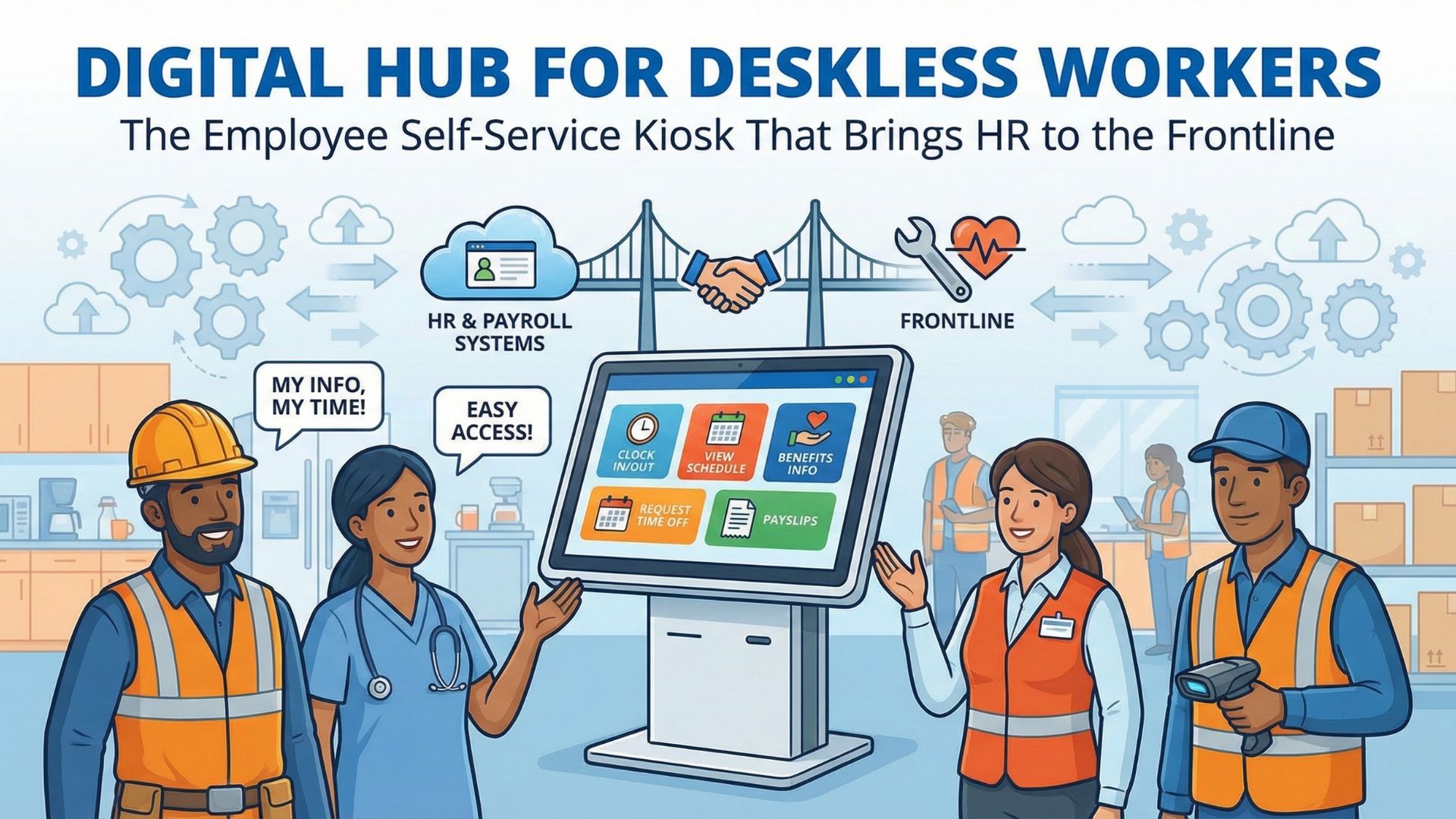
CloudApper’s own content frames this evolution as kiosks becoming a “Digital Hub” for deskless workers, expanding beyond timekeeping into PTO, scheduling, pay questions, and HR support.
Implementation checklist for HR and Ops
You can deploy an agentic kiosk strategy without making it a massive transformation project. The key is sequencing:
- Start with the top 10 HR questions (PTO, pay dates, attendance, schedule, benefits basics)
- Add 2–3 high-volume workflows (PTO request, schedule confirm/swap, missed punch flow)
- Standardize identity verification (Face ID or badge-based, depending on site constraints)
- Decide where kiosks live (entrances, breakrooms, back office) and who owns the content
- Measure outcomes: ticket reduction, time-to-resolution, payroll corrections, adoption rate
This aligns with hrPad’s positioning as a flexible kiosk experience that can grow from timekeeping into a broader frontline HR service point.
Closing thought
Agentic self-service kiosks are not about replacing HR. They’re about putting HR services where the work happens, in a format that matches how employees actually ask for help: in plain language, with immediate next steps.
If you’re looking for a practical way to move from “search-based ESS” to “conversation-based HR service delivery” on the frontline, CloudApper hrPad is a natural fit because it combines kiosk-based self-service with AI assistance, identity verification, shift workflows, and integrations across major HCM ecosystems.
What is CloudApper AI Platform?
CloudApper AI is an advanced platform that enables organizations to integrate AI into their existing enterprise systems effortlessly, without the need for technical expertise, costly development, or upgrading the underlying infrastructure. By transforming legacy systems into AI-capable solutions, CloudApper allows companies to harness the power of Generative AI quickly and efficiently. This approach has been successfully implemented with leading systems like UKG, Workday, Oracle, Paradox, Amazon AWS Bedrock and can be applied across various industries, helping businesses enhance productivity, automate processes, and gain deeper insights without the usual complexities. With CloudApper AI, you can start experiencing the transformative benefits of AI today. Learn More
- Useful Links:
- Agentic AI
- No-Code/Low-Code
- Custom Software
- HCM Personalization
- iPaaS
- FedRAMP
Brochure
CloudApper hrPad
Empower Frontline Employees with an AI-Powered Tablet/iPad Solution
Download Brochure
CloudApper AI Solutions for HR
- Works with







- and more.
Similar Posts
How to Notify Frontline Employees About Unpaid Leave Before They…
Why UKG Pro Employee Self Service Adoption Struggles and How…