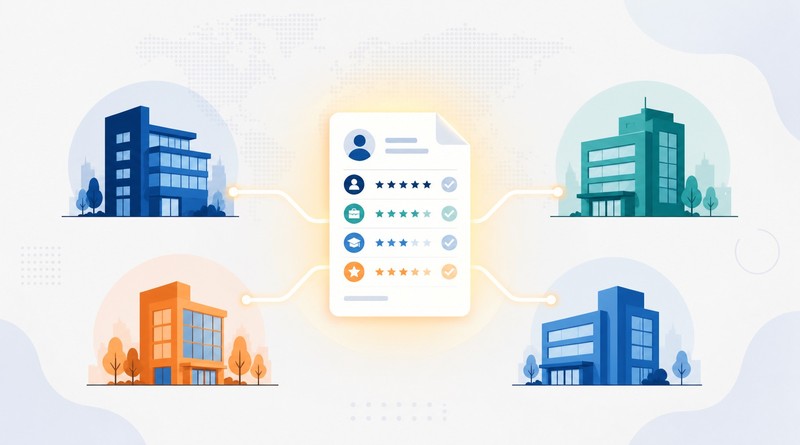
Slow hiring isn’t one issue—it’s stacked delays across intake, screening, engagement, scheduling, and approvals. This guide breaks down the causes of slow hiring using recruiter metrics like time-to-first-touch, time-to-screen, time-to-schedule, and time-to-offer, with practical fixes for both high-volume and professional roles.


Table of Contents
- What “slow hiring” actually means in operational terms
- The causes of slow hiring that show up every day
- A quick diagnostic checklist
- Causes of slow hiring and how to fix them faster
Hiring teams don’t wake up intending to move slowly. Slow hiring usually happens when tiny delays stack up across intake, screening, engagement, scheduling, and offers—until your time-to-fill quietly doubles and the best candidates disappear. If you’re seeing longer time-to-first-touch, rising interview no-shows, and heavier candidate drop-off, you’re already living the causes of slow hiring—even if every individual step feels “reasonable” on its own.
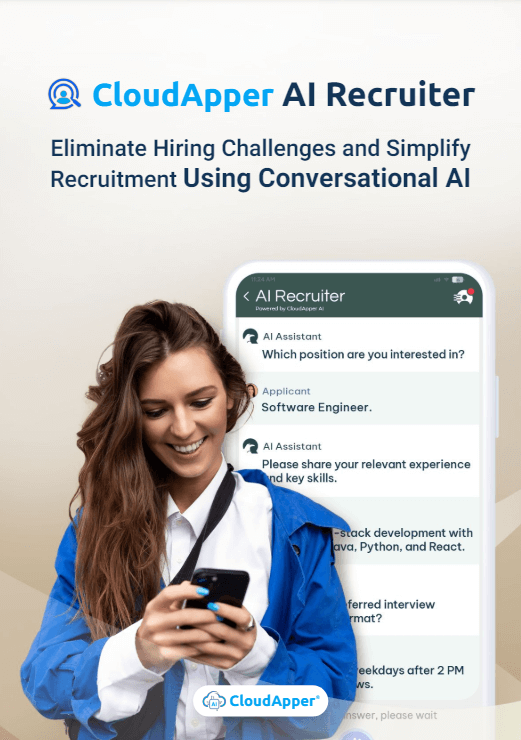
One practical way teams reduce repeatable delays is by using CloudApper AI Recruiter to automate the parts of hiring that don’t need a human bottleneck: resume screening, pre-screening, candidate scoring/ranking, interview scheduling, reminders and follow-ups, candidate engagement, and offer letter generation. It runs alongside your existing ATS/HRIS/TA stack (no messy migration), pulls resumes from the ATS, syncs updates, and can integrate with platforms like UKG, Workday, Oracle, Dayforce, & more.
What “slow hiring” actually means in operational terms
“Slow” isn’t just a feeling. It shows up in a handful of measurable timestamps that tell you where the process is leaking time.
Time-to-first-touch is the gap between application and your first real interaction (not an auto-confirmation email). In high-volume roles, this is often the biggest driver of candidate drop-off because applicants apply to multiple jobs and respond to whoever moves first.

Time-to-screen is how long it takes to get a candidate from application to a pass/fail decision on basic qualifications. When this stretches, recruiters start “batch processing” applicants, and your queue becomes a backlog.
Time-to-schedule measures how long it takes to book the first interview or hiring manager conversation. This is where a lot of teams lose momentum due to calendar friction and back-and-forth.
Time-to-offer and time-to-close are your last-mile indicators. If you’re fast early but slow at approvals, comp alignment, or background checks, your best candidates still get away. When you map each timestamp to a stage, the causes of slow hiring stop being a mystery and become a solvable queue problem.
A simple rule: if you can’t point to which metric is lagging, you’ll end up “fixing” the wrong thing—usually by asking recruiters to work harder instead of changing the process.
The causes of slow hiring that show up every day
Below are the most common bottlenecks, how they look in real life, why they happen, and the most practical fixes for teams that are short on time and juggling volume.
Unclear intake and shifting requirements
What it looks like day-to-day: a requisition opens with a vague job description, and the hiring manager “clarifies” the role over the next two weeks. The recruiter screens for one set of criteria, then gets a message like, “Actually, we need weekend availability,” or “Now we want someone with experience in X system.” Suddenly your early pipeline is “wrong,” and you start over.
Why it happens: intake meetings get rushed. Hiring managers don’t define must-haves versus nice-to-haves. For professional roles (finance, HR, engineering), stakeholders disagree on what “good” means. For high-volume roles (retail, hospitality, logistics), managers underestimate how requirements like schedule flexibility or certification filters shrink the pool.
Practical fix: force clarity early with a short intake template that defines (1) must-haves, (2) deal-breakers, (3) what you’ll train, and (4) the target decision timeline. Then set a “change control” rule: if requirements change after screening begins, something else must change too—pay range, timeline, or screening volume. If not, you’re just moving the goalposts.
CloudApper AI Recruiter can support this by aligning screening questions and scoring rules directly to the job criteria you define, so when intake is clear, the process stays consistent.

Manual resume screening and inconsistent qualification rules
What it looks like day-to-day: resumes pile up, recruiters skim in bursts, and two recruiters make different decisions on the same profile. In high-volume roles, qualified candidates get buried under volume. In professional roles, you lose time debating “potential” versus “experience,” and the shortlist takes forever.
Why it happens: manual screening doesn’t scale. Qualification rules live in people’s heads, not in a repeatable system. Teams also over-rely on keyword matching, which misses context (e.g., equivalent titles, transferable experience) and lets keyword-stuffed resumes slip through.
Practical fix: define a simple scoring rubric tied to the job requirements and use it for every applicant. Keep it configurable, not complicated—think weighted criteria like required certification, shift availability, relevant tenure, and critical skills. Then audit decisions weekly: if your shortlist quality is inconsistent, your rubric is unclear.
CloudApper AI Recruiter helps here with contextual resume analysis (not just keywords) to evaluate fit against criteria and assign configurable scores, making screening faster and more consistent without turning the process into guesswork.
Slow candidate engagement and delayed follow-ups
What it looks like day-to-day: applicants come in at night and on weekends, but recruiter follow-up starts next business day—sometimes two days later. For retail, healthcare support, and call centers, that delay is often the difference between booking an interview and getting ghosted. Candidates message back with questions, but responses lag because the team is slammed. In high-volume markets, the causes of slow hiring are often just a few unattended hours that turn into days of silence for candidates.
Why it happens: engagement is treated as a “when I have time” task. Teams don’t have a structured follow-up cadence. Recruiters also hesitate to move fast because screening isn’t complete, so candidates sit in limbo.
Practical fix: commit to a time-to-first-touch SLA by role type. High-volume roles often need same-day or near-immediate touch to prevent drop-off. Professional roles can tolerate longer, but consistency still matters. Also use a standard follow-up sequence (reminders, next steps, expectations) so candidates aren’t guessing.
CloudApper AI Recruiter can run engagement workflows 24/7 via SMS, chat, and email, reducing candidate waiting time and keeping momentum even when your team is offline.
Scheduling chaos and interview friction
What it looks like day-to-day: endless email threads, reschedules, missed calendar invites, and candidates who stop responding after the third “What time works?” message. For hourly roles, the problem gets worse because candidates may have limited availability or changing shifts. For professional roles, interviewer calendars are packed, and you lose days just finding overlap.
Why it happens: scheduling is often the most manual part of the process. Interviewer availability isn’t centralized, and recruiters become human routers. On top of that, candidates don’t show because reminders are inconsistent or the process feels disorganized.
Practical fix: standardize interview blocks and reduce options. Instead of open-ended scheduling, offer a small set of pre-approved times. Use reminders that go out automatically, and confirm the interview with a simple “reply Y to confirm” flow to reduce no-shows.
CloudApper AI Recruiter automates interview scheduling, reminders, and follow-ups, which helps cut time-to-schedule and reduces the back-and-forth that drains recruiter capacity.
Hiring manager delays and decision drift
What it looks like day-to-day: interviews happen, but feedback doesn’t. Candidates sit in “pending” while hiring managers travel, handle operational fires, or wait for a perfect comparison candidate. Meanwhile, the candidate you liked takes another offer.
Why it happens: hiring managers aren’t measured on hiring speed, but recruiters are. Feedback loops are vague (“They seem fine”) and decisions get pushed until a meeting that keeps moving. For professional roles, consensus hiring adds more stakeholders and more delay.
Practical fix: set a feedback deadline tied to the interview invite. Make it easier to give feedback than to postpone it—use a short structured format: strong yes / yes / no, plus one or two job-related reasons. If feedback isn’t submitted, the process pauses by design (no new interviews scheduled) so the delay becomes visible.
CloudApper AI Recruiter can help keep steps consistent with workflow automation and dashboards, so stalled stages don’t hide in inboxes.

Too many requisitions per recruiter
What it looks like day-to-day: recruiters triage instead of recruit. They focus on urgent roles, leaving other reqs untouched. Candidates experience delays, and hiring managers complain louder, which drives more reactive work. In high-volume environments, a single recruiter may be juggling multiple locations, roles, and hiring events at once.
Why it happens: capacity planning is often reactive. Teams don’t separate high-volume workflows (where automation and speed matter most) from specialized roles (where deeper evaluation matters). Recruiters end up doing the same repetitive steps for every candidate.
Practical fix: segment your hiring process by role type. Use faster, consistent screening for high-volume roles, and reserve recruiter attention for exceptions and relationship-heavy steps. Also track workload with a simple “active reqs per recruiter” and “candidates awaiting action” view so leaders see capacity issues before quality drops.
CloudApper AI Recruiter can reduce repetitive workload by automating screening, scoring, engagement, scheduling, and offer letter generation, allowing recruiters to spend time on high-impact decisions rather than chasing steps.
Assessment problems: false positives, “good talkers,” and AI-generated content
What it looks like day-to-day: candidates interview well but can’t perform. Or you get resumes that look perfect—yet don’t align with how the person answers scenario questions. In professional roles, you may see polished responses that don’t match depth. In high-volume roles, you may see inconsistent stories about attendance, reliability, or experience.
Why it happens: many assessments test presentation, not thinking. Resume and pre-screen answers can be optimized for keywords. Real-time AI assistance can make candidates sound stronger than they are. That leads to false positives that slow hiring because teams lose trust in their funnel and add more steps “just to be safe.”
Practical fix: use scenario-based questions that require consistency and applied reasoning. Instead of “Do you have customer service experience?” ask for a specific situation, what they did, and what they’d do differently. For logistics: “A delivery route is behind schedule and a customer is upset—walk me through your next three actions.” For healthcare support: “A patient is anxious and you’re short-staffed—how do you prioritize?” For engineering: “You inherit a brittle system—how do you reduce risk while delivering features?” These questions reveal real thinking and reduce the need for extra rounds. For professional roles, the causes of slow hiring frequently hide inside “extra” evaluation steps that add time but not signal.
CloudApper AI Recruiter can detect AI-based cheating in resumes and pre-screening by verifying claims with personalized, scenario-based questions, and it can reduce the impact of real-time AI assistance during interviews/assessments by focusing on how a candidate thinks—testing soft skills, problem-solving, and consistency.
Last-mile bottlenecks: background checks, compensation alignment, and offer approvals
What it looks like day-to-day: you finally pick the candidate, then the offer sits. Comp needs approval. Background checks take longer than expected. The candidate asks for updates, and your team scrambles for status. In high-volume roles, a delay here causes immediate fall-off. In professional roles, extended negotiation plus internal approvals can turn into weeks.
Why it happens: last-mile steps often live outside recruiting’s direct control. Different teams own different approvals, and timelines aren’t transparent. Also, offer content can be manual and inconsistent, which creates rework and compliance risk.
Practical fix: define standard approval paths and “fast lanes” for common roles. Pre-align comp bands before the finalist stage. Create a standard offer package template so you’re not reinventing the offer letter each time. Track time-to-offer approval as a metric, not a complaint.
CloudApper AI Recruiter can generate offer letters using templates and workflow rules, reducing rework and speeding up the final step once decisions are made.
A quick diagnostic checklist
Use this checklist to pinpoint where your process is slowing down before you redesign everything.
- If time-to-first-touch is high, your engagement is too manual or limited to business hours.
- If time-to-screen is high, screening rules are unclear or volume is overwhelming your team.
- If time-to-schedule is high, scheduling is too flexible and interviewer availability isn’t structured.
- If candidate drop-off spikes after apply, your application is too long or your follow-up is too slow.
- If interview no-shows are high, reminders and confirmations are inconsistent or scheduling is too far out.
- If time-to-offer is high, approvals and comp alignment are the constraint, not sourcing.
- If quality feels unpredictable, your assessments reward polish over proof and consistency.

Causes of slow hiring and how to fix them faster
The fastest improvement usually comes from fixing the earliest bottleneck that affects the most candidates. That’s why diagnosing with time-to-first-touch, time-to-screen, and time-to-schedule matters more than debating “recruiter effort.” Most teams don’t need more steps—they need fewer delays, clearer rules, and consistent execution. These are the causes of slow hiring that create compounding drag, and they’re solvable when you treat the process like an operating system, not a series of one-off tasks.
Common pattern: high-volume roles vs. professional roles
High-volume hiring (retail, hospitality, logistics, call centers, healthcare support) usually breaks down on speed and follow-through. Candidates apply outside business hours, schedules change fast, and waiting even a day can double drop-off. Fixes that matter most: 24/7 engagement, faster screening decisions, structured scheduling, and consistent reminders.
Professional hiring (HR, finance, engineering) usually breaks down on clarity and decision loops. Stakeholders disagree on requirements, interviews are hard to schedule, and feedback drifts. Fixes that matter most: tighter intake, structured evaluation criteria, faster feedback deadlines, and removing extra rounds that don’t add signal.
Quick Answers
What’s the #1 cause of slow hiring?
In most teams, it’s delayed action at the top of the funnel: slow time-to-first-touch and time-to-screen. When candidates wait, they drop or take other offers, and your team spends more time backfilling the pipeline.
How do you reduce candidate drop-off in high-volume roles?
Reduce friction and waiting. Offer easier apply options (like text/QR/chat), follow up quickly, and keep scheduling simple. Candidates in hourly markets respond to speed and clarity.
How can teams screen faster without sacrificing quality?
Use consistent criteria and scenario-based verification. Faster doesn’t mean sloppy—it means fewer subjective decisions and less rework caused by inconsistent rules. Contextual resume analysis plus structured questions helps keep screening both fast and fair.
Why does scheduling slow everything down?
Because it’s the step most teams still run manually. Back-and-forth messages, interviewer calendar constraints, and reschedules add days. Automating scheduling and reminders reduces time-to-schedule and interview no-shows.
How do you stop hiring manager delays from stalling offers?
Set feedback deadlines and simplify feedback. If feedback takes longer than the interview itself, your process is misaligned. Short, structured evaluation questions reduce decision drift and keep candidates moving.
How do you handle AI-generated resumes and rehearsed answers?
Shift from keyword checks to proof. Use personalized, scenario-based questions that test consistency and applied thinking. When the evaluation requires real reasoning, cheating becomes harder and signal improves.
What should you track weekly to diagnose slow hiring?
Time-to-first-touch, time-to-screen, time-to-schedule, time-to-offer, candidate drop-off by stage, and interview no-show rate. These metrics tell you exactly where the delay lives and whether your fixes are working.
Bringing it all together
Slow hiring isn’t one problem—it’s a chain reaction. Intake ambiguity creates screening confusion. Screening delays reduce engagement speed. Scheduling friction increases drop-off and no-shows. Hiring manager drift stretches decisions. Last-mile approvals turn offers into waiting games. Those are the causes of slow hiring that quietly burn time, recruiter energy, and candidate trust.
The highest-impact fixes are the ones that remove repeatable delays: tighten intake, standardize evaluation criteria, engage candidates quickly (including outside business hours), make scheduling structured and automated, and bring transparency to last-mile approvals. When you diagnose using time-to-first-touch, time-to-screen, time-to-schedule, and time-to-offer, you’ll know exactly what to fix first—and you’ll see faster shortlists, less drop-off, and better quality outcomes as a result.
What is CloudApper AI Platform?
CloudApper AI is an advanced platform that enables organizations to integrate AI into their existing enterprise systems effortlessly, without the need for technical expertise, costly development, or upgrading the underlying infrastructure. By transforming legacy systems into AI-capable solutions, CloudApper allows companies to harness the power of Generative AI quickly and efficiently. This approach has been successfully implemented with leading systems like UKG, Workday, Oracle, Paradox, Amazon AWS Bedrock and can be applied across various industries, helping businesses enhance productivity, automate processes, and gain deeper insights without the usual complexities. With CloudApper AI, you can start experiencing the transformative benefits of AI today. Learn More
- Useful Links:
- Agentic AI
- No-Code/Low-Code
- Custom Software
- HCM Personalization
- iPaaS
- FedRAMP
CloudApper AI Solutions for HR
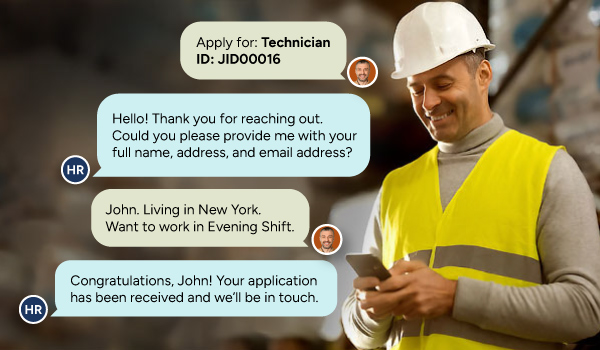

- Works with








- and more.
Similar Posts

The Real Cost of Interview No-Shows, and How Automated Reminders…
Verify Required Certifications and Licenses Without Slowing Down Screening