Application Inflation in Hiring has turned applicant volume into noise. As AI-driven auto-apply tools overwhelm ATS systems, recruiters are rethinking early screening, identity verification, and how to restore trust and signal in the hiring process.

Table of Contents
- What Is Application Inflation in Hiring and Why It Matters
- Why Resume-Based Screening No Longer Works
- The Signal-to-Noise Crisis Recruiters Are Facing
- Why Hiring Is Shifting Back Toward Friction
- Application Inflation in Hiring Is Forcing Identity Back Into the Funnel
- How Modern Teams Restore Signal Without Slowing Hiring
- What Hiring Leaders Should Change Now
- The Long-Term Impact of Application Inflation in Hiring
- Better Signals, Not More Applications
Application Inflation in Hiring is no longer a future risk or a niche problem limited to tech roles. It is now a daily reality for recruiters across industries. The widespread availability of candidate-side AI tools that can automatically apply to hundreds of jobs in minutes has fundamentally changed the hiring landscape. What once looked like healthy applicant volume has turned into an overwhelming flood of low-quality, low-intent submissions. Recruiters are not struggling because they lack applicants. They are struggling because they cannot reliably tell which applicants are real, engaged, and qualified.
This shift has triggered a deeper crisis than most organizations expected. Traditional hiring signals such as resumes, keywords, and application completion have lost their meaning. In response, hiring teams are being forced to rethink how they screen candidates, how early they verify authenticity, and how much friction is actually necessary to protect hiring quality.
This article explores how application inflation emerged, why it has broken conventional applicant tracking systems, and why hiring is now moving back toward verified, human-centric interactions early in the funnel.
What Is Application Inflation in Hiring and Why It Matters
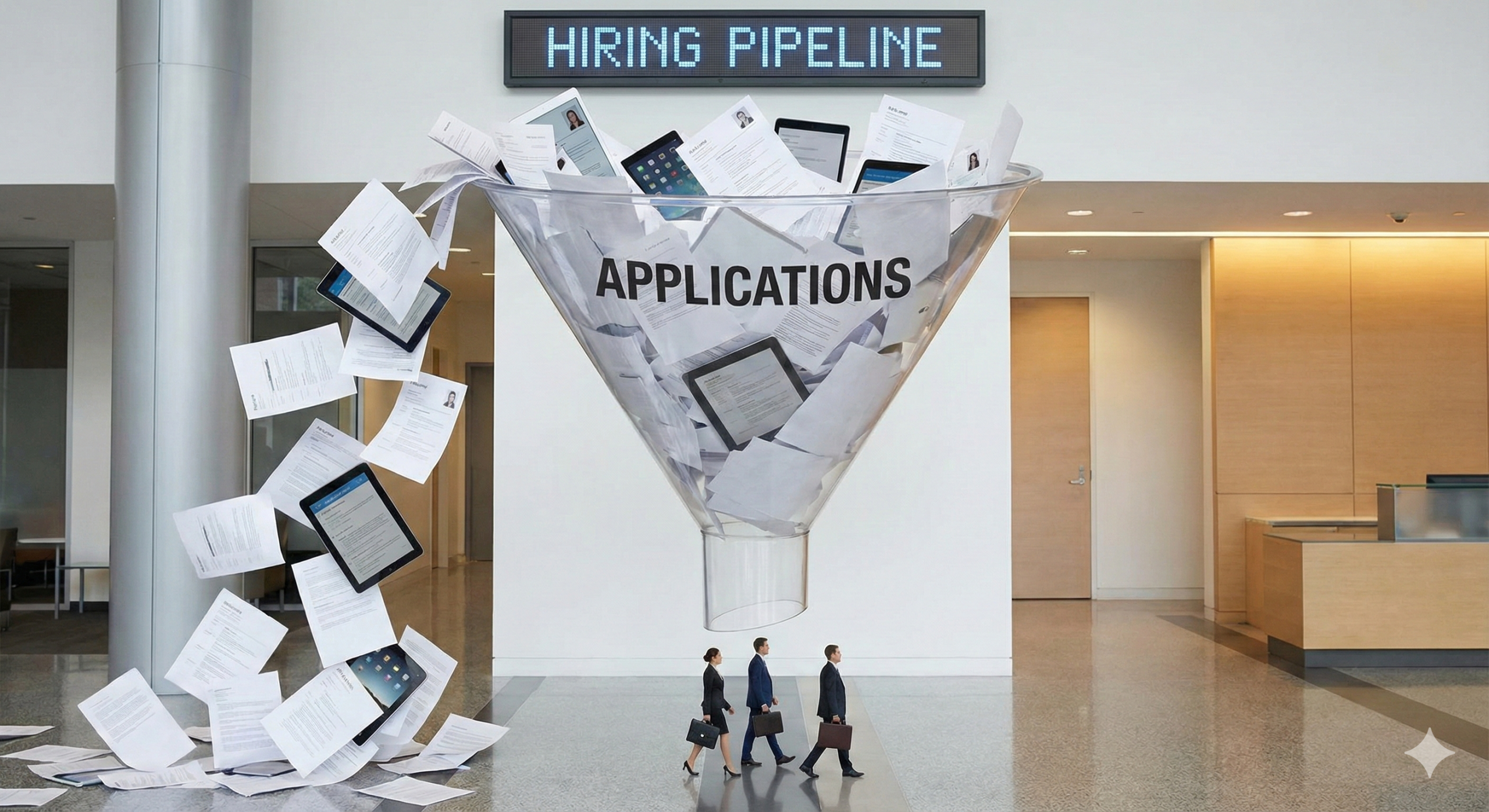
Application Inflation in Hiring refers to the rapid increase in job applications driven not by genuine job seekers, but by automation. Candidate-side AI tools can scrape job boards, tailor resumes at scale, and submit applications with little or no human involvement. From the outside, it appears that interest in open roles has exploded. In reality, the number of serious candidates has not increased at the same pace.
This matters because hiring systems were never designed for this kind of volume. Applicant tracking systems assume that submitting an application represents intent, effort, and availability. Those assumptions no longer hold. When applying costs almost nothing, application volume becomes a weak signal at best and a misleading one at worst.

The result is a hiring funnel filled with activity but lacking clarity. Recruiters are spending more time filtering, screening, and rejecting than engaging with truly qualified candidates. Meanwhile, strong applicants are getting lost in the noise, experiencing slower responses and longer hiring cycles.
Why Resume-Based Screening No Longer Works
For years, resumes served as the primary filter in hiring. Keywords, titles, and formatting helped recruiters quickly assess fit. Today, resumes are often generated or heavily optimized by AI. Two candidates may submit nearly identical resumes despite vastly different levels of experience or interest.
Keyword-based filters, once a time-saver, now amplify the problem. AI-generated resumes are exceptionally good at matching job descriptions. This creates a surge of false positives that pass automated screening while adding little value to the hiring process.
Recruiters report spending hours reviewing resumes that look perfect on paper but fail basic follow-up questions. The issue is not that resumes are useless. It is that resumes alone can no longer confirm authenticity, availability, or motivation.
When hiring decisions rely too heavily on static documents, the system becomes easy to game and difficult to trust.
The Signal-to-Noise Crisis Recruiters Are Facing
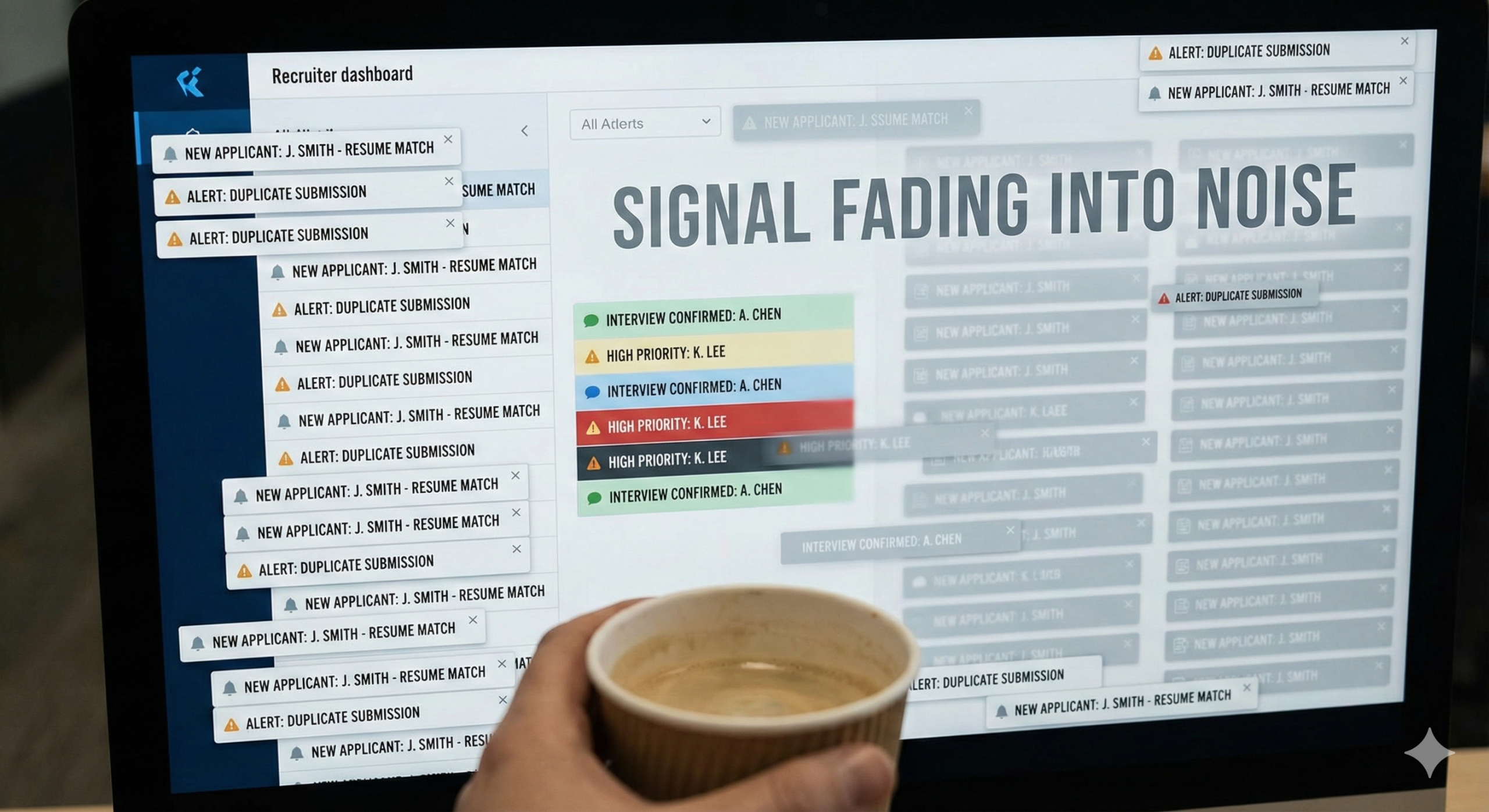
As application volumes grow, signal quality drops. This is the core challenge behind Application Inflation in Hiring. Recruiters are not short on data. They are short on meaningful data.
Noise shows up in several ways:
-
Applicants who never respond after applying
-
Candidates who cannot explain their own resumes
-
Submissions from individuals not legally eligible or geographically available
-
High screening pass rates followed by low interview attendance
Each of these issues adds friction to the recruiter’s day while slowing down hiring for the business. Over time, this creates burnout and forces teams to prioritize speed over depth, which further degrades hiring quality.
The system begins to reward those who automate fastest rather than those who are best suited for the role.
Why Hiring Is Shifting Back Toward Friction
For years, hiring teams focused on removing friction from the application process. Shorter forms, fewer questions, and faster submissions were seen as improvements to candidate experience. In many cases, they were. But friction was also doing important work.
Effort used to signal intent. Time spent used to signal seriousness. Responsiveness used to signal availability.
In an automated environment, removing all friction removes those signals entirely. This is why many organizations are now intentionally reintroducing small, controlled moments of friction early in the hiring process. These moments are not designed to make hiring harder. They are designed to make it more honest.
Examples include:
-
Short, live-recorded video introductions
-
Real-time screening questions delivered conversationally
-
Time-bound skills prompts
-
Immediate follow-up interactions that require presence
These steps quickly differentiate between automated submissions and real candidates without requiring recruiters to manually intervene.
Application Inflation in Hiring Is Forcing Identity Back Into the Funnel
One of the most important shifts driven by Application Inflation in Hiring is the renewed focus on identity and presence. Not identity in the sense of background checks or documentation, but in the sense of proving there is a real person behind the application.
Proof of personhood in hiring is simple in concept. It asks whether a candidate can show up, respond, and engage in real time. Can they answer questions coherently? Can they demonstrate basic understanding of the role? Can they participate in a short interaction without relying on generated responses?
These checks do not require invasive technology or long assessments. They require timing, interaction, and a small amount of effort. When placed early in the process, they dramatically reduce noise downstream.
How Modern Teams Restore Signal Without Slowing Hiring
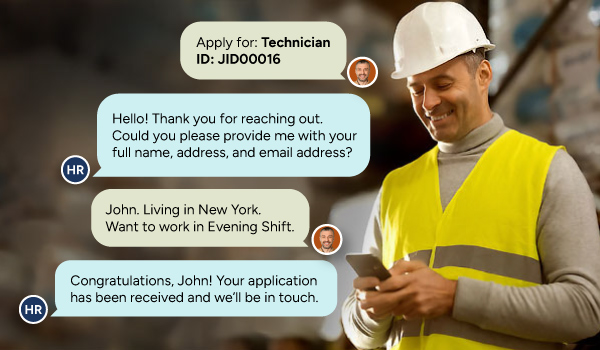
The challenge for hiring leaders is finding ways to restore signal without increasing recruiter workload. Manually calling every applicant or scheduling early interviews is not realistic at scale. This is where conversational and synchronous screening models are gaining traction.
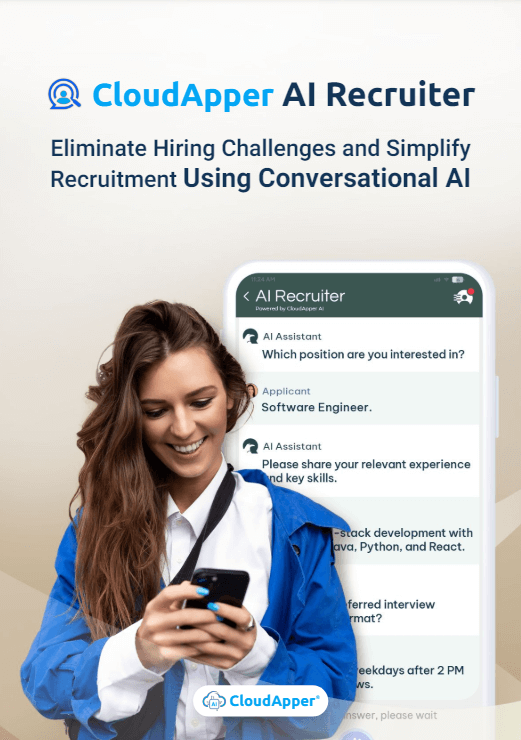
Platforms like CloudApper AI Recruiter enable hiring teams to introduce real-time interactions early in the funnel without requiring constant recruiter involvement. Instead of relying solely on resumes, candidates engage through conversational prompts, short assessments, and immediate follow-ups that require active participation.
This approach filters out automated submissions naturally. Candidates who are not real, not available, or not interested disengage quickly. Those who continue demonstrate responsiveness and intent, giving recruiters cleaner, higher-confidence shortlists.
The value here is not automation for its own sake. It is automation designed to surface human signals at scale.
What Hiring Leaders Should Change Now
Organizations do not need to abandon technology to fix application inflation. They need to use it differently. A few practical shifts can make a significant impact:
Move away from resume-only entry points.
Introduce at least one interaction that requires real-time participation early in the process.
Measure responsiveness, not just completion.
How quickly and clearly a candidate engages is often more predictive than resume keywords.
Design friction intentionally.
A small amount of effort early saves significant time later.
Treat volume as a warning sign, not a success metric.
More applications do not mean better hiring outcomes.
These changes do not require a full system overhaul. They require a mindset shift about what signals matter most.
The Long-Term Impact of Application Inflation in Hiring
Application inflation is unlikely to reverse. Candidate-side automation will continue to improve, and job search tools will become more sophisticated. This makes it even more important for employers to adapt.
Hiring systems that rely on static inputs will continue to struggle. Those that prioritize interaction, verification, and presence will gain an advantage. Over time, this shift may actually improve candidate experience by reducing ghosting, shortening response times, and ensuring that genuine applicants receive attention faster.
The future of hiring will not be defined by who can collect the most applications. It will be defined by who can identify real candidates with confidence and speed.
Better Signals, Not More Applications
The real lesson of the current hiring environment is not that AI has made recruiting impossible. It is that low-effort signals no longer work at scale. Application Inflation in Hiring has exposed weaknesses that were always present but rarely tested this aggressively.
Hiring teams that succeed in this new environment will be those that restore trust early in the process. They will use technology to confirm presence, intent, and authenticity instead of simply accelerating volume.
The goal is not to make hiring harder. It is to make it clearer.

What is CloudApper AI Platform?
CloudApper AI is an advanced platform that enables organizations to integrate AI into their existing enterprise systems effortlessly, without the need for technical expertise, costly development, or upgrading the underlying infrastructure. By transforming legacy systems into AI-capable solutions, CloudApper allows companies to harness the power of Generative AI quickly and efficiently. This approach has been successfully implemented with leading systems like UKG, Workday, Oracle, Paradox, Amazon AWS Bedrock and can be applied across various industries, helping businesses enhance productivity, automate processes, and gain deeper insights without the usual complexities. With CloudApper AI, you can start experiencing the transformative benefits of AI today. Learn More
- Useful Links:
- Agentic AI
- No-Code/Low-Code
- Custom Software
- HCM Personalization
- iPaaS
- FedRAMP
CloudApper AI Solutions for HR


- Works with








- and more.
Similar Posts

How to Stop Losing Shortlisted Candidates During a Hiring Surge…

Recording Candidate Video Interviews in Illinois: Consent, Retention, and Deletion…