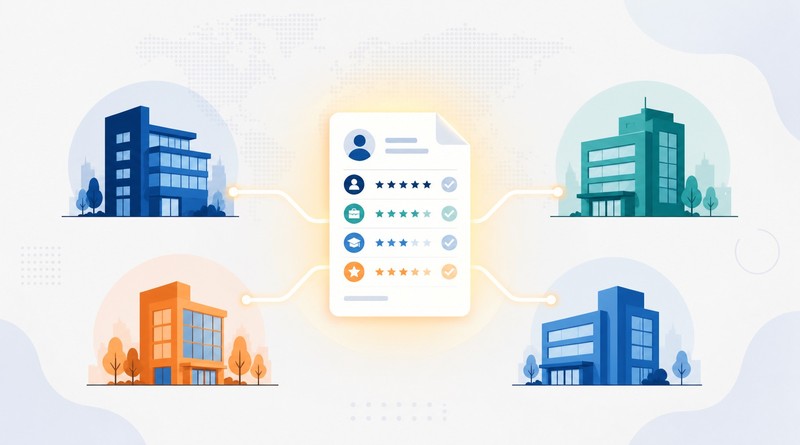
Resumes aren’t disappearing—but they’re no longer proof of ability. As AI-generated applications flood hiring pipelines, employers are shifting to skills-first, scenario-driven assessments that show what candidates can actually do. This article explores why CV-first hiring is breaking down in 2026 and how modern AI recruiting platforms are making skills-based hiring practical, fast, and fair.


Table of Contents
- Why resumes stopped working (it’s not just “fake resumes”)
- The rise of scenario-driven, skills-first assessments
- “Vibe coding” and the new definition of job readiness
- Skills-first hiring is real—but implementation is the hard part
- Candidate drop-off is the silent killer of skills-first hiring
- Where CloudApper AI Recruiter fits (naturally) in a skills-first world
- What “good” looks like in 2026: a practical model
- Closing thought: the resume isn’t dead, but it’s no longer the proof
The modern resume used to be the starting line. In 2026, it’s increasingly treated like a rough draft—sometimes helpful, often inflated, and occasionally fully synthetic.
That change isn’t driven by “lazy candidates.” It’s driven by incentives and tooling. When generative AI can produce polished resumes at scale, the CV stops measuring capability and starts measuring prompting skill and access to good templates. That’s why so many talent teams are rethinking what counts as a dependable signal.

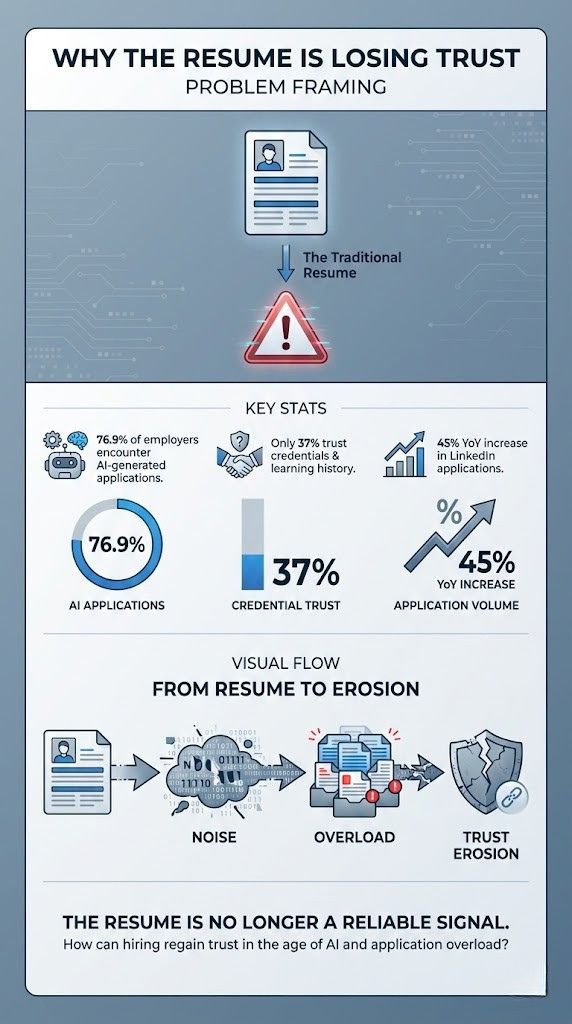
A global hiring study from Willo’s Hiring Trends Report 2026 found that only 37% of employers rate “credentials and learning history” (the stuff CVs are built on) among the most reliable indicators of talent, and 40% are actively moving away from CV-first hiring. Another 10.1% say they’ve largely replaced resumes with alternative methods like skills-based and scenario-driven assessments.
At the same time, the volume problem is getting worse. Business Insider reported that job applications on LinkedIn surged 45% year over year, intensifying recruiter overload and making it harder for real talent to stand out.
So what happens when the “paper trail” breaks?
Hiring pivots to proof.
Why resumes stopped working (it’s not just “fake resumes”)
Resumes were never perfect, but they were directionally useful when effort was a limiting factor. AI removed that friction.
Willo’s research highlights how common AI-assisted applications have become: 76.9% of teams say they encounter AI-generated or AI-assisted applications. That doesn’t mean every resume is fraudulent—it means the baseline quality of writing, structure, and keyword alignment is now artificially high.
The consequence is predictable:
- More “perfect-on-paper” applicants
- Less confidence in screening signals
- More time wasted verifying what’s real
And there’s an additional trust layer: candidates themselves are uneasy. A Gartner survey cited by Unleash found only 26% of candidates trust AI to evaluate them fairly.
This is why the market is shifting toward assessments that can’t be easily faked with formatting.
The rise of scenario-driven, skills-first assessments
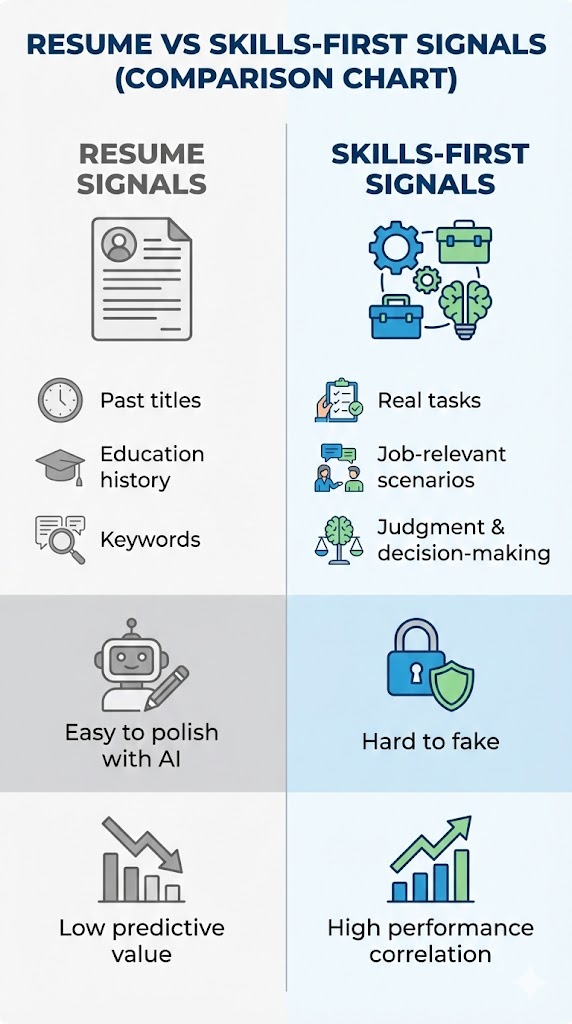
When resumes become noisy, hiring teams look for signals that are:
- Harder to counterfeit
- More predictive of performance
- Faster to evaluate at scale
That’s the promise of scenario-based assessments: instead of asking “Where have you been?”, they ask “What can you do—right now—inside constraints that resemble the job?”
This isn’t theoretical. Employers are increasing their use of assessments to get more authentic signals amid AI-polished applications. Business Insider reported meaningful growth in test usage, including TestGorilla noting a 61% increase in critical thinking test completions and a 69% increase in personality assessments in early 2025.
And Willo’s 2026 report explicitly calls out the move beyond resume-first hiring toward alternatives—including scenario-based evaluation methods.
“Vibe coding” and the new definition of job readiness
In technical and product roles, one version of scenario-driven hiring is gaining a nickname: “vibe coding.”
The idea is simple: evaluate how someone actually works now—with AI tools, documentation, and real constraints—rather than treating tool usage as “cheating.” This style of interview emphasizes translating requirements into working output, making good decisions, and iterating quickly.
Even outside engineering, the same shift applies. “AI readiness” increasingly means:
- Can the candidate reason in ambiguity?
- Can they validate outputs, catch errors, and explain tradeoffs?
- Can they use tools responsibly and communicate decisions?
Those aren’t resume traits. They’re performance traits.
Skills-first hiring is real—but implementation is the hard part
Here’s the uncomfortable truth: many organizations say they’re skills-first, but hiring behavior changes slowly.
A joint report by Harvard Business School and the Burning Glass Institute found that removing degree requirements has often translated into limited real change, with one analysis estimating only a 0.14% increase in hiring of candidates without degrees after degree requirements were removed.
This gap exists because “skills-first” isn’t a slogan—it’s an operating system:
- Defining role-specific skills clearly
- Designing assessments that map to those skills
- Scoring consistently
- Communicating transparently
- Moving candidates fast enough that good people don’t drop off
Which leads to the next problem.
Candidate drop-off is the silent killer of skills-first hiring
If you add assessments but keep a slow, clunky application experience, you don’t get better hiring—you get fewer completions.
SHRM reported a staggering 92% candidate drop-off rate for people who click “Apply” but don’t complete the application.
So the future isn’t just “more assessments.” It’s better assessments + lower friction.
That’s where modern AI recruiting platforms earn their keep.
Where CloudApper AI Recruiter fits (naturally) in a skills-first world
If the hiring market is moving beyond CVs, recruiters need a system that can do two things at once:
- Evaluate skills in structured, scenario-driven ways
- Keep the process fast, conversational, and human-friendly
CloudApper AI Recruiter is built for exactly that transition.
On the evaluation side, it uses an AI scoring system to assess candidates based on skills, experience, and job fit, then produces ranked shortlists and comparisons with notes and metrics for more transparent decisions.
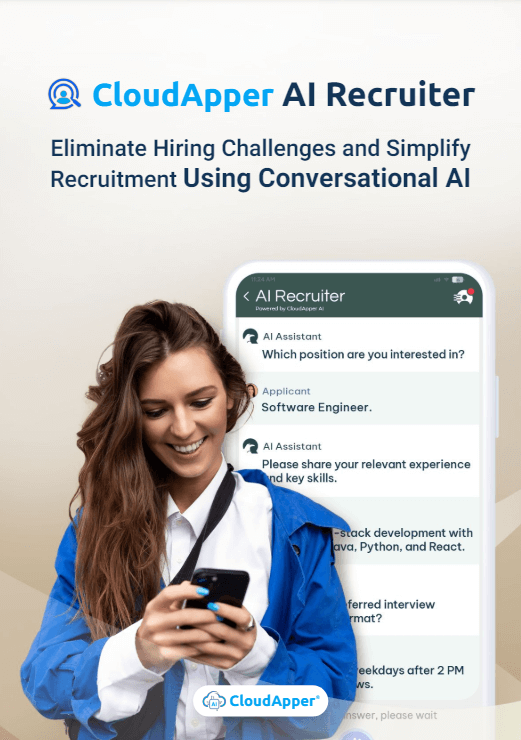
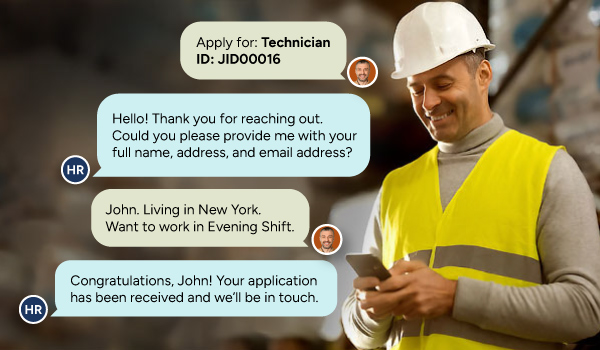
On the experience side, it tackles the biggest dropout drivers by letting candidates apply in simpler ways—like scanning a QR code or texting a shortcode—and using a conversational AI chatbot to guide the application, answer questions, and collect relevant details naturally.
And because speed is a major predictor of acceptance (and dropout), AI Recruiter also automates the busywork that slows teams down:
- Screening and ranking at volume
- Interview scheduling with calendar sync and rescheduling
- Personalized SMS/email outreach to keep candidates engaged
Under the hood, it’s designed as a multi-agent approach (screening, assessment, communication, scheduling, analytics), which mirrors how recruiting actually works—multiple workstreams running at once.
Importantly for real-world adoption: it’s positioned to work alongside existing ATS/HRIS systems rather than forcing disruptive migrations.
What “good” looks like in 2026: a practical model
If you’re redesigning hiring for a post-CV era, a strong model looks like this:
- Lightweight entry (text/QR/conversational apply) to reduce abandonment
- Scenario-driven screening that measures job-relevant judgment and problem-solving
- Structured scoring + transparency to reduce bias and improve defensibility
- Fast scheduling + consistent communication to prevent drop-off
- Human-led final decisions—because trust still matters and most employers still want humans accountable
That combination is how skills-first hiring becomes more than a trend—how it becomes operational.
Closing thought: the resume isn’t dead, but it’s no longer the proof
Resumes will stick around as context. But they’re losing their power as evidence.
In 2026, the hiring teams that win will be the ones who can capture proof of skill quickly, fairly, and at scale—without turning the process into a multi-week obstacle course.
If you want to see what that looks like in practice, CloudApper AI Recruiter is a strong example of how multi-agent automation, conversational applications, and skills-focused scoring can work together—so you spend less time verifying “paper” and more time connecting with the right people.
What is CloudApper AI Platform?
CloudApper AI is an advanced platform that enables organizations to integrate AI into their existing enterprise systems effortlessly, without the need for technical expertise, costly development, or upgrading the underlying infrastructure. By transforming legacy systems into AI-capable solutions, CloudApper allows companies to harness the power of Generative AI quickly and efficiently. This approach has been successfully implemented with leading systems like UKG, Workday, Oracle, Paradox, Amazon AWS Bedrock and can be applied across various industries, helping businesses enhance productivity, automate processes, and gain deeper insights without the usual complexities. With CloudApper AI, you can start experiencing the transformative benefits of AI today. Learn More
- Useful Links:
- Agentic AI
- No-Code/Low-Code
- Custom Software
- HCM Personalization
- iPaaS
- FedRAMP
CloudApper AI Solutions for HR

- Works with







- and more.
Similar Posts

The Real Cost of Interview No-Shows, and How Automated Reminders…
Verify Required Certifications and Licenses Without Slowing Down Screening