Hiring advantage has shifted away from sourcing volume toward judgment and signal interpretation. This article explains why reach stopped differentiating and what now drives better hiring decisions.


Table of Contents
- Why Reach Stopped Being a Differentiator
- The Noise Problem No One Planned For
- Judgment Is Not the Same as Speed
- What Judgment Looks Like in Practice
For most of the last decade, recruiting success followed a simple logic: the more candidates you could reach, the better your outcomes would be. More job boards, more ads, more sourcing tools all promised the same thing—access. That assumption no longer holds. In today’s hiring environment, hiring advantage no longer comes from reach alone; it comes from how well organizations interpret what’s in front of them.
Talent didn’t disappear. Access didn’t shrink. Instead, differentiation collapsed.
Recruiters now operate in a world where everyone can look qualified. Resumes arrive polished. Profiles read confidently. Applications scale faster than teams can reasonably review. As a result, hiring didn’t become easier with abundance—it became harder.
Why Reach Stopped Being a Differentiator
Reach used to matter because it was scarce. Posting in the right place or tapping the right network created real leverage. Today, distribution is cheap and often automated. Candidates can apply everywhere, and tools can source almost anyone.
Because of that shift, reach stopped signaling quality. It now signals volume.

When every employer can reach thousands of candidates and every candidate can reach hundreds of employers, access loses its edge. What replaces it is discernment—the ability to separate meaningful signal from convincing noise.
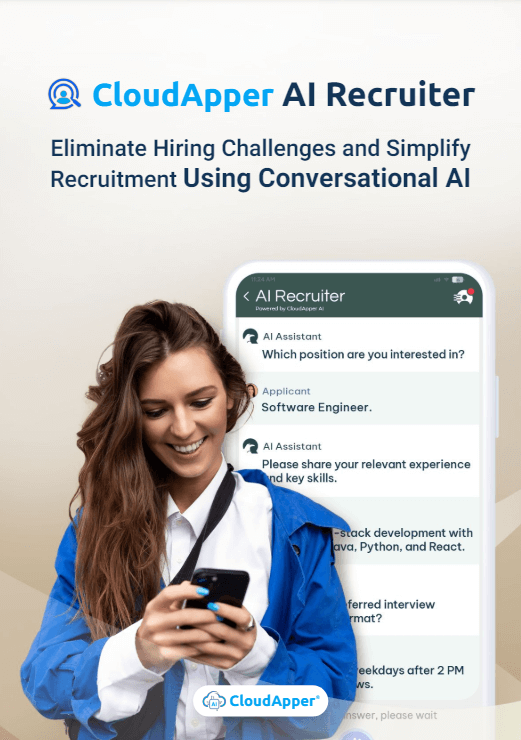
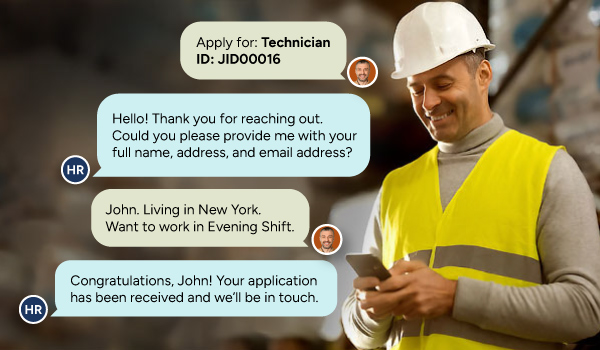
That shift explains why hiring advantage has quietly moved away from sourcing tactics and toward evaluation capability. Some teams are responding by introducing structured, conversational screening earlier in the process, using solutions like CloudApper AI Recruiter to capture clearer signals before resumes dominate the conversation.

The Noise Problem No One Planned For
Hiring systems were built for a different era. They assumed resumes were imperfect reflections of experience. They assumed writing quality varied. They assumed effort correlated with intent.
Those assumptions broke.
AI-assisted tools leveled presentation. Keyword optimization became trivial. As a result, resumes stopped explaining differences and started hiding them. Recruiters didn’t lose skill; they lost contrast.
This is where hiring advantage now emerges: not from finding more candidates, but from identifying which signals still mean something. In practice, that often means shifting attention away from resume polish and toward how candidates respond when asked to explain decisions, priorities, or trade-offs—an area where solutions like CloudApper AI Recruiter are designed to support consistency without removing human judgment.

Judgment Is Not the Same as Speed
Many teams tried to fix the problem by moving faster. They automated screening. They added more filters. They tightened scoring rules. Unfortunately, speed amplifies mistakes when inputs lack clarity.
Faster screening doesn’t create better judgment. It only pushes uncertainty further downstream.
Strong hiring decisions require interpretation. They require context. They require systems that surface how candidates think, not just how they present. Organizations that recognize this distinction gain hiring advantage because they slow down in the right place and speed up in the right one.
What Judgment Looks Like in Practice
Judgment does not mean gut feeling or intuition alone. It means structured interpretation.
High-performing teams focus on:
- Consistent, role-specific questions
- Comparable candidate responses
- Clear evaluation criteria
- Human review where nuance matters
These teams don’t ignore resumes, but they no longer treat them as decision drivers. Instead, resumes provide background, while interactions provide insight. Some organizations use CloudApper AI Recruiter here as a front-door layer to ensure every candidate is evaluated against the same criteria before recruiters step in.
That approach creates hiring advantage by restoring confidence in early-stage decisions and reducing second-guessing later in the process.

Why Technology Still Matters—Just Differently
This shift does not reject technology. It reframes its role.
Technology works best when it:
- Enforces consistency
- Reduces manual effort
- Surfaces patterns
- Prepares information for human judgment
Technology fails when it pretends to replace judgment altogether.
Modern hiring stacks increasingly reflect this reality. Tools handle scale and structure, while humans handle meaning. That division of labor strengthens outcomes because each part of the system does what it does best.
Teams that design for this balance build hiring advantage that competitors struggle to copy, because judgment is harder to automate than reach.

The New Competitive Edge
Every organization can buy reach. Few can build judgment.
Reach scales horizontally. Judgment scales vertically. One multiplies inputs. The other improves outcomes.
As hiring continues to evolve, companies that invest in evaluation capability—not just sourcing capability—will move faster with fewer regrets. They will trust their decisions. Candidates will trust their processes. Hiring managers will trust recommendations again.
That trust is the real differentiator.
Hiring advantage no longer comes from how many candidates you can attract. It comes from how well you can decide which ones actually matter.
What is CloudApper AI Platform?
CloudApper AI is an advanced platform that enables organizations to integrate AI into their existing enterprise systems effortlessly, without the need for technical expertise, costly development, or upgrading the underlying infrastructure. By transforming legacy systems into AI-capable solutions, CloudApper allows companies to harness the power of Generative AI quickly and efficiently. This approach has been successfully implemented with leading systems like UKG, Workday, Oracle, Paradox, Amazon AWS Bedrock and can be applied across various industries, helping businesses enhance productivity, automate processes, and gain deeper insights without the usual complexities. With CloudApper AI, you can start experiencing the transformative benefits of AI today. Learn More
- Useful Links:
- Agentic AI
- No-Code/Low-Code
- Custom Software
- HCM Personalization
- iPaaS
- FedRAMP
CloudApper AI Solutions for HR


- Works with








- and more.
Similar Posts

How to Stop Losing Shortlisted Candidates During a Hiring Surge…

Recording Candidate Video Interviews in Illinois: Consent, Retention, and Deletion…