Transparent AI in HR is gaining trust as recruiters favor tools that reduce busywork without automating decisions. Explainability, human oversight, and clear audit trails are becoming essential for responsible AI-driven hiring.

Table of Contents
- Why HR Teams Are Cautious About AI Decision-Making
- What Transparent AI in HR Means in Recruitment
- How AI Can Reduce HR Busywork Without Increasing Bias Risk
- What Human-in-the-Loop AI Recruiting Looks Like in Practice
- How Explainable AI Helps With Compliance in Recruitment
- Why Busywork-Reducing AI Builds More Trust Than Decision Automation
- What This Shift Means for HR Tech Buyers in 2026
Over the past year, a noticeable shift has emerged in how professionals talk about Transparent AI in HR. Across HR-focused communities on Reddit and professional discussions on LinkedIn, enthusiasm is no longer centered on AI that replaces human judgment. Instead, trust is forming around tools that remove administrative friction while keeping people accountable for decisions.
Posts and discussions that focus on AI reducing screening, scheduling, follow-ups, and documentation consistently generate stronger engagement than those promoting fully automated hiring decisions. Conversations about explainability, visibility, and human override tend to attract thoughtful discussion, while black-box decision-making often triggers skepticism. This pattern reveals a clear preference: HR leaders are not resisting AI. They are resisting opacity.
Why HR Teams Are Cautious About AI Decision-Making
HR teams remain accountable for hiring outcomes, regardless of whether a decision was influenced by AI or made manually. When AI systems operate as black boxes, recruiters and HR leaders are left responsible for results they cannot clearly explain. That creates risk—not just legal or compliance risk, but reputational and internal trust risk.
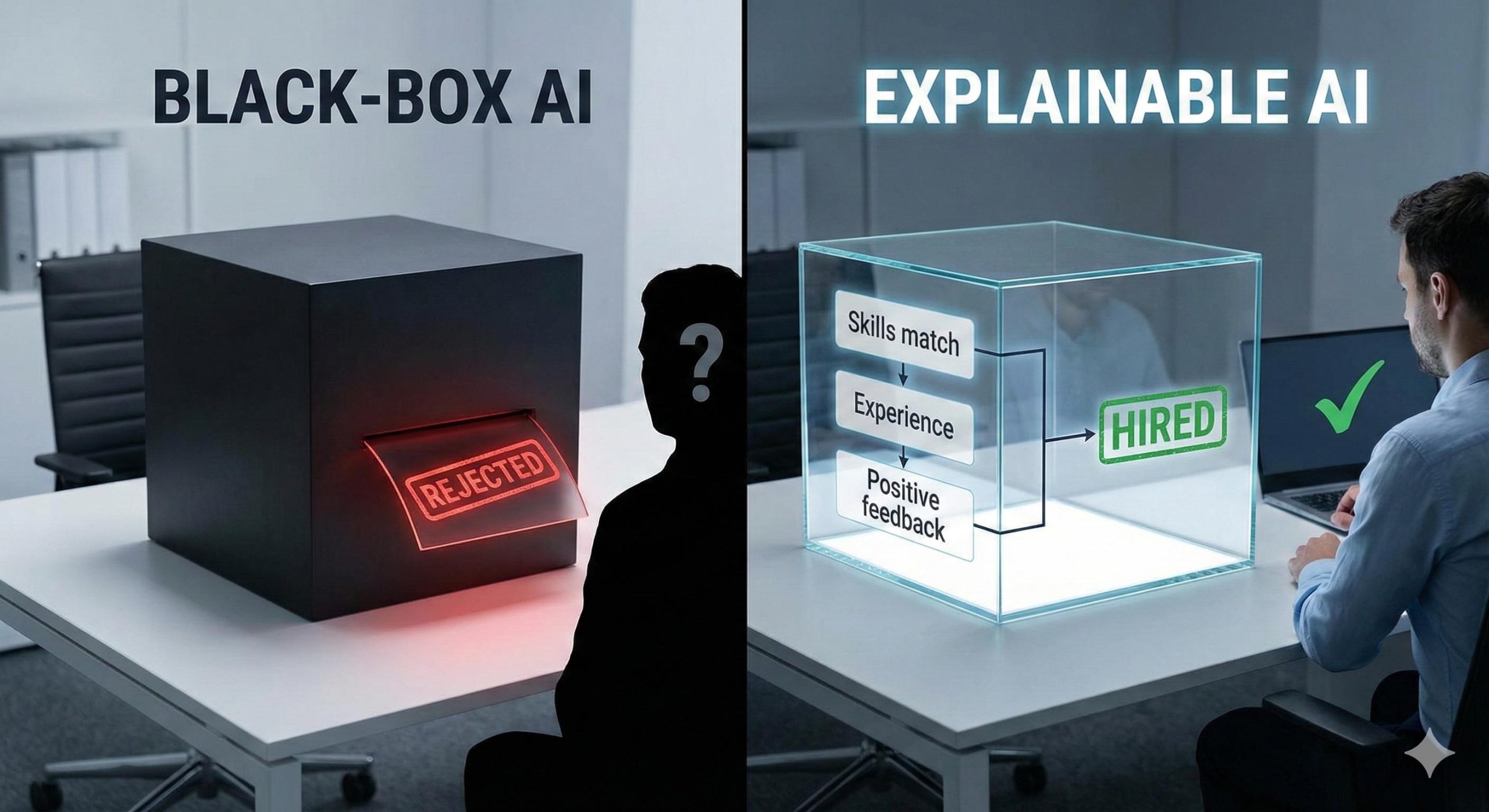

This is why automated decision-making continues to face resistance. When a candidate is rejected or ranked lower, HR professionals are expected to justify the outcome to candidates, hiring managers, auditors, and leadership. AI that cannot explain itself creates friction rather than efficiency.
“I don’t want AI deciding who gets hired. I want it to handle the parts of my job that slow me down so I can actually evaluate candidates.”
— Talent Acquisition Lead, Multi-Location Retail
“If I can’t explain why someone was screened out, that becomes my risk, not the system’s.”
— HR Director, Healthcare Organization
These concerns are not theoretical. They are operational realities that influence which tools HR teams are willing to adopt.
What Transparent AI in HR Means in Recruitment
Transparent AI in HR refers to systems that make their reasoning visible and reviewable by humans. In recruitment, this means recruiters can see what information was evaluated, which criteria influenced recommendations, and where human judgment still applies.
Transparency does not mean exposing technical complexity. It means clarity at the decision level. Recruiters should be able to review recommendations, understand contributing factors, and confidently explain outcomes.
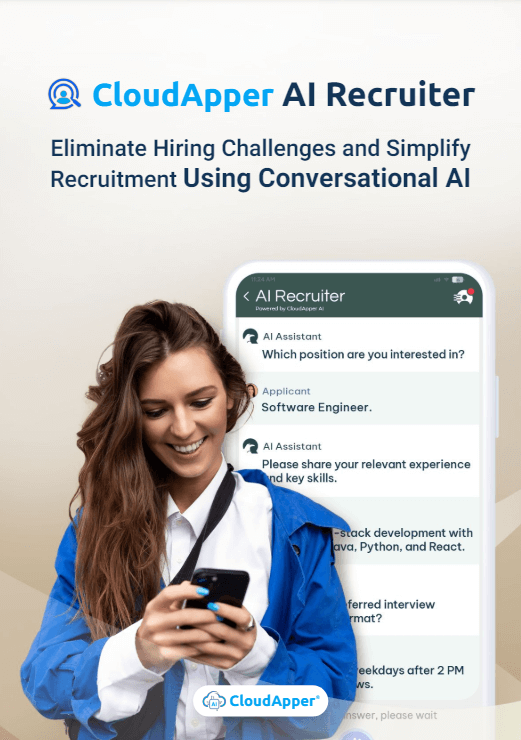
Some AI platforms have begun designing their systems around this principle—adding intelligence around existing HR systems instead of replacing them. For example, platforms like CloudApper AI Recruiter focuses on making AI activity observable and auditable within recruiting workflows, allowing HR teams to see how recommendations are formed before acting on them.
How AI Can Reduce HR Busywork Without Increasing Bias Risk
The strongest positive sentiment toward AI in HR is tied to busywork reduction. Recruiters consistently point to scheduling coordination, resume parsing, follow-ups, and initial screening logistics as the most time-consuming parts of their role.
In many organizations, recruiters estimate that roughly one-third of their time is spent on coordination and administrative screening rather than evaluating candidates. AI that removes this friction delivers immediate value without interfering with human judgment.
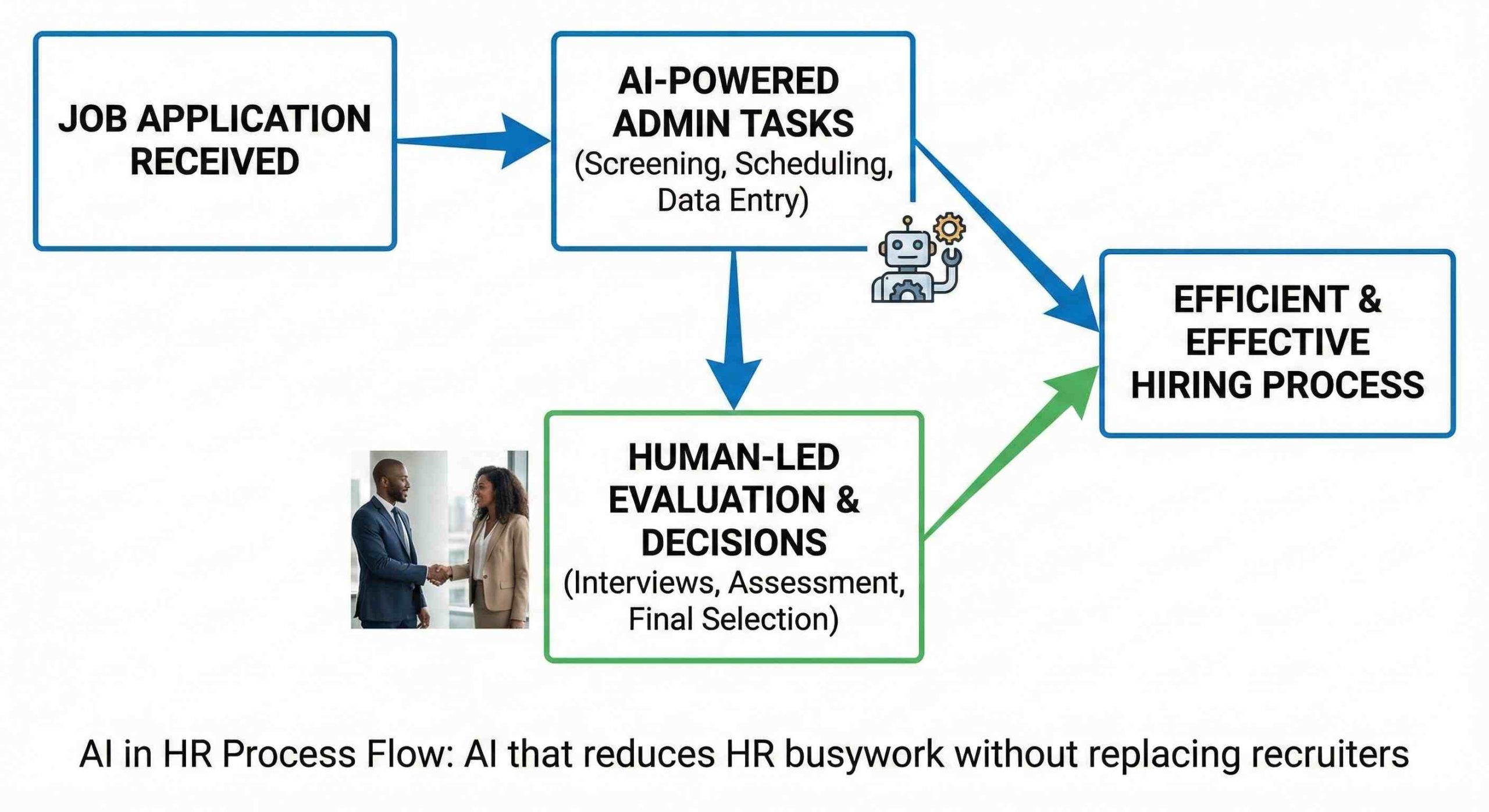 Because these systems focus on preparation rather than decision-making, they often reduce bias risk rather than increase it. Recruiters gain more time to assess candidates thoughtfully instead of rushing decisions due to administrative overload.
What Human-in-the-Loop AI Recruiting Looks Like in Practice
Human-in-the-loop AI recruiting keeps people involved at every critical decision point. AI may summarize, rank, or recommend, but humans review, approve, or override outcomes based on context and judgment.
This model mirrors how HR already operates. Recruiters do not delegate accountability to systems; they use tools to make better-informed decisions. Human-in-the-loop design reinforces ownership rather than diluting it.
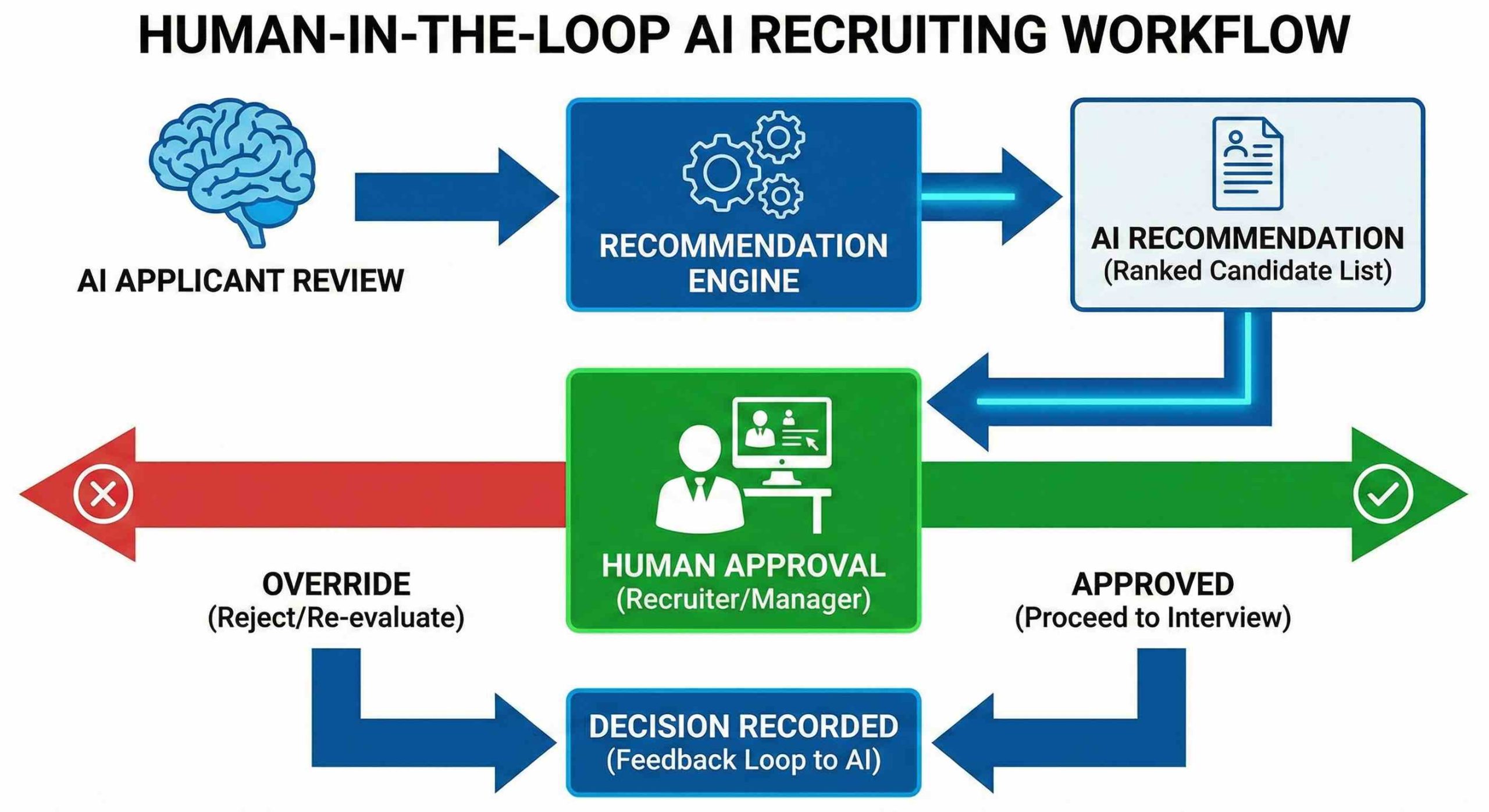
In practice, trust grows fastest when AI prepares decisions, but humans remain accountable for making them.
How Explainable AI Helps With Compliance in Recruitment
As scrutiny around hiring practices increases, organizations are expected not only to make fair decisions but also to explain them. When AI-assisted actions cannot be reviewed or justified, compliance reviews become slower and more complex.
Explainable AI reduces this friction by making hiring workflows auditable by design rather than dependent on after-the-fact explanations. Clear records of what influenced recommendations allow HR teams to respond confidently to audits, internal reviews, and candidate inquiries.
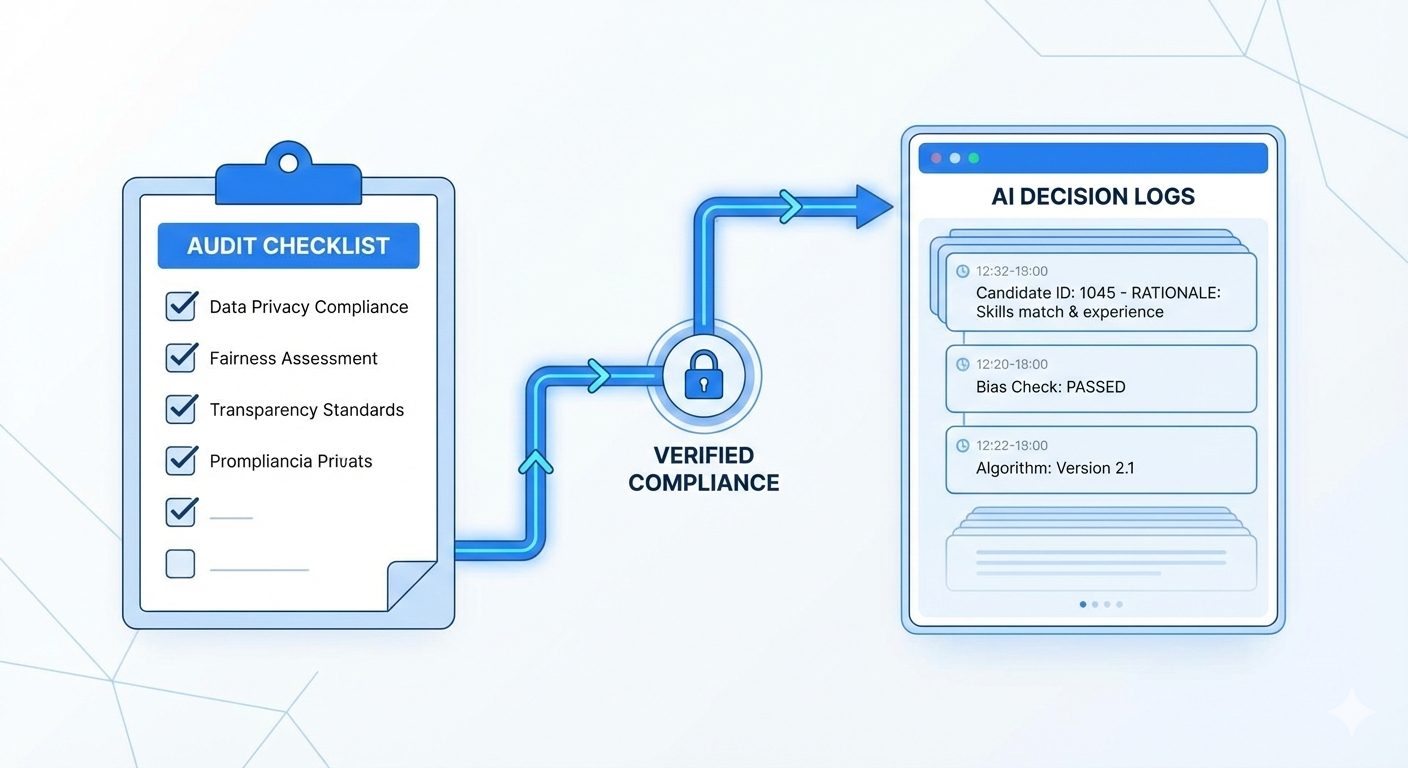
Some platforms now emphasize audit-ready AI behavior—logging actions, preserving rationale, and allowing HR teams to demonstrate oversight. This approach turns compliance from a reactive process into a built-in outcome of transparent system design.
Why Busywork-Reducing AI Builds More Trust Than Decision Automation
The difference between trusted and distrusted AI often comes down to intent. AI that removes friction feels supportive. AI that replaces judgment feels risky.
HR leaders trust tools that help them work better without distancing them from responsibility. Transparent AI in HR succeeds because it strengthens the human role rather than undermining it.
This is why ethical AI in hiring is increasingly defined not by what AI can do, but by what it intentionally does not do.
What This Shift Means for HR Tech Buyers in 2026
HR tech buyers are no longer asking whether AI can automate hiring. They are asking whether AI can support hiring responsibly. Transparency, explainability, and human override are now baseline expectations.
Modern HR platforms are expected to integrate around existing HCM and ATS systems, add intelligence without disruption, and leave a clear audit trail. AI that explains before it acts is becoming the standard for sustainable adoption.
Solutions built around these principles demonstrate how transparent AI should behave in real HR environments—by supporting recruiters instead of substituting them.
Explore how transparent, human-in-the-loop AI can support recruiters without replacing judgment.

What is CloudApper AI Platform?
CloudApper AI is an advanced platform that enables organizations to integrate AI into their existing enterprise systems effortlessly, without the need for technical expertise, costly development, or upgrading the underlying infrastructure. By transforming legacy systems into AI-capable solutions, CloudApper allows companies to harness the power of Generative AI quickly and efficiently. This approach has been successfully implemented with leading systems like UKG, Workday, Oracle, Paradox, Amazon AWS Bedrock and can be applied across various industries, helping businesses enhance productivity, automate processes, and gain deeper insights without the usual complexities. With CloudApper AI, you can start experiencing the transformative benefits of AI today. Learn More
- Useful Links:
- Agentic AI
- No-Code/Low-Code
- Custom Software
- HCM Personalization
- iPaaS
- FedRAMP
CloudApper AI Solutions for HR

- Works with







- and more.
Similar Posts

How to Stop Losing Shortlisted Candidates During a Hiring Surge…
Recording Candidate Video Interviews in Illinois: Consent, Retention, and Deletion…