Integrating CRM and ERP systems can transform business operations, eliminating data silos and manual errors. CloudApper iPaaS offers a no-code solution, enabling seamless integration, real-time data accuracy, and enhanced collaboration, driving efficiency and growth.
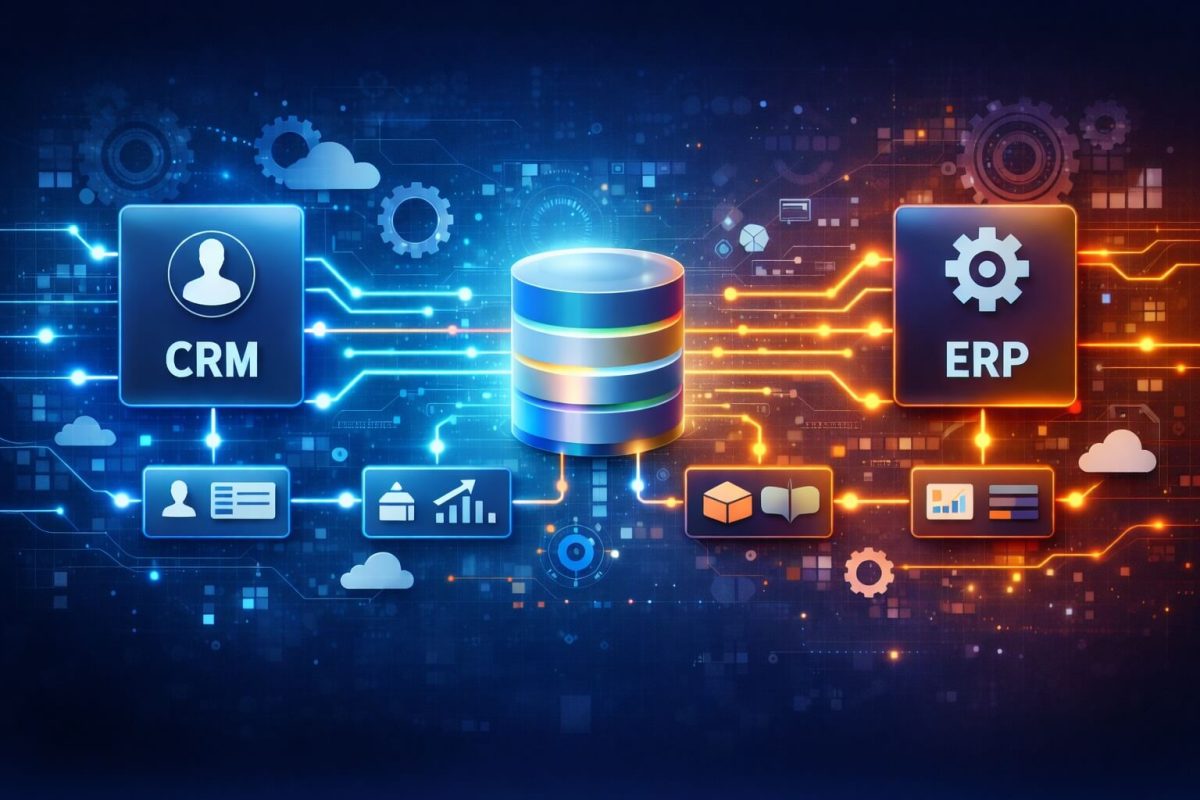
Table of Contents
- What Are the Primary Challenges in CRM and ERP Disconnections?
- How Does CloudApper iPaaS Simplify CRM and ERP Integration?
- What Are the Key CRM and ERP Integration Benefits?
- Can CRM and ERP Integration Solve Real-World Business Problems?
- How Can Businesses Leverage AI in CRM and ERP Integration?
- Why Is Scalability Crucial for Long-Term CRM and ERP Integration Success?
Have you ever wondered why some businesses thrive with seamless operations while others drown in data silos and manual mishaps? In the ever-evolving landscape of enterprise management, the disconnect between CRM and ERP systems remains a persistent challenge, stifling growth and efficiency. As an expert in digital transformation, I’ve seen firsthand how integrating these systems can unlock unprecedented potential, turning operational headaches into strategic advantages. This is where solutions like CloudApper iPaaS come into play, offering a no-code pathway to harness the full spectrum of CRM and ERP integration benefits.
What Are the Primary Challenges in CRM and ERP Disconnections?
In medium to large enterprises, sales teams often rely on CRM platforms like Salesforce or HubSpot to track customer interactions and close deals, while operations and finance departments use ERP systems such as SAP or Oracle for inventory, billing, and supply chain management. Without proper integration, these systems operate in isolation, leading to a cascade of issues. Data discrepancies emerge when a sales win isn’t immediately reflected in inventory levels, resulting in shipping delays or stockouts that frustrate customers and erode trust. Manual data entry becomes a necessity, introducing human errors that can lead to incorrect billing or missed revenue opportunities. From my perspective, these silos not only waste valuable resources but also hinder cross-departmental collaboration, ultimately capping business growth. The real tragedy? These problems are entirely avoidable with the right integration strategy, emphasizing the critical CRM and ERP integration benefits that forward-thinking leaders are already capitalizing on.

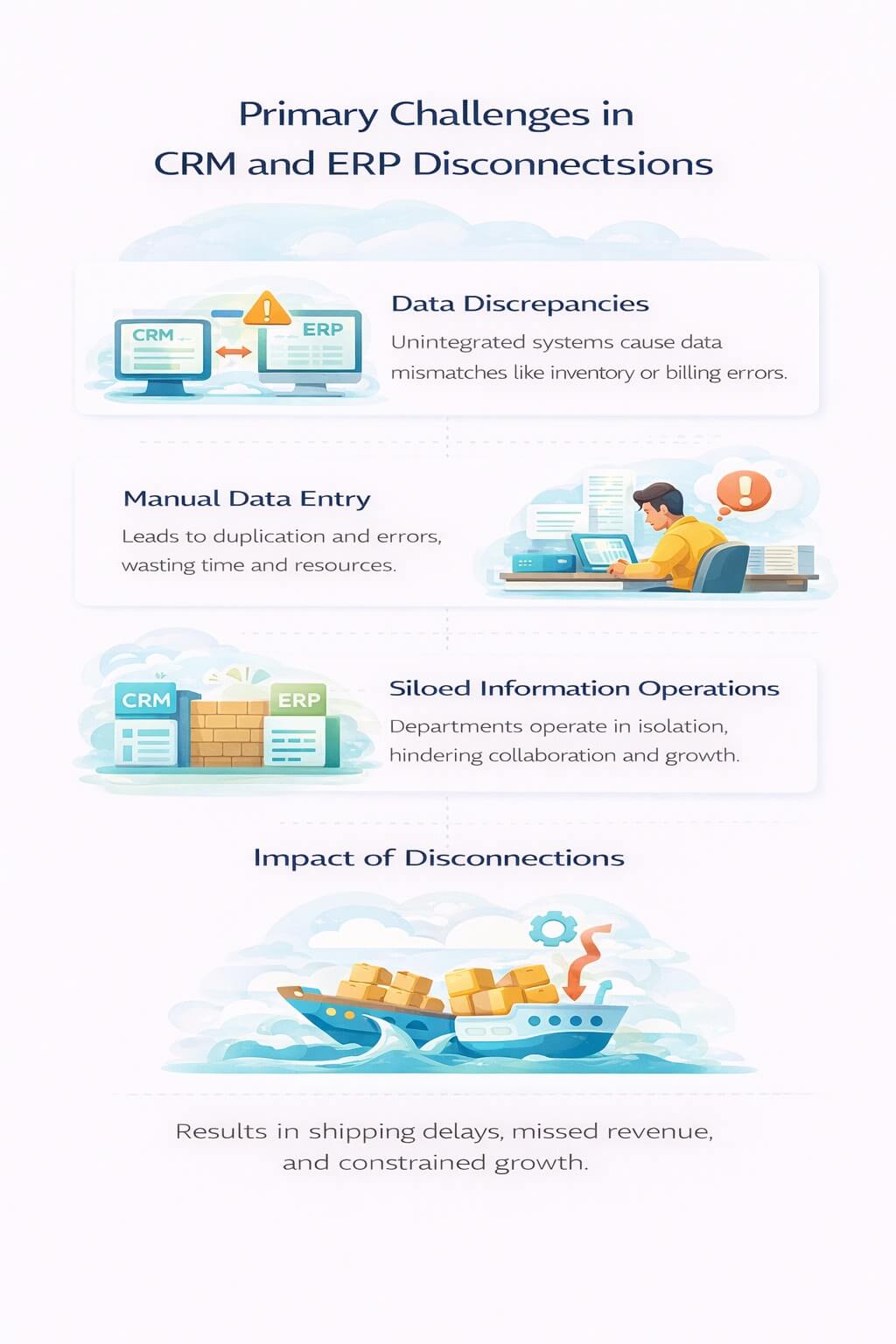
Consider the broader industry trend: As businesses scale, the volume of data explodes, and the need for real-time insights becomes non-negotiable. Without integration, decision-makers are left navigating outdated information, which can spell disaster in competitive markets. I’ve advised numerous organizations where disjointed systems led to lost opportunities—think of a sales team celebrating a deal closure, only for operations to discover insufficient stock due to unsynced data. This isn’t just inefficient; it’s a direct hit to profitability. By addressing these pain points through innovative tools, companies can shift from reactive firefighting to proactive strategy, underscoring why CRM and ERP integration benefits are essential for modern enterprises.
How Does CloudApper iPaaS Simplify CRM and ERP Integration?
Enter CloudApper iPaaS, a game-changing integration platform that eliminates the complexity of connecting disparate systems. Designed for enterprises seeking agility without the burden of coding, this no-code solution empowers users to build robust integrations via an intuitive drag-and-drop interface. Whether you’re linking Salesforce with SAP or HubSpot with Oracle, CloudApper iPaaS offers pre-built connectors that streamline the process, saving time and reducing costs. In my experience, this accessibility democratizes integration, allowing non-technical teams to take control and focus on what matters most—driving business value.
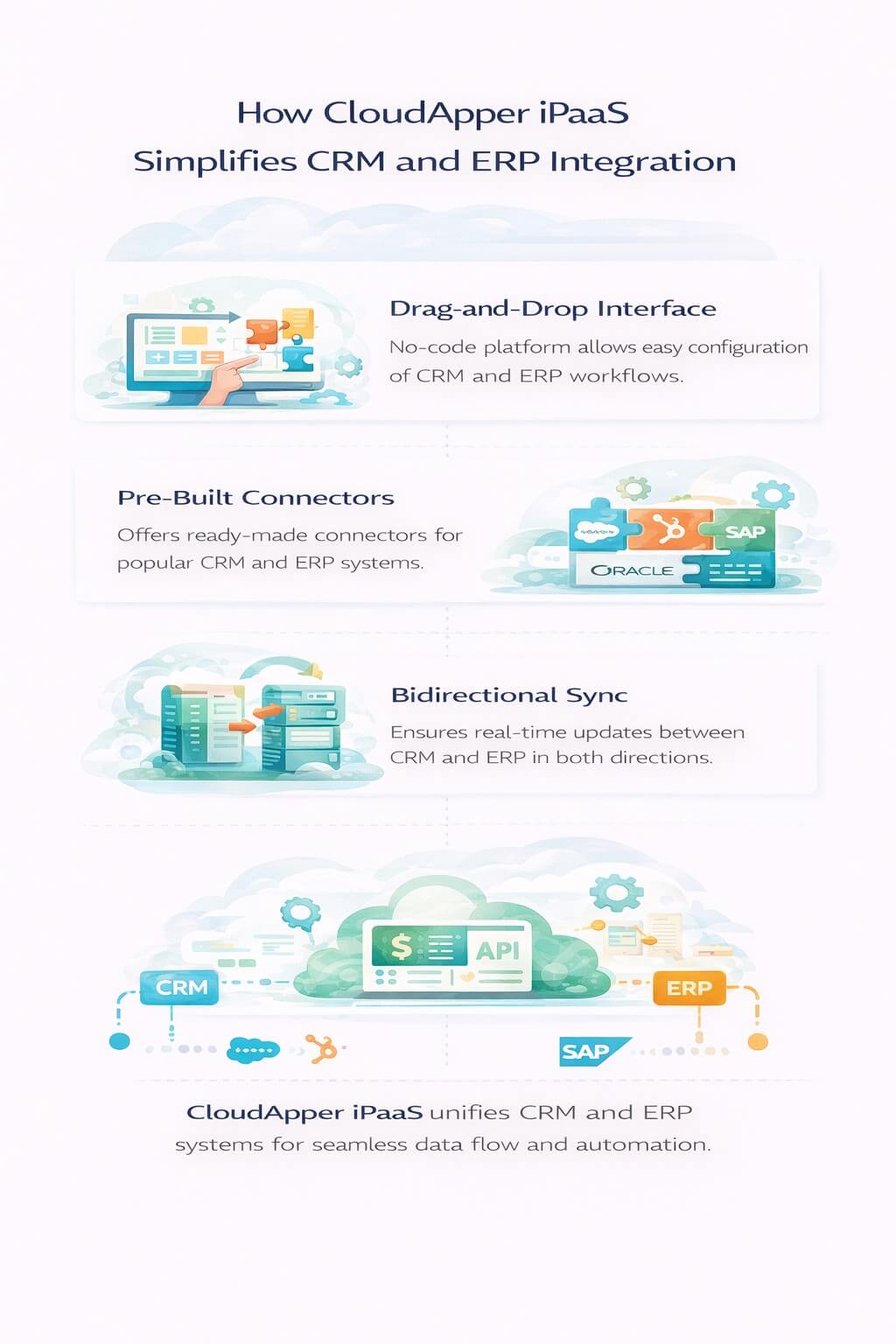
One of the standout features is its bidirectional sync capability, ensuring that updates in one system instantly propagate to others. For instance, when a deal is marked ‘Closed Won’ in your CRM, CloudApper iPaaS can automatically generate an invoice in your ERP, complete with accurate pricing and inventory checks. This real-time data flow is bolstered by advanced AI-driven automation, which optimizes workflows by predicting needs and automating routine tasks. Add to that secure API management and a scalable architecture that grows with your business, and you have a platform that’s not just functional but future-proof. By naturally incorporating these elements, CloudApper iPaaS maximizes CRM and ERP integration benefits, transforming potential pitfalls into opportunities for efficiency and innovation.
What Are the Key CRM and ERP Integration Benefits?
Diving deeper into the CRM and ERP integration benefits, it’s clear that solutions like CloudApper iPaaS deliver transformative outcomes across multiple fronts. First and foremost is real-time data accuracy, which eradicates discrepancies and ensures every team operates from a single source of truth. This precision prevents costly errors, such as overpromising on deliveries due to outdated inventory data, and fosters a culture of reliability.
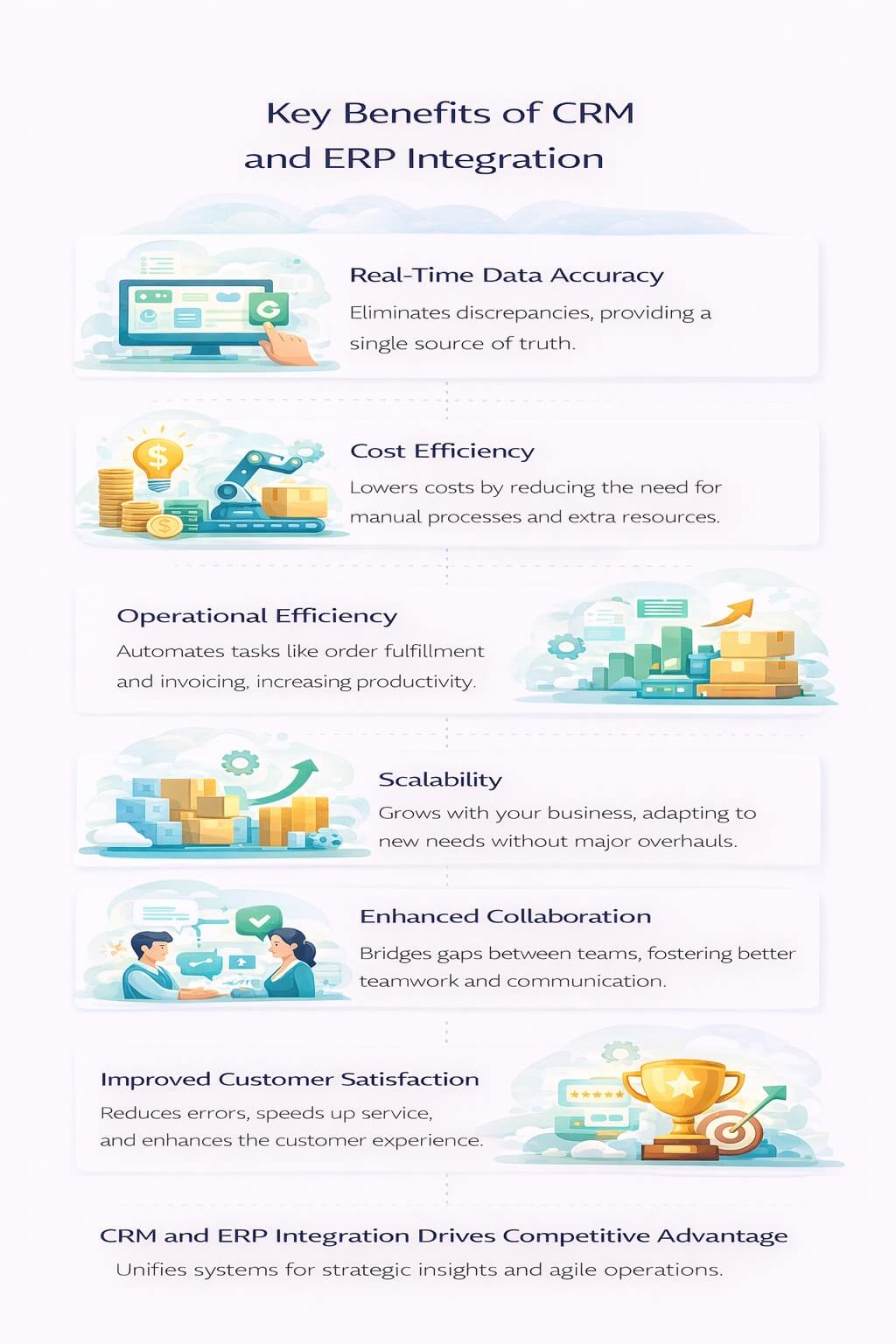
Cost efficiency is another pillar. Traditional integration often requires hiring expensive developers or investing in custom coding, but CloudApper iPaaS’s no-code approach allows businesses to customize workflows in-house, slashing overhead and accelerating deployment. Operational efficiency follows suit, with automation handling tasks like invoicing and order fulfillment, minimizing manual interventions and speeding up cycles. Scalability ensures that as your enterprise expands—perhaps entering new markets or adding product lines—your integrations adapt seamlessly without disruptions.
Enhanced collaboration emerges as a subtle yet powerful benefit, breaking down silos between sales and operations. When data is consistent and accessible, teams can align efforts more effectively, leading to better strategic decisions. Improved customer satisfaction naturally results from fewer errors and faster service, building long-term loyalty. Finally, this integration provides a competitive edge, enabling businesses to innovate rather than merely maintain. In my view, these CRM and ERP integration benefits aren’t just incremental improvements; they’re foundational to sustainable growth in a data-driven world.
Can CRM and ERP Integration Solve Real-World Business Problems?
To illustrate the impact, let’s explore hypothetical yet relatable scenarios where CRM and ERP integration benefits shine. Imagine a mid-sized manufacturing company using Salesforce for CRM and SAP for ERP. Previously, closing a sale involved manual updates to inventory, often resulting in stockouts and delayed shipments that damaged client relationships. With CloudApper iPaaS, the integration enables instant sync: Sales data updates ERP in real-time, triggering automated purchase orders and invoices. This not only prevents delays but also optimizes supply chain efficiency, reducing holding costs.
In a retail context, consider an enterprise integrating HubSpot with Oracle. Sales trends from CRM can feed into ERP for demand forecasting, where AI automation in CloudApper iPaaS analyzes patterns to adjust stock levels proactively. This minimizes overstock and understock issues, cutting waste and improving margins. Another example: A logistics firm grappling with billing errors implements CloudApper iPaaS to automate invoice generation upon deal closure, significantly reducing inaccuracies and boosting team productivity. These cases highlight how CRM and ERP integration benefits extend beyond theory, offering tangible solutions to everyday challenges.
From an industry trend perspective, we’re witnessing a shift toward hyper-connected ecosystems. Businesses that leverage platforms like CloudApper iPaaS are better positioned to harness big data and AI, turning integration into a catalyst for innovation. I’ve observed that companies ignoring these trends risk falling behind, while those embracing them gain agility and resilience. It’s not just about connecting systems; it’s about creating a unified operational framework that supports ambitious goals.
How Can Businesses Leverage AI in CRM and ERP Integration?
A forward-looking aspect of CRM and ERP integration benefits involves AI automation, a feature prominently offered by CloudApper iPaaS. AI doesn’t just automate; it anticipates. By analyzing data flows between CRM and ERP, it can predict inventory needs based on sales pipelines, optimize pricing dynamically, or even flag potential discrepancies before they escalate. This intelligent layer adds depth to integrations, making them proactive rather than reactive.
In practice, AI-driven insights enable better decision-making. For sales leaders, it means accessing ERP-derived forecasts directly in CRM dashboards, informing negotiations with real-time data. Operations teams benefit from automated alerts on supply chain risks, drawn from CRM customer trends. The scalability of CloudApper iPaaS ensures these AI capabilities evolve with your business, supporting everything from small tweaks to enterprise-wide transformations. As someone who’s guided implementations, I believe this fusion of AI and integration is redefining efficiency, positioning adopters as industry leaders.
Why Is Scalability Crucial for Long-Term CRM and ERP Integration Success?
Scalability often gets overlooked, but it’s a cornerstone of enduring CRM and ERP integration benefits. CloudApper iPaaS‘s architecture is built to handle growth, allowing seamless addition of new connectors or workflows as your business evolves. Whether expanding to international markets or integrating additional tools like HR systems, the platform adapts without the need for overhauls.
This flexibility addresses a common pain point: Many legacy integrations falter under increased load, leading to downtime and frustration. In contrast, CloudApper iPaaS ensures continuity, fostering an environment where innovation thrives. By prioritizing scalability, businesses can focus on strategic initiatives rather than technical limitations, amplifying the overall CRM and ERP integration benefits.
Reflecting on industry challenges, the rise of remote work and global supply chains demands integrations that are robust and adaptable. Solutions like CloudApper iPaaS meet this need, providing a foundation for sustained success. It’s this holistic approach that turns integration from a tactical fix into a strategic asset.
If you’re ready to overcome data silos and unlock the full potential of your systems, it’s time to explore CloudApper iPaaS. Visit the CloudApper website today to schedule a demo and discover how this powerful platform can deliver CRM and ERP integration benefits tailored to your enterprise. Don’t let disjointed systems hold you back—embrace seamless operations and drive your business forward.

What is CloudApper AI Platform?
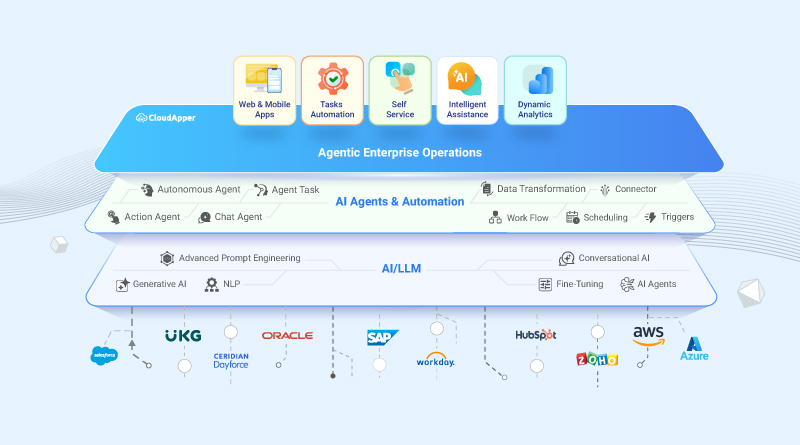
CloudApper AI is an advanced platform that enables organizations to integrate AI into their existing enterprise systems effortlessly, without the need for technical expertise, costly development, or upgrading the underlying infrastructure. By transforming legacy systems into AI-capable solutions, CloudApper allows companies to harness the power of Generative AI quickly and efficiently. This approach has been successfully implemented with leading systems like UKG, Workday, Oracle, Paradox, Amazon AWS Bedrock and can be applied across various industries, helping businesses enhance productivity, automate processes, and gain deeper insights without the usual complexities. With CloudApper AI, you can start experiencing the transformative benefits of AI today. Learn More
- Useful Links:
- Agentic AI
- No-Code/Low-Code
- Custom Software
- HCM Personalization
- iPaaS
- FedRAMP
CloudApper AI Solutions

- Works with







- and more.
Similar Posts

Legacy Modernization Transition: The Compliance Gap That Opens When Both…

Outsourced Legacy Systems: Why Vendor Exit Costs More Than the…