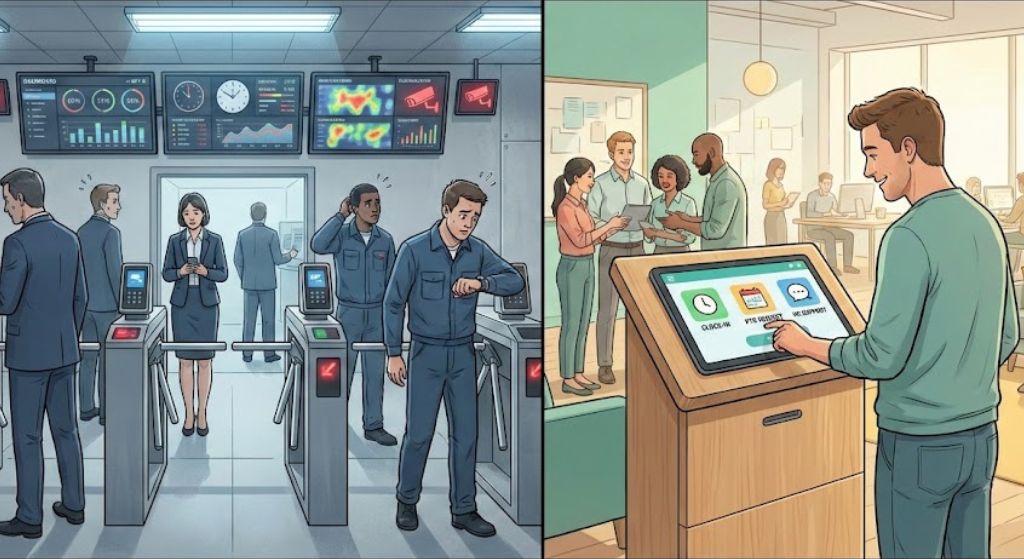
Employee self-service didn’t fail—portals did. Headless HR shifts HR access from portals to where work actually happens: chat tools, kiosks, voice, and embedded workflows. This article explains why HR leaders are moving to transaction-based HR delivery and how frontline organizations can make it real with headless, point-of-work experiences like hrPad.

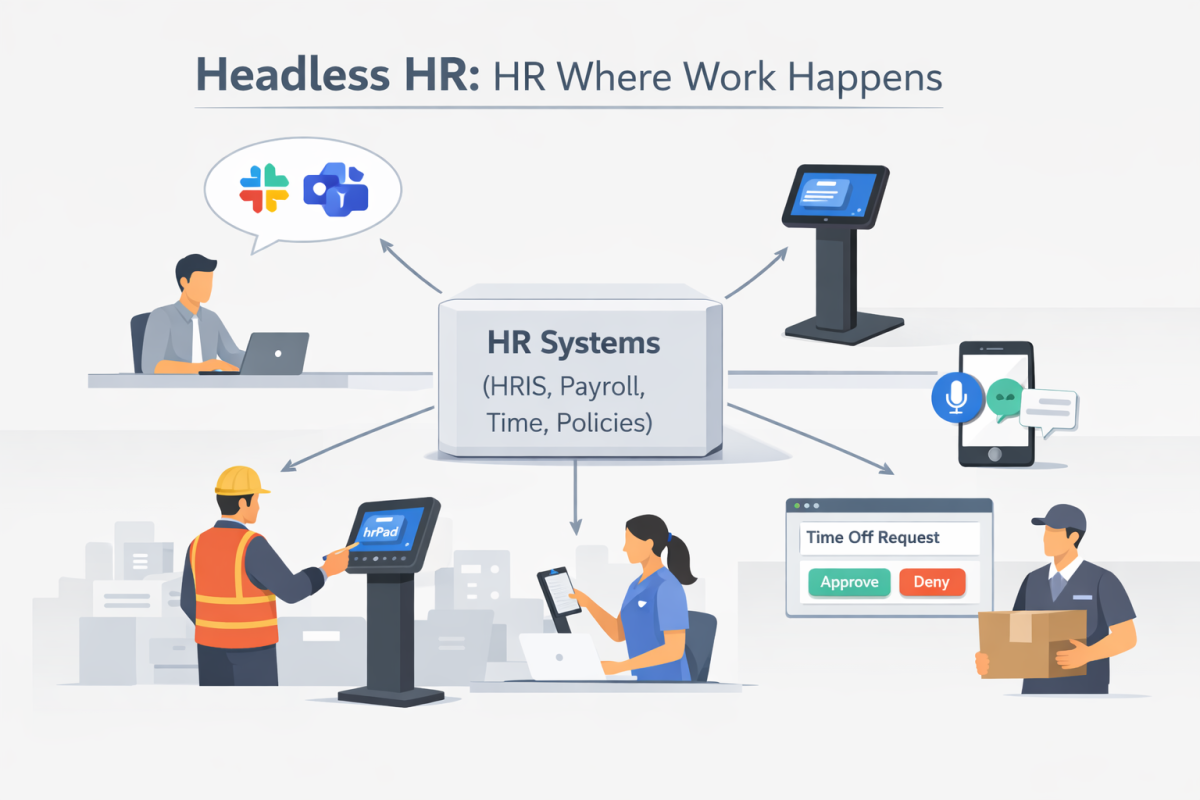
Table of Contents
I’ve lived through every era of HR tech: the “single portal” promise, the HR mobile app boom, and the never-ending cycle of “we just need more training so employees will use it.” Here’s the uncomfortable truth most HR leaders eventually face:
Employee self-service didn’t fail because employees don’t want self-service.
It failed because we made self-service feel like a side quest.
When an employee has to hunt for the right login, remember which app does what, and navigate a maze of menus just to request a day off, we’ve turned a simple moment into friction. And friction is the enemy of adoption.
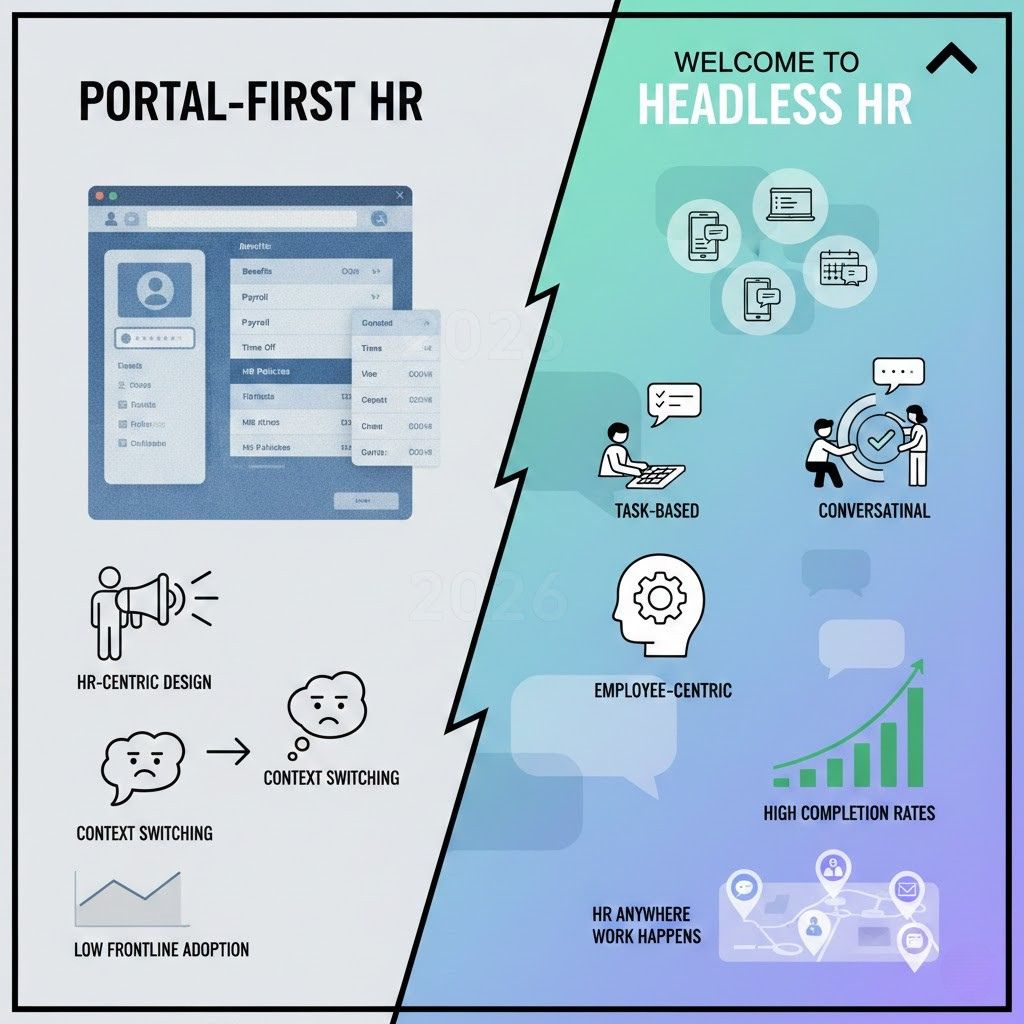
That’s why the most effective HR organizations are shifting from portal-first to presence-first—making HR available where work already happens, not where HR wishes employees would go.
Welcome to headless HR.
What “Headless HR” actually means
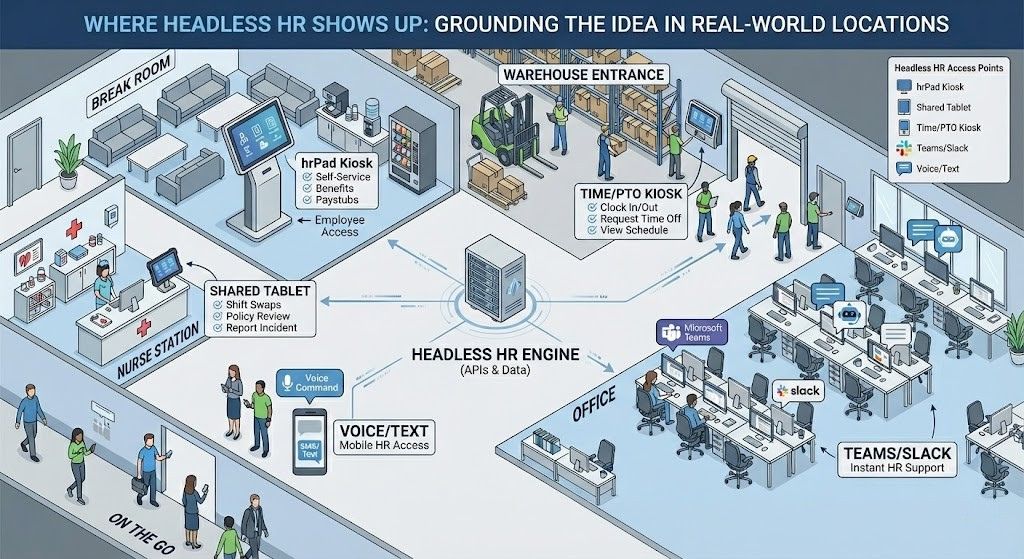
In simple terms, a headless HR system separates the HR “engine” (data + workflows) from the fixed user interface. Instead of forcing everyone into one portal, HR services can be delivered through multiple “front doors”—Slack, Microsoft Teams, kiosks, voice, mobile, or embedded widgets—while the core HR systems remain the system of record behind the scenes.
Think of it like this:
- Your HRIS, payroll, and time systems are the backend.
- The employee experience is the front end.
- Headless HR lets you redesign the front end without ripping out the backend.
That’s a big deal for HR service delivery (HRSD), because the real goal isn’t “get people into the portal.” The goal is: get the transaction done correctly, quickly, and consistently—without burdening HR.
Why the traditional HR portal became dead weight
Portals were built for an earlier workplace assumption: employees have time, a desk, and the patience to navigate HR workflows.
Today, that assumption breaks down in three common scenarios:
1) Context switching kills follow-through
Every time we force a worker to leave the tool they’re already using (Teams, Slack, a scheduling app, the shop floor) we add drop-off risk. People don’t abandon HR tasks because they’re lazy—they abandon them because work is busy.
2) Portals don’t match how people ask for help
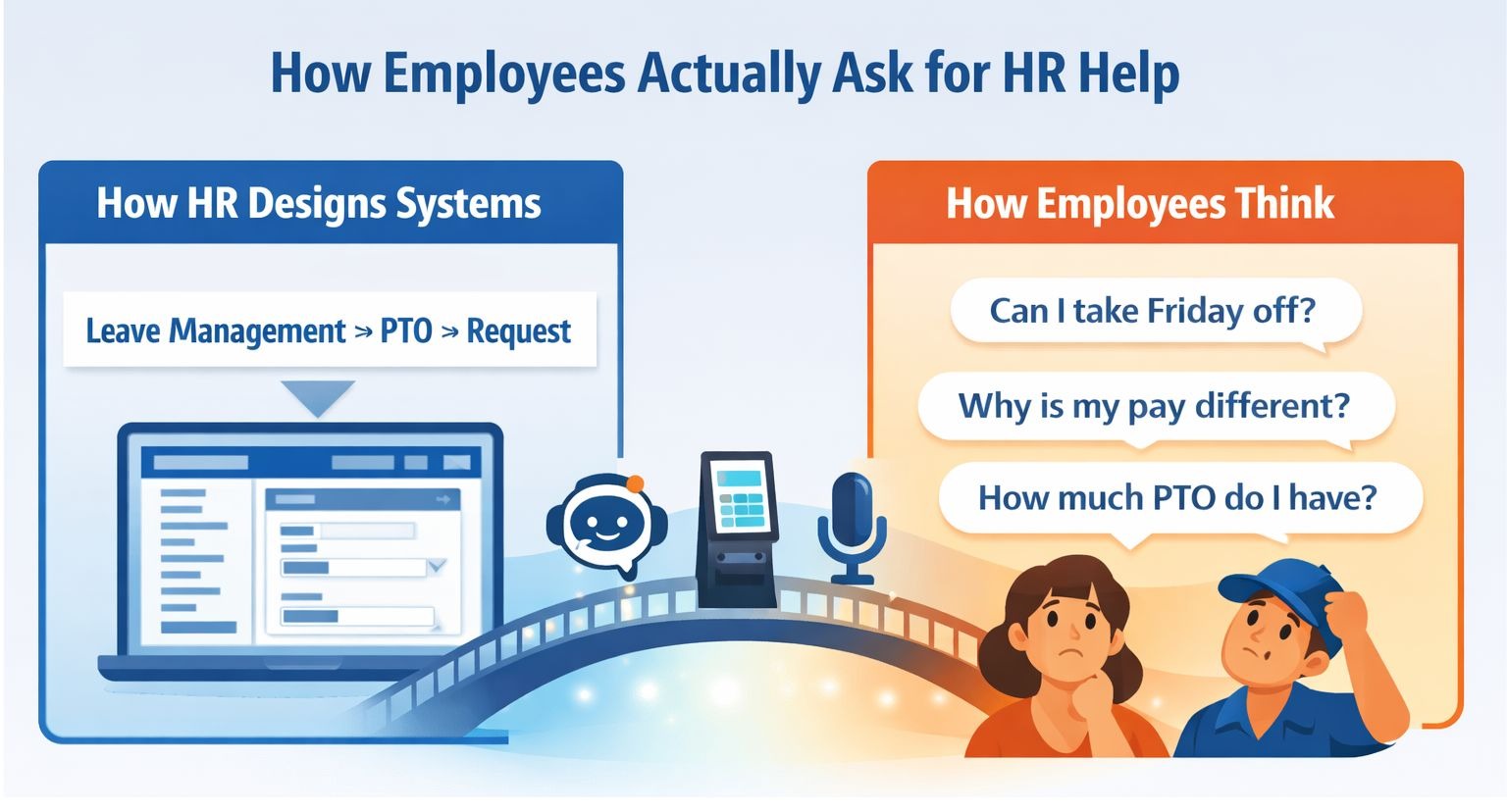
In the real world, employees don’t think:
“Let me find the HR self-service menu item for leave requests.”
They think:
“Can I take Friday off?”
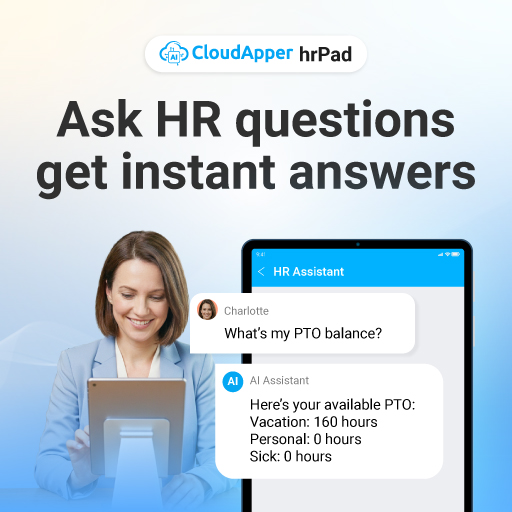
“What’s my PTO balance?”
“Why is my overtime different this week?”
That’s conversational. Not navigational.
3) Frontline and deskless workers are underserved
If your workforce includes manufacturing, healthcare, retail, logistics, or hospitality, portals are often structurally inaccessible—no corporate email, shared devices, limited time, limited bandwidth for multi-step processes.
A portal can still exist. But it shouldn’t be the only doorway.
The real shift: from portals to “transaction interfaces”
The next era of HR isn’t about better portals. It’s about better transactions.
A transaction interface is any experience that lets an employee complete an HR action with minimal friction—often in a conversational flow (text or voice) or a guided kiosk experience.
We’re seeing this play out in three places:
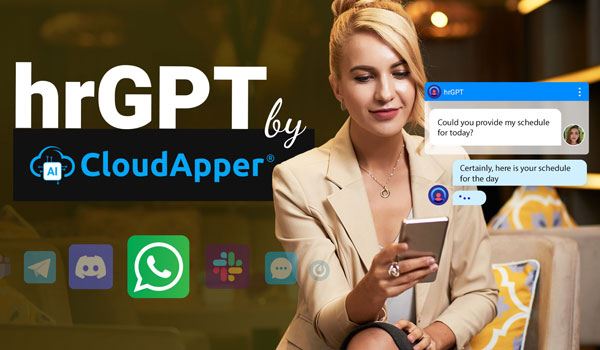
1) Conversational HR in Slack and Teams
Messaging platforms are already where work coordination happens, so HR interactions naturally fit there too. Teams can ask questions, trigger workflows, and surface HR help without forcing employees into a separate HR destination.
And conversational AI is increasingly positioned as a way to improve engagement and streamline work by handling routine questions and requests in a more natural format.
2) “Invisible HR” embedded into existing workflows
This is the essence of headless: HR becomes a capability inside other tools. People stop thinking “I’m using HR software” and start thinking “I’m getting help.”
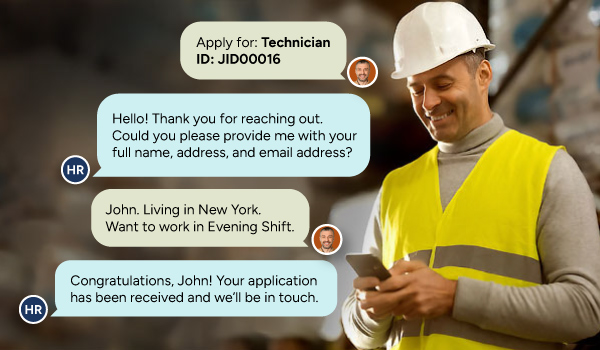
3) Voice and text-based transactions replacing the HR mobile app
HR mobile apps solved one problem—access—while introducing another: app sprawl and login fatigue.
For many organizations, the “HR app” is becoming less important than voice/text entry points that don’t require employees to remember where anything lives.
Where hrPad fits: headless HR for the frontline
Here’s the part many “chat-first” HR strategies miss:
Not everyone lives in Slack or Teams.
And not everyone should have to.
If you run a frontline-heavy organization, you need an HR experience that meets workers where they are—break rooms, nurse stations, warehouse entrances, retail back offices—using shared, secure devices.
That’s exactly where CloudApper hrPad makes headless HR practical.
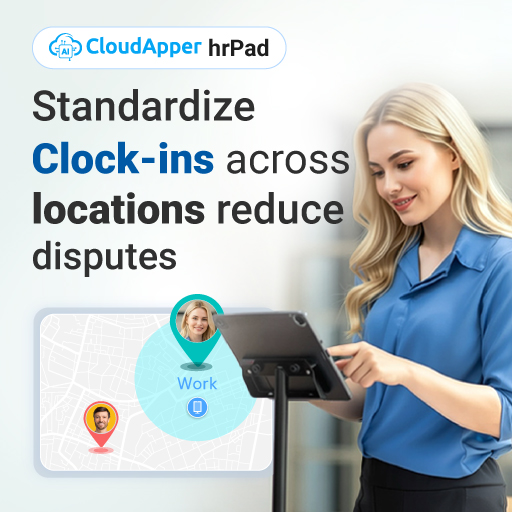
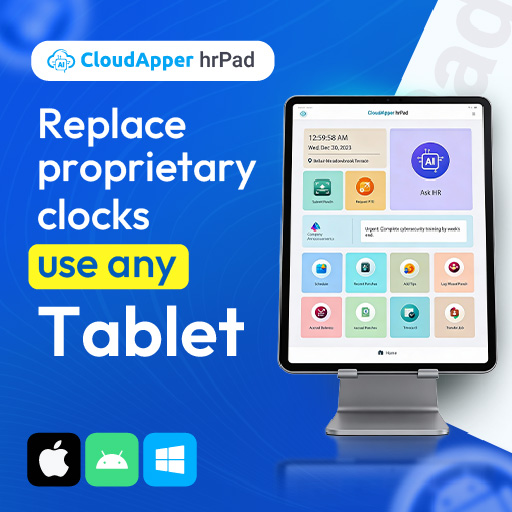
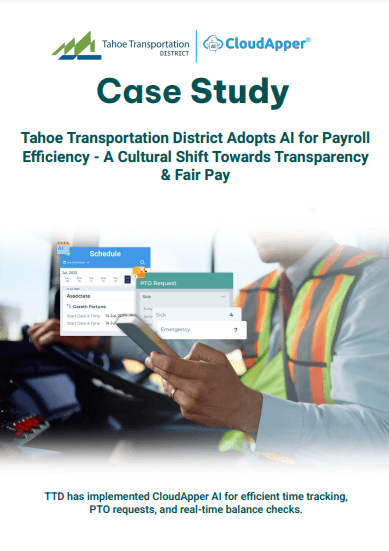
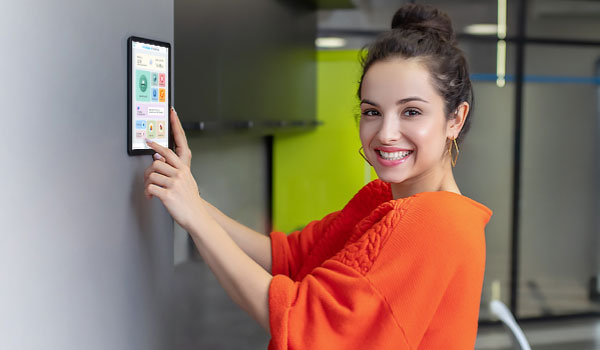
hrPad is an employee self-service kiosk powered by AI agents for HR service delivery, designed to bring high-frequency HR tasks (timekeeping, PTO requests, accrual checks, shift actions, HR Q&A) to the point of work using standard tablets.
In a headless HR model, hrPad becomes one of your most valuable “front ends” because it:
- Delivers HR transactions without requiring personal devices
- Standardizes workflows (so the process is consistent across locations)
- Reduces HR interruptions by handling repetitive questions and requests at the source
It’s not “another portal.” It’s a different doorway—one that actually matches how frontline environments operate.
What a “headless HR” experience looks like in practice
Let’s make it real. An employee wants time off.
Portal-first experience:
They log in (if they remember how), find the right menu, submit the request, hope it routed correctly, and wait.
Headless experience:
They take one of these paths:
- Teams/Slack: “Request PTO for Friday.”
- Kiosk (hrPad): Tap PTO → confirm date → submit → done.
- Voice/text: “How much PTO do I have?” then “Submit request.”
The backend still routes approvals and updates the HRIS. But the employee doesn’t have to “go to HR” to do HR.
This isn’t just convenience. It improves compliance and reduces rework because employees complete transactions correctly the first time, guided by policy-aware prompts.
The HR leader’s playbook: how to move beyond portals without losing control
HR leaders hear “headless” and worry about chaos: too many interfaces, inconsistent answers, security risks.
That’s a valid concern—unless you design it properly.
Here’s what actually works:
Start with the top 10 HR transactions
Not “everything.” The highest volume items.
Typically:
- PTO balance + requests
- Pay questions
- Time corrections
- Schedule/shift actions
- Policy FAQs
- Benefits “how do I…”
- Address changes
- Manager approvals
Build your headless delivery around these.
Make policy and knowledge retrieval a first-class capability
A conversational interface only builds trust if the answers are consistent and aligned to policy. That’s why governance matters: approved content sources, version control, escalation paths.
Measure outcomes like a service organization
Headless HR is HRSD. Treat it like service delivery:
- Deflection: how many repetitive questions never reach HR
- Time-to-resolution
- Completion rate for transactions
- Employee satisfaction with support access
Some organizations using Teams-based assistants report major reductions in Tier 1 tickets (deflection) and faster responses—signals that the channel is working when designed correctly.
Keep humans in the loop
The goal is not to “replace HR.” The goal is to protect HR’s time for work that requires judgment.
Complex cases should escalate cleanly to HR case management or a human HRBP—without losing context.
FAQ
What is headless HR?
Headless HR is an approach where HR systems (HRIS, payroll, time) act as the backend, while employees access HR services through different front ends like chat, kiosks, voice, or embedded tools.
Why are HR portals losing adoption?
Because portals add friction: extra logins, context switching, and navigation overhead for simple tasks—especially for frontline and deskless workers.
What replaces HR portals?
Not one thing—multiple transaction interfaces: Teams/Slack conversational workflows, voice/text requests, and self-service kiosks that deliver HR actions at the point of work.
Is an HR mobile app obsolete?
Not always—but many organizations are shifting the “front door” from apps to faster voice/text and embedded interfaces, because the goal is transaction completion, not app usage.
The bottom line: HR should feel easy—because work is hard enough
If your HR portal cost $2M and employees still ask managers how to request PTO, that’s not an employee problem. That’s a design problem.
Headless HR is simply a commitment to meet employees where they already are—digitally and physically—and make HR actions as natural as sending a message or tapping a kiosk.
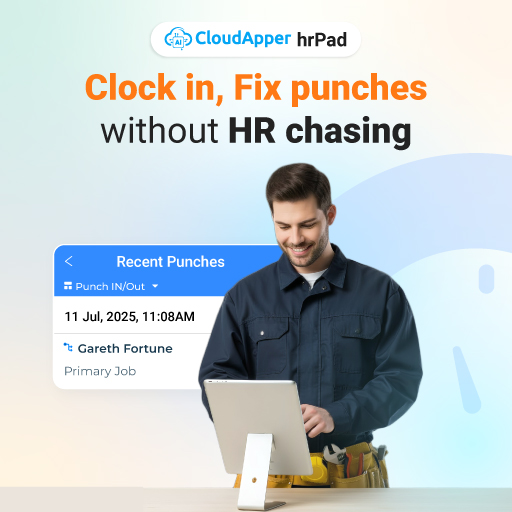
And for frontline-heavy organizations, hrPad is a practical way to make that shift real: a modern employee self-service kiosk that brings HR service delivery to the point of work, powered by AI agents, without forcing employees into yet another portal.
If you’re seeing low HR self-service adoption, high Tier 1 HR interruptions, or constant “where do I go to do this?” questions—book a quick call and we’ll map the top transactions you can move from portal friction to headless, point-of-work HR delivery.

What is CloudApper AI Platform?
CloudApper AI is an advanced platform that enables organizations to integrate AI into their existing enterprise systems effortlessly, without the need for technical expertise, costly development, or upgrading the underlying infrastructure. By transforming legacy systems into AI-capable solutions, CloudApper allows companies to harness the power of Generative AI quickly and efficiently. This approach has been successfully implemented with leading systems like UKG, Workday, Oracle, Paradox, Amazon AWS Bedrock and can be applied across various industries, helping businesses enhance productivity, automate processes, and gain deeper insights without the usual complexities. With CloudApper AI, you can start experiencing the transformative benefits of AI today. Learn More
Brochure
CloudApper hrPad
Empower Frontline Employees with an AI-Powered Tablet/iPad Solution
Download Brochure
CloudApper AI Solutions for HR
- Works with


- and more.







Similar Posts
Why UKG Pro Employee Self Service Adoption Struggles and How…
Beyond Burnout: Job Hugging Is the New Stagnation Risk HR…