Automated employee self-service is transforming HR efficiency for UKG users. Discover how CloudApper hrPad reduces administrative workload, improves compliance, streamlines timekeeping, and empowers frontline employees with AI-driven HR service delivery.


Table of Contents
HR teams today are not short on systems. They are short on time.
Even with modern HCM platforms like UKG/Kronos, HR departments still struggle with repetitive inquiries, manual approvals, missed punches, compliance tracking, onboarding paperwork, and employee follow-ups. The result is an efficiency gap: technology exists, but administrative workload remains high.
Automated employee self-service is emerging as the most practical solution to close that gap.
CloudApper hrPad’s AI-powered employee self-service kiosk addresses this challenge directly by combining HR service delivery, automation, and AI assistance into a single frontline access point. Instead of replacing your HCM, hrPad extends it — helping HR teams reduce manual effort while improving the employee experience.
This article explores how automated employee self-service eliminates HR bottlenecks, strengthens compliance, and creates measurable operational impact.
What Is Automated Employee Self-Service in HR?
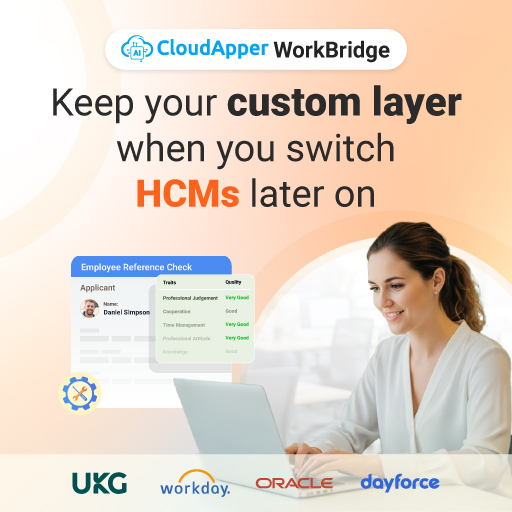
Automated employee self-service (ESS) enables employees to complete common HR tasks independently — without emailing HR or submitting paper forms.
Modern ESS systems allow employees to:
- Check PTO balances
- Submit leave requests
- View schedules
- Access policies
- Clock in and out
- Receive real-time HR assistance
When powered by AI, employee self-service goes beyond static portals. It becomes conversational, proactive, and integrated directly into workforce management systems.
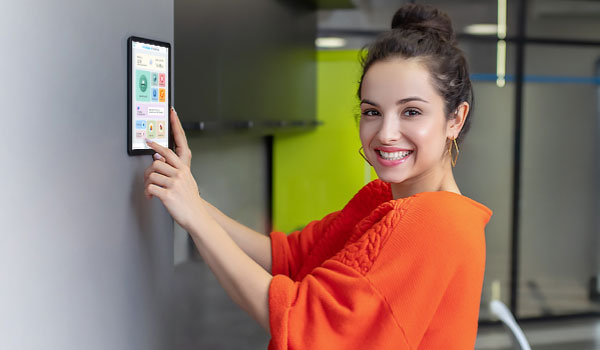
CloudApper hrPad delivers this through an AI-enabled kiosk experience integrated with UKG/Kronos, turning any iPad, Android tablet, or Windows device into a full HR service delivery hub.
The HR Efficiency Gap: Why Automation Matters Now
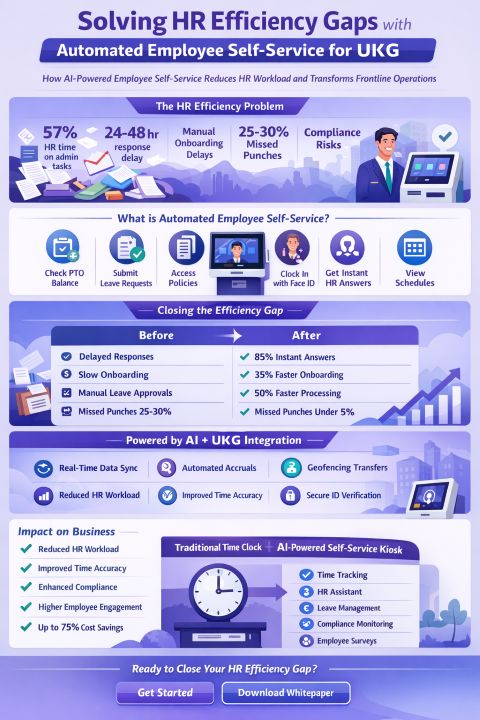
According to SHRM research, HR professionals spend up to 57% of their time on administrative tasks. Gartner reports that HR leaders rank operational efficiency among their top three challenges for 2024–2026.
Despite enterprise HCM platforms, frontline environments still experience:
- High volumes of repetitive HR inquiries
- Manual onboarding and offboarding workflows
- Timekeeping errors and missed punches
- Delayed leave approvals
- Compliance tracking burdens
Automation through employee self-service directly addresses these friction points.
Automating Onboarding and Offboarding
Onboarding and offboarding are often paperwork-heavy and coordination-intensive processes. When managed manually, they slow productivity and increase error rates.
CloudApper hrPad’s AI Assistant automates documentation workflows, guides new hires through required forms, and ensures compliance checkpoints are completed in sequence. Internal customer data shows onboarding time reduced by an average of 35%, with administrative effort reduced by up to 70%.
For offboarding, automated workflows ensure final documentation, policy acknowledgments, and compliance confirmations are completed without back-and-forth emails. This structured automation reduces oversight risk and ensures a consistent employee experience.
Reducing HR Ticket Volume Through Real-Time AI Support
One of the most significant inefficiencies in HR departments is email-based support.
Employees frequently ask:
- “How much PTO do I have left?”
- “When is my next shift?”
- “What’s our attendance policy?”
- “Why was my overtime calculated this way?”
CloudApper hrPad’s AI Assistant resolves up to 85% of employee inquiries instantly, based on configured company policies and UKG-integrated data (client survey data). This reduces ticket volume while improving transparency.
Instead of waiting 24–48 hours for an HR response, employees receive answers at the kiosk during clock-in or shift check-in. This shift from reactive email communication to proactive self-service significantly enhances HR responsiveness.
Improving Timekeeping Accuracy and Workforce Data Integrity
Missed punches and inaccurate time tracking remain common operational challenges in frontline environments.
By integrating directly with UKG/Kronos, hrPad enables:
- Touchless Face ID time capture
- QR code and NFC verification
- Real-time sync with workforce data
- Automated cost center transfers through geofencing
Organizations have reported reductions in missed punches from 25–30% down to under 5% after implementing hrPad (customer data). Accurate time capture not only ensures fair pay but also reduces payroll correction cycles and compliance risks.
Streamlining Leave Management and Attendance Tracking
Manual leave management consumes HR bandwidth and increases approval delays.
With automated employee self-service:
Employees can submit leave requests directly through the kiosk.
Approvals are routed automatically.
Balances update in real time within UKG.
HR maintains a centralized leave history for audit and forecasting.
Clients report up to a 50% reduction in leave processing time after automation. Faster approvals improve workforce planning and reduce employee frustration.
Enabling Continuous Feedback and Engagement
Modern HR service delivery is not only about transactions — it is also about engagement.
CloudApper hrPad enables:
- Customizable job satisfaction surveys
- Real-time performance check-ins
- Mental well-being prompts during clock-in
- Instant employee referrals
SHRM reports that continuous feedback programs can improve employee engagement by up to 20%. By embedding feedback directly into the timekeeping process, hrPad captures insights at natural workforce touchpoints rather than relying on occasional surveys.
Proactive Compliance Monitoring
Compliance complexity continues to rise across industries.
CloudApper hrPad supports compliance by:
- Automating labor rule validations
- Ensuring accurate accrual calculations
- Logging employee acknowledgments
- Generating structured compliance reports
According to Gartner, automated compliance systems can reduce legal exposure risk by up to 40%. By integrating policy-based AI responses and automated tracking, hrPad reduces manual oversight gaps.
Data-Driven HR Decision Making
Automated employee self-service also strengthens analytics.
Because every interaction — PTO submission, shift swap, time capture, policy inquiry — is logged in real time, HR leaders gain actionable workforce insights.
This allows for:
- Trend analysis on absenteeism
- Identification of overtime patterns
- Engagement tracking
- Resource allocation optimization
Instead of reacting to issues after they escalate, HR teams can proactively adjust staffing and engagement strategies.
Cost Efficiency Without New Infrastructure
Traditional hardware-based time clocks require proprietary equipment and maintenance.
CloudApper hrPad operates on:
- iOS tablets
- Android tablets
- Windows devices
- Desktop and web apps
Organizations report cost reductions of up to 75% compared to legacy hardware time clock systems. This flexibility enables scalability without capital-intensive hardware upgrades.
The Strategic Impact of Automated Employee Self-Service
When implemented correctly, automated ESS produces measurable transformation across HR operations:
Administrative workload decreases.
Employee response times improve.
Compliance risks are reduced.
Timekeeping accuracy increases.
Engagement levels rise.
Rather than simply digitizing HR tasks, hrPad modernizes HR service delivery by placing automation and AI at the frontline of workforce interaction.
Why Automated Employee Self-Service Is the Future of HR Efficiency
The future of HR is not about adding more systems. It is about removing friction.
As organizations expand deskless and hybrid workforces, employee self-service kiosks integrated with enterprise HCM platforms like UKG/Kronos become critical infrastructure.
CloudApper hrPad bridges the gap between digital HR systems and frontline employees. It transforms the traditional time clock into a fully integrated HR service delivery hub — powered by AI, automation, and real-time data synchronization.
Frequently Asked Questions
What is automated employee self-service in HR?
Automated employee self-service (ESS) allows employees to independently complete common HR tasks such as checking PTO balances, submitting leave requests, accessing policies, clocking in and out, and receiving real-time support without contacting HR. When integrated with workforce management systems like UKG/Kronos, automated ESS reduces administrative workload and improves response time across HR operations.
How does automated employee self-service improve HR efficiency?
Automated employee self-service improves HR efficiency by reducing repetitive inquiries, streamlining onboarding and offboarding workflows, automating leave approvals, and minimizing timekeeping errors. AI-powered tools can resolve most employee questions instantly, allowing HR teams to focus on strategic initiatives rather than manual administrative tasks.
Can employee self-service integrate with UKG or Kronos?
Yes. Modern employee self-service solutions like CloudApper hrPad integrate seamlessly with UKG/Kronos to provide real-time data synchronization. This ensures accurate time tracking, PTO updates, attendance management, compliance reporting, and payroll accuracy without replacing your existing HCM system.
What is an employee self-service kiosk for UKG?
An employee self-service kiosk for UKG is a tablet- or device-based solution that enables frontline employees to clock in, submit time-off requests, check schedules, access HR policies, and receive AI-powered assistance. It serves as a physical HR touchpoint for deskless workers who may not regularly use desktop portals or email.
How does AI enhance employee self-service?
AI enhances employee self-service by providing instant, policy-based answers to HR questions, guiding employees through workflows, automating approvals, and analyzing workforce data to identify trends. AI-powered HR assistants reduce response times, improve employee experience, and support data-driven HR decision-making.
Does automated employee self-service improve compliance?
Yes. Automated employee self-service strengthens compliance by ensuring accurate time capture, enforcing labor rules, maintaining audit trails, and generating structured compliance reports. When integrated with systems like UKG/Kronos, it reduces manual errors and helps organizations stay aligned with evolving labor regulations.
Final Thoughts
Solving HR efficiency gaps requires more than incremental software improvements. It requires shifting from manual intervention to automated employee self-service.
CloudApper hrPad demonstrates how AI-driven self-service can reduce HR workload, strengthen compliance, improve engagement, and optimize workforce management — all while seamlessly integrating with existing UKG/Kronos environments.
HR teams no longer need to choose between efficiency and employee experience. With automated self-service, they can achieve both.

What is CloudApper AI Platform?
CloudApper AI is an advanced platform that enables organizations to integrate AI into their existing enterprise systems effortlessly, without the need for technical expertise, costly development, or upgrading the underlying infrastructure. By transforming legacy systems into AI-capable solutions, CloudApper allows companies to harness the power of Generative AI quickly and efficiently. This approach has been successfully implemented with leading systems like UKG, Workday, Oracle, Paradox, Amazon AWS Bedrock and can be applied across various industries, helping businesses enhance productivity, automate processes, and gain deeper insights without the usual complexities. With CloudApper AI, you can start experiencing the transformative benefits of AI today. Learn More
CloudApper AI Solutions for HR
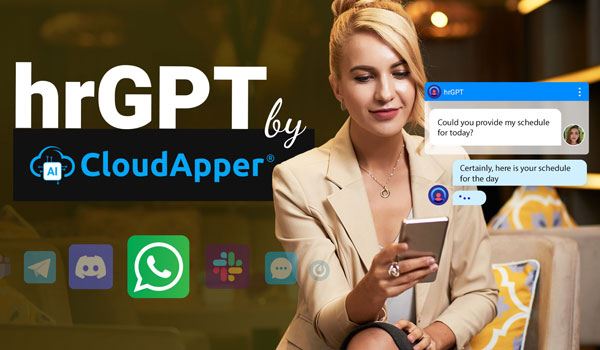
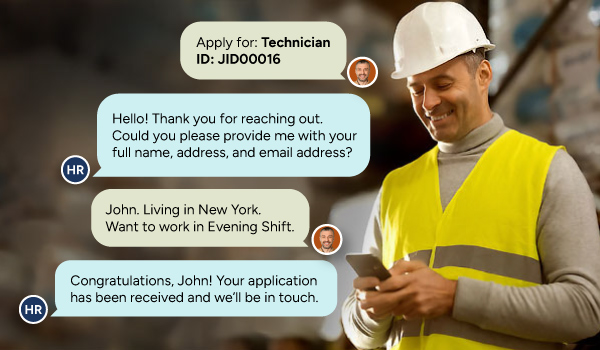
- Works with


- and more.






Similar Posts
Why Complex Workforce Environments Need More Than a Standard HCM…

Auto-Clear Timesheets Using API Workflows: Save HR Hours