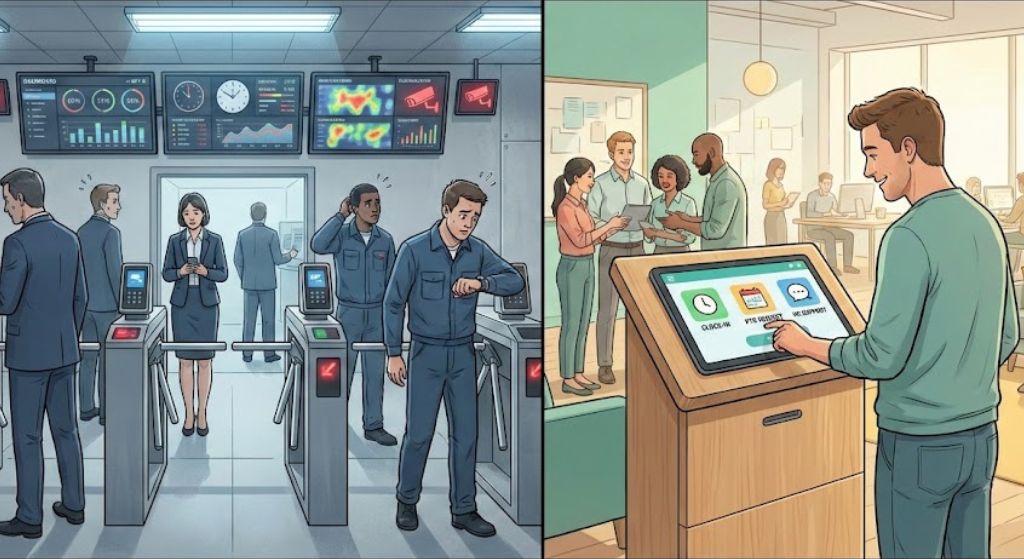
Frontline burnout often comes from daily HR friction, not the work itself. Learn how hrPad’s AI-powered employee self-service kiosk removes bottlenecks, builds trust, and supports frontline teams with people-first AI.

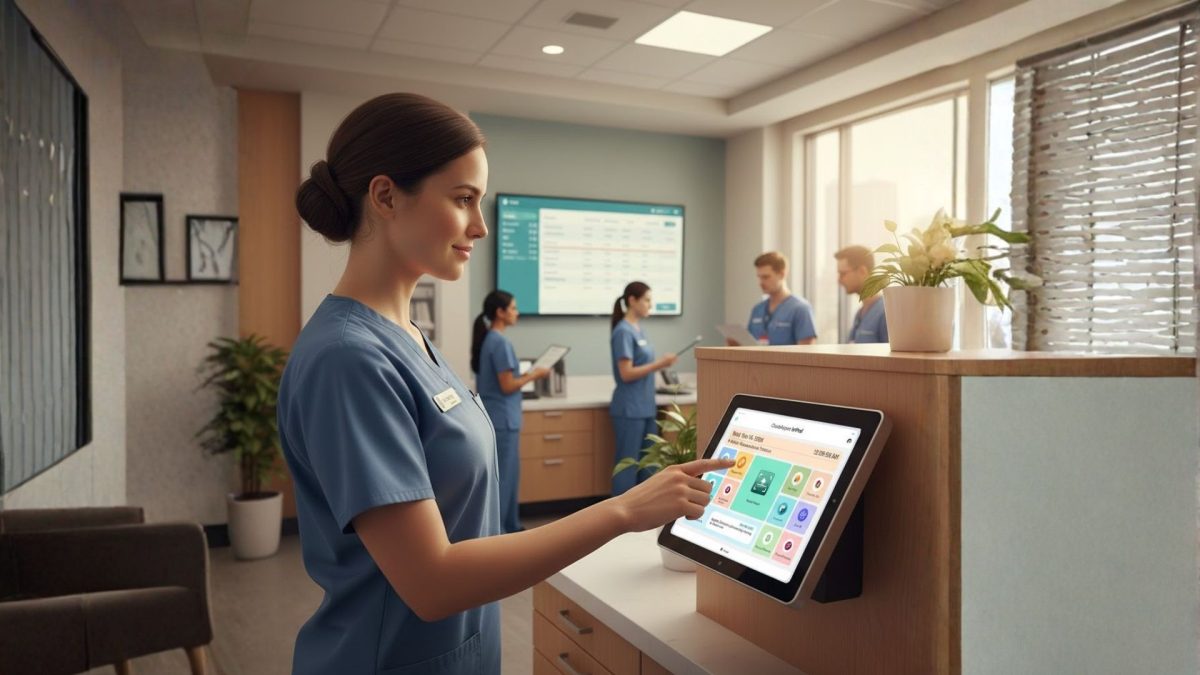
Table of Contents
Frontline work is real work in the most literal sense. You have to be present to do it. And because it happens on the floor, in the store, on the route, in the clinic, or on the line, the “small” workplace frictions hit harder: a confusing schedule change, a payroll question that can’t wait, a PTO request stuck in limbo, a time punch that didn’t register, a policy you can’t quickly find.
A large global study of 8,200 frontline employees across 10 countries found that burnout remains widespread (76%). But it also surfaced an encouraging finding: frontline workers who use AI on the job are less likely to report burnout (41%) than those who don’t (54%).
This is not a “nice-to-have” workforce segment either. Frontline workers make up roughly 80% of the global workforce—meaning the frontline experience is the workforce experience.
So the question for HR and operations leaders isn’t whether AI belongs in frontline environments. The real question is:
How do we deploy AI in a way that reduces friction, supports people, and builds trust—without making employees feel like technology is there to replace them?
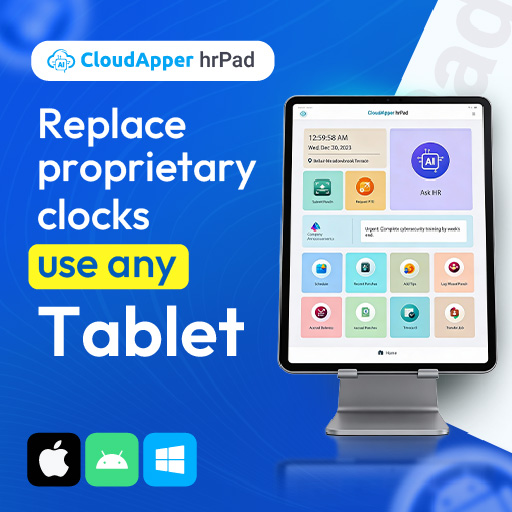
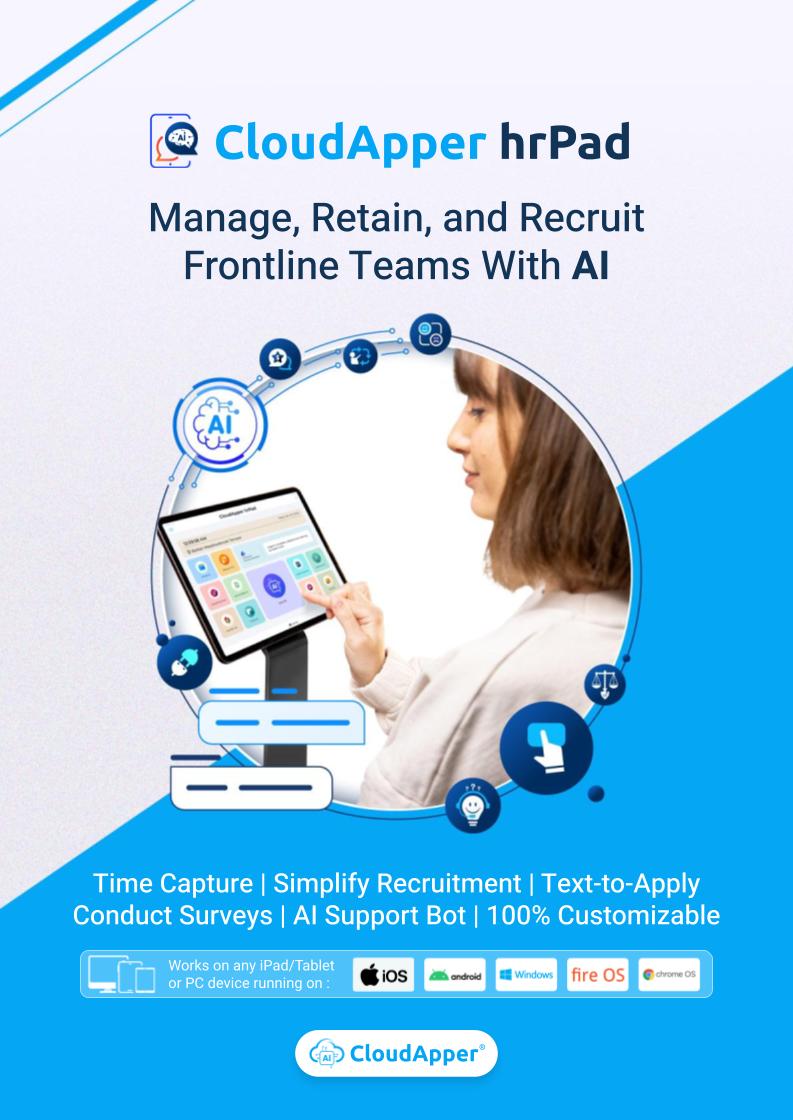
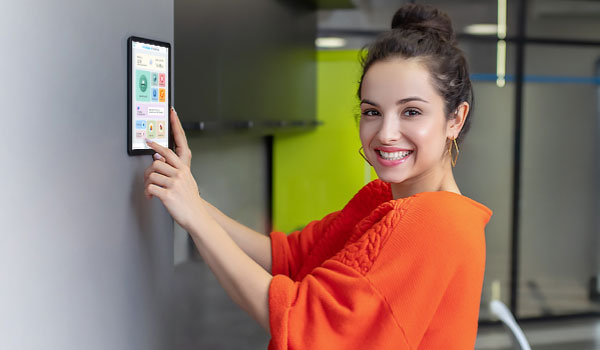
That’s exactly where CloudApper hrPad fits. hrPad is an employee self-service kiosk powered by AI Agents for HR service delivery (HRSD). It runs on regular iPads/tablets, giving frontline teams a simple way to handle timekeeping and common HR tasks in the flow of work—without requiring every employee to have a desktop computer, email access, or a long training ramp.
Why burnout stays high on the frontline
Burnout isn’t only about working hard. It’s also about working through constant friction.
In many frontline environments, employees experience a recurring pattern:
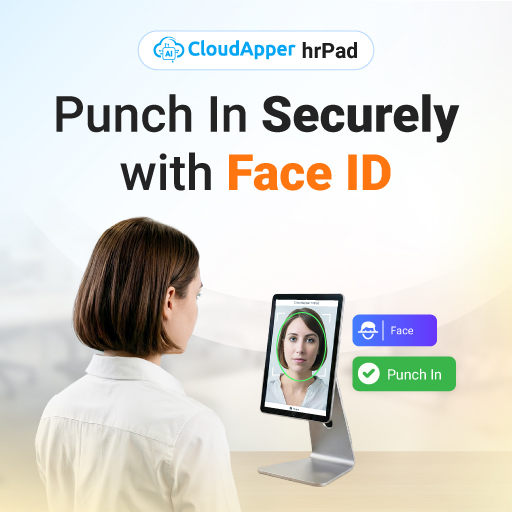
- They’re expected to be fast and accurate.
- They don’t always have easy access to HR resources in real time.
- They have limited control over schedules, time off, and shift coverage.
- Small mistakes in timekeeping can turn into big problems on payday.
When those frictions pile up, people stop feeling supported. They start feeling like they’re constantly chasing answers—about policies, hours, overtime rules, or the status of a request.
That’s why the AI finding above matters: it suggests that when AI is used in practical, day-to-day ways—especially around HR and workforce workflows—it can reduce the “drag” that turns normal work into exhausting work.
The trust gap: employees want help, not replacement
Here’s the part leaders can’t ignore: even when employees see the upside of AI, many still fear it.
In the same research, most frontline workers said replacing frontline roles with AI would be a “huge mistake,” and many worry AI could replace their jobs. A surprisingly large share also believe that the biggest threat is not the AI itself, but coworkers who are better at using it.
This is where a lot of AI rollouts go wrong. The tech may be capable, but the message is unclear. When people don’t understand why AI is being introduced, they fill in the blanks—and the blanks often look like job loss.
A people-first AI approach needs to feel like this:
- AI removes waiting, not jobs.
- AI reduces repetitive admin, not human value.
- AI increases clarity, not confusion.
- AI supports decisions, not hidden decisions.
When AI consistently shows up as “help” in the moments employees actually care about, trust starts to build naturally.
What frontline workers actually want AI to do
What’s interesting about the study is how practical frontline expectations are. The tasks employees said they’d most trust AI with are not controversial. They’re the kinds of “HR friction” issues that cost time and create stress:
- Searching the company handbook and summarizing policies
- Recommending schedules aligned with preferences and availability
- Helping employees understand and use benefits
- Providing training recommendations
- Updating certifications and skills
Many would also trust AI with workflow tasks like developing career paths, verifying paychecks, approving time off, and finding coverage or swapping shifts.
This list is basically a roadmap for reducing burnout: faster answers, fewer bottlenecks, and more control over the things that shape daily life at work.
The challenge is delivery. Frontline employees don’t always have the same access as desk-based employees. If AI support lives only in email, intranet pages, or complex portals, it won’t reach the people who need it most.
Why a shared HR kiosk is the simplest frontline AI strategy
Frontline work happens in physical space. That’s why kiosks succeed when they’re designed well:
- They live where the work happens (breakroom, entrance, supervisor station).
- They’re fast (employees can complete tasks in seconds).
- They’re simple (minimal steps, low training burden).
A kiosk becomes a “single place” for the repeatable actions employees need—especially when managers and HR teams can’t always respond instantly.
Add AI agents to that kiosk experience, and it becomes something more powerful: an always-on HR support layer that reduces interruptions and removes the most common sources of frustration.
Where hrPad fits: an AI-powered employee self-service kiosk
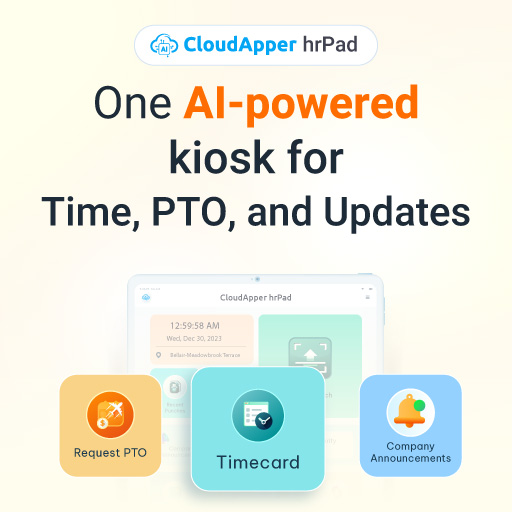
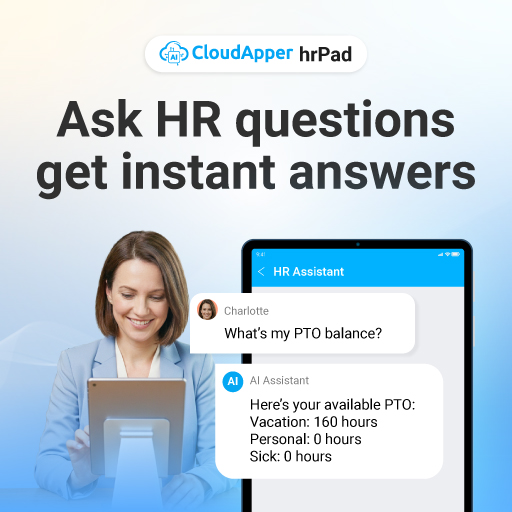
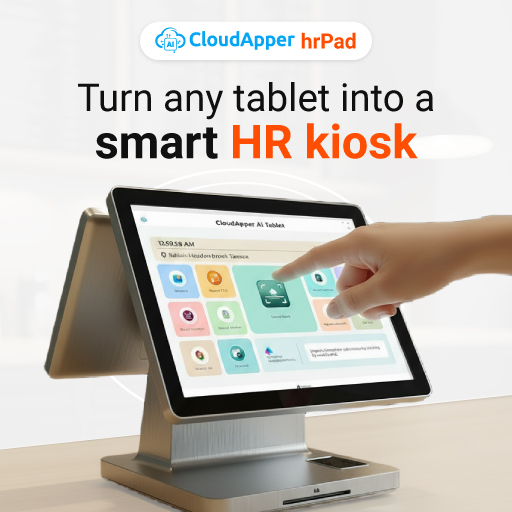
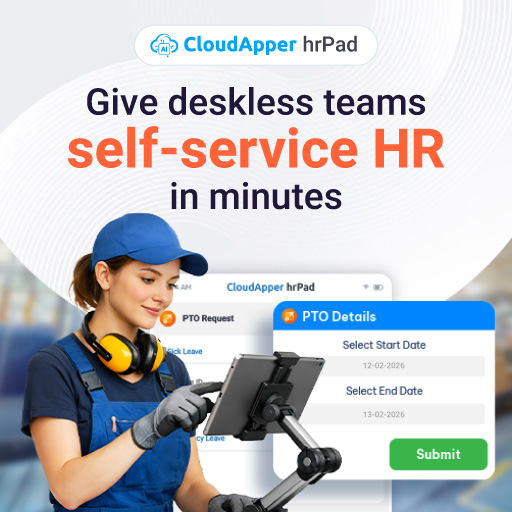
CloudApper hrPad is built to bring HR self-service and timekeeping together into one frontline-friendly experience. It turns a standard tablet into an employee self-service kiosk powered by AI Agents for HRSD—so employees can clock in, request time off, check balances, manage shift actions, and get answers to HR questions quickly and consistently.
What makes hrPad especially relevant to the burnout conversation is that it focuses on the highest-friction areas of frontline work—without trying to “boil the ocean” or force employees into complicated systems.
Self-service that reduces the daily back-and-forth
When employees can self-serve common needs, they don’t have to chase answers during a busy shift. hrPad supports common self-service tasks like:
- Checking accrual balances and submitting PTO requests
- Handling shift-related actions (bid, swap, confirm)
- Asking HR questions through an AI assistant aligned to company policies
That’s not “AI theater.” That’s removing repeated friction from the frontline day.
Timekeeping that feels more accurate and fair
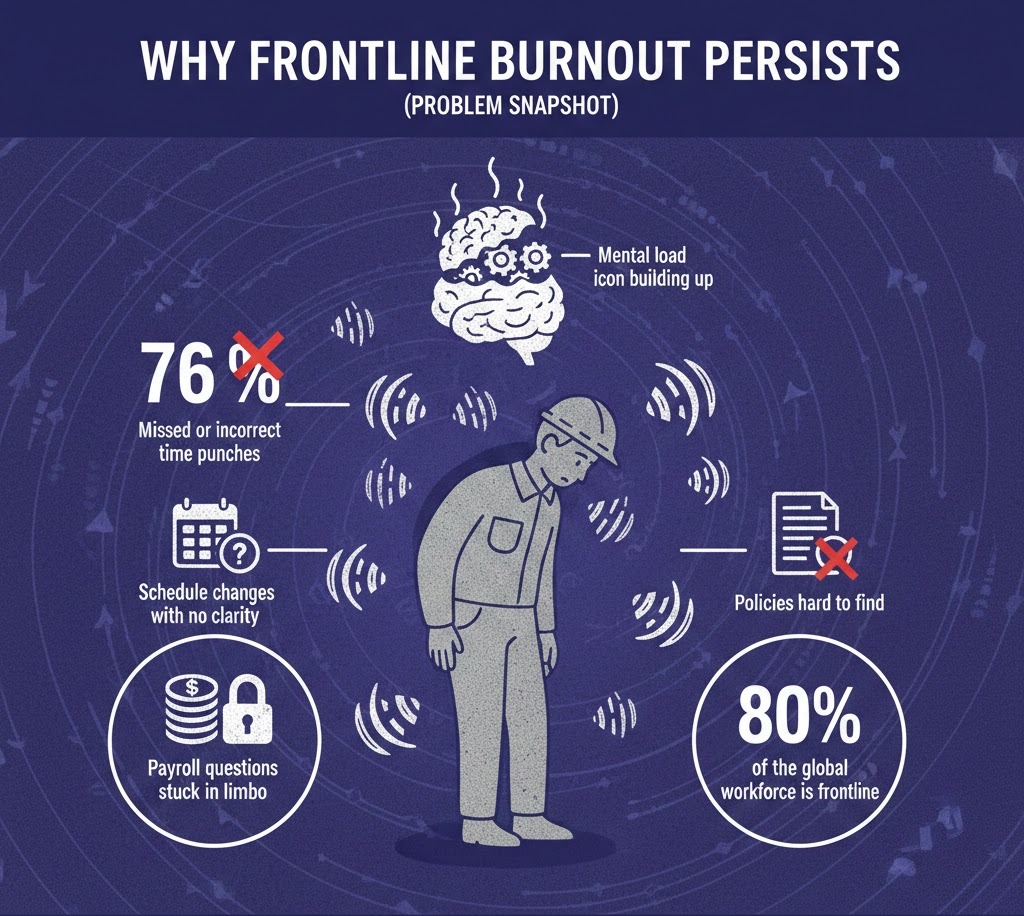
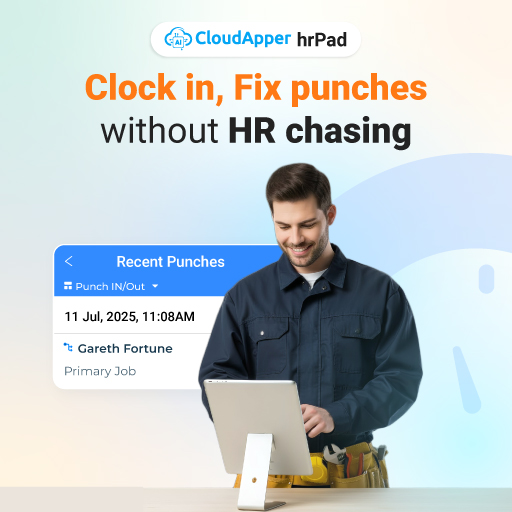
Timekeeping is one of those areas where small failures create big stress—because time is money. hrPad supports touchless Face ID check-in for accurate clock-ins and reducing buddy punching, which helps create cleaner time data and fewer downstream disputes.
Smart workflows for real-world environments
Frontline work is often tied to locations, roles, and cost centers. hrPad includes features like geofencing to support automated cost center transfers and accountability—useful for environments where employees move between departments or zones during a shift.
A 24/7 HR assistant that reduces interruptions
Many frontline HR questions are repetitive: “What’s the policy?” “How do I request time off?” “When does overtime start?” A 24/7 AI assistant reduces the burden on HR and supervisors while giving employees instant answers without the awkward wait.
How hrPad aligns with the “burnout reducers” in the research
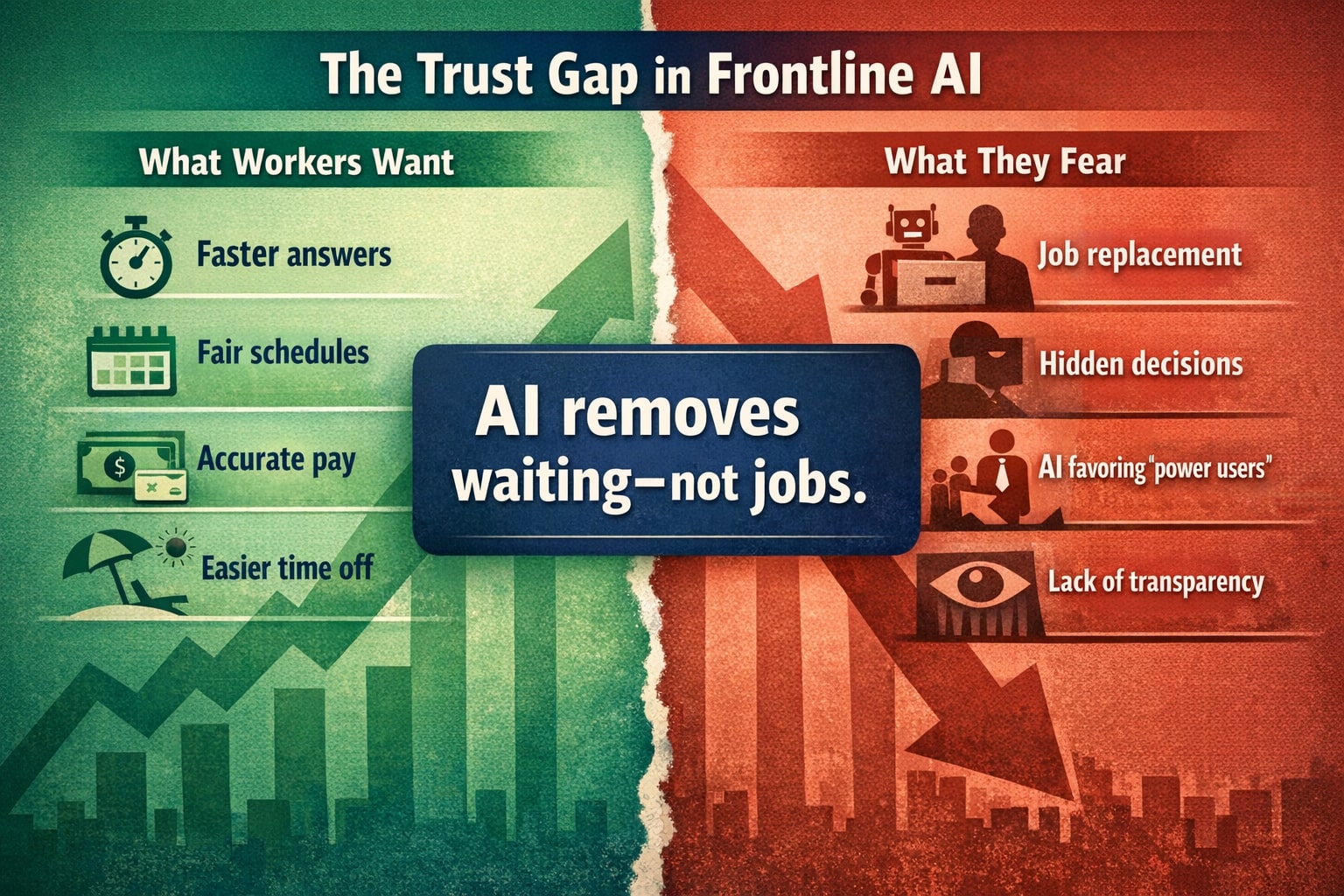
If you want AI to reduce burnout, start where employees already say they want support: clarity, scheduling, time off, and day-to-day guidance.
1) Faster policy answers, fewer dead ends
Employees trust AI for policy discovery and summaries. hrPad delivers that in the flow of work through a kiosk-based HR assistant aligned with your policies.
2) Less schedule chaos, more employee control
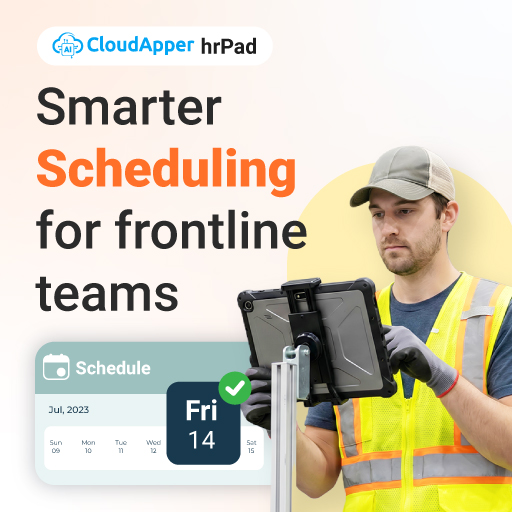
Schedule stress is real on the frontline. hrPad supports shift workflows that make it easier for employees to take action instead of feeling stuck.
3) PTO without friction
When PTO and accrual questions require human routing, employees often delay taking time off or feel uncertain about balances. hrPad brings visibility and requests into a quick self-service flow.
4) Fewer timekeeping disputes
Identity-based clock-ins help reduce buddy punching and improve punch accuracy, which can reduce corrections and frustrations that drain both employees and HR teams.
5) AI that feels supportive, not suspicious
The biggest adoption risk is forcing AI into workflows that don’t make sense. hrPad’s advantage is that it makes AI tangible and helpful in plain sight—answering questions, simplifying requests, and reducing wasted time.
A practical, people-first way to roll out hrPad AI on the frontline
If you want adoption without backlash, roll out in a way that makes the value obvious on day one.
Start with the highest-trust use cases:
- Policy Q&A and “how do I” questions
- PTO balance checks and requests
- Basic timekeeping improvements
Then expand to deeper workflows:
- Shift actions and coverage workflows
- Department/cost center movement support (where relevant)
- Overtime and rules-based automation
This approach helps employees experience AI as support. It also gives leaders a clean feedback loop to refine prompts, policies, and workflows based on real usage.
FAQ
What is hrPad?
hrPad is an AI-powered employee self-service kiosk that runs on standard tablets. It helps frontline employees handle timekeeping, PTO, shift tasks, and HR questions through AI Agents for HR service delivery.
How can an HR kiosk reduce frontline burnout?
By removing daily friction: faster answers to HR questions, easier PTO workflows, simpler shift actions, and fewer timekeeping errors that turn into payroll stress.
Does hrPad replace HR teams or supervisors?
No. hrPad is designed to reduce repetitive requests and waiting by enabling self-service and instant answers—so HR and leaders can focus on higher-value work.
What devices can hrPad run on?
hrPad is designed as a tablet-based kiosk experience and can be deployed on standard devices commonly used in frontline environments.
The takeaway: make AI feel like support, and burnout goes down
Burnout stays high when frontline employees have to fight the system just to do basic things: understand a policy, fix a punch, request time off, or get a schedule question answered. The research signals that AI can help—especially when it’s used for practical employee experience tasks and introduced with a people-first message.
CloudApper hrPad is a natural way to bring that support to the frontline because it meets employees where they are: on a shared kiosk in the workplace, designed for quick self-service, powered by AI Agents that reduce repetition, waiting, and uncertainty.
If you want AI adoption that frontline teams actually welcome, the play is simple: start with workflows that make work easier today—and let the results build trust.

What is CloudApper AI Platform?
CloudApper AI is an advanced platform that enables organizations to integrate AI into their existing enterprise systems effortlessly, without the need for technical expertise, costly development, or upgrading the underlying infrastructure. By transforming legacy systems into AI-capable solutions, CloudApper allows companies to harness the power of Generative AI quickly and efficiently. This approach has been successfully implemented with leading systems like UKG, Workday, Oracle, Paradox, Amazon AWS Bedrock and can be applied across various industries, helping businesses enhance productivity, automate processes, and gain deeper insights without the usual complexities. With CloudApper AI, you can start experiencing the transformative benefits of AI today. Learn More
Brochure
CloudApper hrPad
Empower Frontline Employees with an AI-Powered Tablet/iPad Solution
Download Brochure
CloudApper AI Solutions for HR
- Works with


- and more.







Similar Posts
Why UKG Pro Employee Self Service Adoption Struggles and How…
Beyond Burnout: Job Hugging Is the New Stagnation Risk HR…