Enterprise software is shifting from rigid systems to adaptive intelligence. As workflows grow more complex, organizations need AI that understands business rules, compliance, and real operations. This article explains how enterprise AI workflow intelligence enables flexible, outcome-driven automation without replacing existing systems.


Table of Contents
Enterprise software is going through a quiet shift. It is not being replaced overnight, and it is not becoming obsolete. Instead, the way organizations extract value from software is changing.
For years, most platforms focused on standardization. Businesses were expected to adapt their processes to fit predefined systems. That approach worked when workflows were simple and predictable. In 2026, it no longer reflects how most organizations operate.
The challenge companies face today is not a lack of tools. It is managing workflow complexity across systems, teams, and regulations.
Where Standard Software Starts to Fall Short
Traditional enterprise platforms were designed to handle common use cases. They store records, move data, and support standard workflows.
- Over time, however, businesses evolve.
- Industries develop unique operating models.
- Regulatory requirements grow more specific.
- Internal processes diverge across teams and regions.
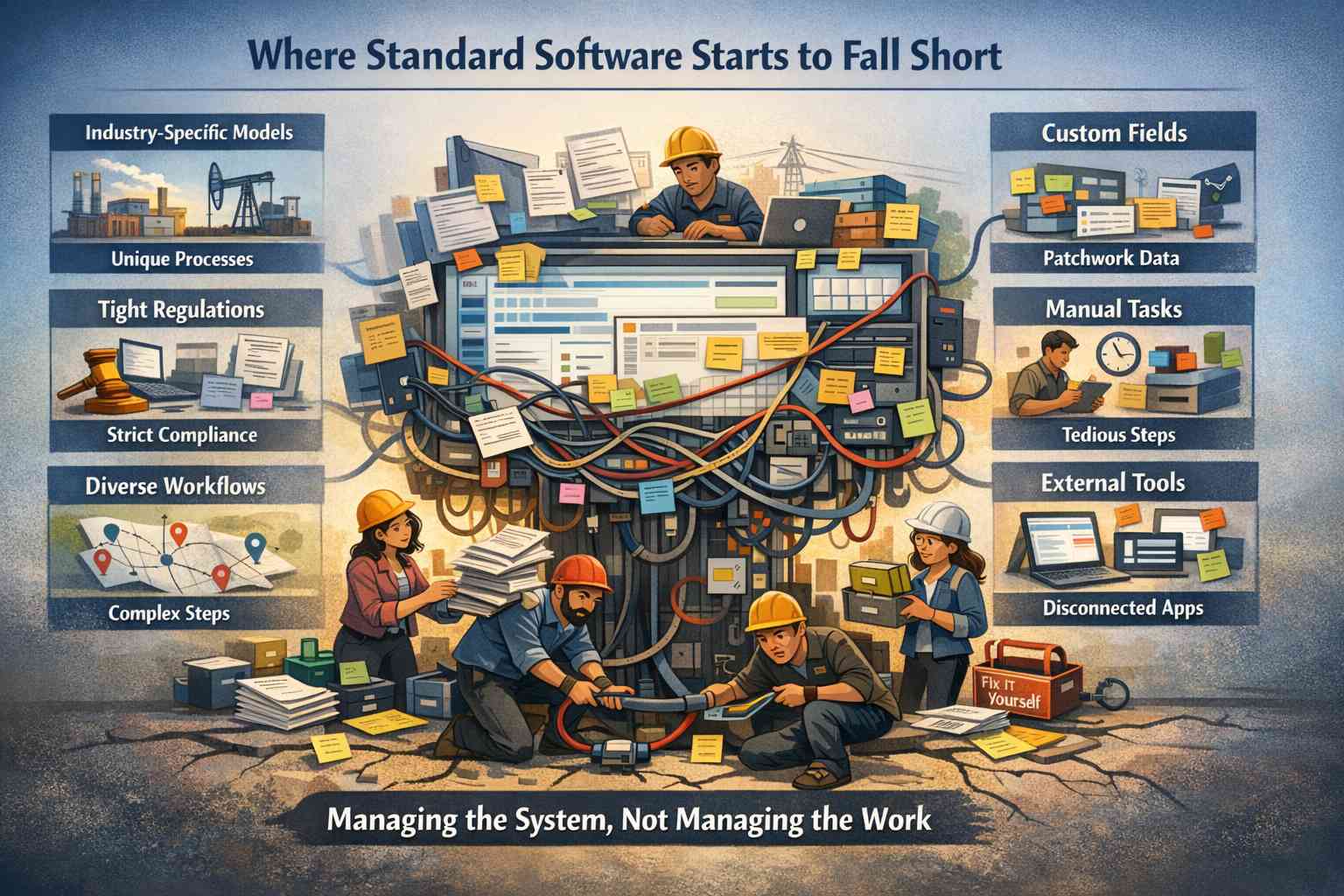
As a result, organizations layer custom fields, manual steps, and external tools on top of their core systems. The software still exists, but it no longer reflects how work actually happens.
At this point, teams are managing the system instead of the system supporting the team.
Why Generic Capabilities Are No Longer Enough
Many enterprise platforms still rely on the same core capabilities they introduced years ago. These include data entry, reporting, and basic automation.
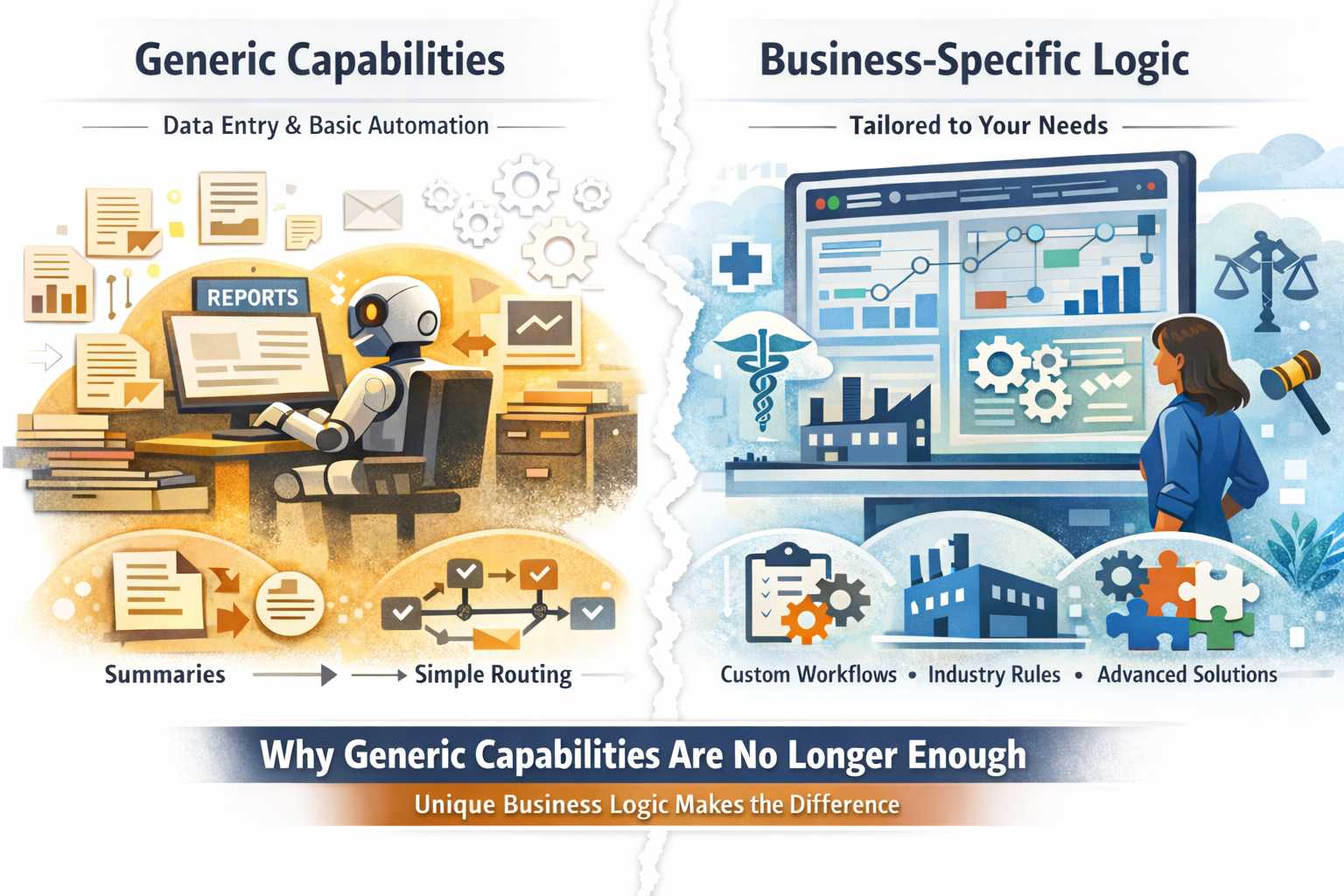
General-purpose AI has changed expectations. Tasks that were once considered advanced are now easy to replicate. Summaries, simple routing, and basic automation no longer differentiate one platform from another.
What remains difficult to replicate is business-specific logic.
The Value Has Moved to Operational Logic
The most effective systems understand more than data. They understand context.
This includes:
-
Industry-specific workflows
-
Compliance and regulatory requirements
-
Approval paths, exceptions, and dependencies
This logic develops over time and reflects how an organization actually operates. It cannot be copied from a template or added as a surface-level feature.
Systems that embed this logic directly into workflows deliver more value because they reduce manual decision-making and prevent errors before they happen.
Why Building Everything from Scratch Is Not Realistic
Some organizations choose to build fully custom systems to reflect their internal logic. While this approach offers flexibility, it requires significant engineering resources and long-term maintenance.
Most companies need another option.
- They want intelligence without replacing existing platforms.
- They want flexibility without rebuilding their entire technology stack.
This is where adaptive AI platforms enter the picture.
How CloudApper AI Supports Adaptive Workflows
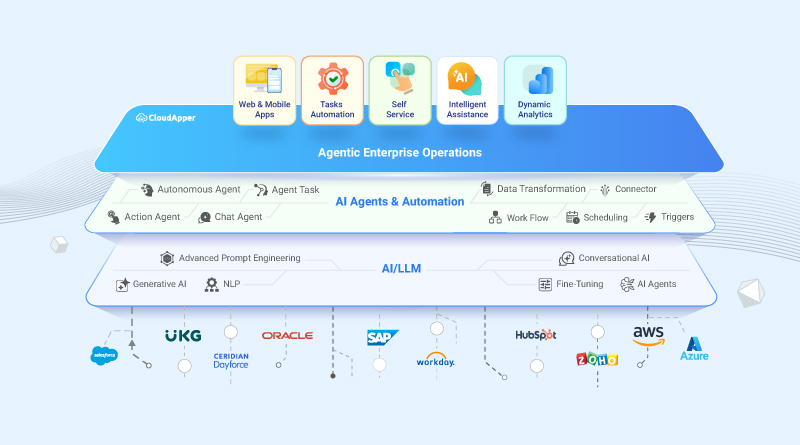
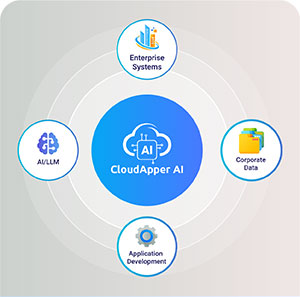
CloudApper AI is designed to work alongside existing enterprise systems, not replace them. It acts as an Agentic AI platform that understands business rules and executes workflows across connected systems.
Instead of forcing teams into rigid processes, CloudApper AI allows organizations to:
-
Connect legacy and modern systems into a unified workflow
-
Encode custom business rules and compliance requirements
-
Deploy AI agents that carry out real operational tasks
These agents do not just respond to requests. They follow logic, trigger actions, and move work forward based on defined conditions.
From Managing Software to Managing Outcomes
Traditional platforms focus on recording activity. CloudApper AI focuses on enabling outcomes.
- Data is not limited to dashboards.
- Rules are enforced automatically.
- Workflows progress without constant manual oversight.
This approach reduces operational friction while preserving the systems organizations already rely on.
Standard Platforms vs CloudApper AI–Driven Workflows
Standard platforms apply the same structure to every organization. CloudApper AI adapts workflows to how each organization actually operates.
- Generic AI adds conversational layers. CloudApper AI deploys task-oriented agents that execute approvals, validations, and integrations.
- Standard tools provide shared functionality. CloudApper AI enables proprietary workflows that reflect unique business logic.
The difference is not feature count. It is control.
What This Means for Enterprise Teams in 2026
Enterprise software is moving toward flexibility, intelligence, and adaptability.
Organizations that rely solely on standardized workflows will continue to face friction as complexity increases. Those that embed logic and automation directly into their operations will gain efficiency without sacrificing control.
CloudApper AI exists to support that shift. It allows teams to evolve their workflows without replacing their systems or increasing operational overhead.
Final Thought
The future of enterprise software is not about abandoning existing platforms. It is about extending them with intelligence that reflects real-world operations.
CloudApper AI enables organizations to move beyond static systems and toward workflows that understand context, follow rules, and act with purpose.
As complexity continues to grow, adaptability becomes the true advantage.
Frequently Asked Questions
-
What is enterprise AI workflow intelligence?
Enterprise AI workflow intelligence refers to AI systems that understand business rules, context, and workflows, then execute tasks across enterprise systems instead of only storing data. -
How is workflow intelligence different from traditional automation?
Traditional automation follows fixed rules, while workflow intelligence adapts to conditions, exceptions, and approvals based on real operational logic. -
Why do standard enterprise platforms struggle with complex workflows?
Standard platforms rely on predefined processes that cannot easily adapt to industry-specific rules, regional compliance, or evolving business needs. -
What role do AI agents play in enterprise workflows?
AI agents execute tasks such as approvals, validations, and integrations by following business logic rather than waiting for manual input. -
Does enterprise AI replace existing systems?
No. Enterprise AI workflow intelligence extends existing systems by adding adaptive logic and automation without requiring full system replacement. -
Which teams benefit most from workflow intelligence?
Operations, HR, finance, compliance, and IT teams benefit most because they manage complex processes with frequent exceptions and approvals.

What is CloudApper AI Platform?
CloudApper AI is an advanced platform that enables organizations to integrate AI into their existing enterprise systems effortlessly, without the need for technical expertise, costly development, or upgrading the underlying infrastructure. By transforming legacy systems into AI-capable solutions, CloudApper allows companies to harness the power of Generative AI quickly and efficiently. This approach has been successfully implemented with leading systems like UKG, Workday, Oracle, Paradox, Amazon AWS Bedrock and can be applied across various industries, helping businesses enhance productivity, automate processes, and gain deeper insights without the usual complexities. With CloudApper AI, you can start experiencing the transformative benefits of AI today. Learn More
CloudApper AI Solutions

- Works with


- and more.







Similar Posts
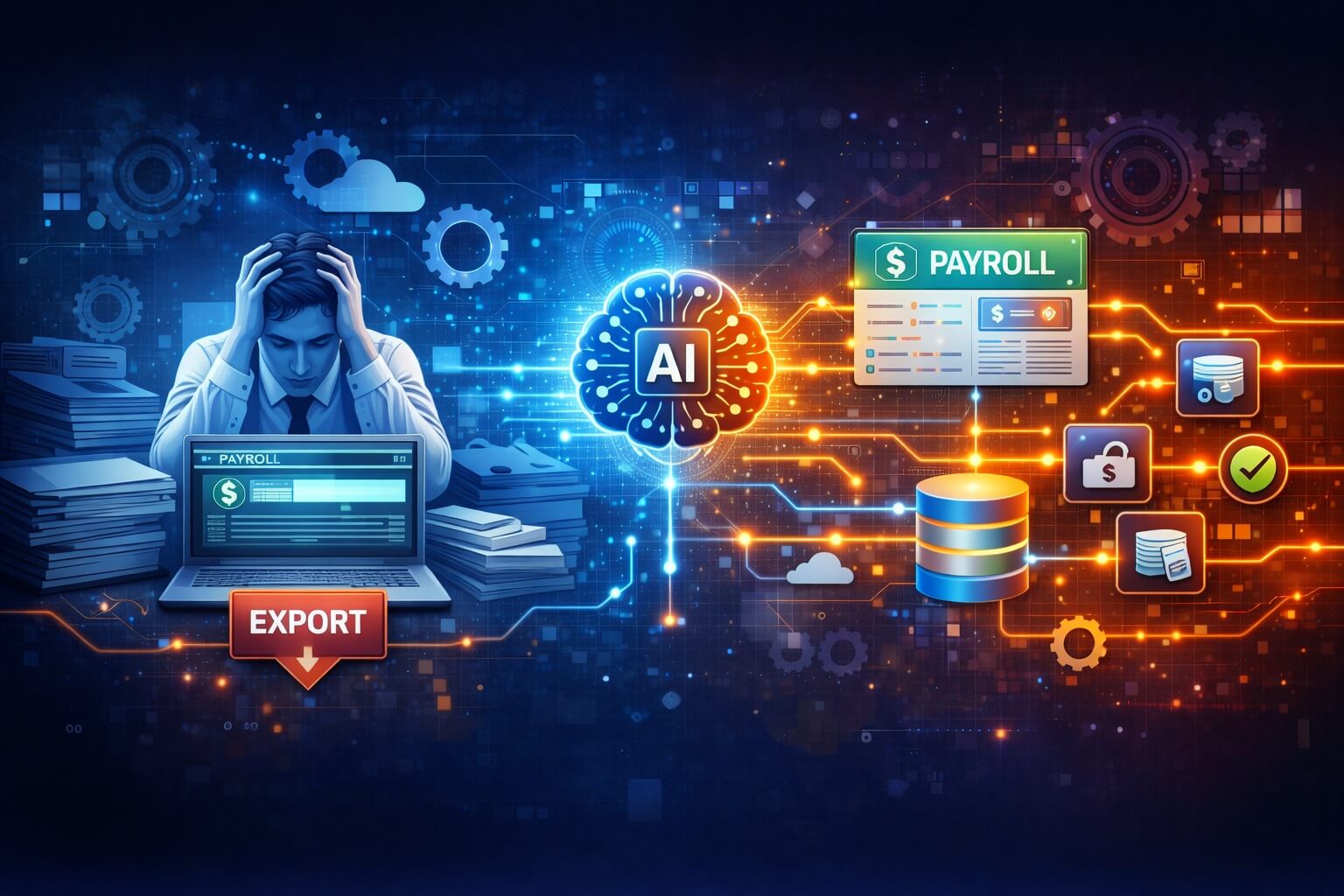
Automated Payroll Integration To Stop Manual Payroll Exports from Killing…
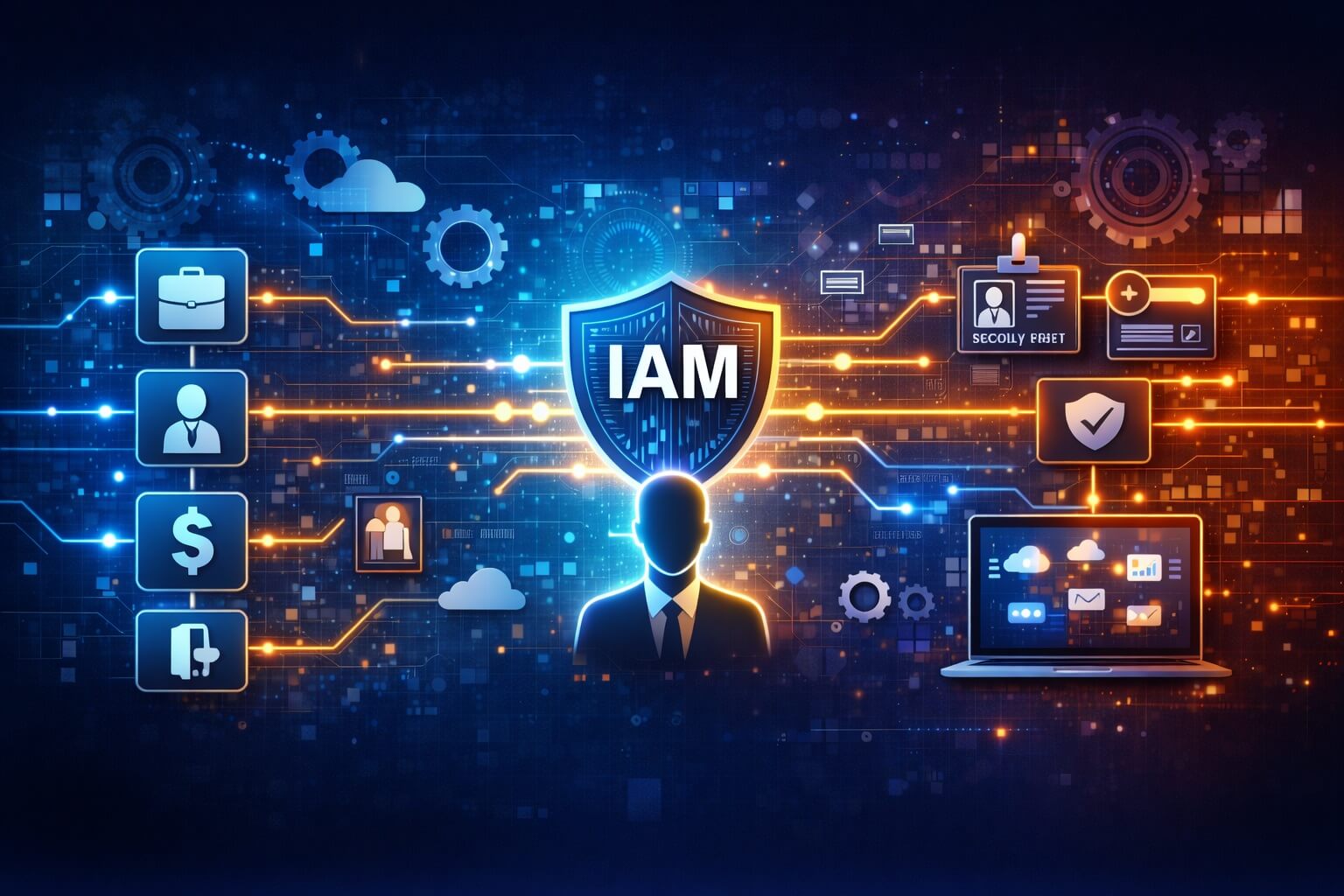
Employee Lifecycle Management with Identity and Access Management (IAM) Integration
 Secure Enterprise Data