Hiring paraprofessionals is challenging amid shortages in school districts. These 10 targeted interview questions assess key skills in IEP support, behavior management, and collaboration. Pair them with CloudApper AI Recruiter for 24/7 automated screening, 90% faster processing, and up to 76% reduced time-to-hire.

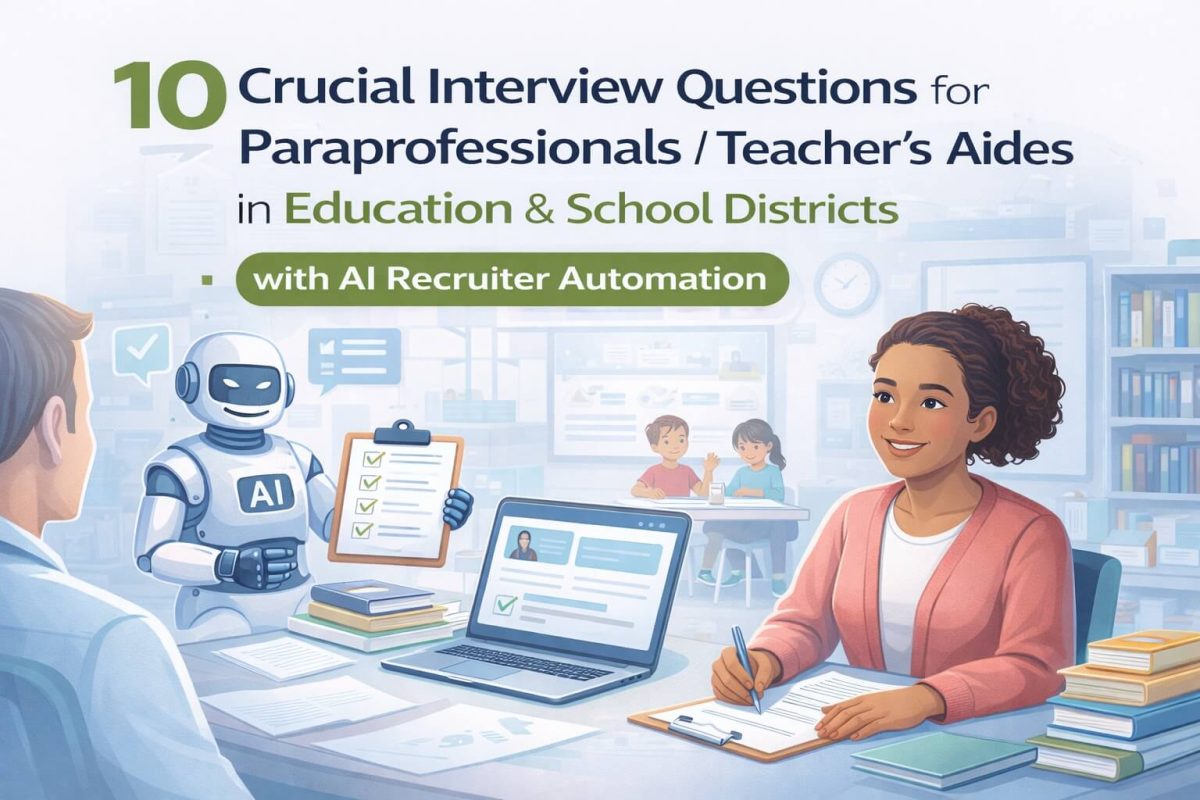
Table of Contents
School districts nationwide are facing a critical paraprofessional shortage that’s directly impacting special education services and classroom support. According to recent data from the National Education Association, 86% of school districts report difficulty hiring qualified paraprofessionals, with some positions remaining vacant for entire school years. This shortage is particularly acute in special education, where federal law mandates specific support services that simply cannot be delivered without adequate paraprofessional staff—putting districts at legal and compliance risk.
The hiring challenges are multifaceted and intensifying. Average time-to-fill for paraprofessional positions has stretched to 48 days, yet students with IEPs need support starting day one of the school year. Candidate drop-off rates hover around 63% between application and hire, largely because qualified candidates accept other positions during lengthy screening processes. The role now requires technological competence (assistive technology, learning management systems, data tracking), understanding of trauma-informed practices, behavior intervention skills, and ability to support diverse learning needs—far beyond the “classroom helper” perception of decades past. Meanwhile, compensation often struggles to compete with retail and service industries offering similar hourly wages with more flexible schedules.
CloudApper AI Recruiter revolutionizes this entire hiring landscape. This conversational AI chatbot conducts screening interviews 24/7 via SMS or web chat, processes candidates 90% faster than traditional methods, eliminates unconscious bias in initial evaluation, and assesses both instructional support capabilities and alignment with inclusive education values before human hiring managers invest their time. Districts using AI-powered recruiting report filling paraprofessional positions in under 14 days—even during the peak hiring season when every district competes for the same limited talent pool.
We’ll give you the exact interview questions that identify capable, student-centered, team-oriented paraprofessionals, then show you how CloudApper AI Recruiter handles the heavy lifting automatically—so you can provide the support services students legally deserve.
TL;DR
School districts face paraprofessional shortages — use these 10 behavioral interview questions to evaluate candidates on IEP collaboration, crisis response, diverse needs support, and data tracking. CloudApper AI Recruiter automates initial screening via chat/SMS, speeds hiring by 76%, expands applicant pools 6x, and eliminates bias for better fits.
Why These Questions Matter for Paraprofessionals
The paraprofessional role has evolved dramatically from “teacher’s helper” to specialized instructional support provider. Today’s paraprofessionals implement individualized behavior intervention plans, collect IEP progress data, provide one-on-one academic support using evidence-based interventions, operate complex assistive technology, manage personal care needs with dignity, de-escalate crisis situations, collaborate with multidisciplinary teams, and often serve as the primary support for students with significant disabilities—all while working under teacher supervision but frequently making independent moment-to-moment decisions.
Post-IDEA reauthorization and with increased inclusion models, paraprofessionals work with more diverse student populations across general education settings, requiring flexibility, cultural competence, and sophisticated understanding of differentiated instruction. They’re expected to understand trauma-informed practices, recognize signs of abuse or neglect as mandated reporters, maintain confidentiality around sensitive student information, and adapt instantly when student needs change.
Old interview questions like “Do you like working with kids?” or “Can you follow directions?” completely fail to reveal whether a candidate can implement a sensory break protocol, collect data on IEP goals, use a communication device to facilitate student expression, or maintain professional boundaries while providing intimate care. Modern paraprofessional interviews must assess instructional capability, behavioral management skills, technological adaptability, collaboration mindset, and genuine commitment to inclusive education—all while processing high volumes of candidates efficiently before the school year begins.
Top 10 Essential Paraprofessional / Teacher’s Aide Interview Questions (Plus How AI Recruiter Can Automate The Entire Hiring Process)
1. “Describe your understanding of a paraprofessional’s role in supporting students with IEPs and how you would collaborate with the classroom teacher.”
Why ask this? This reveals understanding of the support role, professional boundaries, and team collaboration—foundational to success.
Sample Strong Answer: “A paraprofessional supports the implementation of students’ IEPs under the direction of certified teachers and special education staff. My role would be to provide the specific instructional and behavioral supports outlined in each student’s plan—whether that’s helping them access grade-level curriculum with modifications, implementing behavior intervention strategies, collecting data on IEP goals, or providing personal care assistance. I understand that the teacher is responsible for instruction and assessment, while I support and reinforce that instruction. Effective collaboration means daily communication with the teacher about what we’re working on, asking clarifying questions when I’m unsure about an approach, sharing observations about student progress or challenges, and being flexible when priorities shift. For example, in my previous role, I met briefly with the special education teacher each morning to review the day’s goals and any changes to student plans, then debriefed at the end of the day about what worked and what we needed to adjust. I see myself as part of a team working toward each student’s success, not working independently.”
2. “A student you’re supporting becomes dysregulated and starts throwing materials and yelling. Walk me through your response.”
Why ask this? Behavioral crisis management is a daily reality for many paraprofessionals, requiring specific de-escalation skills and protocol adherence.
Sample Strong Answer: “First, I’d ensure the immediate safety of the student and others—calmly removing any dangerous objects within reach and creating space if needed, while using a calm, low voice. I’d refer to the student’s behavior intervention plan if they have one, which usually outlines specific de-escalation strategies that work for that individual. Generally, I’d minimize verbal demands, offer choices to give the student some control, and might suggest a pre-arranged calming strategy like a sensory break or movement to a quiet space. I’d avoid physical intervention unless there’s imminent danger and I’m trained in the district’s approved restraint procedures. I’d signal for backup from other staff if the situation escalates beyond what I can safely manage alone. Throughout, I’d stay calm myself—students often escalate further if they see adults becoming agitated. After the student regulates, I’d help them process what happened using language appropriate to their developmental level, and I’d document the incident thoroughly including antecedents, behaviors, and what intervention worked. I’d communicate with the special education teacher and parents as appropriate so we can identify triggers and adjust supports to prevent future incidents.”
3. “Tell me about your experience supporting students with diverse learning needs, including students with autism, intellectual disabilities, emotional disturbances, or physical disabilities.”
Why ask this? Paraprofessionals often support students with widely varying needs, requiring adaptability and specific knowledge across disability categories.
Sample Strong Answer: “I’ve worked with students across the disability spectrum and understand that each requires individualized approaches. With students with autism, I’ve used visual schedules, social stories, and structured choice boards to support communication and transitions. I’ve learned that consistency, clear expectations, and respecting sensory needs are critical. For students with intellectual disabilities, I’ve focused on breaking tasks into small, achievable steps, using concrete examples and hands-on learning, and celebrating progress at their pace. With students with emotional disturbances, I’ve practiced trauma-informed approaches—remaining calm, maintaining predictable routines, teaching and reinforcing coping skills, and understanding that behaviors often communicate unmet needs. For students with physical disabilities, I’ve assisted with mobility devices, adaptive equipment, and personal care needs while always maintaining their dignity and promoting maximum independence. I’ve also supported students with multiple disabilities who need communication devices, and I’ve learned basic sign language and how to program simple AAC systems. The most important lesson I’ve learned is that disability labels don’t define students—each is an individual with unique strengths, challenges, and potential.”
4. “How would you support a student academically who is significantly below grade level in reading while the rest of the class works on grade-level content?”
Why ask this? This assesses understanding of differentiated instruction, inclusion practices, and ability to provide modified academic support.
Sample Strong Answer: “I’d start by understanding exactly what the student’s IEP goals are for reading and what specific interventions the teacher wants implemented. Typically, I’d work with the student using modified materials that target their instructional level—maybe they’re working on phonics skills while classmates are doing comprehension of chapter books. I’d use a structured literacy program or whatever evidence-based intervention the teacher directs, keeping data on their progress. I’d try to maintain the student’s dignity by working with them at a kidney table or quiet corner rather than leaving the classroom, and I’d focus on the same general theme or topic when possible so they’re still part of the class community. For example, if the class is reading about ecosystems, I’d use simpler texts or picture books about the same topic so the student can participate in discussions. I’d look for ways to highlight their strengths—maybe they struggle with reading but excel at hands-on projects, so I’d facilitate their participation in those activities with minimal reading demands. The goal is supporting their individual growth while maintaining inclusion and self-esteem.”
5. “Describe your experience with assistive technology or communication devices for students with disabilities.”
Why ask this? Technology is increasingly central to supporting students with disabilities, and paraprofessionals must be willing and able to learn these tools.
Sample Strong Answer: “I’ve worked with various assistive technologies depending on student needs. I’ve supported students using AAC devices like Proloquo2Go on iPads, where I helped them navigate categories to express wants and needs throughout the day. I’ve learned it’s important to honor their communication attempts even when it takes longer than speaking for them. I’ve also worked with text-to-speech software like Read&Write for students with dyslexia, and I’ve helped students use graphic organizers and word prediction software for writing tasks. For students with physical disabilities, I’ve assisted with switch-adapted devices and eye-gaze technology. I’m not an expert in every technology, but I’m comfortable with iPads and basic troubleshooting, and I’m always willing to learn new tools. When our school introduced a new communication app, I practiced at home using the tutorials so I could support students effectively. I understand that assistive technology is equalizing—it gives students with disabilities access to learning and communication that they deserve, and my job is to facilitate that access, not be a barrier to it.”
6. “How do you maintain confidentiality and professional boundaries when working closely with students who may share personal information or develop attachments?”
Why ask this? FERPA compliance and professional boundaries are critical, especially in intimate support relationships with vulnerable students.
Sample Strong Answer: “Confidentiality is non-negotiable. Any information about a student’s disability, IEP, behavior plans, family situation, or academic struggles stays within the professional team—I’d never discuss students by name with other parents, friends, or on social media. If I observe concerning information like signs of abuse, I’d report it through proper channels as a mandated reporter, not handle it myself. Regarding boundaries, I maintain a warm but professional relationship—I’m a caring adult and educational support, not a friend or family member. I’m affectionate in age-appropriate ways but avoid situations that could be misinterpreted. For students who become attached, which is natural when you support them daily, I help them understand our role: ‘I’m your helper at school and I care about you, but I’m here to help you learn and grow.’ I also support their connections with multiple adults rather than becoming their only support, which builds resilience. For students needing personal care, I maintain maximum dignity and privacy, narrating what I’m doing and involving them in the process as much as possible. Professional boundaries actually serve students—they keep relationships healthy and focused on their growth.”
7. “Tell me about a time you disagreed with a teacher’s approach to a student. How did you handle it?”
Why ask this? This tests professional maturity, communication skills, and understanding of hierarchy while valuing paraprofessionals’ observational insights.
Sample Strong Answer: “In my previous position, a teacher wanted a student to complete an entire worksheet independently before accessing a preferred activity, but I’d observed that the student became overwhelmed by the full page and shut down completely. Rather than contradicting the teacher in the moment, I implemented their instruction as directed. Later, I requested a private conversation and shared my observations respectfully: ‘I noticed that when we present the full worksheet, he seems to get overwhelmed. I tried covering all but two problems at a time yesterday and he was much more successful. Would you be open to trying that approach?’ The teacher appreciated the specific feedback and agreed to modify the expectation. The key is recognizing that teachers have ultimate instructional authority and they see the bigger picture I might not see, while also understanding that I have valuable observational data from working closely with individual students. If I’d raised a concern and the teacher maintained their approach, I’d implement it faithfully and document the results for later discussion. Disagreements are normal on teams—what matters is addressing them professionally and always keeping the student’s best interest central.”
8. “How do you collect and document data on student IEP goals? Give me an example of a goal you tracked and how you recorded progress.”
Why ask this? Data collection is a fundamental responsibility for paraprofessionals and demonstrates accountability in IEP implementation.
Sample Strong Answer: “Data collection is essential for measuring student progress and adjusting interventions. I’ve used various methods depending on the goal—frequency counts for behaviors, task analysis checklists for multi-step skills, accuracy percentages for academic skills, and duration tracking for attention or engagement. For example, I supported a student whose IEP goal was to read 40 words correctly per minute in second-grade text. I conducted one-minute timed readings three times per week using progress monitoring passages, marked errors, calculated words correct per minute, and graphed the data weekly on a chart we kept in the student’s folder. This helped us see that the student was making progress but needed additional practice with vowel teams. Another student’s goal was to initiate communication with peers five times during unstructured activities. I used a simple tally system on a clipboard, noting who they communicated with and the context. I made sure to record data immediately while it’s accurate, and I shared it weekly with the special education teacher during our planning time. Good data helps us celebrate student growth, identify when interventions aren’t working, and make evidence-based decisions about instruction.”
9. “A parent approaches you privately to ask about their child’s progress and whether you think their IEP goals are appropriate. How do you respond?”
Why ask this? This tests understanding of professional roles, appropriate communication channels, and FERPA compliance.
Sample Strong Answer: “I’d respond respectfully but clearly about appropriate channels: ‘I’m glad you’re involved in your child’s education. I work with [student’s name] daily and see their hard work, but questions about IEP goals and formal progress need to be directed to [special education teacher’s name] or the IEP team, since they have the full picture of assessment data and educational planning. I’m happy to share general observations like that your child is working hard and engaging with the materials, but I’m not able to discuss IEP specifics.’ If the parent presses, I’d kindly hold the boundary and offer to have the teacher contact them. I’d then notify the special education teacher about the parent’s questions so they can follow up appropriately. Paraprofessionals are vital team members but we’re not IEP team decision-makers, and it’s important parents get accurate, comprehensive information from the professionals responsible for that communication. Maintaining these boundaries actually serves families better because they get expert answers rather than potentially incomplete information from someone not seeing the full educational picture.”
10. “Why do you want to work as a paraprofessional specifically, and what do you find most rewarding about supporting students with diverse learning needs?”
Why ask this? Mission alignment and genuine passion for the work predict retention in this challenging, often undercompensated role.
Sample Strong Answer: “I’m drawn to this work because I believe deeply in inclusive education and the potential of every student. I’ve seen firsthand how the right support at the right moment can unlock learning for a student who’s been struggling, and there’s nothing more rewarding than being part of that. I love the relational aspect of this role—building trust with students over time, celebrating their progress, and being a consistent, caring adult presence. I find it particularly meaningful to work with students with disabilities because education has historically failed these students, and being part of changing that narrative matters to me. I also appreciate that this role is team-based—I’m not alone in figuring out how to support complex needs, I’m learning from experienced teachers and therapists. While I understand the challenges—the emotional demands, the need for patience, sometimes the physical demands—I find the work deeply purposeful. When a nonverbal student uses their communication device to tell me about their weekend, or when a student with autism successfully navigates a transition that used to cause meltdowns, or when a struggling reader makes progress and feels proud—those moments are why I do this work. I want to be part of helping every student access education and reach their potential.”
How CloudApper AI Recruiter Makes Hiring Paraprofessionals Effortless
Imagine this: School starts in three weeks and you have seven unfilled paraprofessional positions, including two supporting students with complex needs. Instead of frantically calling candidates who don’t answer and rescheduling interviews repeatedly, you activate CloudApper AI Recruiter. Within 72 hours, it has screened 24 candidates via SMS conversations, asked all ten questions above plus your district’s custom scenarios, assessed their understanding of IEP support and behavior management, evaluated their collaboration mindset and technological readiness, ranked them by qualification match and mission alignment, and scheduled your top eight candidates for in-person interviews—all without you spending a single hour on phone screening. This isn’t hypothetical. It’s exactly how CloudApper AI Recruiter works for school districts right now.
Here’s how it transforms paraprofessional hiring specifically:
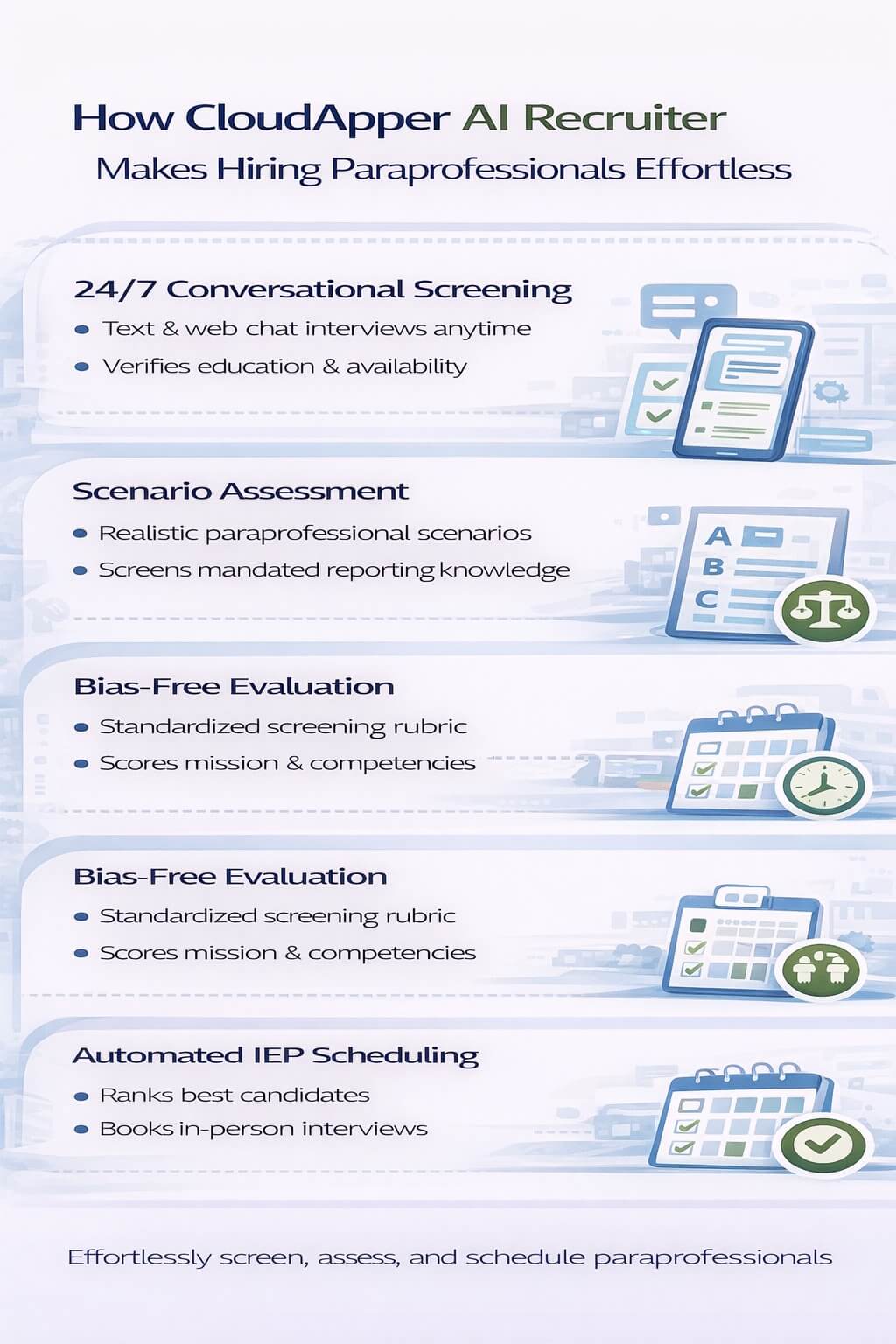
24/7 Conversational Screening via SMS & Web Chat
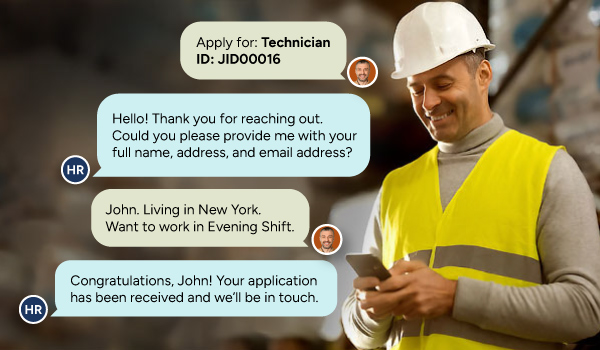
Paraprofessional candidates often have caregiving responsibilities, work other jobs, or apply during evenings and weekends. CloudApper meets them whenever they’re available—they can complete screening interviews via text message at 10 PM after putting kids to bed, during lunch breaks at their current job, or on Saturday mornings. The AI conducts warm, human-like conversations that assess both technical competencies (IEP knowledge, data collection, behavior management) and essential soft skills (empathy, collaboration, patience under pressure). For paraprofessional recruitment specifically, it can immediately verify educational requirements (high school diploma, associate degree, or ParaPro certification), assess previous experience with special populations, confirm schedule availability, and evaluate mission alignment with inclusive education—all before your special education director reviews applications.
Education-Specific Scenario Assessment
CloudApper AI Recruiter can present realistic scenarios tailored to paraprofessional work: “A student refuses to transition from recess to the classroom and says ‘I hate school.’ How would you respond?” or “You notice a student has unexplained bruises. What’s your course of action?” The AI evaluates responses for appropriate strategies, understanding of mandated reporting, trauma-informed approaches, and professional judgment. You can configure district-specific questions about your behavior management philosophy, IEP implementation processes, or assistive technology platforms. Candidates who don’t demonstrate baseline understanding of special education support or who give concerning responses are automatically flagged for deeper review or screened out entirely.
Bias-Free, Student-Centered Evaluation
Every candidate answers identical questions evaluated against the same rubric focused on competency and mission fit. The AI doesn’t make assumptions based on career changers, age, educational background, or whether someone has traditional teaching credentials. This is especially important for paraprofessional roles where individuals from diverse backgrounds—parents of children with disabilities, career changers seeking meaningful work, college students pursuing education degrees—often bring incredible passion and capability but may face unconscious bias in traditional screening. CloudApper evaluates what matters: Do they understand the role? Do they show genuine empathy for students? Can they handle the demands? Do they respect professional boundaries?
Automated IEP Knowledge Verification & Scheduling
After initial screening, CloudApper can automatically assess understanding of IEP basics through targeted questions, request copies of relevant certifications (ParaPro, CPR, crisis intervention training), and schedule candidates for the next hiring steps—whether that’s skills assessments, working interviews in classrooms, or panel interviews with special education teams. For qualified candidates, it integrates directly with hiring managers’ calendars. The system maintains a live, ranked pipeline of pre-screened candidates so when positions open mid-year (which is common due to turnover), you have ready candidates instead of starting from scratch.
Real-World Success Story
A suburban district with 52 schools was short 31 paraprofessionals three weeks before school started, jeopardizing their ability to implement IEPs legally. After emergency implementation of CloudApper AI Recruiter, they reduced screening time from 45 days to 11 days, increased their qualified applicant pool by 127%, and filled 28 of 31 positions before the first day of school. Most dramatically, their candidate-to-hire conversion rate jumped from 31% to 74% because the instant SMS screening process kept candidates engaged and informed rather than losing them to retail jobs that hired within 48 hours. The special education director reported: “CloudApper didn’t just speed up hiring—it fundamentally changed our ability to compete for talent in a tight labor market.”
Mobile-Optimized for Busy Candidates
Paraprofessional candidates are juggling multiple responsibilities and aren’t sitting at computers during business hours. CloudApper’s SMS-first design requires no app downloads or account creation—just natural text conversation that can happen anywhere, anytime. Candidates complete screening in 12-18 minutes during any free moment. Completion rates are 6x higher than traditional applications requiring desktop access, lengthy forms, and business-hours phone screening.
Ready to build your paraprofessional team effortlessly? See how CloudApper AI Recruiter ensures you’re fully staffed: Explore CloudApper AI Recruiter for Special Education Hiring
Stop Scrambling for Paraprofessionals—Start Hiring Smarter Today
The paraprofessional shortage threatens your ability to provide legally mandated services and support student success. Traditional hiring processes that take 45+ days simply can’t compete in today’s labor market. By asking the right interview questions and leveraging CloudApper AI Recruiter’s conversational intelligence, you can build a capable, committed, student-centered paraprofessional team that provides the support your students legally deserve—not eventually, but within two weeks.
Districts using CloudApper AI Recruiter consistently report:
- 90% faster initial screening processes
- 76% reduction in time-to-hire for paraprofessional roles
- 6x larger qualified candidate pools
- 74% decrease in candidate drop-off rates
- Elimination of evening/weekend phone screening for administrators
The interview questions we’ve shared reveal whether candidates have the knowledge, skills, empathy, and commitment to succeed as paraprofessionals. But manually asking them to dozens of candidates while also managing IEP meetings, compliance deadlines, and the start of school? That’s where most special education departments fail.
FAQ
1. What is the role of a paraprofessional in special education
Paraprofessionals support students with IEPs by providing instructional, behavioral, and personal care assistance under the direction of certified teachers, helping implement individualized goals while collaborating closely with the classroom team.
2. Why are paraprofessional positions hard to fill in school districts?
86% of districts report shortages, with average fill times of 48 days and 63% candidate drop-off rates, due to demanding roles, low pay relative to responsibilities, and evolving requirements like tech and trauma-informed skills.
3. How can AI help in hiring paraprofessionals?
CloudApper AI Recruiter conducts 24/7 conversational screening interviews via SMS or web chat, evaluates responses against key criteria, ranks candidates, reduces time-to-hire by 76%, attracts 6x more applicants, and minimizes unconscious bias.
4. What are key skills to assess in paraprofessional interviews?
Essential skills include behavior de-escalation, data collection for IEP goals, assistive technology use, maintaining confidentiality, differentiated academic support, and professional collaboration with teachers and parents.
5. How quickly can CloudApper AI improve paraprofessional hiring?
Real-world examples show reducing time-to-hire from 45 days to 11 days, with 127% more applicants and 74% higher completion rates through mobile-friendly, automated screening.
Don’t let outdated hiring processes leave students without the support they need.
Book your personalized demo of CloudApper AI Recruiter and discover how it screens, evaluates, and schedules paraprofessionals automatically—while your team focuses on supporting students and teachers.
What’s your biggest challenge in recruiting and retaining qualified paraprofessionals? Share in the comments below. Our team actively monitors these conversations and often provides customized strategies for specific special education hiring challenges.
CloudApper AI Recruiter: Building inclusive schools through smarter hiring—because every student deserves the support they need to succeed.
You might also like to read:

What is CloudApper AI Platform?
CloudApper AI is an advanced platform that enables organizations to integrate AI into their existing enterprise systems effortlessly, without the need for technical expertise, costly development, or upgrading the underlying infrastructure. By transforming legacy systems into AI-capable solutions, CloudApper allows companies to harness the power of Generative AI quickly and efficiently. This approach has been successfully implemented with leading systems like UKG, Workday, Oracle, Paradox, Amazon AWS Bedrock and can be applied across various industries, helping businesses enhance productivity, automate processes, and gain deeper insights without the usual complexities. With CloudApper AI, you can start experiencing the transformative benefits of AI today. Learn More
CloudApper AI Solutions for HR

- Works with


- and more.








Similar Posts
How cNPS Reflects Your Recruitment and Employer Brand
The Recruitment-to-HRIS Gap: Why Your “System of Record” Should Start…