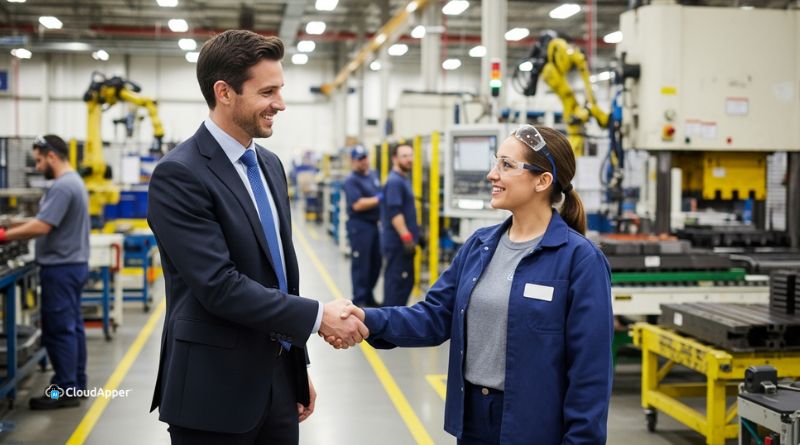
Many companies overlook qualified candidates already in their ATS while spending heavily on new sourcing. This guide outlines 5 ways to mine your ATS: rediscover silver medalists, match early-stage applicants to new roles, re-engage cold candidates, leverage referrals, and use AI for automatic matching with CloudApper.

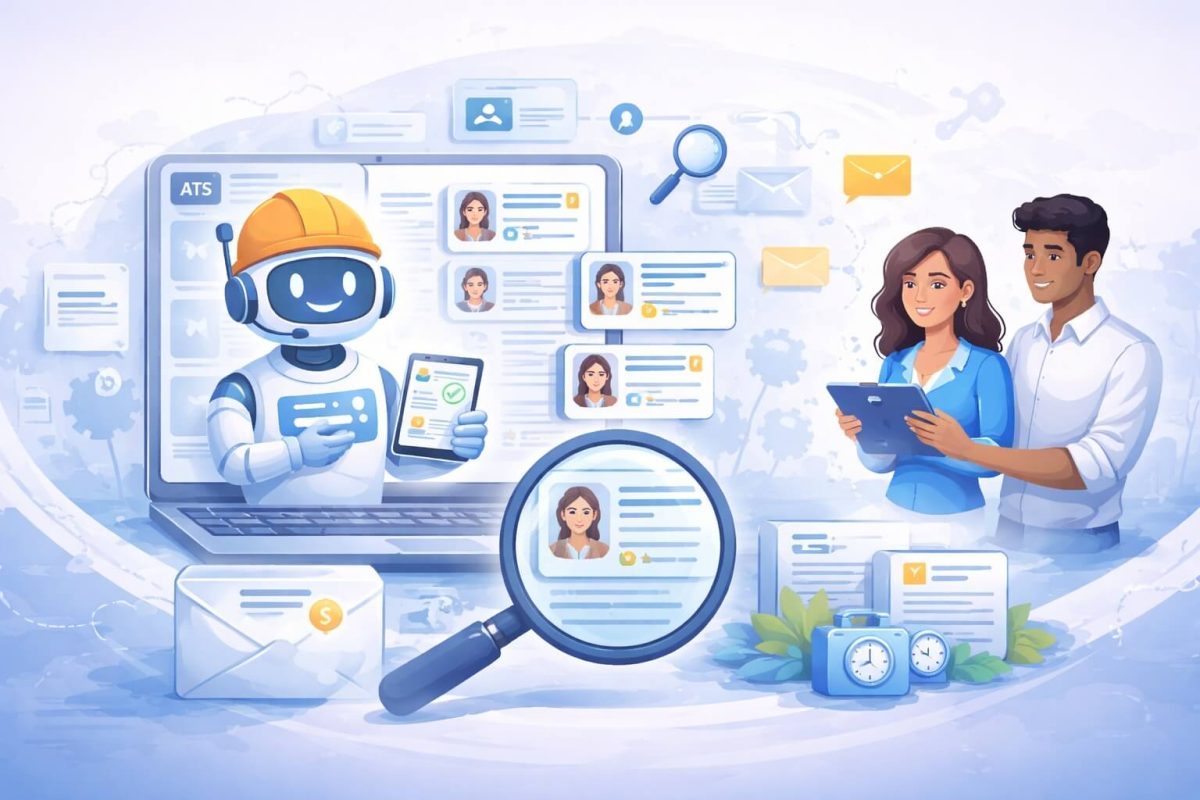
Table of Contents
Your ATS Is a Gold Mine You’re Not Digging Into
Here’s a question that should keep every talent acquisition professional up at night: How much money are you spending to source new candidates when hundreds—maybe thousands—of qualified people are already sitting in your applicant tracking system?
Think about it. You screen 200 resumes for a nursing position. You conduct 40 phone screens. You interview 20 candidates. Five make it to the final round. You hire one. What happens to the other four exceptional candidates who were good enough to reach the finals? They disappear into your ATS database, forgotten, while you start the whole expensive process over again for the next opening.
This is happening across healthcare systems, retail chains, and manufacturing facilities every single day. Companies are spending thousands on job boards, agency fees, and recruiter time to find “new” talent while overlooking the pre-vetted, interested, qualified candidates already in their system.
The average company has what industry experts call a “metaphorical gold mine” of qualified talent in their ATS. The problem? Most recruiting teams don’t know how to mine it effectively. Let’s change that.
TL;DR
Tap into your existing ATS to find hidden talent: track silver medalists, search by skills for role fits, nurture dropped-off candidates, ask for referrals, and automate with CloudApper AI Recruiter. Cuts cost-per-hire 40-60%, speeds hiring, improves quality, and outperforms manual efforts.
Why Hidden Talent Matters More Than Ever Now
The recruiting landscape has fundamentally shifted. Time-to-hire is now a critical competitive advantage. The best candidates are off the market in 10 days or less. Recruiting costs continue to climb—the average cost-per-hire now exceeds $4,500 according to recent industry data.
Meanwhile, your ATS contains candidates who have already shown interest in your organization, gone through at least part of your screening process, and demonstrated they meet many of your requirements. These candidates—often called “silver medalists” or part of “talent rediscovery”—represent your fastest, most cost-effective path to quality hires.
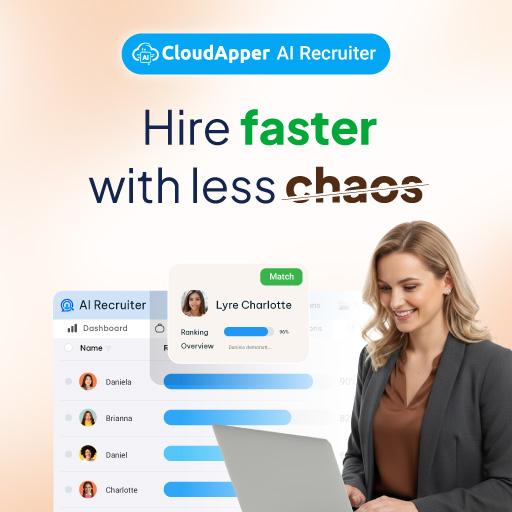
A hospital system using talent rediscovery filled 40% of open nursing roles from previously engaged candidates. A SaaS company saved over $150,000 in sourcing costs by rediscovering 5,000 engineers in their ATS. A retail chain improved seasonal hiring turnaround by 35% by re-engaging past applicants.
The data is clear: mining your ATS for hidden talent isn’t just smart—it’s essential for staying competitive.
The Problem: Why Great Candidates Get Lost
Before we explore solutions, let’s understand why qualified candidates disappear into your ATS database in the first place.
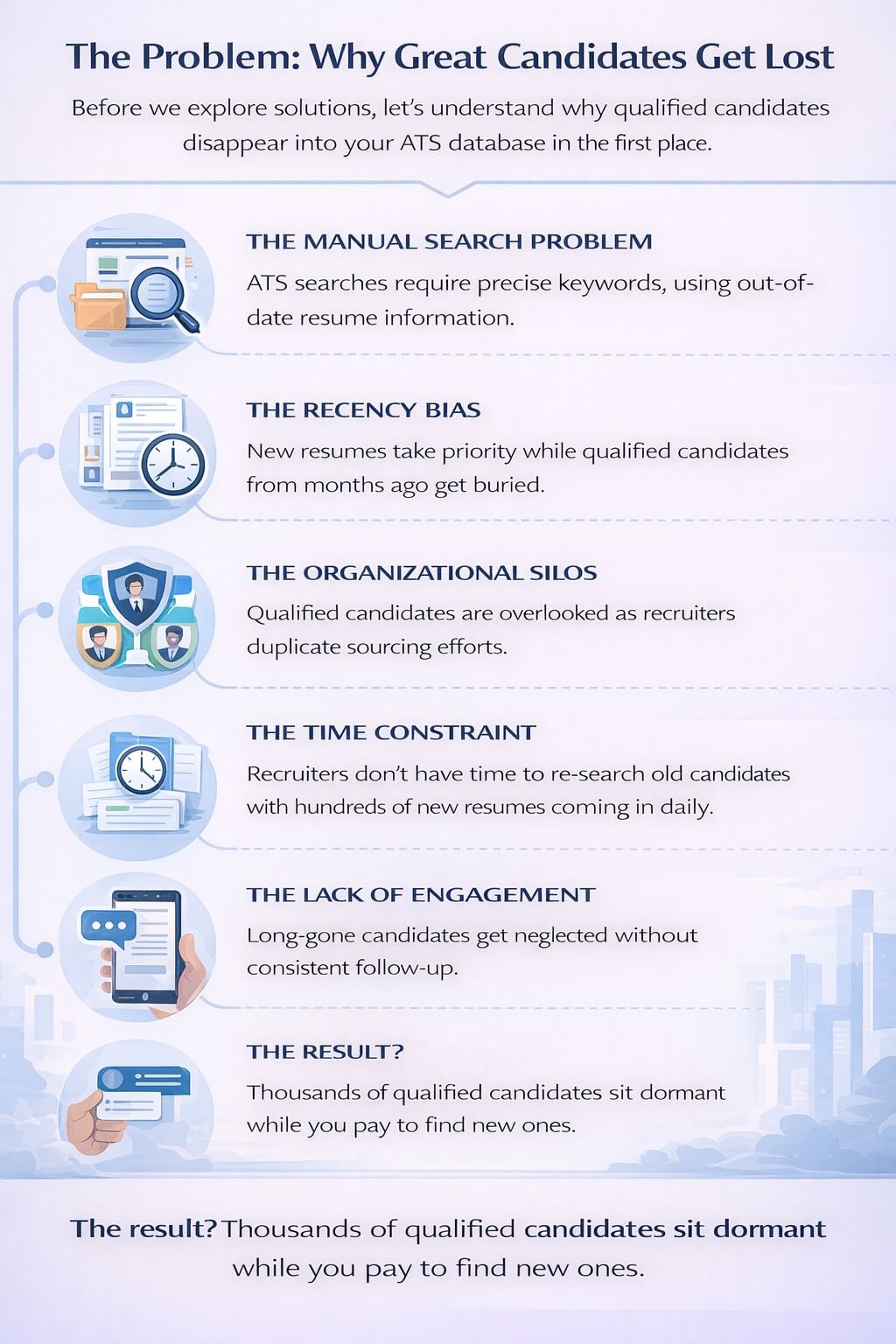
The Manual Search Problem: Most ATS platforms have limited search capabilities. Finding specific candidates requires knowing exactly what keywords to search for, and even then, the results are based on outdated resume information from when they applied.
The Recency Bias: Recruiters naturally focus on new applications. Candidates from three months ago, six months ago, or a year ago get buried under fresh resumes, even though they might have gained valuable new experience since applying.
The Organizational Silos: One recruiter’s silver medalist is another recruiter’s perfect candidate. But if recruiters don’t know who their colleagues interviewed last month, great candidates get overlooked while teams duplicate sourcing efforts.
The Time Constraint: With hundreds of new applications flowing in daily, recruiters don’t have time to manually search through old candidates. The urgent crowds out the important.
The Lack of Engagement: Even when you remember a great candidate from six months ago, reaching out feels awkward. What do you say? Is their information still current? Are they still interested? Without a system for staying connected, the relationship dies.
The result? Thousands of qualified candidates sitting dormant while you pay to find new ones who may not be as good a fit.
Way #1: Rediscover Your Silver Medalists
Silver medalists are the runner-up candidates who made it to final interview rounds but didn’t get the offer. These are people you’ve already vetted extensively. You know their skills, you’ve assessed their fit, and you’ve invested significant time in evaluating them. The only reason they’re not on your team is that someone else was marginally better for that specific role.
Why Silver Medalists Are Valuable: They’ve already been through your hiring process, they’re familiar with your company, they’ve expressed serious interest in working for you, and they’ve demonstrated the skills and experience you need. They’re pre-qualified candidates who can move through your hiring process much faster than new applicants.
How to Implement This:
Create a systematic process for identifying and tracking silver medalists in your ATS. Tag candidates who reach final rounds but don’t get offers with a “silver medalist” label. Segment them by role type, skills, and when they last engaged with you.
Reach out personally—not with a generic email. Call them. Acknowledge that you were impressed with them previously and have a new opportunity that might be an even better fit. Candidates who received thoughtful feedback and were treated respectfully during rejection are four times more likely to consider future offers from your company.
Set reminders to check in with silver medalists every 3-6 months, even when you don’t have an immediate opening. Keep them warm. Share company updates. Let them know you’re thinking about them for future opportunities.
Real-World Application: A healthcare system created a “silver medalist pool” of nurses who reached final interviews but weren’t selected. When new positions opened, they contacted these candidates first. Result: 60% of silver medalists they reached out to were interested in interviewing again, and they filled positions in half the normal time with candidates who already understood the organization.
Way #2: Mine Early-Stage Candidates for Different Roles
Not everyone who applies for one position is only qualified for that position. Your ATS contains candidates who may have been perfect fits for roles they didn’t even apply for—they just didn’t know about those opportunities.
The Cross-Pollination Opportunity: A candidate who applied for a retail store manager position might have experience that makes them ideal for your corporate training role. A manufacturing applicant who didn’t have the specific equipment experience you needed might be perfect for your quality control position. An RN who applied when you only had night shifts available might be interested now that you’re hiring for days.
How to Implement This:
Use advanced search capabilities to look beyond the specific jobs candidates applied for. Search by skills, certifications, years of experience, and location rather than just the job title they clicked on.
Modern AI-powered tools can analyze your entire ATS database and match candidates to current openings based on skills and experience, even if they applied for completely different roles. This contextual matching catches qualified people that keyword searches miss.
Review candidates who were disqualified early not because they weren’t qualified, but because of timing, shift availability, or location constraints that may have changed. Someone who couldn’t relocate a year ago might be able to now. Someone who needed day shift six months ago might be open to evenings now.
Real-World Application: A retail chain used AI to scan their ATS database of 10,000+ past applicants when opening a new distribution center. They identified 150 candidates who had applied for store positions but had logistics and warehousing experience. 45 of those candidates were interested in the distribution center roles, filling most positions without external recruiting.
Way #3: Re-Engage Candidates Who Went Cold
Candidate engagement often dies at predictable points: after they submit an application but don’t hear back, after a phone screen that doesn’t lead to an interview, after scheduling an interview that you cancelled, or after rejection. These aren’t bad candidates—they’re candidates you lost due to process breakdowns or timing mismatches.
The Nurture Gap: Most organizations do a poor job keeping candidates engaged throughout the hiring process and almost no job staying connected with candidates who aren’t immediately hired. This gap creates opportunity for competitors and wastes your investment in sourcing and initial screening.
How to Implement This:
Implement automated nurture campaigns for candidates at different stages. Someone who applied but wasn’t selected for an interview receives different messaging than someone who completed a phone screen. Personalization matters—reference their specific interaction with your company.
Use your ATS data to identify candidates who expressed interest but disappeared partway through your process. Maybe they started an application but didn’t finish. Maybe they scheduled a phone screen but didn’t show up. Reach out to understand why and see if the situation has changed.
Create segmented talent pools based on where candidates dropped off and why. Candidates who rejected your offer due to salary can be contacted when you adjust compensation ranges. Candidates who couldn’t start immediately but were qualified can be re-engaged a few months later.
Real-World Application: A manufacturing facility identified 200 candidates who had completed online applications but never finished the assessment process. They reached out with a simplified assessment link and a personal message acknowledging the time gap. 35% completed the assessment, and they hired 15 quality candidates without spending a dollar on new sourcing.
Way #4: Leverage Referral Networks Within Your ATS
Your ATS doesn’t just contain candidates—it contains networks. Every person who has applied to or interviewed with your company knows other people in their field. These networks represent massive untapped recruiting potential.
The Network Effect: A nurse who interviewed with your hospital last year knows other nurses. A retail manager in your database knows other retail professionals. A manufacturing technician who applied six months ago knows people with similar skills. By re-engaging candidates and asking for referrals, you multiply your talent pool exponentially.

How to Implement This:
When re-engaging past candidates—even those who weren’t hired—ask if they know anyone who might be interested in your current openings. Frame it as helping their network find opportunities, not just helping you fill positions.
Create a formal referral program specifically for past applicants. Offer the same referral bonuses to candidates in your database as you offer to current employees. They’re already familiar with your company and can speak authentically about the hiring experience.
Use social proof in your outreach. When contacting past candidates, mention that you’ve successfully hired people with similar backgrounds and those employees are thriving. This reduces concerns about “if they didn’t hire me before, why would they hire me now?”
Real-World Application: A healthcare system reached out to 100 silver medalist nurses asking if they knew qualified colleagues looking for new opportunities. The campaign generated 75 referrals, resulting in 12 new hires. The cost per hire was $200 versus their average of $3,500.
Way #5: Use AI to Automatically Surface Hidden Matches
Manual searching through your ATS is time-consuming and limited by human memory and keyword thinking. Artificial intelligence can analyze thousands of profiles in seconds and identify matches you would never find manually.
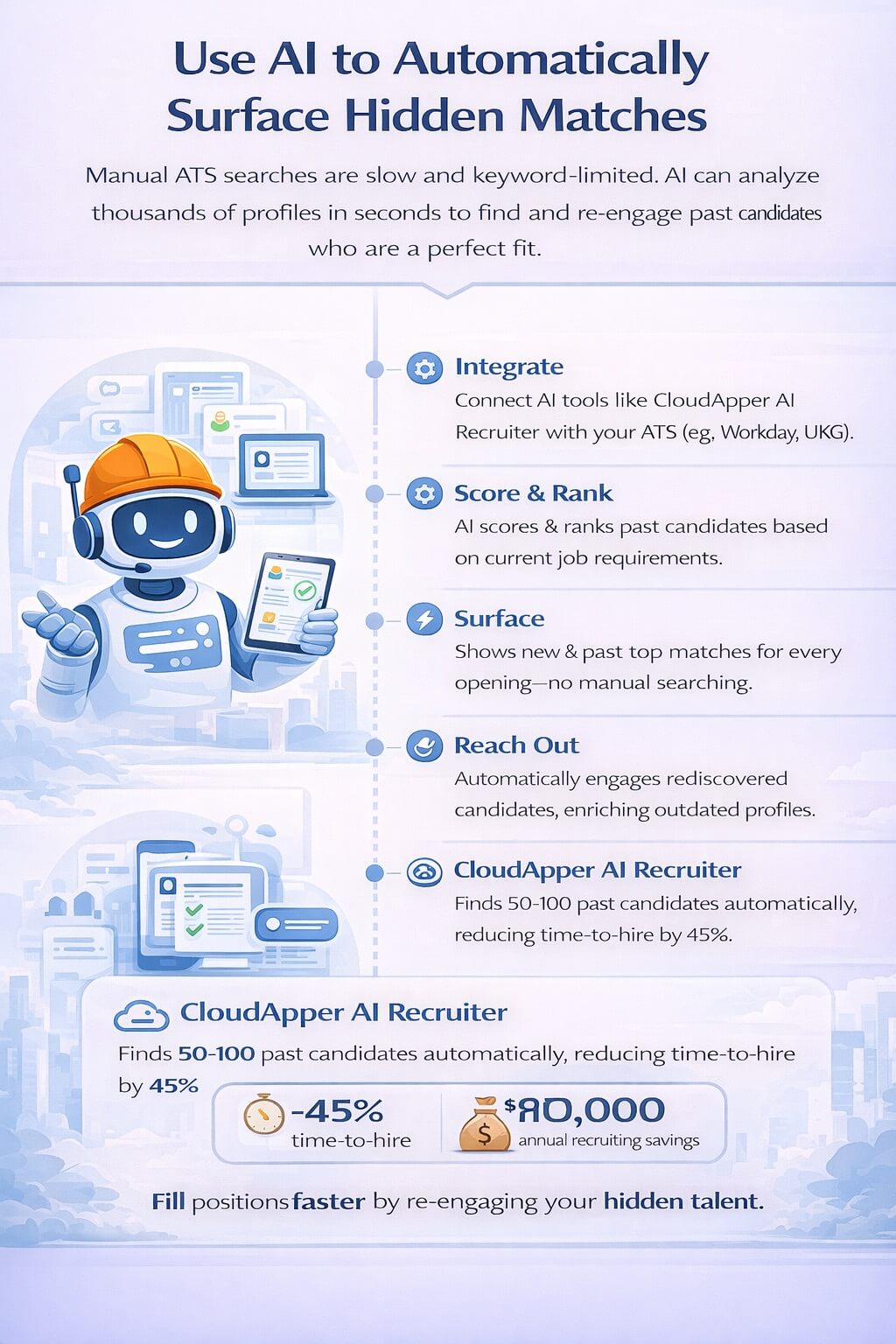
The AI Advantage: Modern talent rediscovery platforms use AI and natural language processing to understand context, not just keywords. They recognize that “patient care coordinator” relates to nursing experience even if the resume never uses the word “nurse.” They identify transferable skills across industries. They can predict which past candidates would be strongest matches for current openings based on successful hires.
How to Implement This:
Integrate AI-powered recruitment automation tools like CloudApper AI Recruiter with your existing ATS. These platforms connect to systems like Workday, Dayforce, UKG, SAP SuccessFactors, and others to automatically analyze your entire candidate database whenever new positions open.
Configure the AI to automatically score and rank past candidates based on how well they match current job requirements. The system considers not just what’s on their resume, but how similar candidates have performed in your organization, what skills predict success, and which qualifications are must-haves versus nice-to-haves.
Set up automatic workflows that surface top matches from your database alongside new applicants. This ensures recruiters consider internal talent pool candidates without having to remember to search manually.
Use predictive analytics to identify which past candidates are most likely to be interested and available. The AI learns patterns—candidates who applied recently are more likely to still be job searching, candidates who engaged deeply with your process are more likely to respond, and candidates whose rejection reason was timing-based may now be available.
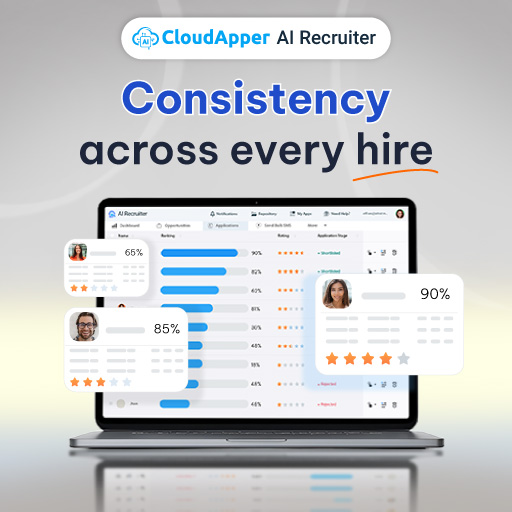
CloudApper AI Recruiter Solution: CloudApper’s platform doesn’t just help you screen new applicants—it continuously mines your existing ATS database for hidden talent. When you post a new position, the AI automatically:
- Scans your entire candidate database for matches
- Scores past applicants based on current job requirements
- Identifies silver medalists and early-stage candidates who fit
- Enriches old candidate data with updated information when available
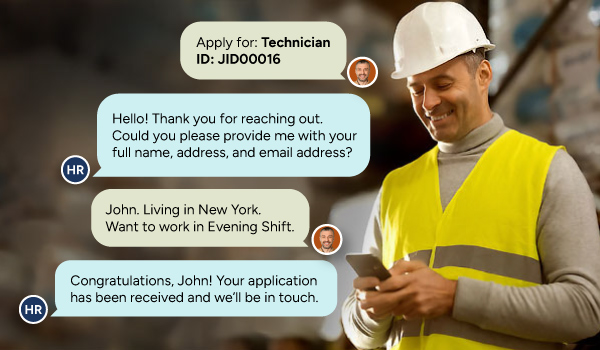
- Automatically reaches out to top matches via text, email, or chat
- Re-engages candidates through conversational AI interactions
- Syncs everything back to your ATS seamlessly
This means every time you have an opening, you’re simultaneously recruiting from both new applicants and your existing talent pool—without any additional manual work from your recruiting team.
Real-World Application: A retail organization integrated AI recruitment automation with their ATS database of 50,000+ past applicants. For each new store opening, the system automatically identified and reached out to 50-100 candidates who had previously applied in nearby locations or for similar roles. They filled 30% of new positions from rediscovered candidates, reducing time-to-hire by 45% and saving approximately $180,000 annually in recruiting costs.
Benefits That Transform Your Recruiting ROI
Mining your ATS for hidden talent delivers benefits that extend far beyond just filling positions faster.
Dramatic Cost Reduction: Recruiting from your existing database eliminates job board fees, reduces agency usage, and requires less recruiter time per hire. Organizations typically reduce cost-per-hire by 40-60% for positions filled through talent rediscovery.
Faster Time-to-Hire: Candidates already in your system move through screening faster because you have their information, you’ve already done initial vetting, and they’re familiar with your company. This speed advantage helps you beat competitors to top talent.
Higher Quality Hires: Past applicants who were good but not quite right for previous roles often develop additional skills and experience over time. When you re-engage them months or years later, they may now be perfect fits. Plus, candidates who were silver medalists are by definition high-quality—they already passed your rigorous screening.
Improved Candidate Experience: Candidates appreciate being remembered and reconsidered. When you reach out to someone you interviewed six months ago about a new opportunity, you’re sending a powerful message: “We valued you then, and we still value you now.” This creates loyalty and positive employer branding.
Better Retention: Candidates hired from your talent pool often have higher retention rates because they’re familiar with your organization, they’ve been through a thorough evaluation process, and they feel valued rather than like just another applicant.
Reduced Recruiter Workload: When 30-40% of your hires come from candidates already in your system, your recruiters can focus on fewer external searches while maintaining or improving hiring volume. This prevents burnout and improves job satisfaction.
Scalability Without Proportional Cost Increases: As your hiring needs grow, mining your ATS allows you to scale efficiently. Each recruiting cycle adds more candidates to your database, creating a larger pool to draw from for future hires—a compounding advantage that gets stronger over time.
Implementation: Making This Real in Your Organization
Understanding the value of mining your ATS is one thing. Actually implementing effective talent rediscovery is another. Here’s your practical roadmap:
Phase 1: Audit Your Current ATS Data
Start by understanding what you have. How many candidates are in your database? How far back does your data go? What information do you have for each candidate? How are candidates currently tagged and categorized?
Identify your silver medalists—candidates who reached final rounds in the past year. Segment them by role type, location, and skills. These are your highest-value targets for immediate re-engagement.
Phase 2: Clean and Organize Your Data
Create consistent tagging systems. Ensure candidates are labeled with relevant skills, certifications, interview stage reached, rejection reasons (if applicable), and any other information that helps future searching.
Update outdated categories and consolidate duplicate records. Old data is valuable, but only if it’s organized enough to be searchable.
Phase 3: Establish Re-Engagement Protocols
Define clear processes for when and how you’ll reach out to past candidates. Who handles silver medalist outreach? What’s the messaging? How often do you check in?
Create email templates and call scripts that feel personal, not generic. Acknowledge the previous interaction and explain why you’re reaching out now.
Phase 4: Implement Automation Technology
Manual talent rediscovery doesn’t scale. Integrate AI-powered tools like CloudApper AI Recruiter that automatically match past candidates to new openings and handle initial re-engagement.
These platforms connect to your existing ATS and work in the background, continuously analyzing your database and surfacing relevant candidates without requiring manual searches.
Phase 5: Train Your Team
Ensure your recruiting team understands the value of talent rediscovery and how to leverage it effectively. Change their mindset from “find new candidates” to “find the best candidates, whether new or existing.”
Set expectations that recruiters should always check the internal database before posting jobs externally or paying for sourcing.
Phase 6: Measure and Optimize
Track key metrics: percentage of hires from talent rediscovery, time-to-hire for rediscovered candidates versus new applicants, cost-per-hire differences, and candidate quality scores.
Use this data to continuously improve your approach. Which re-engagement messages get the best response rates? Which candidate segments are most likely to be interested? How long after initial contact is the optimal time to re-engage?
FAQ
What does it mean to mine your ATS for hidden talent?
It involves searching and re-engaging past applicants already in your Applicant Tracking System who are qualified for current or future roles, rather than only sourcing new candidates externally.
Who are “silver medalists” in recruiting?
Silver medalists are strong candidates who reached final interview stages but weren’t selected for the specific role. They are often ideal for future openings and can be quickly re-engaged.
How can AI help mine hidden talent from an ATS?
AI tools like CloudApper AI Recruiter automatically scan resumes, score and rank past applicants against new job requisitions, identify hidden matches (including silver medalists), enrich data, and initiate personalized outreach.
What are the benefits of mining your existing ATS?
It reduces cost-per-hire by 40-60%, shortens time-to-hire, improves hire quality and retention, enhances candidate experience, lightens recruiter workload, and scales efficiently without added external spending.
Why do companies often overlook talent in their ATS?
Challenges include manual search limitations, recency bias (favoring new applicants), data silos, time constraints, and lack of automated engagement tools.
How quickly can mining ATS impact hiring results?
Real examples show dramatic improvements: a hospital filled 40% of nursing roles from past applicants, a SaaS company saved $150,000 by rediscovering engineers, and retail chains boosted seasonal hiring by 35%.
The Strategic Advantage: Why This Matters Now
We’re in an era where recruiting speed and efficiency separate winning organizations from struggling ones. The companies that fill critical positions in 15 days instead of 45 days win better talent. The organizations that spend $2,000 per hire instead of $5,000 per hire can invest those savings in retention, compensation, or growth.
Mining your ATS for hidden talent isn’t about being cheap—it’s about being smart. You’ve already invested thousands of dollars and countless hours building a database of candidates. Why wouldn’t you maximize that investment?
Healthcare systems that effectively rediscover talent maintain adequate nursing staffing levels, which directly impacts patient care quality and employee burnout. Retail chains that quickly fill seasonal positions from past applicants maximize revenue during critical periods. Manufacturing facilities that keep production lines staffed through talent pipelines avoid costly delays and contract penalties.
The technology to make this easy now exists. AI platforms like CloudApper AI Recruiter can automatically mine your ATS, identify matches, and re-engage candidates without manual work from your team. The ROI is immediate and measurable.
Your competitors are already doing this. Forward-thinking organizations have embraced talent rediscovery as standard practice. They’re hiring faster, spending less, and building stronger teams by leveraging candidates you’re letting slip away.
The question isn’t whether you should mine your ATS for hidden talent. The question is: Can you afford not to?
Stop overlooking the qualified candidates already in your system. Start mining your ATS, re-engaging your silver medalists, and building sustainable talent pipelines that give you a lasting competitive advantage in the war for talent.
To learn how CloudApper AI Recruiter can help you automatically discover and re-engage hidden talent in your existing ATS, visit CloudApper AI Recruiter to schedule a demo.

What is CloudApper AI Platform?
CloudApper AI is an advanced platform that enables organizations to integrate AI into their existing enterprise systems effortlessly, without the need for technical expertise, costly development, or upgrading the underlying infrastructure. By transforming legacy systems into AI-capable solutions, CloudApper allows companies to harness the power of Generative AI quickly and efficiently. This approach has been successfully implemented with leading systems like UKG, Workday, Oracle, Paradox, Amazon AWS Bedrock and can be applied across various industries, helping businesses enhance productivity, automate processes, and gain deeper insights without the usual complexities. With CloudApper AI, you can start experiencing the transformative benefits of AI today. Learn More
CloudApper AI Solutions for HR

- Works with


- and more.







Similar Posts
How cNPS Reflects Your Recruitment and Employer Brand
The Recruitment-to-HRIS Gap: Why Your “System of Record” Should Start…