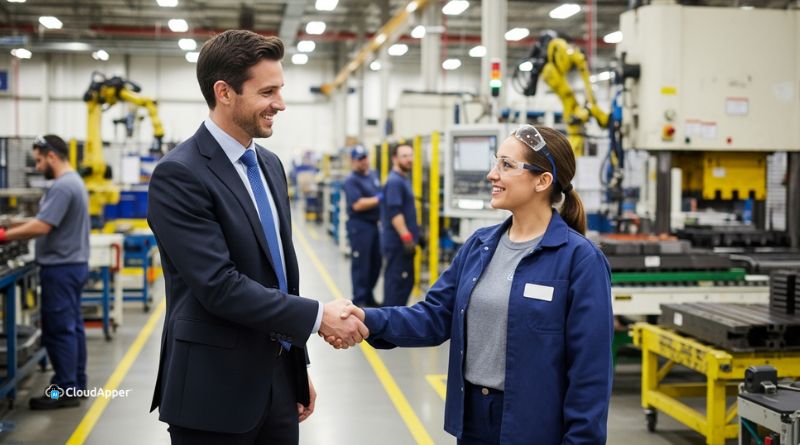
Frontline hiring is fast, high-volume, and complex. This guide explains how AI recruiting solutions help automate screening, scheduling, and engagement.

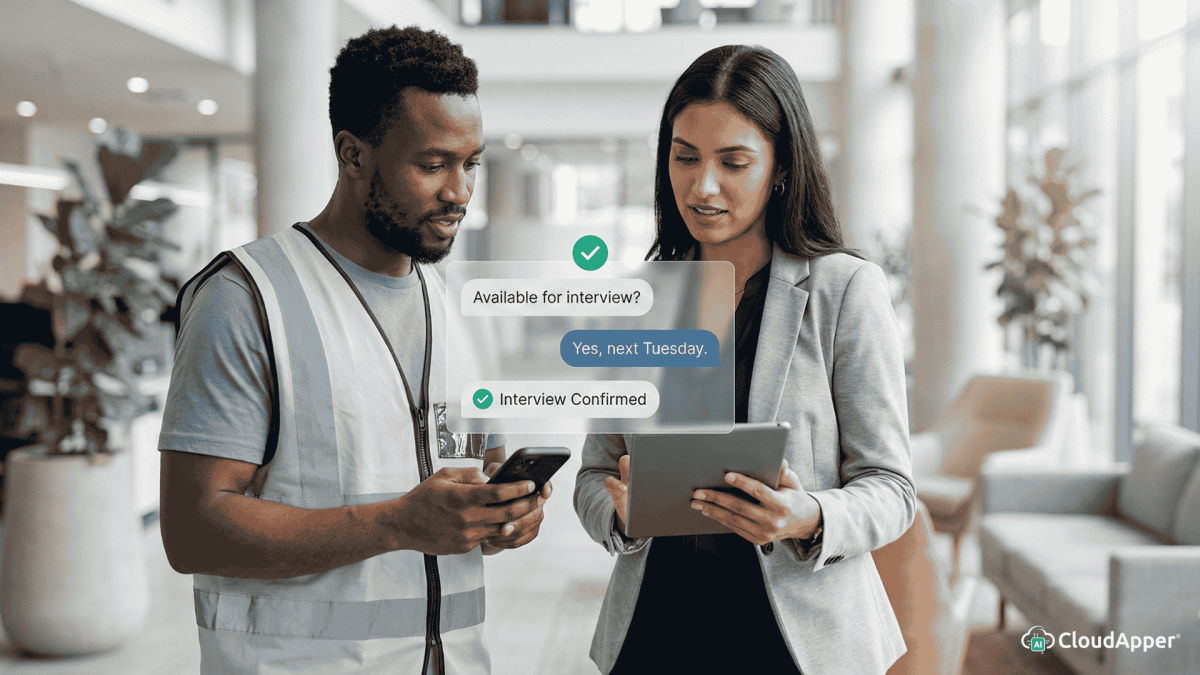
Table of Contents
Hiring frontline and hourly workers has become one of the most operationally challenging parts of modern recruitment. These roles often require fast turnaround, flexible scheduling, and constant backfilling—yet many hiring processes are still built for salaried, desk-based candidates. As a result, recruiters are overwhelmed, candidates drop off early, and open roles stay unfilled longer than they should.
AI recruiting solutions for frontline and hourly workers are emerging as a practical way to close this gap. Rather than replacing recruiters or existing systems, these tools focus on automating the most time-consuming parts of the hiring process—screening, communication, and scheduling—so hiring teams can move faster without sacrificing quality or candidate experience.
This article explains why frontline hiring is uniquely difficult, how AI recruiting solutions address those challenges, and what recruiters should look for when evaluating automation for hourly roles.

Why Frontline and Hourly Hiring Is Fundamentally Different
Frontline hiring does not fail because recruiters lack effort or expertise. It fails because traditional recruiting systems were not designed for the realities of hourly work.
Most frontline candidates:
-
Apply from mobile devices, often between shifts
-
Do not have polished resumes
-
Expect fast responses and simple processes
-
Are applying to multiple employers at the same time
At the same time, recruiters managing these roles are dealing with:
-
Hundreds or thousands of applications
-
High turnover and constant backfill needs
-
Limited recruiter-to-candidate ratios
-
Multiple locations with different hiring needs
When the hiring process involves long application forms, delayed follow-ups, and manual screening, candidates disengage quickly. Even highly qualified applicants abandon the process if it feels slow or complicated.
This disconnect between how frontline candidates apply and how traditional systems operate is where AI recruiting solutions become relevant.

What AI Recruiting Solutions Actually Do in Frontline Hiring
AI recruiting solutions are often misunderstood as complex or experimental. In practice, the most effective tools focus on very specific, practical outcomes: removing friction and speeding up decision-making.
For frontline and hourly hiring, AI is typically used to:
-
Automate early-stage candidate conversations
-
Replace long application forms with short, guided interactions
-
Screen candidates based on role-specific requirements
-
Keep candidates engaged through timely responses and reminders
-
Coordinate interview scheduling without manual back-and-forth
The goal is not to “replace” recruiters. Instead, AI handles repetitive, high-volume tasks so recruiters can focus on judgment-based decisions—such as interviews, final selection, and onboarding coordination.
The Core Problems AI Solves in Frontline and Hourly Hiring
Application Drop-Off
One of the biggest challenges in frontline hiring is candidate drop-off. Long forms, account creation, and unclear next steps discourage candidates from completing applications.
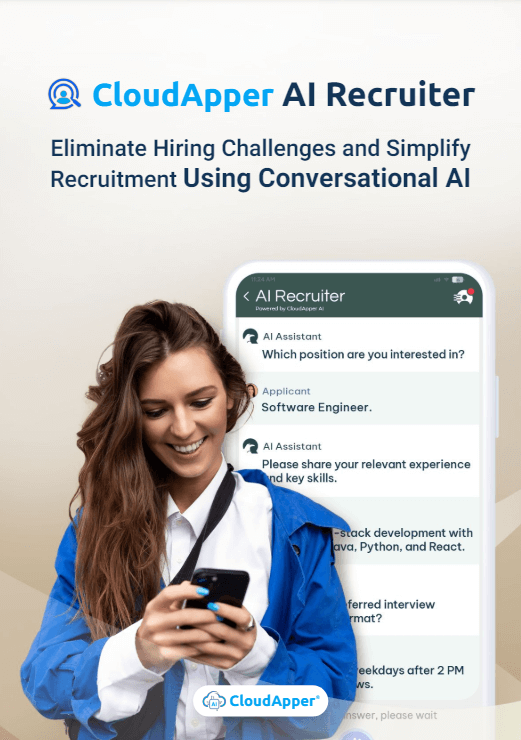
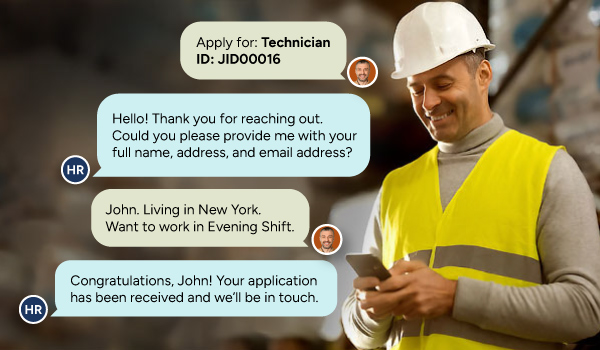
AI-driven, conversational applications reduce this friction by guiding candidates step by step, often through SMS or chat-based interfaces. This aligns with how frontline workers already communicate, making the process feel faster and more natural.
Slow Screening
Manually reviewing hundreds of applications is time-consuming and inconsistent. Recruiters may miss qualified candidates simply because they cannot review applications quickly enough.
AI screening tools assess candidates against predefined criteria—such as availability, certifications, or location—so recruiters see qualified applicants first.
Recruiter Overload
High-volume hiring often leads to recruiter burnout. When recruiters are buried in administrative work, response times slow and candidate experience suffers.
By automating screening, follow-ups, and scheduling, AI recruiting solutions reduce the administrative burden and help recruiters stay focused on meaningful interactions.
Scheduling Bottlenecks
Coordinating interviews for hourly roles is surprisingly complex, especially across multiple locations and hiring managers.
AI scheduling tools sync availability, send confirmations, and reduce no-shows—without recruiters having to manage calendars manually.
How AI recruiting solutions works for frontline and hourly workers
While implementations vary, most AI recruiting solutions for frontline roles follow a similar flow:
-
Candidate Discovery
Candidates find job openings through QR codes, SMS links, employee referrals, or job boards. -
Conversational Application
Instead of filling out lengthy forms, candidates answer short, role-specific questions through a guided conversation. -
Automated Qualification
AI evaluates responses in real time to determine whether candidates meet baseline requirements. -
Smart Routing
Qualified candidates move forward automatically, while unqualified applicants receive clear, respectful feedback. -
Interview Scheduling
Interviews are scheduled based on availability, without recruiter intervention. -
Recruiter Review
Recruiters focus only on candidates who are ready for interviews, rather than sorting through raw applications.
This process dramatically shortens time-to-hire while improving consistency and fairness.
Must-Have Features in AI Recruiting Solutions for Hourly Hiring
Not all AI recruiting tools are equally suited for frontline roles. Recruiters evaluating these solutions should prioritize features that address real operational needs:
-
Mobile-first, resume-free applications
Frontline candidates should be able to apply quickly without uploading documents. -
Conversational AI interfaces
Chat-based or SMS-driven workflows reduce friction and improve completion rates. -
Automated screening and ranking
Candidates should be assessed consistently against job requirements. -
Interview scheduling automation
Reducing scheduling delays has a direct impact on time-to-hire. -
Integration with existing ATS or HCM systems
AI should extend current systems, not require replacement. -
Support for high-volume, multi-location hiring
Scalability is critical for frontline environments.
Using AI Recruiting Without Replacing Existing Systems
One of the most common concerns recruiters have is whether adopting AI means replacing their current ATS or HCM platform. In most cases, the answer should be no.
Effective AI recruiting solutions act as an extension layer—automating interactions and decisions at the front of the funnel while syncing data back into existing systems. This approach allows organizations to modernize hiring workflows without disrupting compliance, reporting, or downstream HR processes.
For example, solutions like CloudApper AI Recruiter are designed to work alongside existing recruiting systems. Rather than forcing a complete system overhaul, they focus on automating candidate engagement, screening, and scheduling where traditional tools struggle most—especially in high-volume, hourly hiring scenarios.
What Recruiters Actually Gain From AI Recruiting Solutions
From a recruiter’s perspective, the value of AI recruiting is measured in outcomes, not features.
Common results include:
-
Faster time-to-hire due to immediate candidate engagement
-
Fewer unqualified interviews
-
Reduced candidate drop-off early in the process
-
Lower recruiter workload and burnout
-
More consistent hiring decisions across locations
These improvements compound over time, especially in environments where roles must be filled continuously.
Industries That Benefit Most From AI Recruiting for Frontline Roles
While nearly any organization with hourly roles can benefit from AI recruiting, adoption is especially strong in industries such as:
-
Retail
-
Manufacturing
-
Healthcare
-
Hospitality
-
Logistics and warehousing
-
Multi-location service businesses
These industries share common challenges: high turnover, fluctuating demand, and the need to hire quickly without compromising quality.
Common Questions About AI recruiting solutions for frontline and hourly workers
Will AI replace recruiters?
No. AI handles repetitive tasks, allowing recruiters to focus on interviews, decision-making, and relationship-building.
Do candidates respond well to AI-based applications?
Most frontline candidates prefer fast, mobile-friendly experiences over traditional forms.
Does AI reduce or increase bias?
When configured properly, AI can reduce bias by applying consistent criteria to all candidates.
Is implementation complex?
Many modern AI recruiting tools are designed for rapid deployment and integration with existing systems.
Can small HR teams benefit from AI recruiting?
Yes. Smaller teams often see the greatest impact because automation reduces workload without requiring additional staff.
Final Thoughts on AI recruiting solutions for frontline and hourly workers
Frontline and hourly hiring challenges are not going away. High application volumes, candidate drop-off, and recruiter burnout are symptoms of systems that were never designed for today’s workforce realities.
AI recruiting solutions offer a practical path forward. By automating screening, communication, and scheduling—while integrating with existing systems—organizations can hire faster, improve candidate experience, and support recruiters more effectively.
For teams exploring ways to modernize frontline hiring without overhauling their entire recruiting stack, thoughtfully implemented AI recruiting is no longer optional—it’s becoming essential.

What is CloudApper AI Platform?
CloudApper AI is an advanced platform that enables organizations to integrate AI into their existing enterprise systems effortlessly, without the need for technical expertise, costly development, or upgrading the underlying infrastructure. By transforming legacy systems into AI-capable solutions, CloudApper allows companies to harness the power of Generative AI quickly and efficiently. This approach has been successfully implemented with leading systems like UKG, Workday, Oracle, Paradox, Amazon AWS Bedrock and can be applied across various industries, helping businesses enhance productivity, automate processes, and gain deeper insights without the usual complexities. With CloudApper AI, you can start experiencing the transformative benefits of AI today. Learn More
CloudApper AI Solutions for HR

- Works with


- and more.







Similar Posts
How cNPS Reflects Your Recruitment and Employer Brand
The Recruitment-to-HRIS Gap: Why Your “System of Record” Should Start…