Blind resume screening automation embeds anonymization into the hiring workflow, ensuring resumes are evaluated on qualifications before identity cues influence decisions.

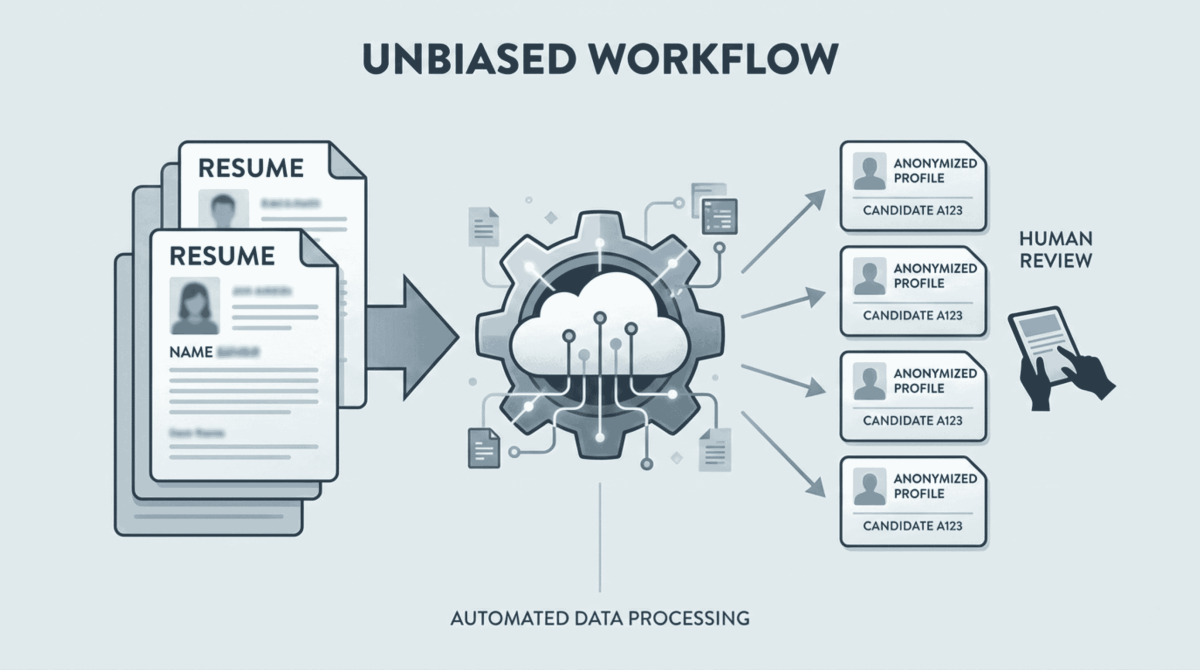
Table of Contents
Most hiring teams agree that reducing bias matters.
What’s harder is making that commitment hold up under real recruiting pressure.
Blind resume screening—removing personal identifiers before resumes are reviewed—has long been recognized as an effective way to reduce unconscious bias. But when blind screening is handled manually, it rarely survives scale. Recruiters move faster. Volume increases. Original resumes circulate. Steps get skipped.
Increasingly, teams are addressing this not through better reminders or stricter rules, but by enforcing blind screening directly at the workflow level—automatically anonymizing resumes before anyone reviews them.
This shift matters because bias rarely enters hiring through intent.
It enters through process gaps.
Blind resume screening automation closes those gaps by embedding fairness into the system itself, ensuring resumes are evaluated on qualifications, not identity cues, before human judgment begins.
Why Blind Resume Screening Needs Automation
Manual blind screening breaks down for predictable reasons:
- Redaction is forgotten under time pressure
- Anonymization varies from resume to resume
- Original files are shared “temporarily”
- No audit trail exists to prove consistency
In high-volume environments, these small failures compound quickly. Bias isn’t reintroduced because teams stop caring. It reappears because the workflow allows it.
Automation makes blind screening non-optional and repeatable. When anonymization happens automatically at ingestion, it cannot be bypassed later.
What Blind Resume Screening Actually Removes (and What It Preserves)
Blind screening focuses on neutralizing identity signals, not reducing candidate information.
Commonly redacted elements
- Names and name variants
- Gendered pronouns
- Photos or profile images
- Dates that imply age
- Precise addresses or location markers
What remains intact
- Skills and certifications
- Work history and responsibilities
- Job titles and tenure
- Measurable achievements
This distinction is critical. Blind screening does not rank or select candidates.
It ensures the first evaluation happens without unconscious cues influencing perception.
The Blind Screening Workflow (Step by Step)
This is where blind screening becomes operational rather than aspirational.
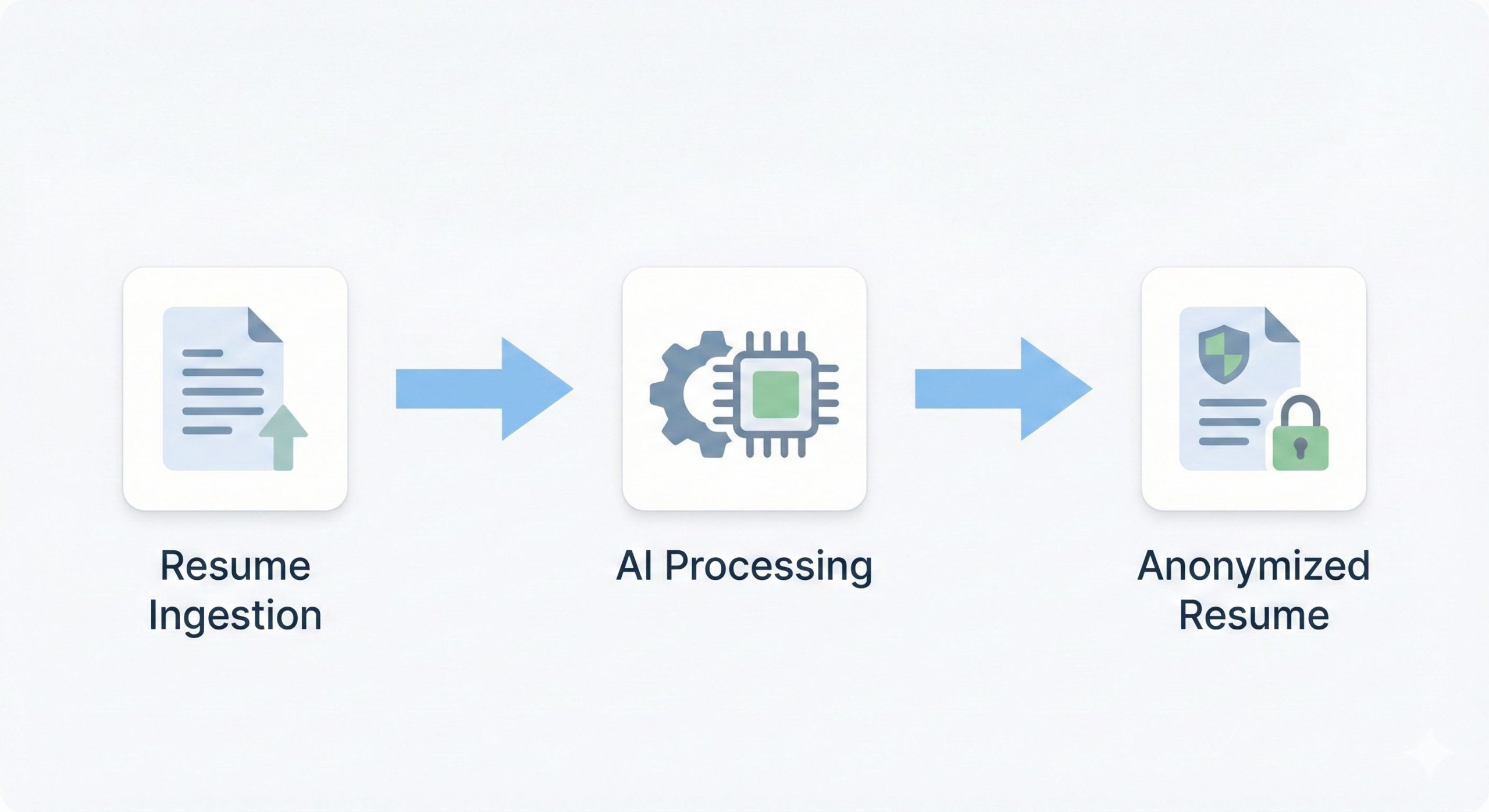
Step 1: Resume Ingestion (Before Human Review)
Resumes enter the system through career sites, text-to-apply flows, email ingestion, or ATS integrations. At this stage, no recruiter or hiring manager has seen the resume.
The resume is treated as raw input data, ensuring anonymization occurs before bias can enter the process.
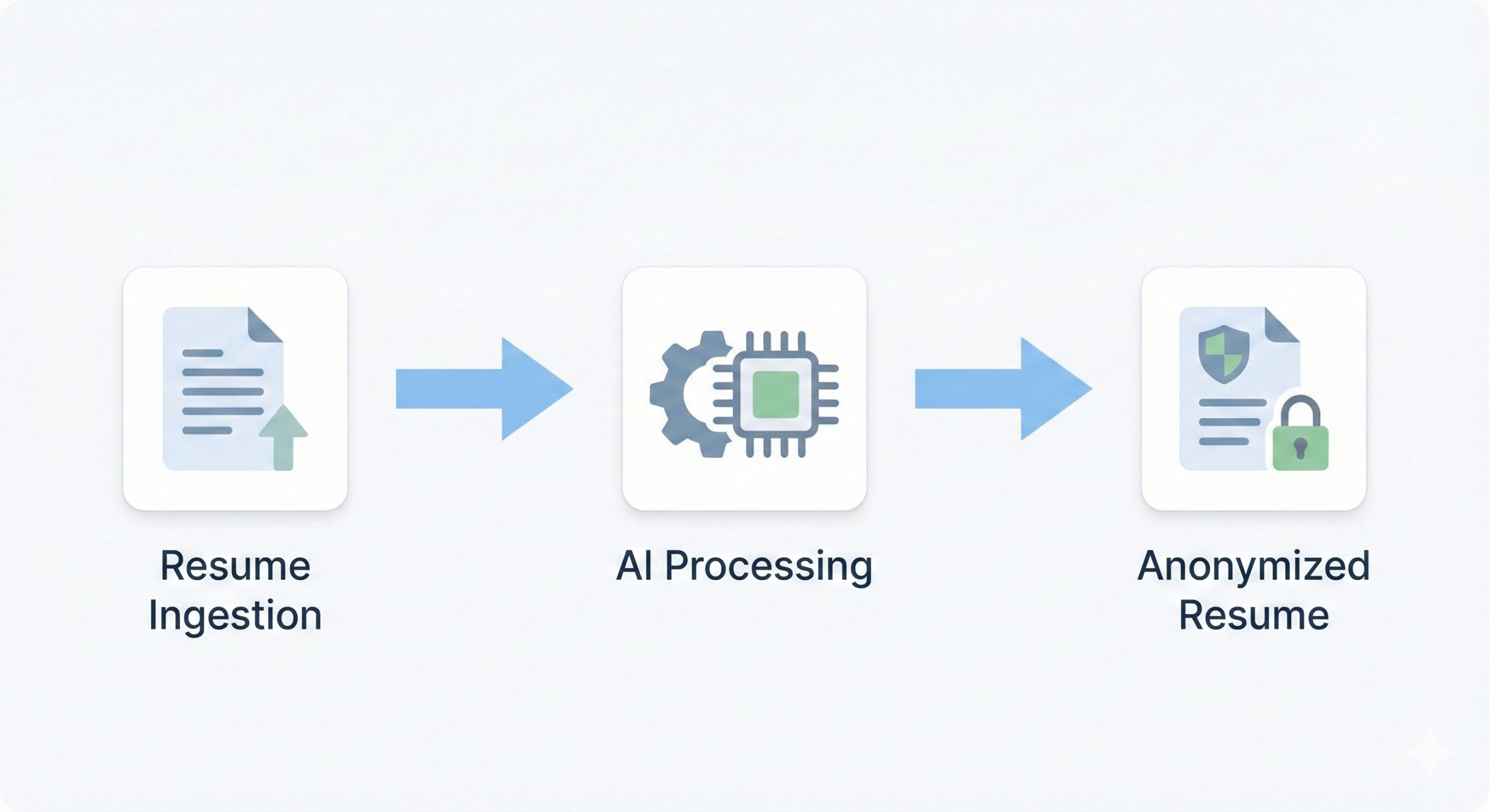
Step 2: AI-Based PII Detection
The system scans resumes to detect personally identifiable information using pattern recognition and entity detection. This includes names, pronouns, images, age signals, and geographic references.
At no point is the AI evaluating candidate quality.
Its role is limited to identifying what should be hidden, not who should advance.
Step 3: Automated Redaction and Anonymization
Detected identifiers are automatically removed or masked, while role-relevant content is preserved. Two records are created:
- An anonymized version for review
- A protected original retained securely
This dual-record approach protects both fairness and traceability.
Where Workflow-Level Tools Fit (Early, Subtle Introduction)
At this point in the workflow, the challenge is no longer philosophical—it’s operational.
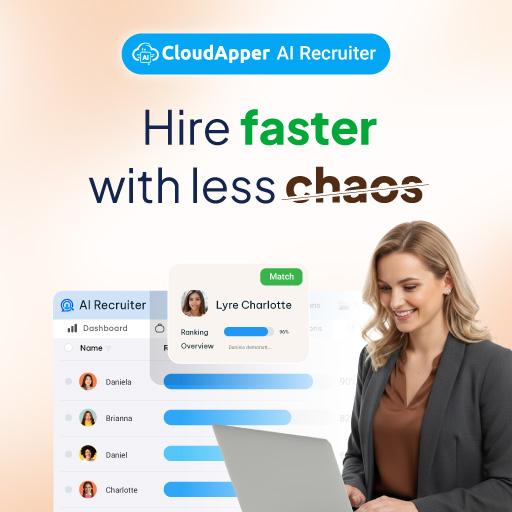
Tools such as CloudApper AI Recruiter are designed to support this exact stage by automating anonymization and enforcing routing rules around existing recruiting systems. The goal is not to decide who gets hired, but to ensure blind screening is applied consistently before human review begins.
Step 4: Routing Anonymized Resumes to Hiring Managers
Only anonymized resumes are shared for initial review. Hiring managers evaluate experience, skills, and role alignment without exposure to identity cues.
This is where blind screening delivers its intended value.
Step 5: Controlled Re-Identification
Once candidates advance, recruiters can intentionally re-associate identities. Interviews proceed normally, restoring full context at the appropriate stage.
Human judgment remains central.
Automation exits the process here.
Step 6: Audit Trail and Compliance Logging
Each step is logged automatically:
- When anonymization occurred
- What data was redacted
- Who accessed which version
- When identities were revealed
This documentation supports DEI reporting, internal audits, and regulatory defensibility.
How Blind Screening Reduces Bias Without Automating Decisions
Concerns about AI in hiring often stem from fears of black-box decision-making. Blind screening avoids this entirely.
AI enforces fairness before evaluation.
Humans remain responsible for decisions.
By separating bias prevention from candidate judgment, organizations reduce risk while preserving accountability.
Blind Screening as a DEI and Compliance Foundation
DEI commitments often fail when they rely on intent rather than infrastructure. Blind screening succeeds because it is enforced at the system level, applied uniformly, and documented automatically.
Fairness becomes operational, not aspirational.
Fair Hiring Starts With Better Workflows
Unbiased hiring doesn’t start with better intentions.
It starts with better systems.
Blind resume screening automation ensures fairness is embedded into the hiring workflow—before bias has a chance to influence decisions—while preserving transparency, auditability, and human control.
Frequently Asked Questions
What is blind resume screening automation?
Blind resume screening automation is the use of software and AI to automatically remove personal identifiers—such as names, gender indicators, photos, age signals, and location data—from resumes before they are reviewed by hiring managers. This ensures initial evaluations focus on qualifications rather than identity cues.
How does blind resume screening automation reduce bias?
It reduces bias by eliminating unconscious signals before human review begins. By anonymizing resumes at the workflow level, evaluators assess skills and experience without being influenced by demographic indicators, while still retaining full human decision-making authority.
Does blind resume screening automation make hiring decisions?
No. Blind resume screening automation does not score, rank, or select candidates. It only enforces anonymization before review. All hiring decisions remain the responsibility of recruiters and hiring managers.

What information is removed during blind resume screening?
Typically removed information includes candidate names, pronouns, photos, dates that imply age, and precise location details. Skills, certifications, work history, job titles, and achievements remain visible so candidates can be evaluated fairly.
Can blind resume screening be integrated with existing ATS systems?
Yes. Blind resume screening automation is designed to integrate with existing applicant tracking systems and hiring workflows. It operates as an enhancement layer that enforces anonymization before resumes reach reviewers, without requiring system replacement.

How does blind resume screening support DEI and compliance efforts?
By applying anonymization consistently and logging each step, blind resume screening creates a repeatable, auditable process. This supports DEI initiatives by operationalizing fairness and helps organizations demonstrate compliance through documented workflows rather than intent alone.
Is blind resume screening suitable for high-volume hiring?
Yes. Automation is particularly valuable in high-volume hiring environments, where manual anonymization often breaks down under speed and scale. Automated workflows ensure blind screening is applied consistently, even when application volume increases.
Explore how workflow-driven AI can support fair hiring without replacing human judgment.

What is CloudApper AI Platform?
CloudApper AI is an advanced platform that enables organizations to integrate AI into their existing enterprise systems effortlessly, without the need for technical expertise, costly development, or upgrading the underlying infrastructure. By transforming legacy systems into AI-capable solutions, CloudApper allows companies to harness the power of Generative AI quickly and efficiently. This approach has been successfully implemented with leading systems like UKG, Workday, Oracle, Paradox, Amazon AWS Bedrock and can be applied across various industries, helping businesses enhance productivity, automate processes, and gain deeper insights without the usual complexities. With CloudApper AI, you can start experiencing the transformative benefits of AI today. Learn More
CloudApper AI Solutions for HR

- Works with


- and more.








Similar Posts
How cNPS Reflects Your Recruitment and Employer Brand
The Recruitment-to-HRIS Gap: Why Your “System of Record” Should Start…