Discover how to improve candidate experience in recruitment using CloudApper AI Recruiter—automate communication, engage candidates through SMS, email, and chatbots, and reduce drop-offs with smart follow-ups and personalized workflows.
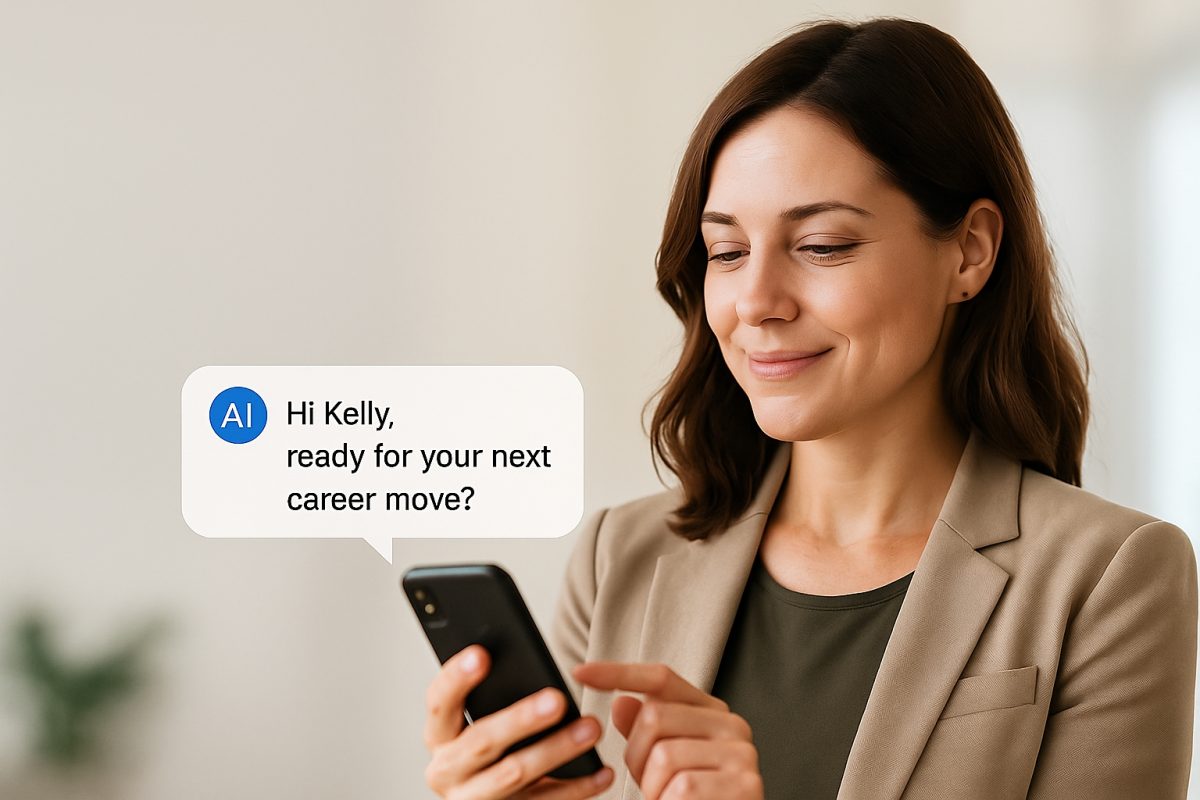
Table of Contents
- What Is Candidate Experience in Recruitment?
- Why High-Volume Hiring Breaks Candidate Experience
- The Five Points Where Candidates Drop Off (and What Fixes Each)
- How CloudApper AI Recruiter Fixes Candidate Experience at Scale
- The KPIs That Actually Measure Candidate Experience
- Fast Hiring and Human Hiring Are the Same Thing
- Frequently Asked Questions
Every hiring team says candidate experience matters. In high-volume hourly hiring, it does something more specific: it decides who you get to hire at all.
According to research reported by SHRM, 92% of candidates who click “apply” never finish the application. In salaried hiring, that number stings. In hourly hiring, where a CNA, line cook, or field technician applies to five jobs on a lunch break and takes the first offer that responds, it defines the funnel. The employer who makes applying easy and responds first wins the candidate. Everyone else interviews whoever is left.
That is what most candidate experience advice misses. The problem in high-volume hiring is not that recruiters lack empathy. It is that the experience depends on response speed and consistency that no small TA team can sustain manually across hundreds of applicants a week.
What Is Candidate Experience in Recruitment?
Candidate experience is the sum of every interaction a job seeker has with your organization, from the first job post view through application, screening, interviews, offer, and onboarding. Candidates judge it on three things above all: how easy it was to apply, how quickly you responded, and whether anyone kept them informed between steps.
In 2025, poor experiences led 26% of job seekers to decline offers, and negative interview interactions pushed that to 36%. Candidates talk, review sites amplify, and in tight local labor markets for hourly roles, a reputation for slow or silent hiring empties the top of your funnel.
Why High-Volume Hiring Breaks Candidate Experience
A hospital system, senior care operator, or multi-site field services company faces a structurally different problem than a company hiring one marketing manager.
Volume overwhelms manual process. One requisition can pull hundreds of applications, and a team of two to five recruiters cannot respond to each one within hours. Applications sit. Candidates move on.

Speed expectations are unforgiving. Hourly candidates apply broadly and accept quickly. Text messages get a 97% read rate within 15 minutes, and the employers who use that channel set the pace everyone else gets judged against.
Every gap compounds across sites. A clunky application costs you at every location simultaneously. So does a three-day scheduling delay or an unanswered question about pay and shifts.
Candidates ghost what ghosts them. No-show rates for hourly interviews commonly run 50% or worse when days pass between application and interview, because the candidate accepted another job in the gap.
None of this improves with reminders or better intentions. It improves when the workflow itself answers, screens, schedules, and updates candidates the moment they act.
The Five Points Where Candidates Drop Off (and What Fixes Each)
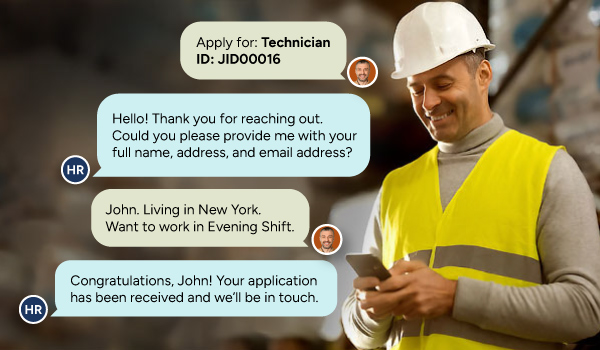
1. The application itself. Long forms, account creation, and resume uploads on a phone kill 92% of starts. Fix: a conversational, text-based apply flow that takes minutes on a phone and feeds your ATS directly.
2. The silence after applying. Most applicants never hear anything for days, if ever. Fix: instant acknowledgment plus automated screening that moves qualified candidates forward immediately instead of when a recruiter clears their queue.
3. Unanswered questions. Pay range, shift patterns, location, benefits: when candidates cannot get answers, they do not wait. Fix: an AI assistant that answers candidate questions instantly, around the clock, in the candidate’s own language.
4. Scheduling friction. Every back-and-forth email adds a day, and every day adds no-show risk. Fix: automated self-service scheduling the moment screening completes, so a candidate can go from application to booked interview in one sitting.
5. The gap before day one. Offer accepted, then silence until orientation invites ghosting even after a yes. Fix: automated check-ins and next-step updates between offer and start date.
Notice what all five fixes share: they remove waiting, not people. Recruiters still make every hiring decision. The workflow just stops making candidates pay for the team’s workload.
How CloudApper AI Recruiter Fixes Candidate Experience at Scale
CloudApper AI Recruiter applies these fixes as a process layer inside the ATS you already run, including UKG Pro Recruiting and Dayforce, rather than as another portal for recruiters and candidates to learn.
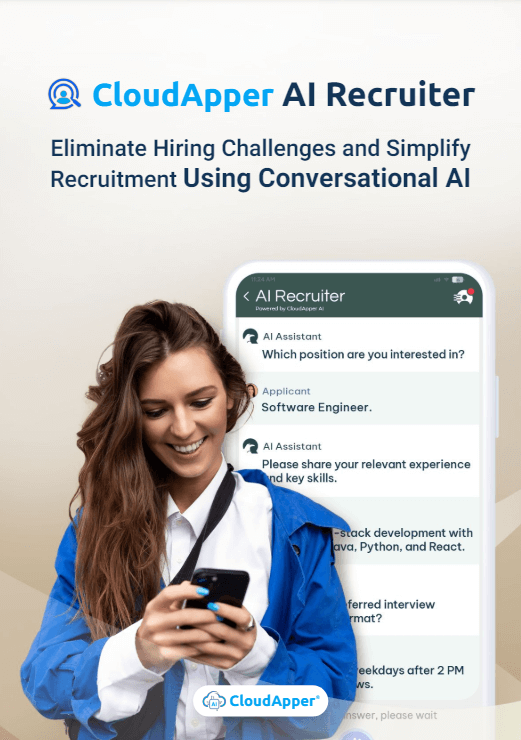
Candidates apply conversationally by text or chat, get their questions answered instantly in more than 50 languages, complete screening in the same session, and book their own interviews immediately. Recruiters see qualified, consistently screened candidates in their existing workflow and keep full control over every decision and every criterion.
The results compound exactly where high-volume hiring hurts. Organizations using AI Recruiter cut application-to-interview time from 12 days to 72 hours, and interview show-up rates climbed from around 40% to 70% because candidates booked interviews while they were still interested. Faster response also means the best candidates stop disappearing into competitors’ funnels.
The candidate feels a company that answers immediately, communicates clearly, and respects their time. The recruiting team feels hundreds of conversations they no longer have to type. Both of those are the same feature.
The KPIs That Actually Measure Candidate Experience
Skip vanity metrics. Five numbers tell you whether your candidate experience works, and every one of them should move within weeks of fixing the workflow: application completion rate (the inverse of your drop-off), time-to-first-touch (aim for minutes, not days), application-to-interview time, interview show-up rate, and candidate NPS measured right after the hiring decision. If you track only one, track time-to-first-touch; it predicts most of the others.
Fast Hiring and Human Hiring Are the Same Thing
The industry has spent years framing candidate experience as a trade-off: high-touch treatment or high-volume efficiency, pick one. The organizations winning hourly talent in 2026 refuse that trade. They let automation handle immediacy, which is what candidates actually experience as respect, and let recruiters spend their recovered hours on the judgment calls that deserve a human.
CloudApper is the process layer that closes the gaps enterprise software can’t, and candidate experience is one of those gaps: your ATS stores applications, but it was never built to answer, screen, schedule, and follow up in the moment. The organizations that close that gap stopped losing 92% of their funnel before the first conversation. The ones that don’t are staffing their competitors.
Frequently Asked Questions
What is candidate experience in recruitment? Candidate experience covers every interaction a job seeker has with an employer, from the job post through application, screening, interviews, offer, and onboarding. Candidates judge it mainly on application ease, response speed, and communication between steps, and it directly affects offer acceptance and employer reputation.
Why do so many candidates abandon job applications? Research reported by SHRM shows 92% of candidates who start an online application never finish it. Long forms, forced account creation, poor mobile flows, and no visible response from the employer drive most of the abandonment, especially among hourly workers applying from phones.
How can AI improve candidate experience without making hiring impersonal? AI improves the parts candidates experience as neglect: slow responses, unanswered questions, and scheduling delays. When an AI assistant answers instantly, screens consistently, and books interviews immediately, candidates reach a human interviewer faster. Recruiters keep every hiring decision and gain back the hours that manual coordination consumed.
What is a good time-to-first-touch for hourly hiring? Aim for minutes. Text messages reach a 97% read rate within 15 minutes, and hourly candidates typically accept the first credible offer they receive. Employers who respond within the hour consistently out-hire employers who respond within the week.
How do you improve interview show-up rates in high-volume hiring? Compress the gap between application and interview. Show-up rates collapse when days pass, because candidates accept other jobs in the meantime. Organizations that let candidates self-schedule immediately after automated screening have lifted show-up rates from roughly 40% to 70%.
Does better candidate experience work inside an existing ATS like UKG or Dayforce? Yes. Workflow-level tools such as CloudApper AI Recruiter run as an enhancement layer inside UKG Pro Recruiting and Dayforce, so candidates get conversational apply, instant answers, and self-scheduling while recruiters keep working in the system they already use.

What is CloudApper AI Platform?
CloudApper AI is an advanced platform that enables organizations to integrate AI into their existing enterprise systems effortlessly, without the need for technical expertise, costly development, or upgrading the underlying infrastructure. By transforming legacy systems into AI-capable solutions, CloudApper allows companies to harness the power of Generative AI quickly and efficiently. This approach has been successfully implemented with leading systems like UKG, Workday, Oracle, Paradox, Amazon AWS Bedrock and can be applied across various industries, helping businesses enhance productivity, automate processes, and gain deeper insights without the usual complexities. With CloudApper AI, you can start experiencing the transformative benefits of AI today. Learn More
- Useful Links:
- Agentic AI
- No-Code/Low-Code
- Custom Software
- HCM Personalization
- iPaaS
- FedRAMP
CloudApper AI Solutions for HR

- Works with







- and more.
Similar Posts
Verify Required Certifications and Licenses Without Slowing Down Screening
How to Standardize Candidate Selection Across Regional Hiring Teams