Candidate pipeline management becomes critical when hiring volume spikes. This practical guide explains why pipelines break down in high-volume hiring and how AI helps teams organize, prioritize, and move candidates forward faster without adding complexity or losing control.


Table of Contents
You probably know this situation well. You open your recruiting dashboard on a Monday morning and see hundreds of new applications. Some are strong. Many are not. Your hiring managers want interviews scheduled fast. Candidates expect updates even faster. You want to do the right thing, but the pipeline feels messy and hard to control. This is where candidate pipeline management starts to matter in a very real way.
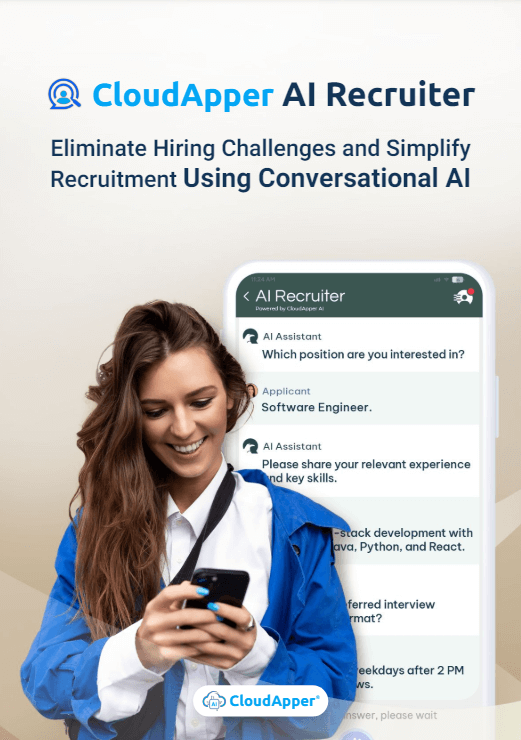
Over the last few years, I have worked closely with enterprise talent acquisition and HR teams dealing with high-volume hiring every day. What I have seen again and again is that the problem is rarely sourcing. The problem is what happens after candidates enter the pipeline. That is why teams look at solutions like CloudApper AI Recruiter early in the conversation. They are not trying to replace their systems. They are trying to bring order, clarity, and flow into a pipeline that has become difficult to manage at scale.
In this article, you will learn what candidate pipeline management really means in high-volume hiring, why it breaks down so easily, and how you can make it more efficient and sustainable without adding complexity.
What Candidate Pipeline Management Really Means in High-Volume Hiring
Candidate pipeline management is the practice of organizing, prioritizing, and moving candidates through each stage of hiring in a structured and consistent way. In high-volume hiring, this is not about keeping a long list of names. It is about maintaining a steady flow of qualified candidates who are ready to move forward when you need them.
When you are hiring at scale, managing and building a talent pipeline becomes a daily operational discipline. It involves how candidates enter your system, how quickly they are reviewed, how they are prioritized, and how consistently they are engaged. If any one of these steps breaks down, the entire pipeline slows down.
In a high-volume environment, you do not have the time to deeply analyze every resume at the start. You need a clear way to separate signal from noise early. Effective candidate pipeline management gives you that structure. It helps you focus your time on the candidates who matter most while still treating every applicant fairly.
Why Candidate Pipeline Management Breaks Down at Scale
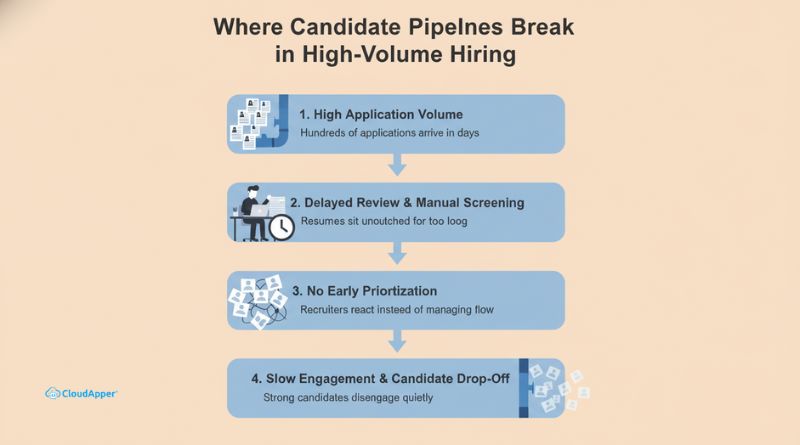
If you have worked in high-volume hiring for any length of time, you have likely seen the same patterns repeat. Applications come in fast. Recruiters start strong. Then volume overwhelms the process.

One common issue is delayed review. When hundreds of applications arrive in a short window, resumes sit untouched for days. By the time you reach strong candidates, they have already moved on. This delay is not due to a lack of effort. It happens because the pipeline is not designed to handle volume.
Another issue is a lack of early prioritization. Without a clear way to rank or group candidates early, recruiters end up reacting instead of managing flow. Everyone feels busy, but progress slows. The pipeline fills up, yet very few candidates move forward.
You also see candidate drop-off increase. Slow responses, generic messages, and long application steps make candidates disengage quietly. From the outside, it looks like low interest. From the inside, it is a pipeline management problem.
These breakdowns do not mean your team is doing something wrong. They mean your process is under stress. High-volume hiring exposes weaknesses that stay hidden when volume is low.
The Real Challenges of Candidate Pipeline Management in High-Volume Hiring
In high-volume recruiting, candidate pipeline management rarely breaks at one obvious point. It breaks gradually, under pressure, as volume exposes weak spots in how candidates are handled early and consistently.
Intake Creates Noise Instead of Clarity
Most teams do not struggle to attract candidates. The real issue is what happens when hundreds of applications enter the system at once. Long forms, poor mobile experiences, and resume-heavy intake methods generate a lot of noise.
When intake is cluttered, recruiters start with incomplete or low-quality information. This makes early decisions harder and slows down everything that follows. Clean, simple intake does not reduce volume, but it improves the signal that enters the pipeline.
Early Screening Becomes a Bottleneck
Early screening is where pipelines usually start to back up. When screening relies heavily on manual resume review, candidates wait too long for the first decision.
In high-volume hiring, slow screening creates a domino effect. Strong candidates lose interest. Recruiters fall behind. Hiring managers receive fewer viable options. What should be a flow becomes a backlog.
Lack of Clear Prioritization
Many pipelines focus on filtering candidates out rather than ordering candidates by readiness. This creates confusion when the volume is high.
Without clear prioritization, recruiters spend time reviewing candidates in the order they arrive instead of engaging the strongest fits first. As a result, qualified candidates wait while attention goes elsewhere.
Engagement Slows and Candidates Drop Off
Candidate pipeline management does not end with screening. Engagement is a constant challenge at scale.
When updates are delayed or communication feels generic, candidates disengage quietly. The pipeline may look full on paper, but very few candidates actually move forward. This is often misread as low candidate interest when it is really a process issue.
How AI Supports Candidate Pipeline Management in High-Volume Hiring Without Taking Control Away
AI can support candidate pipeline management when it is used to strengthen structure and consistency, not replace human judgment.
Reducing Manual Sorting at the Top of the Pipeline
In high-volume hiring, the biggest drain on recruiter time is manual sorting. AI helps by reviewing resumes and screening responses quickly and consistently. This allows recruiters to start with organized information instead of raw volume. When early sorting improves, recruiters regain control of the pipeline instead of reacting to it.
Keeping Prioritization Continuous Instead of Reactive
Pipelines often break when prioritization happens only once. AI helps keep candidates ordered as new applications arrive and as more information becomes available. This continuous prioritization ensures strong candidates are surfaced early, even when volume changes day to day.
Improving Consistency Without Removing Accountability
AI applies the same evaluation logic across candidates, which improves consistency. Recruiters still decide who moves forward and why. This balance reduces variability caused by fatigue or time pressure while keeping humans responsible for decisions.
Managing volume does not mean giving up judgment. It means removing the work that slows recruiters down.
How CloudApper AI Recruiter Enhances Candidate Pipeline Management in High-Volume Hiring
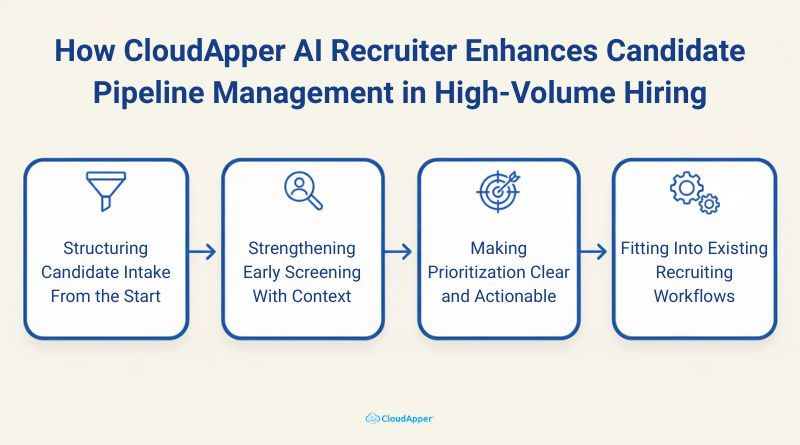
CloudApper AI Recruiter supports candidate pipeline management by focusing on the stages where high-volume pipelines most often break.
Structuring Candidate Intake From the Start
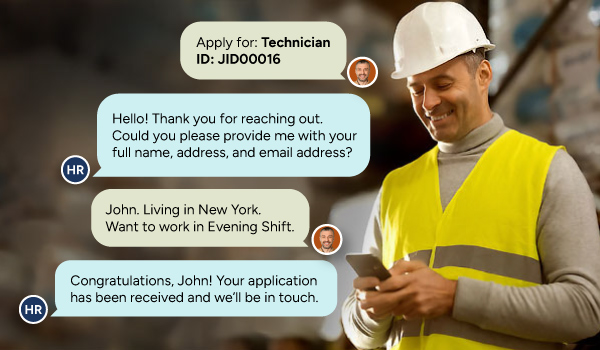
Candidates enter the pipeline through a simple, mobile-friendly experience. Resumes are analyzed immediately, and relevant details are organized before recruiters review anything. This reduces noise at the top of the pipeline and improves data quality from the beginning.
Strengthening Early Screening With Context
Pre-screening questions adapt based on the candidate’s background and role requirements. This produces richer information early without adding friction for candidates. Recruiters receive more context before engagement, which improves decision-making and saves time.
Making Prioritization Clear and Actionable
Candidates are prioritized based on role alignment and screening responses. Recruiters see who is ready for engagement and why. This turns pipeline management into an intentional process instead of a reactive one.
Fitting Into Existing Recruiting Workflows
CloudApper AI Recruiter integrates with existing systems, so recruiters do not need to change how they manage interviews, approvals, or offers. The workflow stays familiar, but the pipeline becomes easier to manage at scale.
Practical Advice for Making Candidate Pipeline Management Sustainable
If you want to improve candidate pipeline management in high-volume hiring, focus on small, practical changes that improve flow and reduce friction across the process.
- Build pipelines before hiring spikes whenever possible: When you wait until roles are already open to start building a pipeline, every delay feels urgent. Proactive pipeline building gives you qualified candidates to draw from when volume suddenly increases and reduces pressure on recruiters during peak periods.
- Prioritize candidates continuously, not in batches: Do not wait until the pipeline is full before deciding who to review. Continuous prioritization helps recruiters stay ahead of volume and ensures strong candidates are engaged while interest is still high.
- Design every step with mobile candidates in mind: Many high-volume roles rely on candidates applying from their phones. If the application or screening process feels slow or difficult on mobile, you lose candidates before they ever enter the pipeline in a meaningful way.
- Keep humans accountable for hiring decisions: Technology should make it easier to manage volume and surface insights, but recruiters and hiring managers must remain responsible for evaluating candidates and making final decisions. This balance maintains fairness and trust in the process.
- Review pipeline health on a regular schedule: Short weekly check-ins help you spot bottlenecks early, understand where candidates are dropping off, and adjust before small issues turn into larger delays.
Taken together, these habits help keep your pipeline flexible, predictable, and resilient, even when hiring demand increases quickly.
Final Takeaway
Candidate pipeline management is not a feature you turn on. It is a system you maintain. In high-volume hiring, this system is tested every day by volume, time pressure, and candidate expectations.
When the pipeline flows, recruiters work with confidence. Hiring managers get better shortlists. Candidates feel respected. When it breaks down, everyone feels the strain.
You do not need to rebuild your recruiting stack to fix this. You need better structure, clearer prioritization, and tools that simplify early-stage work. When done well, candidate pipeline management turns high-volume hiring from a daily struggle into a process you can scale with confidence.
The right pipeline structure helps recruiters move faster, hiring managers decide sooner, and candidates stay engaged.
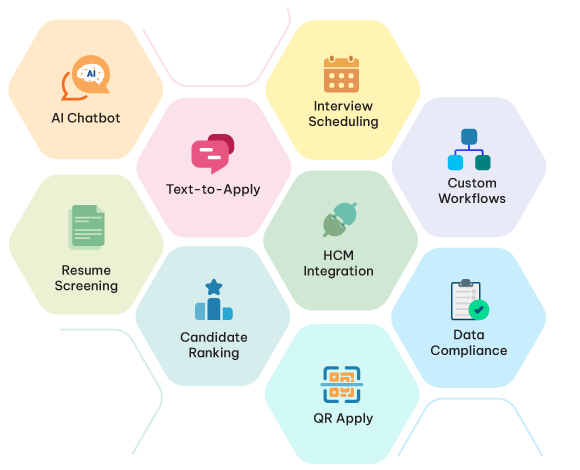
Reduce Time-to-Hire by 97% with AI for Talent Acquisition
Recruit skilled, culturally fit, and diverse candidates with CloudApper’s state-of-the-art AI resume screening, automated interview scheduling, and offer letter generation.
Learn more | Download BrochureFrequnetly Asked Questions
-
What is candidate pipeline management in high-volume hiring?
Candidate pipeline management is the process of organizing, prioritizing, and moving large numbers of candidates through hiring stages in a structured and consistent way. -
Why does candidate pipeline management break down at scale?
Pipelines break down due to delayed reviews, lack of early prioritization, slow engagement, and manual screening that cannot keep up with high application volume. -
What are the biggest challenges in high-volume candidate pipelines?
The biggest challenges include noisy intake, screening bottlenecks, unclear prioritization, and candidates dropping off due to slow communication. -
How does AI support candidate pipeline management?
AI supports pipeline management by speeding up early screening, keeping candidates continuously prioritized, and reducing manual effort while leaving decisions with recruiters. -
Does AI replace recruiters in high-volume hiring?
No. AI helps recruiters manage volume more efficiently, but recruiters and hiring managers remain responsible for evaluating candidates and making hiring decisions.

What is CloudApper AI Platform?
CloudApper AI is an advanced platform that enables organizations to integrate AI into their existing enterprise systems effortlessly, without the need for technical expertise, costly development, or upgrading the underlying infrastructure. By transforming legacy systems into AI-capable solutions, CloudApper allows companies to harness the power of Generative AI quickly and efficiently. This approach has been successfully implemented with leading systems like UKG, Workday, Oracle, Paradox, Amazon AWS Bedrock and can be applied across various industries, helping businesses enhance productivity, automate processes, and gain deeper insights without the usual complexities. With CloudApper AI, you can start experiencing the transformative benefits of AI today. Learn More
CloudApper AI Solutions for HR


- Works with


- and more.







Similar Posts
How cNPS Reflects Your Recruitment and Employer Brand
The Recruitment-to-HRIS Gap: Why Your “System of Record” Should Start…