Building a talent pipeline helps enterprise recruiters hire faster without starting from scratch. This guide explains how to source, engage, screen, and maintain candidates using structured processes and AI-driven automation while keeping recruiters focused on relationships and strategy.


TL;DR
- A talent pipeline keeps qualified candidates engaged before roles open.
- Enterprise hiring requires proactive sourcing across multiple channels.
- Continuous candidate engagement prevents drop-off and lost talent.
- AI accelerates screening, communication, and scheduling at scale.
- Ongoing measurement and optimization keep pipelines effective long term.
Table of Contents
Let me ask you something. How long does it take your team to fill a critical role? 40 days? 60 days? Sometimes even longer? And how often are you starting from scratch, frantically posting jobs and hoping the right candidates magically appear?
Here’s the thing. Reactive recruiting is costing you time, money, and top talent. While you’re scrambling to fill urgent positions, your competitors are hiring from pipelines of pre-qualified candidates they’ve been nurturing for months.
In this guide, I’ll walk you through exactly how to build a talent pipeline that keeps qualified candidates ready to hire. You’ll learn the step-by-step process for sourcing, engaging, and organizing candidates so you never have to start from zero again. Plus, I’ll show you how modern AI Recruiting tools like CloudApper AI Recruiter can handle the heavy lifting while you focus on building real relationships with top talent.
What Is a Talent Pipeline? (And Why It Matters)
A talent pipeline is a pool of pre-qualified, engaged candidates who are ready to fill your future roles. Think of it as your bench of potential hires who already know your company, understand your culture, and have the skills you need.
Here’s what makes it different from just collecting resumes. A talent pool is passive. It’s a database of candidates you might contact someday. A talent pipeline is active. You’re continuously engaging these candidates, sharing updates about your company, and building relationships so when a role opens, they’re excited to apply.
The numbers tell the full story. Right now, candidates face applications so tedious and complicated that 92% drop off before completing them. When you finally get applications, your recruiters spend days manually screening hundreds of resumes. Then comes the back-and-forth nightmare of scheduling interviews. By the time you make an offer, your top candidate has already accepted another job.
For enterprise organizations, these challenges multiply. You’re hiring at scale, often for specialized roles where talent is scarce. You’re competing with every other company for the same skilled professionals. Building a talent pipeline isn’t just nice to have anymore. It’s the only way to consistently hire quality candidates without burning out your recruiting team.
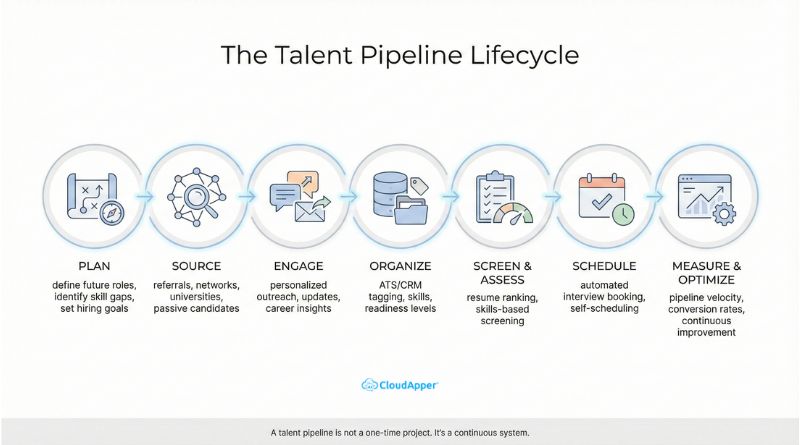
How to Build a Talent Pipeline: Step-by-Step Guide
Let me break down exactly how to build a talent pipeline that actually works. I’ve helped countless enterprise talent acquisition teams implement these strategies, and they consistently see faster hiring and better candidate quality.
Step 1: Define Your Hiring Needs and Future Roles
You can’t build a pipeline without knowing where it’s going. Start by sitting down with your department heads and business leaders. Ask them about their growth plans for the next 12 to 18 months. Which teams are expanding? What new projects are launching? Where are the skill gaps right now?
Create detailed profiles for your hard-to-fill positions. Don’t just list job requirements. Think about the specific skills, experience levels, and qualities that make someone successful in each role. If your data science team needs senior analysts, what tools do they actually use? What problems do they solve daily? The more specific you get, the better you can target the right candidates.
Set clear goals for your pipeline. Maybe you want to reduce time-to-hire for engineering roles by 50%. Or perhaps you’re focused on improving diversity in your leadership pipeline. Define what success looks like and establish KPIs you can track, like pipeline conversion rate, time-to-fill, and source quality.
Step 2: Source Candidates from Multiple Channels
Now comes the fun part. You need to cast a wide net to find diverse talent. Relying on one or two sources limits your candidate pool and leads to homogeneous hiring.
Start with your internal talent. Your current employees are your best source of referrals because they understand your culture and know talented people in their networks. Create an employee referral program that makes it easy for your team to share job openings with trusted contacts. When employees can quickly refer candidates and track their progress, they’re more likely to participate. This approach reduces your recruitment costs while bringing in candidates who already have a warm connection to your company.
Look externally too. LinkedIn is obvious, but don’t stop there. Engage with professional organizations in your industry. Partner with universities for early career talent. Attend conferences and networking events where your ideal candidates gather. Use social media strategically to showcase your culture and open roles.
Don’t forget about passive candidates. These are talented professionals who aren’t actively job hunting but might be open to the right opportunity. They make up about 70% of the workforce and are often your highest-quality hires because they’re already employed and performing well.
Step 3: Create a Strong Employer Brand
Top talent has options. Why should they choose you? Your employer brand is how candidates perceive your company as a place to work. If they’ve never heard of you or only see negative reviews online, building a pipeline becomes infinitely harder.
Invest in your careers page. Show real employee stories, not just corporate messaging. Share photos and videos from your office or remote team events. Be transparent about your culture, values, and what makes working at your company unique.
Encourage your current employees to share their experiences on social media and review sites. A single authentic post from a happy employee carries more weight than a dozen polished recruiting ads. Make it easy for them by creating shareable content they’re proud to post.
Your candidate experience matters from the very first interaction. Every person who applies, interviews, or even just asks a question forms an impression of your company. Treat every candidate well, respond promptly, and provide updates throughout the process. Even candidates you don’t hire can become brand ambassadors if you respect their time and effort.
Step 4: Engage and Nurture Candidates Continuously
Here’s where most companies fail. They do great at sourcing candidates, then let those relationships go cold. You can’t build a talent pipeline by just collecting contact information. You need to nurture these relationships over time.
Send personalized email campaigns that provide value. Share industry insights, company news, and career development resources. Don’t just reach out when you have an opening. Stay in touch regularly so candidates remember you and stay interested in your company.
Here’s the challenge though. Manual outreach is incredibly time-consuming and inconsistent. When your recruiters are juggling dozens of open roles, candidate nurturing falls to the bottom of the priority list. That’s where AI-powered candidate engagement changes everything. Automated systems can send personalized emails and text messages to keep candidates engaged with instant updates, reminders, and follow-ups. This ensures no candidate falls through the cracks while your team focuses on strategic conversations.
If nurturing candidates depends on manual outreach, it’s only a matter of time before relationships stall.
Step 5: Use a CRM or ATS to Organize Your Pipeline
Spreadsheets don’t scale. When you’re building a talent pipeline for an enterprise organization, you need a centralized system to track every candidate interaction, skill, and qualification.
A good CRM system or ATS helps you organize candidates by role fit, skills, experience level, and readiness to hire. You can tag candidates based on their interests, track when you last contacted them, and set reminders for follow-up. This keeps your pipeline organized and actionable instead of just being a massive list of names.
Look for systems that integrate with your existing tools. Your pipeline software should work seamlessly with your email, calendar, and other recruiting platforms. You shouldn’t need to manually copy data between systems or lose information in the transition.
Modern talent acquisition requires more than basic database functionality. CloudApper AI Recruiter integrates seamlessly with your existing ATS, HRIS, and talent acquisition systems like UKG, Workday, Greenhouse, Bullhorn, Lever, Oracle, and more. It adds intelligent automation on top of your current tools without requiring messy migrations or disrupting your workflows.
Step 6: Screen and Assess Pipeline Candidates Efficiently
When a role opens, you need to quickly identify which pipeline candidates are the best fit. The problem? Manually screening hundreds of resumes takes days and introduces unconscious bias into your process.
Move beyond resume-only screening. Use skills-based assessments that show you what candidates can actually do, not just what they claim on paper. Create situational screening questions that relate specifically to each role. Give candidates the option to respond via video so you can assess their communication skills and cultural fit.

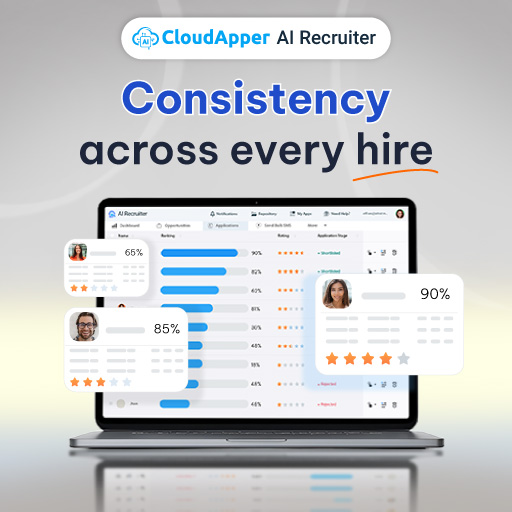
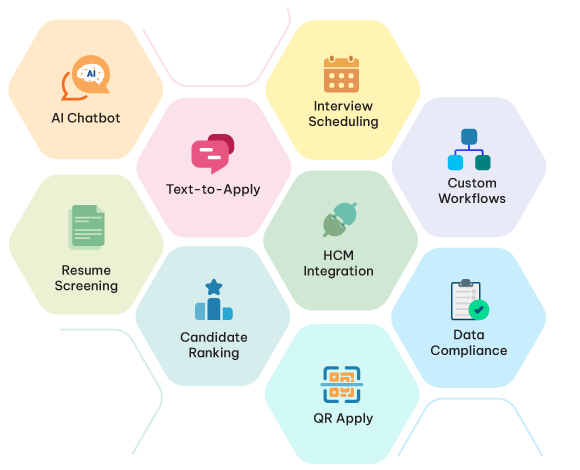
This is where a multi-agent AI system makes a massive difference. CloudApper AI Recruiter uses specialized agents that work together to handle different parts of screening and assessment. The Screening Agent automatically analyzes and ranks resumes, surfacing only your top-fit candidates. The Assessment Agent conducts intelligent evaluations with personalized screening questions and role-specific scoring.
Most importantly, research-backed bias elimination technology ensures fair and inclusive candidate recommendations based on skills and actual fit. The system minimizes both unconscious human bias and algorithmic bias, so you’re building diverse pipelines that strengthen your team.
Step 7: Measure, Optimize, and Maintain Your Pipeline
Your talent pipeline isn’t a set-it-and-forget-it project. You need to continuously measure its effectiveness and make improvements.
Track key metrics like pipeline size, pipeline velocity (how quickly candidates move through stages), source quality (which channels produce the best hires), and conversion rates (what percentage of pipeline candidates actually get hired). These numbers tell you what’s working and where you need to adjust.
Conduct regular pipeline audits. Remove candidates who are no longer interested or relevant. Refresh your engagement with candidates who’ve gone quiet. Update your candidate profiles as you learn more about what makes someone successful in each role.
Test different approaches. Try new sourcing channels and measure their results. Experiment with different messaging in your nurture campaigns. A/B test your job descriptions and application processes. Small improvements compound over time into dramatically better hiring outcomes.
How AI Helps You Build a Talent Pipeline Fast
Talent pipeline management has changed dramatically in recent years. What once required large recruiting teams and endless coordination can now be handled by intelligent systems working alongside recruiters. Here’s how AI fits into a modern pipeline without removing the human element that matters most.
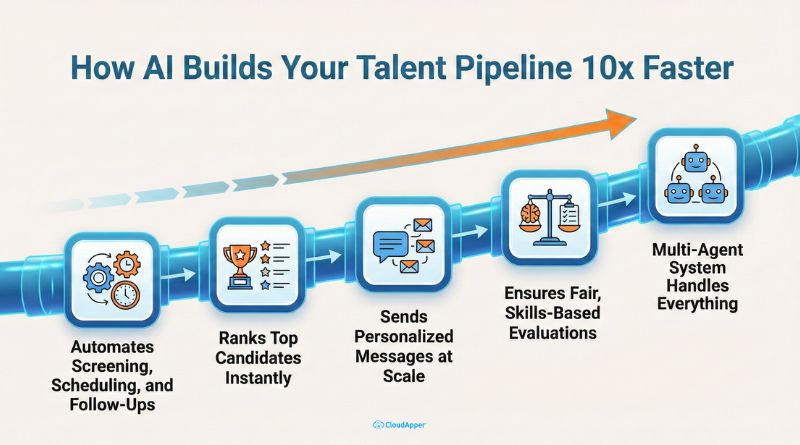
- AI takes over repetitive, time-consuming tasks: Resume screening, candidate scoring, interview scheduling, and follow-ups no longer need manual effort. AI handles these tasks quickly and consistently, freeing recruiters from administrative overload.
- Candidate screening happens at speed and scale: Instead of reviewing hundreds of resumes by hand, AI evaluates applications in minutes, identifying top-fit candidates based on skills, experience, and role requirements. This allows teams to act faster without sacrificing quality.
- Personalized engagement runs continuously in the background: AI-powered communication keeps candidates warm through tailored emails, texts, reminders, and updates. Every candidate receives timely communication, even when recruiters are focused on other priorities.
- Bias reduction is built into screening and assessment: Structured, skills-based evaluations reduce unconscious bias that often appears in manual resume reviews. AI focuses on actual fit and capability rather than background signals that can skew decisions.
- Multi-agent AI mirrors how recruiting teams already work: Different AI agents specialize in specific tasks, much like a recruiting team does today. One agent analyzes pipeline data and performance, another screens resumes, another runs assessments, another manages candidate communication, and another coordinates scheduling. Together, they keep the pipeline moving smoothly without manual bottlenecks.
This balance is what makes modern talent pipeline management effective. AI handles speed, scale, and consistency, while recruiters focus on strategy, relationships, and final decisions. The result is a pipeline that stays active, organized, and ready to deliver quality hires when roles open.
Common Talent Pipeline Challenges (And How to Overcome Them)
Let me address the biggest obstacles I see enterprise recruiting teams face when building talent pipelines.
High-volume resume overload kills productivity. Your recruiters spend an average of 23 hours screening resumes for every single hire. Multiply that across dozens of open roles and your team is drowning in paperwork instead of talking to candidates. AI-powered resume screening and candidate ranking solve this by automatically identifying your best matches in minutes instead of days.
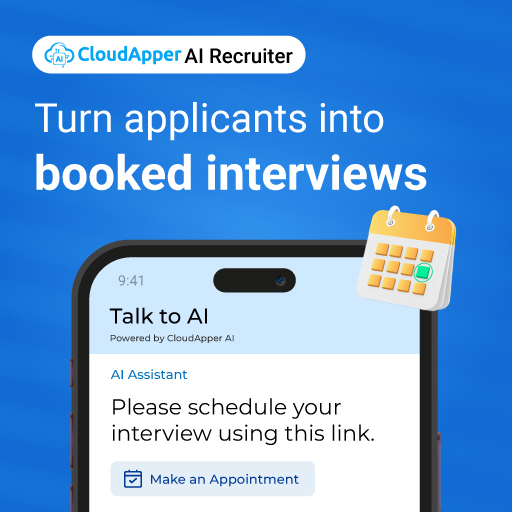
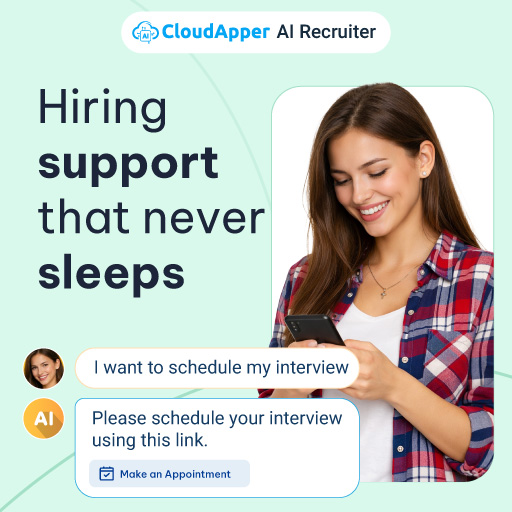
Candidate drop-off and disengagement happens when your process is too slow or complicated. That 92% application drop-off rate I mentioned earlier? It’s usually because candidates get frustrated and give up. They also lose interest when you take weeks to respond or make them wait days for interview scheduling. Conversational AI, automated scheduling, and instant communication keep candidates engaged and moving forward.
Unconscious bias in pipeline building leads to having teams that lack diverse perspectives. When humans manually screen candidates, we gravitate toward people who remind us of ourselves or previous successful hires. This perpetuates existing patterns and limits innovation. Structured assessments and skills-based screening help you reduce hiring bias and create more diverse, high-performing pipelines.
Manual, time-consuming processes prevent your team from scaling. Scheduling a single round of interviews can take 2 to 3 hours of back-and-forth emails. Multiply that across every candidate and open role, and you’ll see why automation matters. Self-scheduled interviews and calendar automation eliminate this bottleneck entirely.
CloudApper AI Recruiter reduces time-to-hire by 97% compared to traditional methods. Question personalization takes seconds instead of 2 to 4 hours. Screening and ranking happens in 2 minutes to 1 hour instead of 24-plus hours. Interview scheduling takes 2 minutes instead of 2 to 3 hours. These time savings let your recruiters focus on relationship-building and strategic work instead of administrative tasks.
Building Your Pipeline for Long-Term Success
Building a talent pipeline transforms your recruiting from reactive firefighting to proactive strategy. Instead of starting from scratch every time a role opens, you’ll have engaged, qualified candidates ready to move forward. Your recruiters will spend less time on administrative tasks and more time building relationships with top talent.
The reality is that manual processes can’t keep pace with modern hiring demands. When you’re competing for the same skilled professionals as every other company, speed and efficiency determine who wins. Combining strategic pipeline planning with intelligent automation gives you the competitive advantage you need.
A strong talent pipeline isn’t built by working harder. It’s built by working smarter with the right systems in place.
Reduce Time-to-Hire by 97% with AI for Talent Acquisition
Recruit skilled, culturally fit, and diverse candidates with CloudApper’s state-of-the-art AI resume screening, automated interview scheduling, and offer letter generation.
Learn more | Download BrochureFrequently Asked Questions About How to Build a Talent Pipeline
-
What is a talent pipeline?
A talent pipeline is an active pool of pre-qualified and engaged candidates who are ready to fill future roles, reducing time-to-hire and reliance on reactive recruiting. -
How is a talent pipeline different from a talent pool?
A talent pool is a passive resume database, while a talent pipeline involves ongoing engagement, communication, and relationship-building with candidates over time. -
Why is building a talent pipeline important for enterprise recruiters?
Enterprise hiring involves scale, specialization, and competition. A talent pipeline ensures faster hiring, better candidate quality, and reduced recruiter burnout. -
How does AI help in building a talent pipeline?
AI automates resume screening, candidate engagement, scheduling, and analytics, allowing recruiters to focus on strategic decisions and candidate relationships. -
How do you maintain a talent pipeline long term?
Ongoing measurement, regular candidate engagement, pipeline audits, and continuous optimization ensure the pipeline stays relevant and effective.

What is CloudApper AI Platform?
CloudApper AI is an advanced platform that enables organizations to integrate AI into their existing enterprise systems effortlessly, without the need for technical expertise, costly development, or upgrading the underlying infrastructure. By transforming legacy systems into AI-capable solutions, CloudApper allows companies to harness the power of Generative AI quickly and efficiently. This approach has been successfully implemented with leading systems like UKG, Workday, Oracle, Paradox, Amazon AWS Bedrock and can be applied across various industries, helping businesses enhance productivity, automate processes, and gain deeper insights without the usual complexities. With CloudApper AI, you can start experiencing the transformative benefits of AI today. Learn More
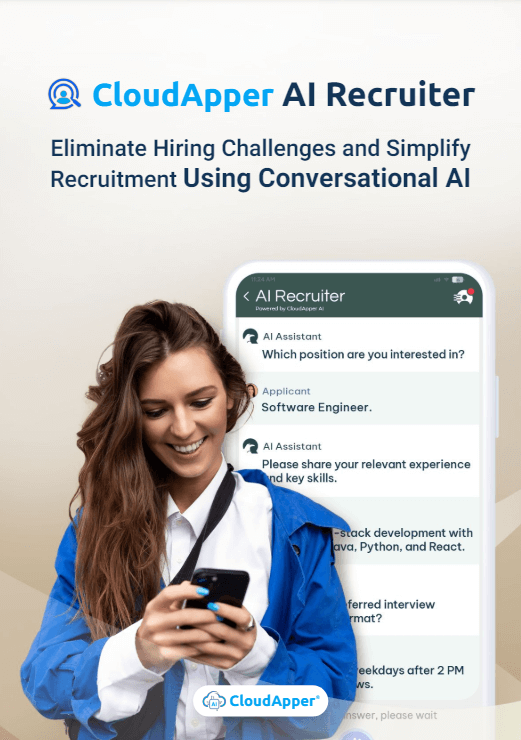
CloudApper AI Solutions for HR

- Works with


- and more.







Similar Posts
How cNPS Reflects Your Recruitment and Employer Brand
The Recruitment-to-HRIS Gap: Why Your “System of Record” Should Start…