High applicant volume doesn’t have to mean low interview yield. This guide explains how recruiters can improve apply-to-interview conversion rates by fixing screening delays, strengthening pre-screening quality, and keeping candidates engaged from application to interview.

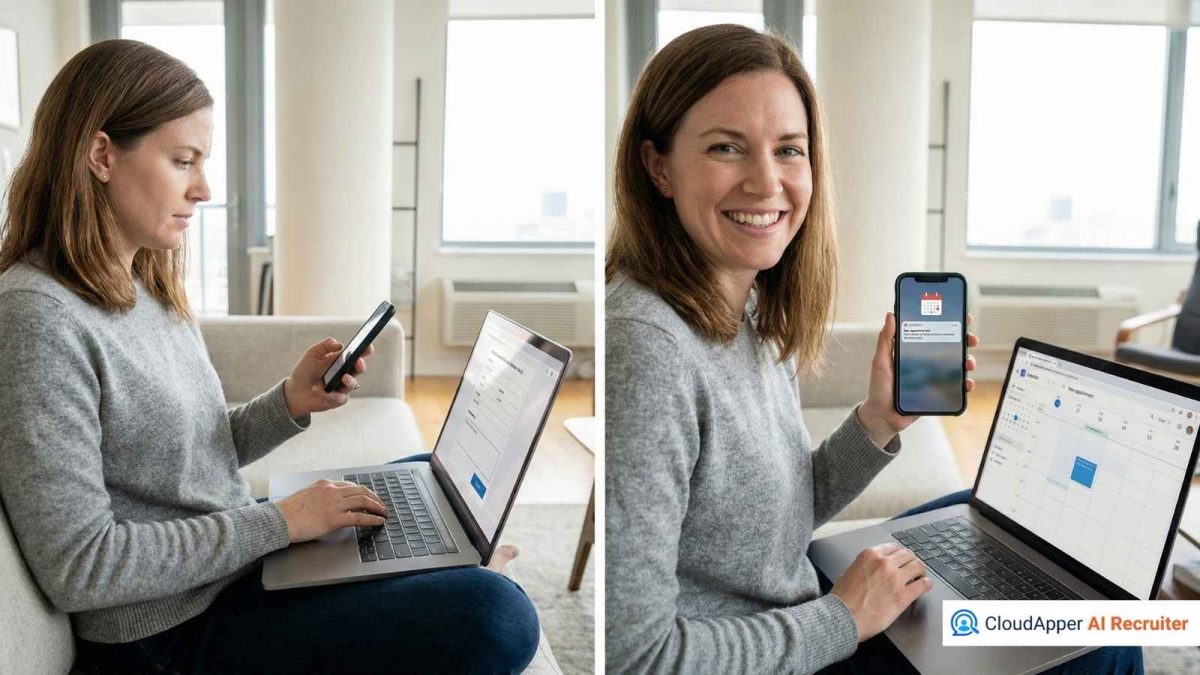
Table of Contents
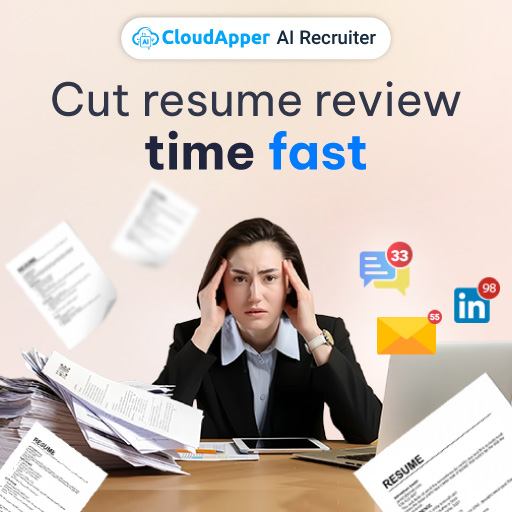
If you manage a high-volume hiring pipeline, you’ve likely felt the frustration of watching qualified candidates disappear between application and interview. Recruiters are under pressure to move fast, yet many teams still struggle to improve apply-to-interview outcomes because the process breaks down at the exact moment candidates expect momentum. Long review cycles, unclear screening criteria, and slow follow-up create friction that pushes good applicants elsewhere—often without you realizing it until roles remain unfilled.
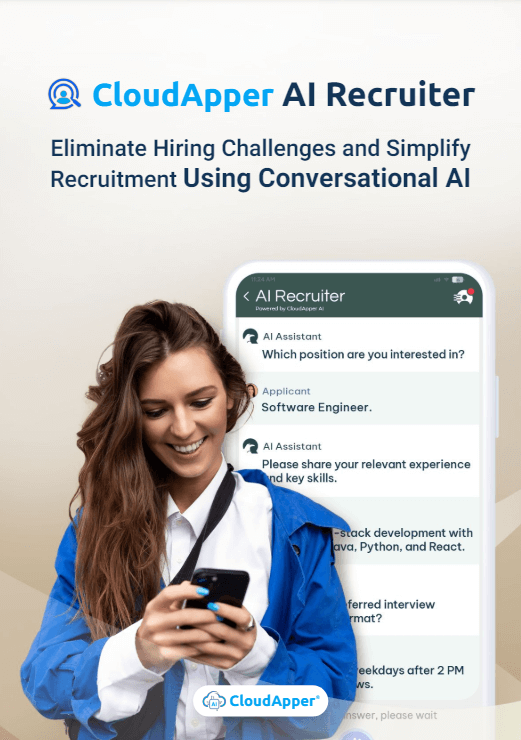
That gap is where solutions like CloudApper AI Recruiter fit naturally into real-world recruiting workflows. It helps teams screen, score, and rank applicants within seconds, ensures candidates never wait days for next steps, and keeps communication moving automatically around the clock. Instead of adding more steps or tools, it removes the delays that quietly erode candidate interest and recruiter confidence.
What Apply-To-Interview Conversion Really Measures—And Why It Matters
Apply-to-interview conversion rate is not a vanity metric. It shows how effectively your hiring process identifies and advances candidates who are genuinely worth interviewing. A low conversion rate usually signals one of two problems: either too many unqualified applicants are entering the funnel, or qualified candidates are being lost due to process delays and uncertainty.
In practice, most organizations suffer from both. Recruiters are flooded with resumes that look good on paper but don’t reflect real capability. At the same time, strong candidates expect fast acknowledgment and clear next steps. When neither happens, the funnel clogs at the top and leaks in the middle. Improving this metric means tightening screening quality and accelerating movement—without sacrificing hiring judgment.
Why Apply-To-Interview Conversion Drops In Real Hiring Environments
Most conversion problems aren’t caused by bad recruiters. They come from systems and habits that haven’t evolved alongside candidate expectations.
Manual resume screening is often the first bottleneck. When hundreds of applications arrive for a single role, even experienced recruiters need days to review them. During that time, candidates hear nothing. Many assume rejection and move on, even if they were a strong match.
Pre-screening questions can also work against you. Generic, checkbox-style questions fail to distinguish real experience from surface-level familiarity. Candidates who rely on polished language—or automated resume tools—can pass easily, while thoughtful applicants get lumped together in the same pile.
Scheduling adds another layer of friction. Back-and-forth emails, calendar mismatches, and delayed confirmations signal disorganization. From a candidate’s perspective, it feels like low priority. From a recruiter’s perspective, it’s time lost chasing availability instead of evaluating talent.
Together, these issues quietly sabotage your ability to move candidates forward with confidence.
How To Improve Apply-To-Interview Conversion Without Overwhelming Recruiters
Improving conversion does not mean interviewing more people. It means interviewing the right people faster, with fewer handoffs and clearer signals of readiness.
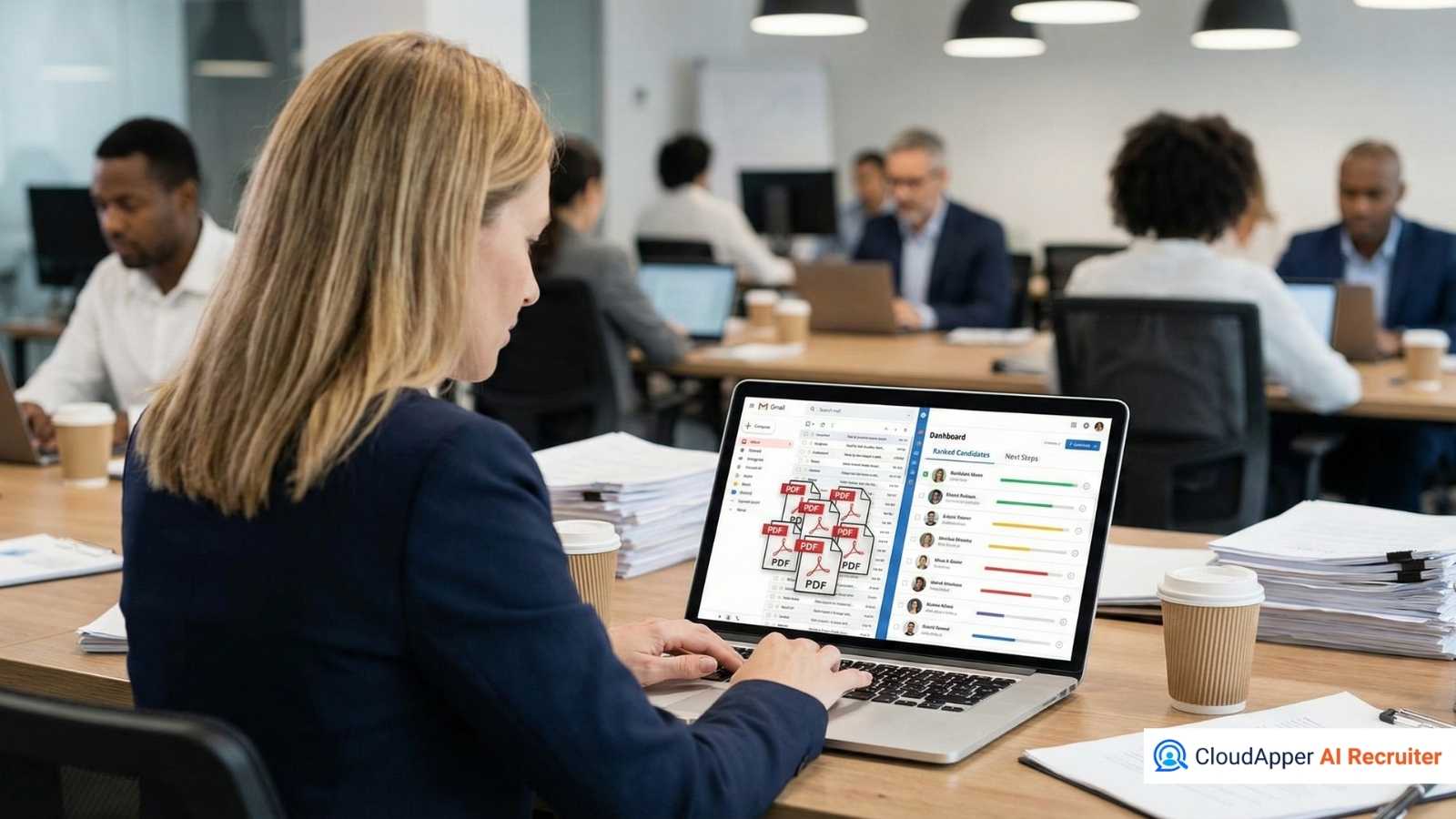
The first shift is immediate screening. When resumes are screened, scored, and ranked within seconds of submission, candidates experience momentum instead of silence. Recruiters gain a prioritized view of who deserves attention now, not days later. This reduces drop-off before interest fades and ensures promising applicants are contacted while they’re still engaged.
The second shift is smarter validation. CloudApper AI Recruiter uses scenario-based pre-screening questions that require candidates to explain how they’ve handled real situations. These aren’t theoretical prompts; they force applicants to demonstrate reasoning, judgment, and experience. Candidates who rely on generic answers or borrowed language struggle to respond consistently, making it easier to separate substance from polish early.
Equally important is protecting the integrity of screening itself. Resume manipulation and automated answer generation have become common. By analyzing context, reasoning flow, and internal consistency—rather than surface keywords—the platform can flag patterns that suggest artificial responses. This protects recruiters from advancing candidates who look impressive but lack depth.
Faster Scheduling Is Not A Nice-To-Have—It’s Conversion Leverage
Once a candidate qualifies, speed becomes the deciding factor. Every additional hour between screening and interview increases the risk of drop-off. Candidates assume interest is mutual when next steps happen quickly.
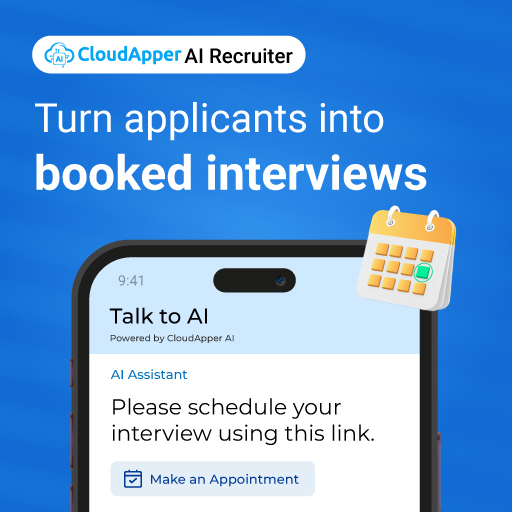
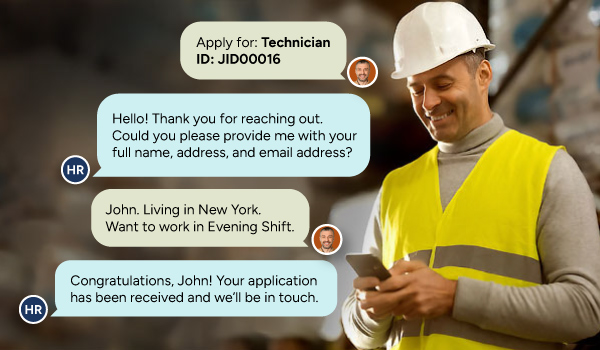
Automated scheduling removes this friction entirely. Candidates can select interview times instantly, receive confirmations and reminders automatically, and reschedule without recruiter involvement. There’s no waiting for replies or calendar coordination. Interviews feel intentional and professional, not improvised.
This matters because candidate perception directly affects acceptance rates. When the interview process feels smooth, candidates are more likely to show up prepared and engaged. Recruiters, in turn, spend less time managing logistics and more time evaluating fit.
Detecting Real Skills—Not Just Good Answers—Before Interviews
Pre-screening is only effective if it predicts interview performance. Too often, candidates breeze through early stages only to fall apart in live conversations.
That’s why it’s critical to evaluate how candidates think, not just what they say. CloudApper AI Recruiter examines problem-solving approaches, response consistency, and reasoning patterns across screening stages. During assessments or interviews, it can detect signs of real-time assistance tools by observing unnatural shifts in tone, pacing, or logic. This helps recruiters enter interviews with confidence that they’re speaking to the person behind the resume—not a script.
This approach doesn’t eliminate human judgment. It strengthens it by giving recruiters better signals before investing time in interviews that won’t lead to offers.
Improve Apply-To-Interview Conversion By Fixing Pre-Screening Signal Quality
Conversion improves naturally when pre-screening reflects real job requirements. When candidates must explain how they’ve handled similar challenges, fewer unqualified applicants advance—and fewer qualified ones get stuck waiting.
The strongest results come when screening questions are tied directly to day-to-day responsibilities. Candidates either recognize the scenario and respond clearly, or they don’t. There’s very little middle ground. Recruiters spend interviews exploring depth instead of uncovering basics.
The Only Bulletproof Way To Reduce Drop-Off Between Apply And Interview
There is no single feature that fixes conversion rates. It’s the combination of speed, clarity, and credibility. When candidates feel seen quickly, understand what comes next, and trust the process, they stay engaged.
In practice, this means:
- Screening that happens immediately, not days later
- Questions that validate experience instead of encouraging guesswork
- Scheduling that removes friction instead of adding it
These elements reinforce each other. Faster screening enables faster outreach. Better screening reduces wasted interviews. Faster scheduling keeps candidates invested.

What Recruiters Gain When Conversion Improves
When apply-to-interview conversion rises, the impact shows up everywhere. Recruiters regain control of their time. Hiring managers see stronger shortlists. Interview panels spend less time filtering and more time evaluating fit. Most importantly, hiring decisions feel more confident because they’re based on demonstrated capability, not assumptions.
This is where teams see sustained improvement—not from working harder, but from aligning process design with how candidates actually behave.
Organizations that consistently improve apply-to-interview outcomes don’t rely on reminders or manual workarounds. They build workflows that move qualified candidates forward automatically while filtering out noise early. The result is a calmer, more predictable hiring rhythm that scales with demand instead of collapsing under it.
Final Thoughts On Building A Conversion-Focused Hiring Process
Apply-to-interview conversion is a reflection of respect—for candidates’ time and recruiters’ judgment. When systems are slow, vague, or easy to game, everyone loses. When they are fast, structured, and grounded in real skill validation, the hiring process becomes a competitive advantage.
If your team is feeling the strain of high applicant volume and low interview yield, it’s worth examining where momentum breaks and why. Improving that single handoff between apply and interview often unlocks faster hiring, better candidate experience, and stronger long-term outcomes.
Explore CloudApper AI Recruiter

What is CloudApper AI Platform?
CloudApper AI is an advanced platform that enables organizations to integrate AI into their existing enterprise systems effortlessly, without the need for technical expertise, costly development, or upgrading the underlying infrastructure. By transforming legacy systems into AI-capable solutions, CloudApper allows companies to harness the power of Generative AI quickly and efficiently. This approach has been successfully implemented with leading systems like UKG, Workday, Oracle, Paradox, Amazon AWS Bedrock and can be applied across various industries, helping businesses enhance productivity, automate processes, and gain deeper insights without the usual complexities. With CloudApper AI, you can start experiencing the transformative benefits of AI today. Learn More
CloudApper AI Solutions for HR

- Works with


- and more.







Similar Posts
How cNPS Reflects Your Recruitment and Employer Brand
The Recruitment-to-HRIS Gap: Why Your “System of Record” Should Start…