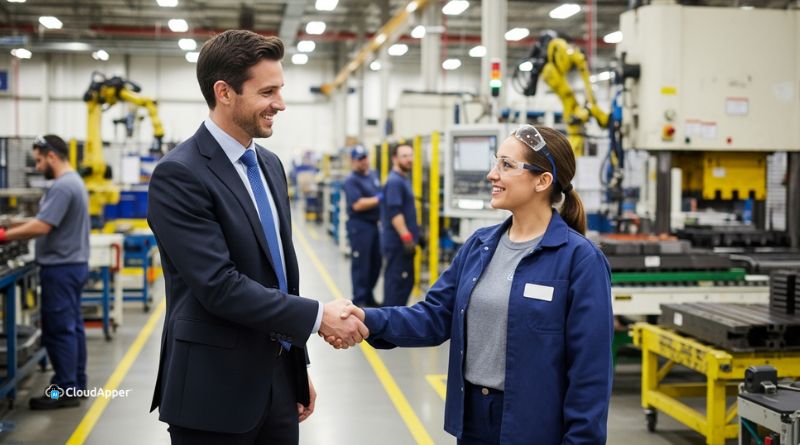
Manufacturing turnover is costly, disruptive, and often completely avoidable. Most churn starts long before an employee reaches the production floor—it begins during screening. By combining deeper evaluation with AI-driven scoring, manufacturers can finally hire people who are skilled, reliable, and ready for the demands of the job. This article breaks down how smarter screening helps reduce manufacturing turnover while giving recruiters the tools they need to hire faster and more accurately.

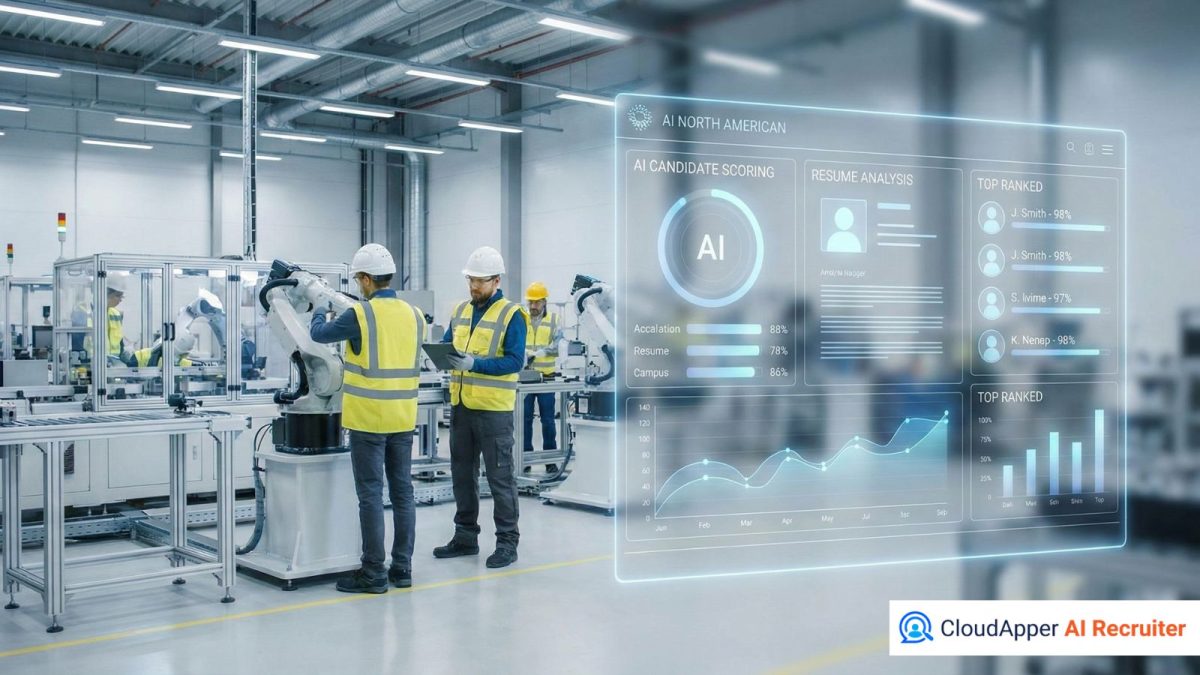
Table of Contents
Reducing turnover has become one of the biggest challenges in today’s manufacturing workforce. Plants across North America are dealing with absenteeism, inconsistent performance, new-hire churn, and rising recruitment costs. Every recruiter knows the story: you hire fast, invest in training, and then lose workers within weeks. This is exactly why learning how to reduce manufacturing turnover matters—not just for HR teams, but for productivity, safety, and long-term operational stability.
Many of these turnover issues start far earlier than the first day on the job. They start at the screening stage. If you bring in candidates who lack the required skills, reliability, or genuine interest in the work, turnover becomes inevitable. And while traditional hiring processes can help, they often miss key indicators that point to whether someone is likely to stay or leave. That’s where better screening and AI-driven scoring change the game for manufacturers who want to reduce manufacturing turnover strategically and sustainably.
AI Recruiter enters the picture as one of the few tools built to solve this exact challenge. It screens and scores candidates instantly, verifies real experience through contextual analysis, detects AI-based cheating, and evaluates behavioral fit through scenario-driven questions. Instead of relying on a recruiter’s intuition under time pressure, manufacturing organizations get a consistent, unbiased process that helps identify reliable workers before they ever reach the production floor.
Why Turnover Hits Manufacturing Harder Than Most Industries
Manufacturing roles are uniquely demanding—physically, mentally, and emotionally. These jobs call for precision, discipline, punctuality, and safety awareness. Yet many applicants underestimate the nature of the work or oversell their capabilities during interviews. This mismatch creates the perfect storm for turnover.
Recruiters in manufacturing also face:
• High hiring volumes
• Fast-changing staffing needs
• Strict regulatory and safety requirements
• Skill shortages in machining, welding, assembly, and quality control
• A labor market filled with applicants who apply to dozens of jobs at once
When the wrong people make it through screening, turnover becomes almost unavoidable. But when your screening process gets smarter, turnover drops—sometimes dramatically.
That’s why more manufacturers are turning to technology to validate skills, identify genuine experience, and predict reliability before extending an offer.
The Root Causes of Bad Hires in Manufacturing
Manufacturing turnover doesn’t happen randomly. It’s often rooted in predictable patterns—ones that AI can detect and respond to far more accurately than traditional screening.
- Candidates exaggerate hands-on experience.
Many job seekers list skills like forklift operation, CNC experience, or quality inspection—but they struggle when confronted with real-world tasks. Traditional screening can miss these gaps. - Recruiters don’t have enough time to evaluate applicants thoroughly.
Manufacturing recruiters often handle hundreds of applications a week. Screening each one manually is unrealistic. - Candidates drop off because hiring takes too long.
Manufacturing jobs attract high-volume applicants who won’t wait days for a follow-up. Slow processes lead to lost candidates and rushed hiring decisions. - Soft skills and reliability aren’t evaluated well.
Most turnover is caused not by technical failure, but by poor attendance, low motivation, or lack of adaptability. These qualities are harder to assess manually.
AI-based screening and scoring allow manufacturers to fix each of these issues from the start.
How AI Recruiter Helps Identify Workers Who Will Stay
A predictable, consistent screening process is one of the most effective ways to reduce manufacturing turnover. AI Recruiter gives manufacturers a way to achieve that without slowing down the hiring process.
Instant Resume Screening and Scoring
AI Recruiter instantly screens, scores, and ranks resumes in seconds. No matter how many applicants come through for machine operator, warehouse, maintenance, or assembly roles, the system analyzes each one the same way—fast, accurately, and without bias.
Because it automates resume screening and interview scheduling, no candidate waits for a response. This alone prevents drop-off during early stages, especially in competitive labor markets.
Contextual Analysis That Verifies Real Experience
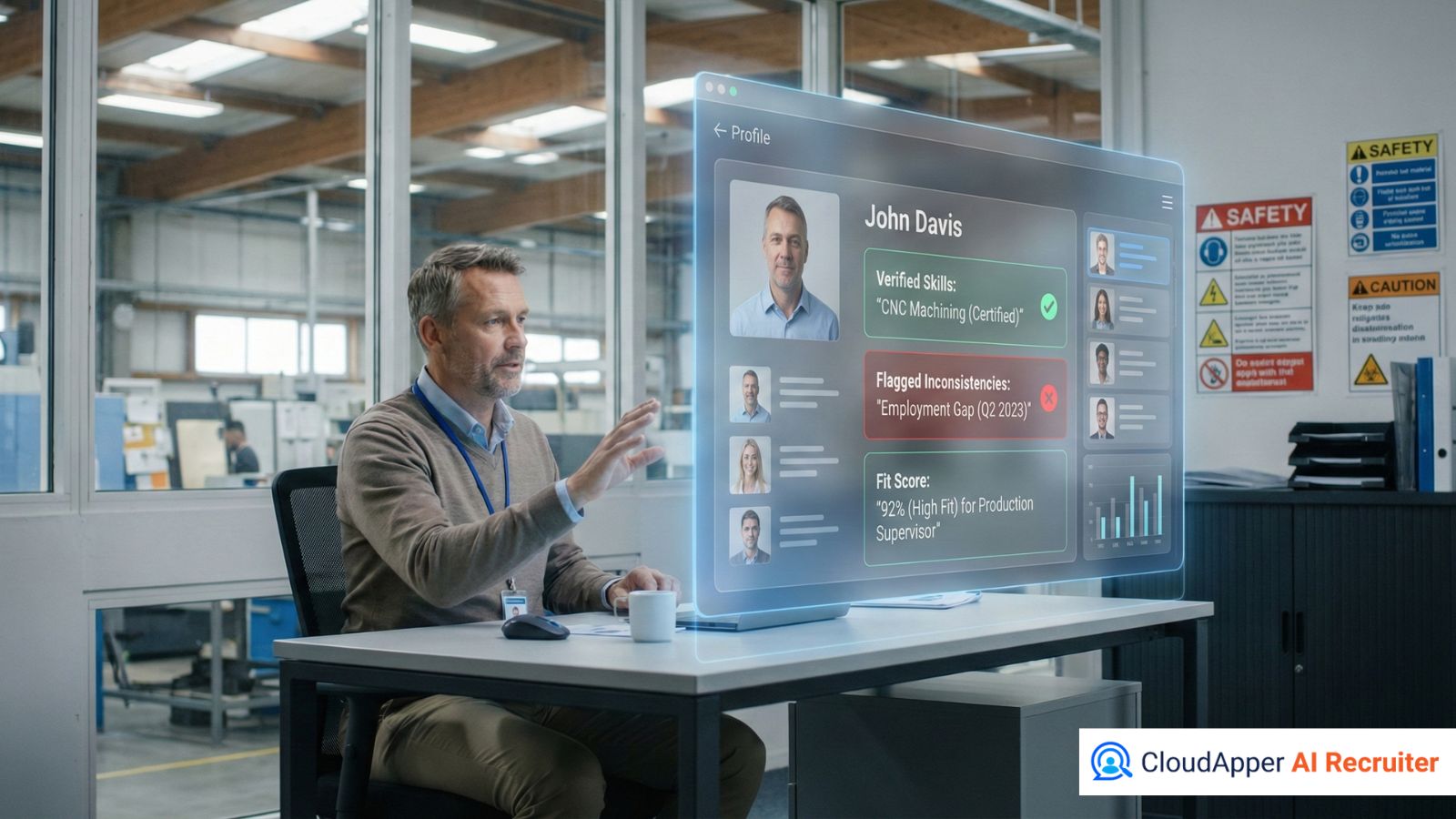
Instead of relying only on keyword matching, AI Recruiter reads resumes like a human—decoding context, identifying role history, and spotting inconsistencies. It also asks personalized, scenario-based questions to verify experience such as:
• “Tell me how you respond when a machine requires adjustment during a shift.”
• “Walk me through how you inspect a part failing quality standards.”
This eliminates guesswork and confirms whether a candidate truly understands the tasks—not just the terminology.
Detection of AI-Created Resumes or AI-Assisted Responses
Manufacturing applicants increasingly use AI tools to generate resumes or pre-screening answers. AI Recruiter identifies content that doesn’t match the candidate’s real experience. If someone claims welding experience but can’t answer a basic scenario question, the system flags it instantly.
This protects recruiters from relying on polished—but inaccurate—applications.
Assessment of Decision-Making and Soft Skills
Turnover often stems from behavior rather than technical skill. AI Recruiter evaluates:
• Work ethic
• Attention to detail
• Problem-solving
• Safety awareness
• Consistency under pressure
• Communication clarity
These insights help recruiters predict if a candidate will thrive in a production environment where reliability, routine, and safety matter.
How Better Screening Directly Reduces Manufacturing Turnover
High turnover creates ripple effects across production, from missed quotas to safety risks. Here’s how improved screening and AI scoring change the outcome.
1. You identify reliable workers before they step onto the floor.
When screening becomes deeper and more contextual, you reduce the number of people who accept the job but aren’t truly prepared for it.
2. You prevent underqualified workers from being hired.
Workers who lack real experience often leave quickly once training becomes difficult or overwhelming. AI verifies experience early, preventing early-stage churn.
3. You avoid mismatched expectations.
AI’s scenario-based questions reveal whether a candidate understands the pace, structure, and physical demands of manufacturing work.
4. You speed up hiring, reducing candidate drop-off.
Slow processes push candidates toward competitors. AI Recruiter automates follow-ups, reminders, and scheduling so no one feels ignored.
5. You reduce bias and improve consistency.
AI ensures every candidate receives the same standard of evaluation. This consistency improves hiring quality and reduces mistakes that lead to turnover.
Where Manufacturers See the Biggest Impact
Recruiters who use AI screening often report improvements within weeks. The most noticeable differences appear in:
- Assembly & production roles
Where speed and attention to detail matter. - Warehouse & distribution
Where reliability and shift commitment are essential. - Skilled trades
Where verifying experience prevents costly mistakes. - Shift-based environments
Where absenteeism directly affects output.
Manufacturers with seasonal peaks also benefit from faster hiring without sacrificing quality.
Why Traditional Screening Fails to Reduce Turnover
You can have the best training program and great supervisors, but if the wrong hires enter the workforce, turnover becomes a recurring problem. Traditional screening struggles because:
• Recruiters are overwhelmed with volume.
• Resume fraud is growing.
• AI-written resumes are becoming harder to identify.
• Skills and reliability aren’t evaluated consistently.
• Manual pre-screening takes too long for high-velocity hiring.
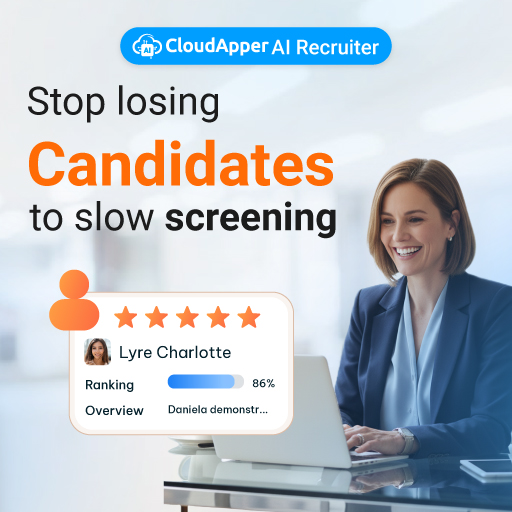
AI Recruiter eliminates these bottlenecks by analyzing skills, verifying experience, evaluating behavior, and accelerating the process all at once.
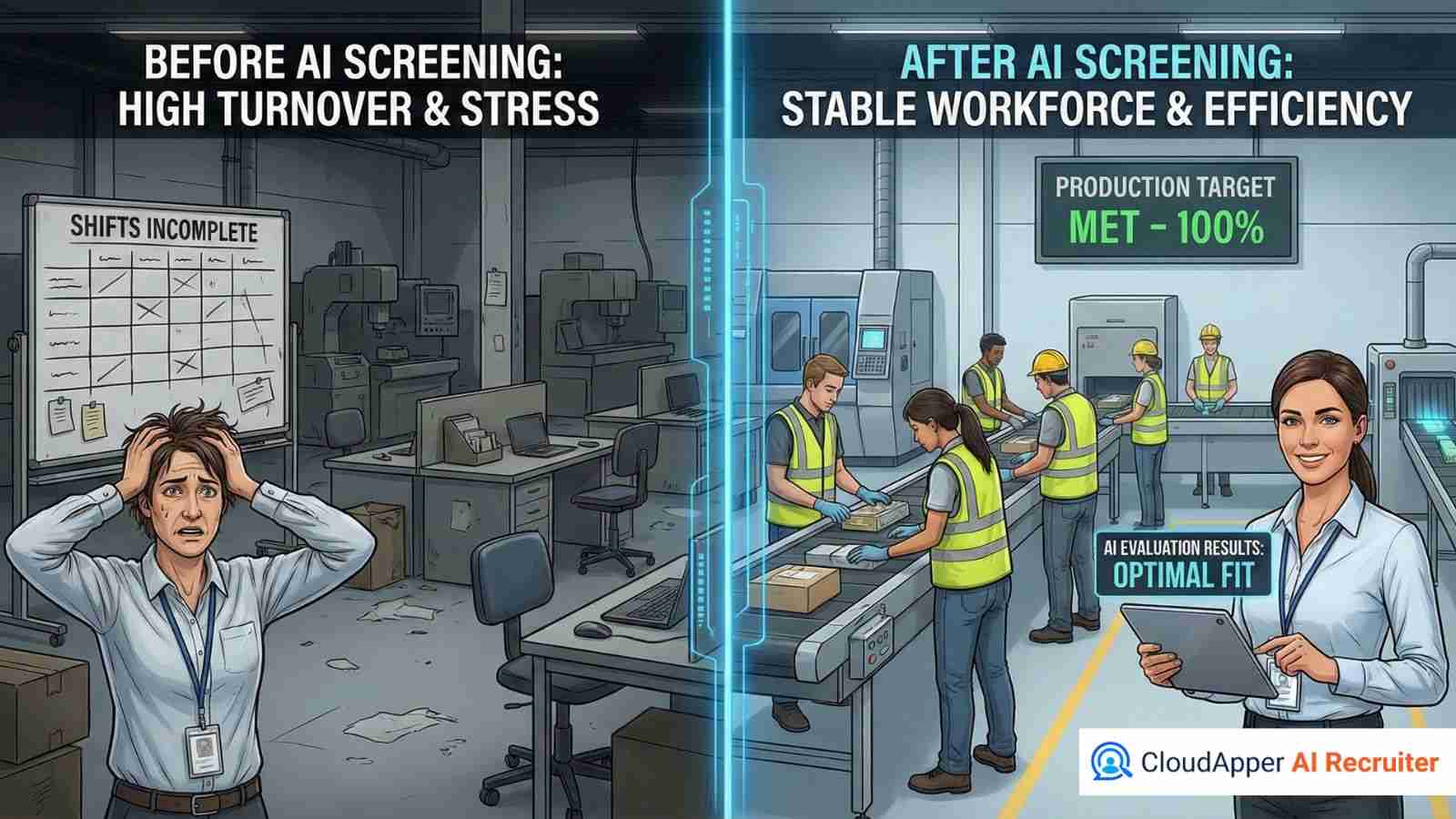
How to Reduce Manufacturing Turnover With Better Screening and AI Scoring
To truly reduce manufacturing turnover, HR teams need more visibility into candidate fit before onboarding begins. AI-driven scoring gives manufacturers a way to predict success from day one—not after someone quits.
Reduce Manufacturing Turnover With Better Screening Practices
This approach helps manufacturers:
• Hire for reliability and long-term fit
• Reduce first-90-day churn
• Increase productivity on the floor
• Strengthen safety and compliance
• Improve workforce planning
When screening becomes a strength instead of a bottleneck, turnover drops—and manufacturing teams feel the impact across production lines.
The Future of Manufacturing Recruitment Is Predictive, Not Reactive
The manufacturing workforce is evolving. Candidates now use AI tools to apply faster, write polished resumes, and respond to job questions with AI assistance. Recruiters need tools that see through these layers to validate real experience and authenticity.
That’s exactly why AI Recruiter was built with deep contextual analysis and scenario-driven assessment—so manufacturers can make confident hiring decisions based on proof, not guesswork.
The goal isn’t to replace recruiters. It’s to empower them with better insights, more time, and a sharper understanding of who will stay, who will succeed, and who isn’t the right match.
Conclusion
Reducing turnover in manufacturing isn’t about hiring slower—it’s about hiring smarter. Better screening and AI scoring allow recruiters to verify skills, check authenticity, evaluate behavior, and accelerate hiring without sacrificing quality.
If manufacturing leaders want to build a stable, high-performing workforce, AI-driven screening isn’t optional anymore. It’s the competitive edge that keeps production running smoothly, safely, and efficiently.
Explore CloudApper AI Recruiter

What is CloudApper AI Platform?
CloudApper AI is an advanced platform that enables organizations to integrate AI into their existing enterprise systems effortlessly, without the need for technical expertise, costly development, or upgrading the underlying infrastructure. By transforming legacy systems into AI-capable solutions, CloudApper allows companies to harness the power of Generative AI quickly and efficiently. This approach has been successfully implemented with leading systems like UKG, Workday, Oracle, Paradox, Amazon AWS Bedrock and can be applied across various industries, helping businesses enhance productivity, automate processes, and gain deeper insights without the usual complexities. With CloudApper AI, you can start experiencing the transformative benefits of AI today. Learn More
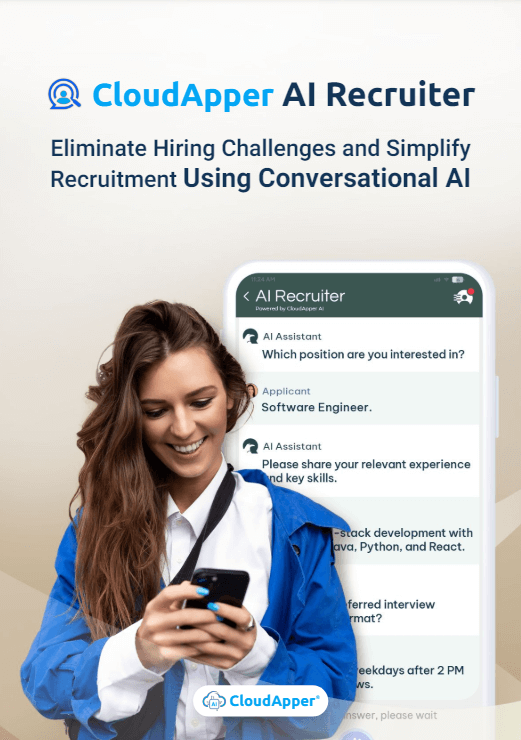
CloudApper AI Solutions for HR

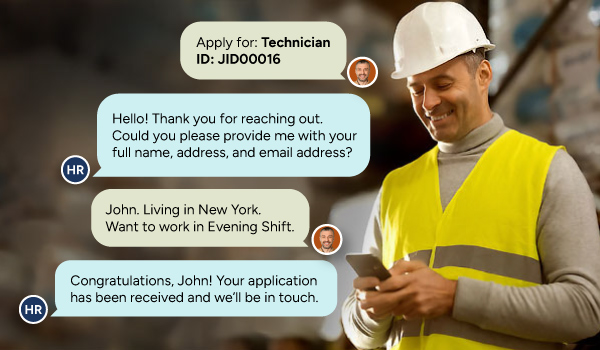

- Works with


- and more.







Similar Posts
How cNPS Reflects Your Recruitment and Employer Brand
The Recruitment-to-HRIS Gap: Why Your “System of Record” Should Start…