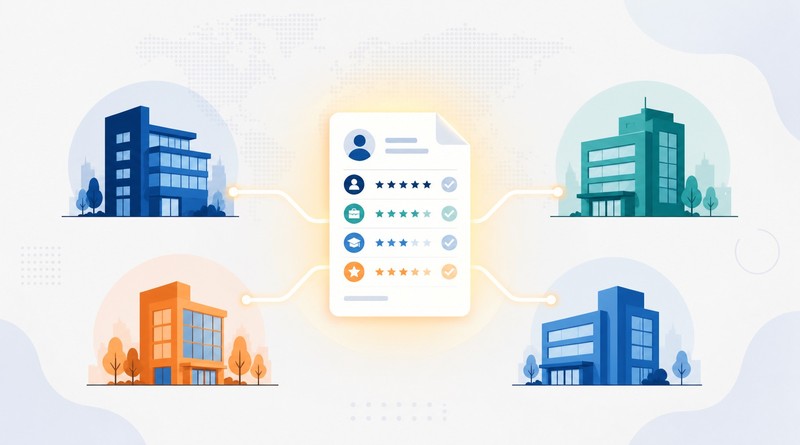
A bad hire costs $17,000 to $240,000+. See how AI candidate screening reduces mis-hire risk and what quality-of-hire improvements look like in practice.
Table of Contents
- What a Bad Hire Actually Costs
- Why Screening Keeps Producing the Wrong Results
- What Changes With AI Screening
- Tracking Whether It’s Actually Working
A team lead position at a 400-person distribution company. Three weeks of recruiting. Two months of onboarding. Five months of underperformance before the organization finally cut its losses and started over. Total spend: around $85,000 for a role that paid $55,000 a year.
Nobody wrote a check for $85,000. It came out in small pieces — recruiter hours, training time, manager attention, lost output, team frustration — spread across eight months and three departments. That’s exactly why most companies never calculate it.
What a Bad Hire Actually Costs
The U.S. Department of Labor puts the floor at 30% of first-year earnings. SHRM puts total replacement cost between 50% and 200% of annual salary, and the upper end of that range applies more often than most HR leaders want to admit.
Six components make up that total:
- Direct recruiting costs. Job postings, sourcing fees, recruiter time. For hourly and entry-level roles this is typically $3,000 to $7,000. For management positions it often runs $15,000 to $30,000.
- Onboarding and training. SHRM estimates onboarding costs average $4,100 per new hire. For technical or supervisory roles the number is higher. When someone exits at month five, every dollar of that investment is gone.
- Lost productivity. New hires ramp to full output somewhere between three months and a year in, depending on role complexity. A bad hire who exits before that ramp completes never delivers the value the position was budgeted to generate. The gap is commonly estimated at 50 to 75% of fully loaded salary through the ramp period.
- Manager time. Underperforming employees don’t just underperform quietly. Managers spend disproportionate time coaching, documenting, working around capability gaps, and eventually navigating the exit process. Leadership IQ research found that 46% of new hires fail within 18 months, and nearly all of those failures were preceded by months of elevated management attention.
- Team impact. When someone isn’t pulling their weight, someone else picks up the slack. In some cases the best people on the team start looking elsewhere because they’re tired of it.
- Re-hiring. Start the whole process over, usually with more urgency and sometimes with a smaller candidate pool than the first time around.
Add it up and the Department of Labor’s 30% floor starts to look optimistic.
Why Screening Keeps Producing the Wrong Results
Organizations know bad hires are expensive. They’ve known for decades. The problem isn’t awareness — it’s that the standard screening process wasn’t built to catch the signals that actually predict job performance.
A resume tells you where someone has been, not how they’ll show up. A phone screen tells you whether someone presents well under low-pressure conditions. A panel interview tells you how they handle a room of strangers for 45 minutes. None of those things correlate particularly well with whether they’ll still be there in 18 months doing good work.

Unstructured interviews, which remain the most common screening format in use, predict job performance with roughly the reliability of a coin flip. That’s not an opinion — it’s one of the most consistently replicated findings in industrial-organizational psychology. Yet most companies still rely on them because they’re fast and familiar.
Cognitive bias makes it worse. When evaluators don’t have consistent criteria to anchor on, they default to pattern-matching: this person reminds me of someone who worked out well. That pattern often has nothing to do with job-relevant capability. It’s how you end up with someone who interviewed great and performed poorly.
What Changes With AI Screening
AI-powered screening doesn’t take human judgment out of hiring. It gives human judgment something better to work with.
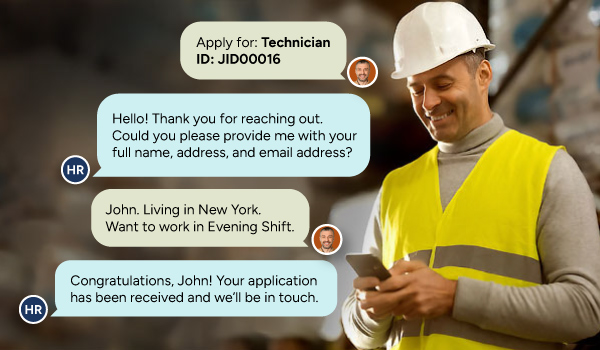
With a structured, conversational AI screening process, every candidate answers the same set of role-specific questions. There’s no variation based on who’s running the screen that day or whether a candidate’s background looks familiar. Evaluation is anchored to actual job criteria — reliability signals for shift-based roles, problem-solving patterns for supervisory ones, relevant knowledge for technical positions.
Conversational AI can also probe for how someone has handled real workplace situations, not just what they say they’re capable of. Those behavioral signals turn out to be much stronger predictors of performance than a credential list. Candidates are scored against criteria that matter for the specific role, and hiring managers receive a ranked, comparable shortlist rather than a stack of resumes with no common frame of reference.
The bias reduction aspect matters here too, and not just as a compliance argument. When criteria are explicit and applied consistently, the pathways for unconscious bias to shape a hiring decision narrow. That means more consistent outcomes — and more consistent outcomes mean fewer mis-hires.
CloudApper AI Recruiter customers have reported quality-of-hire improvements of 30 to 50%, tracked through 90-day retention rates, hiring manager satisfaction scores, and six-month performance ratings. A manufacturing client saw first-year retention improve 32% after implementing conversational AI screening for hourly roles. That single change cut annual turnover costs by over $400,000 at a 600-person facility.
Tracking Whether It’s Actually Working
If you improve your screening process and don’t measure the results, you’re flying blind. Three metrics worth tracking:
90-day retention rate by role and hiring manager. Early exits almost always mean the screening missed a misalignment. If a specific department keeps losing people in the first 90 days, that’s usually a criteria problem, not a run of bad luck.
Hiring manager satisfaction at 30 and 90 days. A simple three-question survey. Do it consistently and the data starts telling you things aggregate turnover numbers never will.
Six-month performance score versus screening prediction. If your screening criteria are working, the people who scored well in the process should be performing well at their first review. If the correlation isn’t there, you’ve found where the criteria need to change. That kind of feedback loop is what makes a screening process get better over time instead of staying static.
No hiring process eliminates mis-hires. The goal is a measurable, steady reduction in how often they happen — and what they cost when they do.
Frequently Asked Questions
What does a bad hire actually cost on average?
At minimum, 30% of the employee’s first-year earnings according to the Department of Labor. SHRM’s estimate ranges from 50% to 200% of annual salary. For a manager earning $80,000, that’s $40,000 to $160,000 per mis-hire before you account for team morale or the cost of the re-hire.
How does AI screening reduce the likelihood of a bad hire?
It improves the inputs going into the hiring decision. Consistent, role-relevant criteria replace resume proxies. Behavioral signals replace impression-based judgment. And because every candidate is evaluated the same way, the variability that leads to inconsistent outcomes is reduced. Related reading: AI Candidate Screening: A Blueprint for Fair, Fast Shortlists.
Can AI screening integrate with our existing ATS or HCM system?
Yes. CloudApper AI Recruiter connects with UKG, Workday, Dayforce, ADP, and other major platforms. It layers into your existing workflow rather than replacing it. See how it works: How AI Reduces Time to Hire While Improving Quality of Hire.
If you want to see what better screening looks like for your hiring volume, request a demo of CloudApper AI Recruiter.

What is CloudApper AI Platform?
CloudApper AI is an advanced platform that enables organizations to integrate AI into their existing enterprise systems effortlessly, without the need for technical expertise, costly development, or upgrading the underlying infrastructure. By transforming legacy systems into AI-capable solutions, CloudApper allows companies to harness the power of Generative AI quickly and efficiently. This approach has been successfully implemented with leading systems like UKG, Workday, Oracle, Paradox, Amazon AWS Bedrock and can be applied across various industries, helping businesses enhance productivity, automate processes, and gain deeper insights without the usual complexities. With CloudApper AI, you can start experiencing the transformative benefits of AI today. Learn More
- Useful Links:
- Agentic AI
- No-Code/Low-Code
- Custom Software
- HCM Personalization
- iPaaS
- FedRAMP
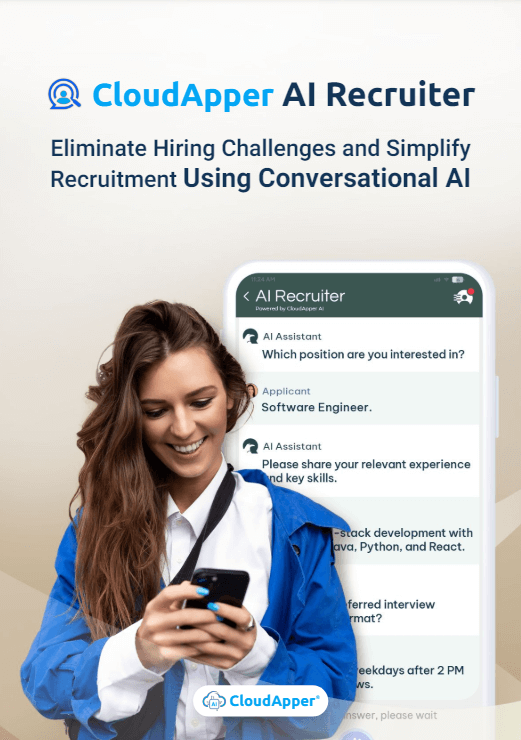
CloudApper AI Solutions for HR

- Works with







- and more.
Similar Posts
The Real Cost of Interview No-Shows, and How Automated Reminders…
Verify Required Certifications and Licenses Without Slowing Down Screening