AI-generated resumes are blurring hiring lines. Learn how recruiters can verify candidate authenticity using CloudApper AI Recruiter’s contextual screening, behavioral analysis, and real-time assessments to identify genuine talent and make confident, data-driven hiring decisions.


Table of Contents
- The Growing Challenge of Candidate Authenticity
- Why Traditional Screening Can’t Keep Up
- The Smart Way to Verify Candidate Authenticity
- What an Enterprise-Grade Resume Authenticity Verification System Looks Like
- Signs a Candidate May Not Be Fully Authentic
- The Ethical Side: Balancing Fair Screening With Authenticity Checks
- How to Implement a Resume Authenticity Verification Process in Your Enterprise
- Detecting AI-Based Cheating in Real Time
- The Results: Authentic Talent, Verified at Scale
- Why 2026 Is The Turning Point for Authentic Hiring
- Frequently Asked Questions
- Ready to Verify Smarter?
- TL;DR
Three layers of tooling, used together: contextual resume analysis that tests a CV for internal consistency, scenario-based screening that asks candidates to apply skills rather than claim them, and behavioral consistency checks across the whole conversation. No single tool confirms authenticity — the signal comes from where the three disagree.
Recruiters today are facing an unprecedented challenge in the hiring landscape: candidates are using the same tools recruiters once thought gave them an advantage, AI. From ChatGPT-polished CVs to AI-generated cover letters and even live interview aids, the challenge isn’t just finding quality talent anymore, it’s how to verify candidate authenticity.
In 2026, more than 40% of recruitment officials have reported difficulty differentiating real experience from AI-enhanced content. What used to be a simple process of going through a resume and identifying potential now demands a smarter, contextual approach. The question every recruiter is asking, How can we trust what we see and how can we verify candidate authenticity at scale?
The Growing Challenge of Candidate Authenticity
Recruiters today aren’t only evaluating qualifications; they’re verifying identity, intent, and truth. Generative AI has made it easy for applicants to inflate their achievements or mask inexperience behind convincing texts.
“Half the resumes I review read like they came from the same template,” said Sandra M., Senior Talent Acquisition Director at a global manufacturing firm. “It’s not that people are lying – it’s that AI makes exaggeration effortless.”

The outcome? Hiring officials waste time pursuing profiles that crumble under scrutiny. Interview panels struggle to find consistent behavior across stages. And hiring confidence – the backbone of every recruitment – starts to erode.
Authenticity has become the new currency of hiring.
Why Traditional Screening Can’t Keep Up
Traditional methods such as manual resume parsing or keyword filters were never built for the AI era. They measure what is written, not why or how.
A resume boasting “data science expertise” passes the filter whether the candidate actually built a model or just read a Medium post about it. Likewise, scripted interview questions can’t reveal whether responses are coming from memory or a second screen.
“The tools we relied on 5 years ago were designed for volume, not verification,” noted Brian T., Recruitment Systems Consultant. “In 2026, volume isn’t the problem. Authenticity is.”
Recruiters need systems that interpret context, evaluate reasoning, and detect inconsistencies – without slowing the hiring process down. The modern challenge is no longer filtering applicants, but learning how to verify candidate authenticity across every hiring stage.
The Smart Way to Verify Candidate Authenticity
That’s where smarter verification enters the picture. CloudApper AI Recruiter introduces a new framework to verify candidate authenticity through contextual understanding and behavioral evaluation – eliminating guesswork from modern recruitment.
Contextual Resume Analysis
Instead of scanning keywords, AI Recruiter interprets resumes like a recruiter would: by understanding how skills, timelines, and achievements logically connect. It flags inconsistencies – like mismatched project durations or unrelated expertise and builds a credibility score before any human review begins.
This ensures that candidates entering your pipeline already meet a threshold of truth.
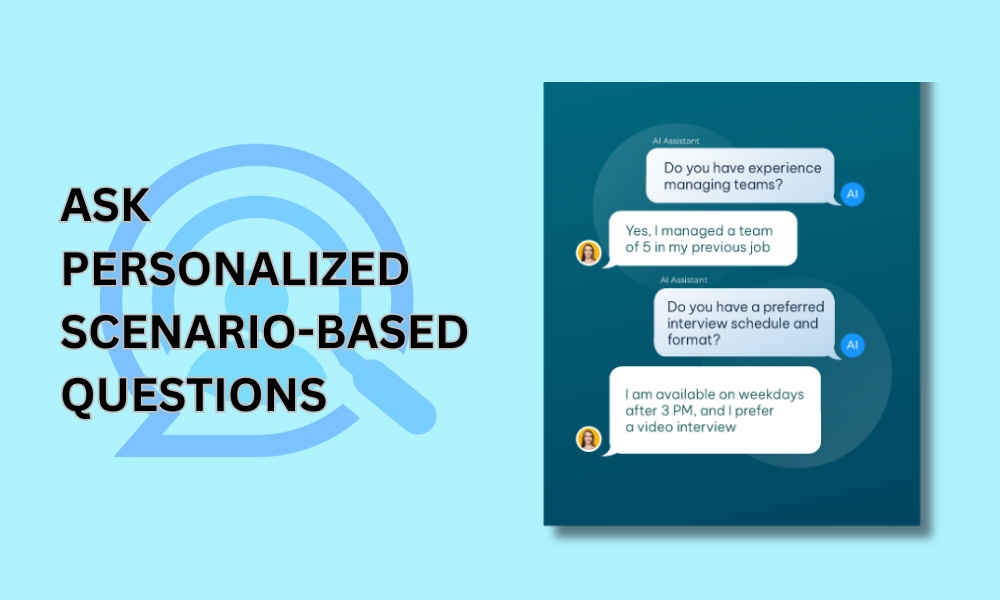
Scenario-Based Pre-Screening
To verify experience, AI Recruiter generates personalized, scenario-based questions tied directly to each candidate’s claimed background. For example, if someone lists “supply chain optimization,” the system asks how they would redesign a logistics workflow with specific constraints.
There’s no copy-paste answer to that. Candidates must demonstrate reasoning grounded in real experience.
Behavioral Consistency Checks
During interviews or assessments, AI Recruiter monitors how candidates approach problem-solving. Are their examples consistent with earlier responses? Do they show logical progression or contradict prior claims?
By analyzing behavioral signals, the system identifies when an applicant’s answers sound rehearsed or AI-assisted and highlights those discrepancies for recruiter review.
What an Enterprise-Grade Resume Authenticity Verification System Looks Like
An effective system goes far beyond checking keywords or scanning for red flags. It must validate three layers:
Layer 1 – Resume Structure & Context Validation
This step helps verify whether the resume itself is logically consistent.
A robust system checks for:
- Overlapping date ranges
- Unrealistic career progression
- Missing or vague responsibilities
- Duplicate job descriptions copied from the internet
- Job titles inconsistent with experience level
- Undefined skill claims
Recruiters often spot these manually, but automation makes the process faster and more consistent.
Layer 2 – Experience & Skill Verification
Here’s where a modern resume authenticity verification system becomes indispensable.
It evaluates claims such as:
- “Managed a cross-functional team of 20”
- “Increased sales by 40%”
- “Built a machine-learning model used for forecasting”
A strong system flags statements that feel too generic, inflated, or misaligned with previous roles.
This is also where CloudApper AI Recruiter plays a significant role. Instead of accepting resumes at face value, it asks contextual, scenario-based questions based on the candidate’s own claims. If someone says they built a forecasting model, the system may ask:
“Walk me through the steps you used when selecting the model architecture. Why did you choose that method?”
Real experience leads to real answers. AI-generated or fabricated experience usually falls apart here.
Layer 3 – Behavioral & Problem-Solving Validation
This layer checks whether candidates think the way their resumes suggest they should.
A modern system evaluates:
- Problem-solving style
- Ability to reason through new scenarios
- Communication patterns
- Consistency across multiple responses
- Behavioral alignment with the role
This helps recruiters determine skill depth—not just surface-level competence.

Signs a Candidate May Not Be Fully Authentic
Detecting these reliably is its own discipline — see how to detect a fake resume using AI for the resume-specific signals.
Here are some cues a resume authenticity verification system typically catches:
1. Overly polished phrasing
If the resume reads like a textbook, it may have been heavily AI-written.
2. Accomplishments lacking measurable detail
Real contributions tend to have actual numbers, context, or outcomes.
3. Skills unrelated to previous roles
For example:
An entry-level marketer claiming experience in “enterprise revenue forecasting models.”
4. Identical job descriptions across different roles
Often a sign that sections were copy-pasted from online templates.
5. Inconsistent storytelling
If the resume narrative doesn’t match verbal responses, that’s a strong signal of embellishment.
A resume authenticity verification system identifies these patterns quickly, allowing recruiters to focus on the candidates who truly align with the role.
The Ethical Side: Balancing Fair Screening With Authenticity Checks
Enterprises must ensure that new verification layers don’t unintentionally create bias or discourage candidates who simply write well or use tools to improve grammar.
A strong system should:
- Evaluate content, not writing style
- Ask consistent, role-based validation questions
- Avoid penalizing candidates for using AI as long as the skills are genuine
- Support structured, equitable comparison across applicants
Authenticity checks should enhance fairness—not limit opportunity.

How to Implement a Resume Authenticity Verification Process in Your Enterprise
Here’s a practical roadmap HR teams often follow:
Step 1: Define what “authenticity” means for your org
Different teams value different things—projects, results, problem-solving ability, leadership, or technical depth.
Step 2: Identify the roles most vulnerable to inflated claims
Engineering, sales, data science, and marketing are the usual starting points.
Step 3: Add claim extraction to your screening workflow
Solutions like CloudApper automatically identify claims that need validation.
Step 4: Build a structured question bank
Use scenario-driven questions that reveal real experience.
Step 5: Introduce consistency scoring
This helps compare candidates based on how reliably they explain their work.
Step 6: Train hiring managers on pattern recognition
Human + AI validation together creates the strongest system.
Step 7: Keep the candidate experience smooth
Authenticity checks should feel conversational, not interrogative.
Detecting AI-Based Cheating in Real Time
AI-based cheating is the quiet disruptor of 2026 recruitment. Candidates now use real-time assistants that generate answers during online assessments or interviews. These tools mimic human phrasing so well that traditional anti-cheating measures fail to catch them.
CloudApper AI Recruiter tackles this challenge by evaluating how candidates think. The platform’s Assessment Agent presents adaptive, scenario-driven questions that require reasoning steps rather than memorized responses.
“Genuine candidates can explain why they made a choice,” explained Leonard K., HR Technology Strategist. “AI tools can only simulate patterns. When you test for reasoning instead of recall, the truth surfaces.”
This shift, from output to cognition, is redefined how recruiters verify candidate authenticity. Recruiters gain deeper insight into problem-solving styles, communication patterns, and situational awareness, creating a clearer picture of genuine potential.

The Results: Authentic Talent, Verified at Scale
With CloudApper AI Recruiter, recruiters achieve three critical outcomes:
- Authentic Shortlists: Every shortlisted candidate is contextually verified, ensuring hiring teams only engage with genuine talent.
- Time Savings: The system screens, scores, and schedules automatically, cutting review times from hours to minutes.
- Better Decision Confidence: Recruiters move forward knowing each candidate’s history, skills, and behavior align with truth-based insights.
By automating verification, organizations protect themselves from mis-hires while elevating candidate experience. Applicants appreciate timely, relevant interactions – no endless waiting or redundant screening forms.
Why 2026 Is The Turning Point for Authentic Hiring
The next frontier in talent acquisition isn’t automation, it’s authentic automation. As AI reshapes every part of hiring funnel, verifying truth becomes just as important as attracting talent.
Recruiters who adapt early will not only save time but also strengthen the integrity of their hiring decisions. Authenticity, once a soft metric, is now a competitive advantage.
“Authentic hiring is the new efficiency,” said Priya D., VP of Talent Strategy at a U.S. tech firm. “When you combine automation with verification, you get faster hiring without compromising trust.”
Frequently Asked Questions
What tools help recruiters confirm candidate authenticity?
Three layers used together: contextual resume analysis that checks a CV for internal consistency, scenario-based pre-screening that asks candidates to apply a skill rather than claim it, and behavioral consistency checks across the full conversation. Any one layer can be gamed; the signal comes from where the three disagree.
How can you tell if a resume was written by AI?
Rarely from the writing itself, and increasingly not at all — polished prose is no longer evidence of anything. The reliable signals are structural: overlapping employment dates, unrealistic career progression, responsibilities described in generic terms, duplicate job descriptions lifted from public postings, and skill claims the candidate cannot expand on when asked a specific scenario question.
Is screening for candidate authenticity fair to applicants?
It is when the same checks are applied to everyone and the criteria relate to the job. Using AI to write a CV is not itself disqualifying; misrepresenting experience is. A defensible process asks every candidate the same structured questions, records the exchange, and puts a human in front of any decision to reject.
What are the warning signs of an inauthentic candidate?
Vague answers to specific scenario questions, a gap between the fluency of written materials and spoken responses, skill claims that cannot be demonstrated, inconsistent detail between the resume and the screening conversation, and answers that arrive with unusual latency or in unnaturally structured prose during live interviews.
Does verifying candidate authenticity slow hiring down?
It does when it is done manually through reference calls and repeat interviews. Done inside an automated screening workflow it costs no additional calendar time, because contextual resume analysis and scenario-based questions run as part of the initial screen rather than as a stage added after it.
Do we need to replace our ATS to verify candidate authenticity?
No. Verification is a screening-layer function, not a system-of-record function. The checks run on top of an existing applicant tracking system, write their findings back as structured data, and leave the ATS as the authoritative record of the application.
Ready to Verify Smarter?
Every candidate tells a story. The question is, how true is it?
If your team wants to ensure every applicant in your pipeline is genuine, it’s time to modernize your verification process.
Want to verify candidate authenticity before you even schedule an interview?
Consult our experts today to verify Smarter with AI Recruiter.
TL;DR
- AI-generated resumes and interview aids have made it harder than ever to verify candidate authenticity in modern recruitment.
- Traditional screening tools can’t detect context, inconsistency, or real reasoning behind candidate responses.
- CloudApper AI Recruiter introduces contextual resume analysis, scenario-based pre-screening, and behavioral consistency checks for accurate verification.
- Its Assessment Agent detects AI-based cheating by evaluating how candidates think, not just what they say during assessments.
- Recruiters save time, build trust, and ensure only genuine, skilled, and authentic talent enters their hiring pipeline confidently.
What is CloudApper AI Platform?
CloudApper AI is an advanced platform that enables organizations to integrate AI into their existing enterprise systems effortlessly, without the need for technical expertise, costly development, or upgrading the underlying infrastructure. By transforming legacy systems into AI-capable solutions, CloudApper allows companies to harness the power of Generative AI quickly and efficiently. This approach has been successfully implemented with leading systems like UKG, Workday, Oracle, Paradox, Amazon AWS Bedrock and can be applied across various industries, helping businesses enhance productivity, automate processes, and gain deeper insights without the usual complexities. With CloudApper AI, you can start experiencing the transformative benefits of AI today. Learn More
- Useful Links:
- Agentic AI
- No-Code/Low-Code
- Custom Software
- HCM Personalization
- iPaaS
- FedRAMP
CloudApper AI Solutions for HR


- Works with








- and more.
Similar Posts

Hiring During ATS Migration: How to Keep Your First Round…

Hiring Freeze? How to Keep Qualified Candidates Engaged Until the…