Hiring across multiple time zones introduces hidden delays in screening, scheduling, and candidate engagement. This article explores the challenges and how enterprises eliminate time-zone gaps with 24/7 AI-driven hiring.

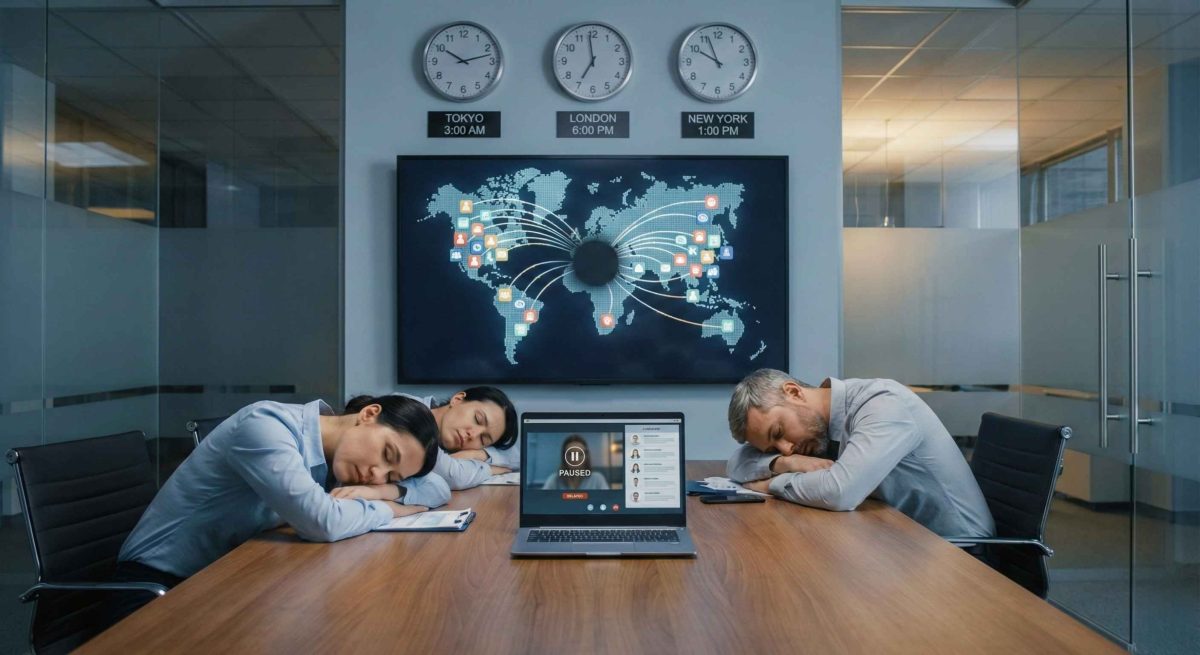
Table of Contents
For enterprise recruiting teams in the U.S. and Canada, hiring no longer happens within a single workday—or even a single region. As companies expand operations across states, countries, and continents, hiring across multiple time zones has become a structural reality rather than a niche challenge. While access to a broader talent pool creates opportunity, it also introduces operational friction that many hiring organizations are not equipped to manage.
Recruiting models built around local business hours struggle to keep pace with global candidate behavior. Applications arrive overnight, interviews stall across calendar gaps, and qualified candidates disengage while waiting for a response. Forward-looking organizations are beginning to close this gap by introducing intelligent automation into their hiring workflows. Platforms such as CloudApper AI Recruiter are designed to keep candidates moving through screening and scheduling stages even when recruiting teams are offline.
Understanding where time-zone friction originates—and how it can be eliminated—is now essential for enterprises that want to scale hiring without sacrificing speed or candidate experience.
Why Hiring Across Multiple Time Zones Has Become a Business Challenge
The rise of distributed work, multi-site operations, and global talent sourcing has fundamentally changed candidate behavior. Job seekers no longer apply between 9 a.m. and 5 p.m. in the employer’s local time. Large-scale labor market analyses show that a majority of applications are submitted outside traditional business hours, particularly for frontline, technical, and hourly roles.
At the same time, recruiting teams remain largely centralized. A U.S.- or Canada-based talent acquisition team may be responsible for supporting hiring needs across four or more time zones. This mismatch creates an unavoidable lag between candidate action and recruiter response.
Research from workforce analytics organizations consistently shows that response speed is a critical factor in hiring success. Delays of even 24 to 48 hours significantly reduce candidate engagement and completion rates. When those delays are caused by time-zone misalignment rather than workload, they become a preventable source of talent loss.
Challenge #1: Delayed Screening Slows the Entire Funnel
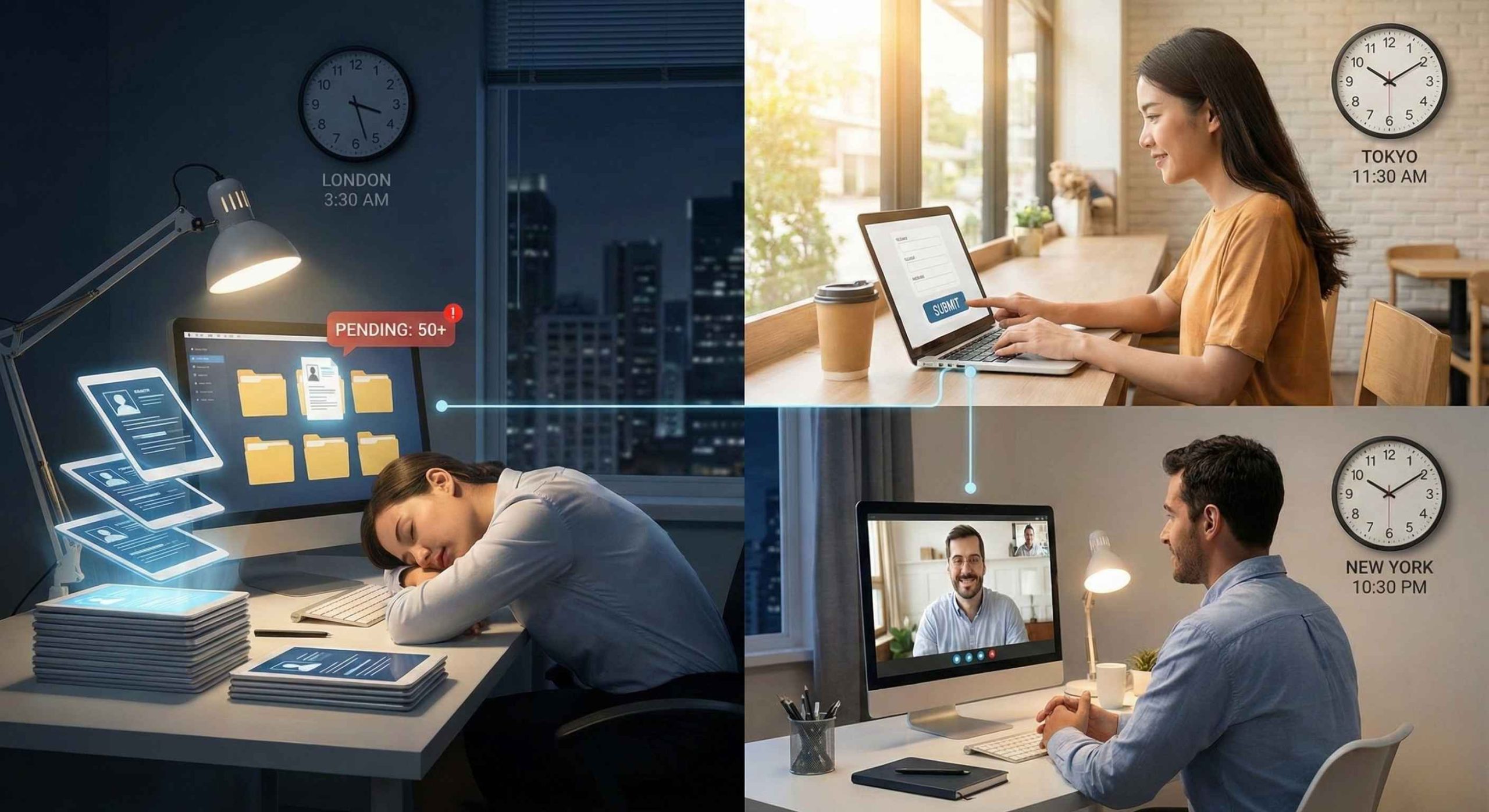
One of the most common breakdowns in hiring across multiple time zones occurs at the very first stage: application screening. In many organizations, resumes and applications sit untouched until recruiters return to their desks. For candidates applying late at night or from overseas, this delay can stretch into an entire day or longer.
From an operational standpoint, delayed screening creates a backlog that compounds quickly during high-volume hiring periods. From a candidate perspective, silence signals uncertainty. Studies from labor market research institutions indicate that candidates are far more likely to abandon an application process if they do not receive timely confirmation or next steps.
When screening depends entirely on human availability, time zones become a structural bottleneck rather than a logistical detail.
Challenge #2: Interview Scheduling Across Time Zones Is Inefficient
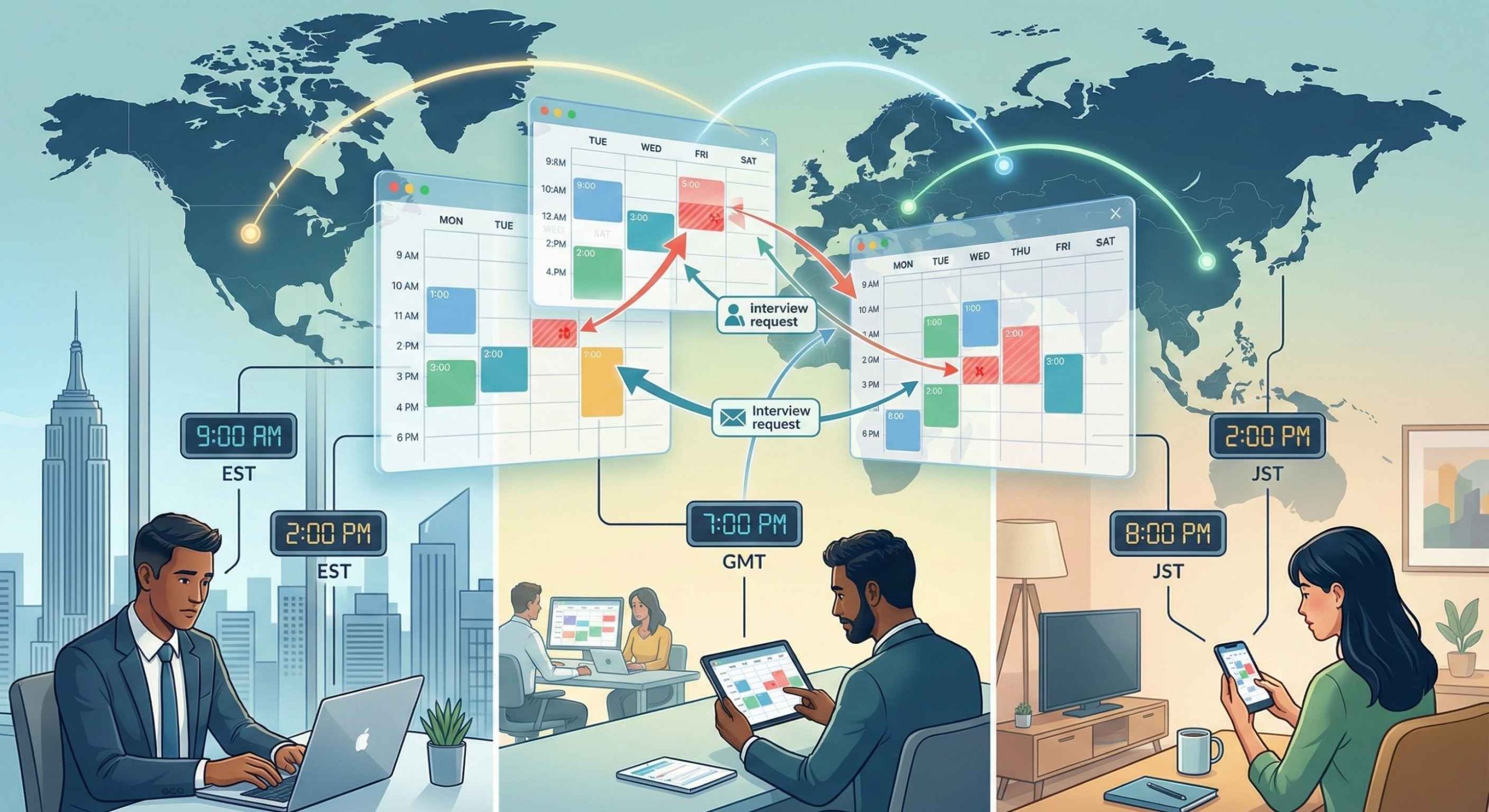
Scheduling interviews across regions introduces another layer of friction. Coordinating availability between candidates and recruiters in different time zones often leads to prolonged email exchanges, missed connections, and calendar confusion.
Data from workplace productivity research shows that scheduling can account for a disproportionate share of recruiter time, particularly in distributed hiring environments. When interviews require overlapping business hours, candidates in distant regions may wait days for a suitable slot.
This inefficiency directly affects time-to-hire. As roles remain open longer, organizations incur higher operational costs, while candidates increasingly pursue faster-moving opportunities.
Challenge #3: Candidate Experience Degrades Without Visibility
Candidate experience is one of the earliest casualties of poorly managed global hiring. When applicants cannot see progress or receive timely communication, trust erodes.
Independent research on candidate behavior consistently shows that lack of transparency and slow follow-up are among the top reasons candidates withdraw from hiring processes. In hiring across multiple time zones, these issues are amplified because delays feel systemic rather than situational.
Enterprises that fail to address this experience gap risk damaging the employer brand across multiple markets simultaneously.
Challenge #4: Recruiter Burnout Increases as Scale Grows
To compensate for time-zone gaps, recruiters often extend their working hours or monitor applications outside normal schedules. While this may work temporarily, it is not sustainable.
Workforce studies from occupational research bodies highlight rising burnout rates among HR and recruiting professionals, particularly in high-volume environments. As organizations scale hiring across regions, the burden placed on centralized teams increases unless processes evolve.
Relying on human effort to bridge time-zone gaps ultimately leads to diminishing returns.
Why Traditional Hiring Systems Fall Short
Most applicant tracking systems were designed to document hiring activity, not to operate autonomously. They require recruiters to initiate actions, review information, and move candidates forward.
In a single-time-zone environment, this limitation is manageable. In hiring across multiple time zones, it becomes a constraint. The system pauses when recruiters are offline, regardless of candidate demand.
This is not a staffing issue—it is an architectural one.
Solving the Time-Zone Gap With Always-On Hiring
The most effective way to address these challenges is to decouple candidate progress from recruiter availability. Always-on hiring models use automation to ensure that screening, communication, and scheduling continue around the clock.
Independent workforce technology studies have shown that organizations using automated early-stage hiring workflows significantly reduce cycle times and candidate drop-off. By allowing candidates to move forward asynchronously, enterprises can maintain consistency and speed across regions.
This approach transforms hiring across multiple time zones from a liability into a competitive advantage.
How CloudApper AI Recruiter Eliminates the Time-Zone Gap
CloudApper AI Recruiter was built to address the exact operational issues that global and multi-site organizations face.
24/7 Automated Candidate Screening
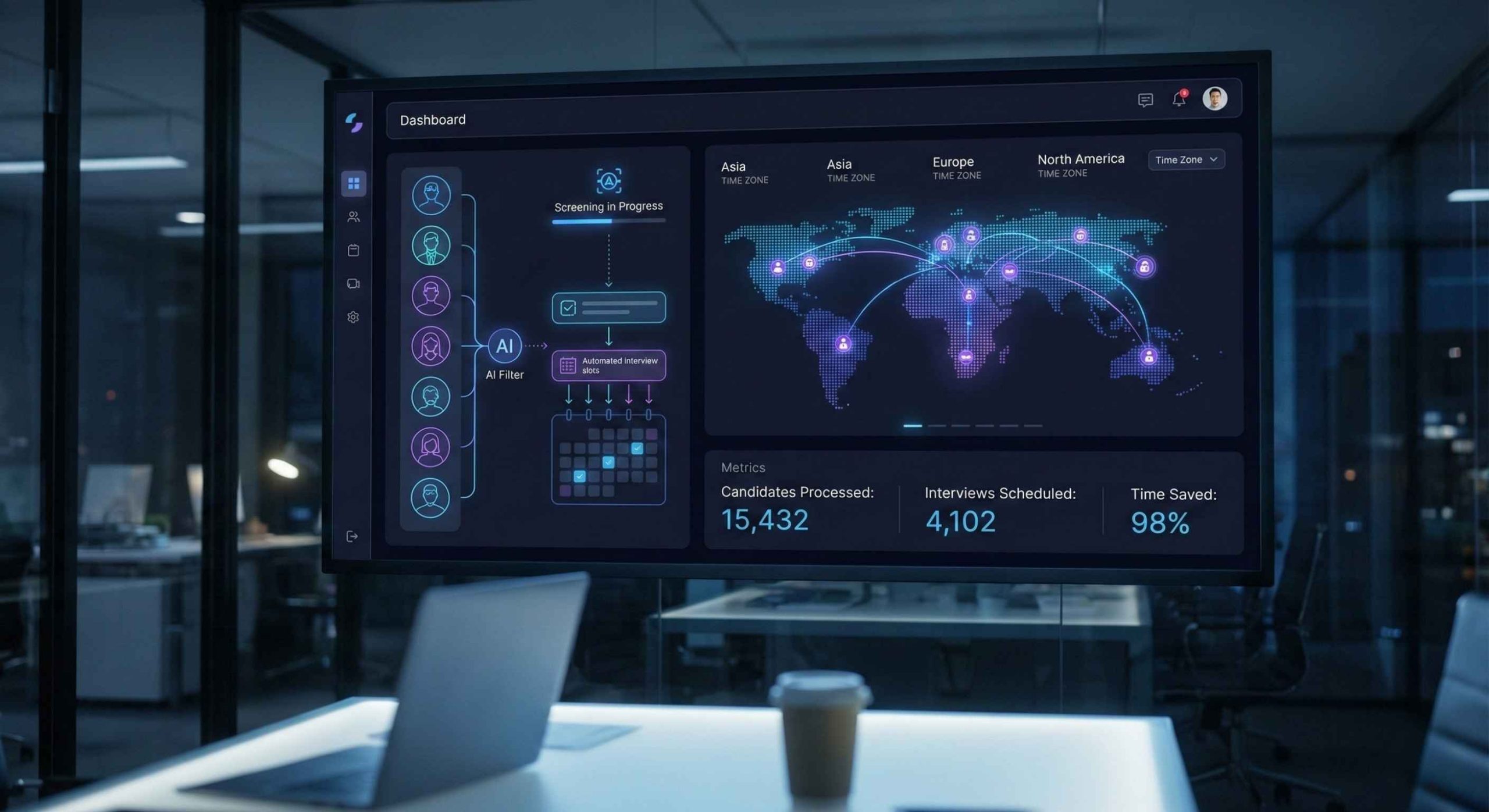
As applications arrive, the platform evaluates candidates instantly against role-specific criteria. Qualified candidates advance without waiting for recruiter review, ensuring no loss of momentum due to time-zone differences.
Intelligent Interview Scheduling
Candidates can schedule interviews automatically based on predefined availability and business rules. This removes manual coordination and allows interviews to be booked regardless of recruiter location or local office hours.
Continuous Candidate Engagement
Automated communication keeps candidates informed at every stage, reducing uncertainty and improving completion rates across regions.
Multi-Agent Architecture for Scale
Multiple AI agents operate in parallel to manage screening, scheduling, and progression simultaneously. This enables true scalability without linear increases in recruiter workload.
Seamless Integration With Existing Systems
Organizations can modernize hiring workflows without replacing their ATS, allowing faster adoption and lower operational disruption.
By eliminating the dependency on recruiter availability, CloudApper AI Recruiter enables enterprises to engage talent instantly—closing the gap that traditionally slows hiring across multiple time zones.
The Business Impact of Solving Time-Zone Challenges
Enterprises that implement always-on hiring capabilities consistently see improvements across key metrics:
- Faster candidate progression in early hiring stages
- Reduced time-to-hire across regions
- Higher candidate engagement and completion rates
- Lower recruiter workload and burnout
- Greater consistency across locations and markets
Research from global workforce studies indicates that organizations with automated hiring workflows are better positioned to scale operations without compromising experience or control.
Preparing for the Future of Global Hiring
As talent markets continue to globalize, hiring across multiple time zones will only become more complex. Organizations that rely on manual, time-bound processes will struggle to compete with those that operate continuously.
The future of hiring is not about working longer hours—it is about building systems that never stop. By embracing AI-driven screening and scheduling, enterprises can ensure that candidates progress through the funnel regardless of when or where they apply.
For organizations focused on growth, efficiency, and candidate experience, solving time-zone challenges is no longer optional. It is a foundational capability for modern talent acquisition.

What is CloudApper AI Platform?
CloudApper AI is an advanced platform that enables organizations to integrate AI into their existing enterprise systems effortlessly, without the need for technical expertise, costly development, or upgrading the underlying infrastructure. By transforming legacy systems into AI-capable solutions, CloudApper allows companies to harness the power of Generative AI quickly and efficiently. This approach has been successfully implemented with leading systems like UKG, Workday, Oracle, Paradox, Amazon AWS Bedrock and can be applied across various industries, helping businesses enhance productivity, automate processes, and gain deeper insights without the usual complexities. With CloudApper AI, you can start experiencing the transformative benefits of AI today. Learn More
CloudApper AI Solutions for HR

- Works with


- and more.








Similar Posts
How cNPS Reflects Your Recruitment and Employer Brand
The Recruitment-to-HRIS Gap: Why Your “System of Record” Should Start…