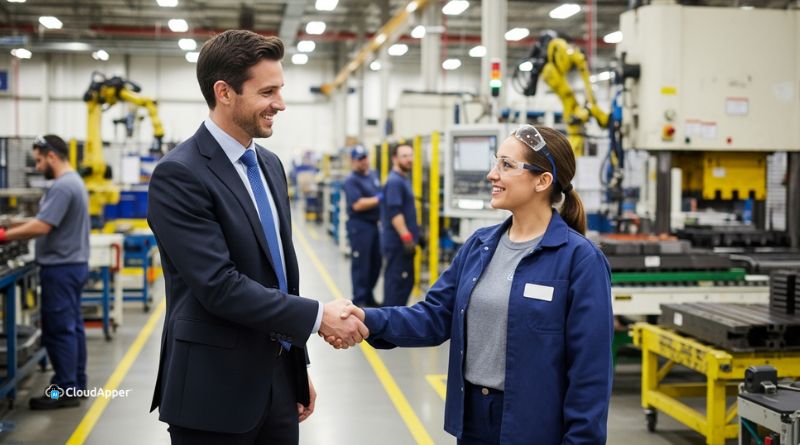
As HR teams face the "compliance cliff", new state mandates are redefining how AI can be used in hiring. This article explains what recruiters must know about transparency, bias audits, and compliant AI hiring systems.


Table of Contents
Recruiting teams across the United States have entered the “compliance cliff” at a moment when AI is already embedded into everyday hiring workflows. As of January 1, 2026, state-level regulations governing AI use in employment decisions are no longer emerging concepts. They are active, enforceable requirements that directly affect how recruiters screen candidates, how HR leaders manage risk, and how organizations defend hiring decisions under scrutiny.
In response, many employers are reassessing not just how quickly they hire, but how defensible their hiring systems truly are. Solutions such as CloudApper AI Recruiter are increasingly part of that evaluation, not because they promise more automation, but because they were designed with explainability, audit readiness, and candidate transparency in mind. This reflects a broader shift in recruiting priorities driven by regulation rather than innovation alone.
Why The “Compliance Cliff” Is Reshaping AI Hiring Decisions
The term reflects more than regulatory change. It describes a sharp transition from loosely governed AI adoption to mandatory oversight. Two laws have accelerated this shift: Illinois House Bill 3773 and the Texas Responsible AI Governance Act. Together, they establish a new baseline for how AI may be used in hiring and how those decisions must be communicated and justified.
Under these mandates, employers must notify candidates when AI systems influence hiring decisions. They must also avoid non-auditable “black box” algorithms that cannot be examined for bias or discriminatory impact. Importantly, responsibility does not stop with the software provider. Employers are accountable for understanding how their tools work and for ensuring that independent bias audits can be conducted when required.
The challenge for many HR teams has been timing. These regulations took effect on a fixed date, creating immediate compliance exposure for organizations that had adopted AI tools without demanding transparency from vendors. Legal and compliance teams are now asking for documentation that recruiting technology was not always built to provide.
Operating at The “Compliance Cliff” Without Losing Momentum
For recruiters and HR leaders, the difficulty is translating legal requirements into daily hiring operations. Bias audits, for example, depend on access to structured decision data. If a system cannot show how candidates are evaluated or ranked, meaningful audits become difficult, if not impossible.
CloudApper AI Recruiter addresses this challenge by relying on contextual evaluation rather than opaque scoring logic. Resume screening focuses on how experience aligns with role requirements, and the system maintains clear records of how candidates are assessed. This makes it easier for HR teams to explain outcomes and demonstrate that decisions are job-related rather than arbitrary.
Communication also plays a growing role in compliance. Automated hiring processes that leave candidates waiting without updates can undermine trust and invite scrutiny. Transparency is not just about disclosure statements; it is reinforced through consistent, timely engagement.
Explainability as a Practical Hiring Requirement
Explainability is no longer a technical preference. It is a functional requirement shaped by regulation. HR leaders are discovering that explainable AI does not mean exposing proprietary algorithms, but being able to articulate how hiring decisions were made in clear, human terms.
With CloudApper AI Recruiter, screening and ranking decisions are grounded in documented criteria rather than hidden weighting systems. This allows recruiters to show how role-relevant experience was interpreted and why certain candidates advanced. When questions arise from candidates, auditors, or legal teams, explanations are available without guesswork.
This approach also supports consistency. When decisions are traceable, organizations are better positioned to identify patterns, address unintended bias, and adjust criteria proactively rather than defensively.
Compliance Pressure Across HR, TA, and Legal Teams
The effects of the “compliance cliff” are not limited to recruiting teams. Legal departments are increasingly involved in vendor reviews, requesting evidence of bias controls and audit support. Talent acquisition leaders must balance hiring velocity with documentation requirements. HR executives are tasked with aligning technology, policy, and training under heightened scrutiny.
Vendor accountability has become central. Employers can no longer rely on assurances of compliance; they must verify that systems support explainability, audits, and regulatory change. This has shifted buying decisions away from feature volume and toward governance readiness.

Preventing Candidate Drop-Off While Staying Transparent
Compliance does not require slowing down hiring. In fact, thoughtful automation can support both speed and fairness. CloudApper AI Recruiter automates scheduling, reminders, and follow-ups so candidates are not left without communication during critical stages of the process.
Timely engagement reinforces transparency and reduces frustration that can lead to complaints or negative perceptions. When candidates understand where they stand and receive consistent updates, AI involvement feels clearer and more accountable.
Detecting Inflated or AI-Generated Applications
Another emerging concern is the rise of AI-generated resumes and real-time assistance tools during assessments. Fair hiring depends on evaluating genuine capability, not polished automation. CloudApper AI Recruiter uses deep contextual analysis to move beyond keyword matching and identify inconsistencies or generic claims.
When clarification is needed, the system prompts candidates with role-specific, scenario-based questions that require explanation of real experience. This emphasis on demonstrated understanding supports defensible decision-making aligned with transparency requirements.
Assessing How Candidates Think, Not Just What They Say
During interviews and assessments, compliance depends on evaluating consistent, job-related behavior. CloudApper AI Recruiter applies scenario-driven evaluation to assess problem-solving, judgment, and reasoning. By focusing on how candidates approach situations, the system provides richer insight than static answers alone.
Because these evaluations are structured and tied to job requirements, they are easier to explain and defend than subjective scoring or opaque automation.

Planning Beyond the Current Regulations
While current state mandates represent a major shift, they are unlikely to be the final word on AI governance. Organizations that treat compliance as a one-time effort risk repeating the cycle as oversight evolves.
CloudApper AI Recruiter supports adaptability by allowing hiring criteria, evaluation logic, and documentation practices to evolve alongside regulatory expectations. This helps HR leaders remain prepared without repeatedly restructuring their hiring processes.
Moving Forward After The “Compliance Cliff”
The past year has clarified that AI in hiring is no longer just an efficiency tool. It is a regulated decision-making system with legal and ethical implications. Employers who recognize this shift are rethinking how they select technology, train teams, and communicate with candidates.
Navigating the “compliance cliff” does not require abandoning AI. It requires choosing systems built for transparency, auditability, and accountability. When hiring technology can explain its decisions and support compliance, it becomes a stabilizing asset rather than a risk.
Explore CloudApper AI Recruiter

What is CloudApper AI Platform?
CloudApper AI is an advanced platform that enables organizations to integrate AI into their existing enterprise systems effortlessly, without the need for technical expertise, costly development, or upgrading the underlying infrastructure. By transforming legacy systems into AI-capable solutions, CloudApper allows companies to harness the power of Generative AI quickly and efficiently. This approach has been successfully implemented with leading systems like UKG, Workday, Oracle, Paradox, Amazon AWS Bedrock and can be applied across various industries, helping businesses enhance productivity, automate processes, and gain deeper insights without the usual complexities. With CloudApper AI, you can start experiencing the transformative benefits of AI today. Learn More
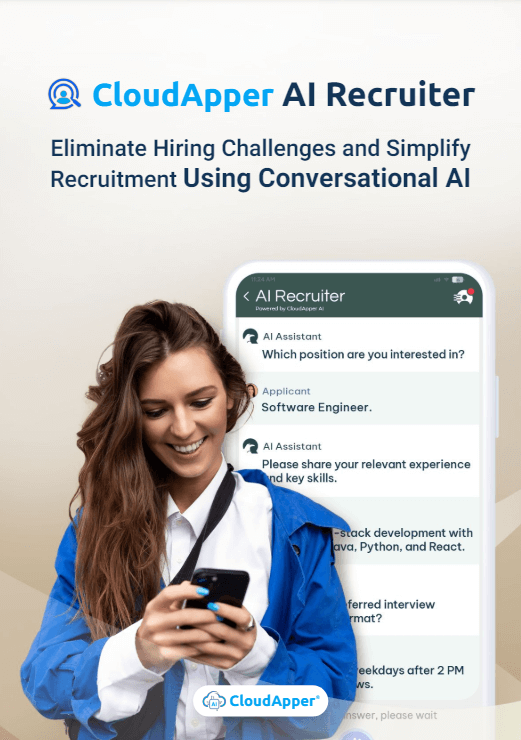
CloudApper AI Solutions for HR
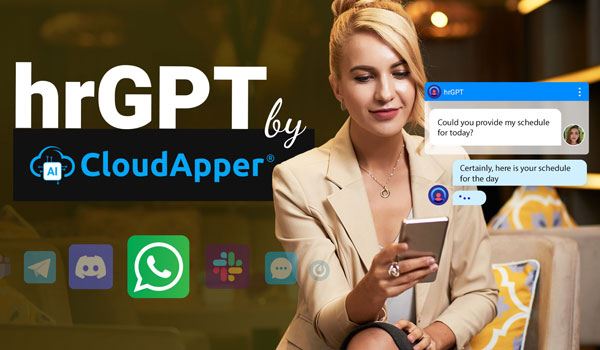
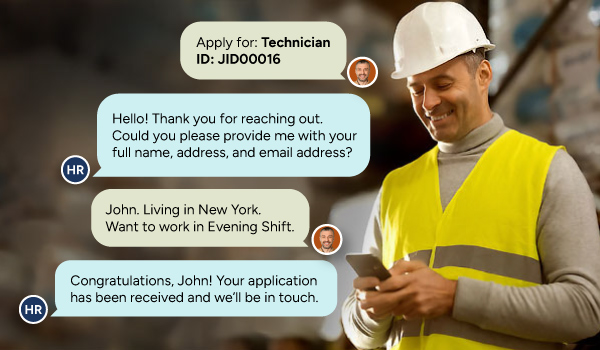

- Works with


- and more.







Similar Posts
How cNPS Reflects Your Recruitment and Employer Brand
The Recruitment-to-HRIS Gap: Why Your “System of Record” Should Start…