When AI-generated resumes become indistinguishable, recruiters lose signal, not standards. This article explains why resume screening broke and what still works in early-stage hiring.


Table of Contents
Not long ago, recruiters could rely on resumes to do one basic thing: differentiate candidates.
That assumption no longer holds.
Today, most resumes arriving in hiring pipelines are clean, keyword-optimized, and confidently written. Many are also partially or fully AI-generated resumes. On paper, candidates look equally qualified. In reality, they are not.
This is the quiet failure reshaping hiring in 2026.
Not because recruiters stopped caring.
Not because standards dropped.
But because the signal resumes once provided has been diluted beyond usefulness.
When every resume looks perfect, hiring breaks. The real question now is what still works.
The Resume Didn’t Get Worse. It Got Too Good.
This isn’t a story about dishonesty or bad candidates. It’s a story about scale.
AI made professional-quality resumes accessible to everyone overnight. Formatting, phrasing, keyword alignment, and even role-specific tailoring are now table stakes. What once required experience or coaching is now automated in seconds.
As a result:
- Resume quality increased
- Resume differentiation collapsed
- resume screening effort skyrocketed
- Confidence in early-stage decisions dropped
Recruiters didn’t suddenly lose judgment. They lost contrast.
When every resume looks polished, recruiters are forced to spend more time validating what the resume used to imply. The document didn’t disappear. Its informational value did.

Why Keyword Screening Quietly Failed
Most hiring systems were built around an assumption that no longer holds:
that resumes are a reliable proxy for skills, intent, and fit.
Keyword matching worked when:
- Candidates wrote resumes manually
- Language reflected lived experience
- Gaps and imperfections carried meaning
AI-generated resumes flattened all of that.
Now, keyword density says more about prompt quality than candidate ability. The result is a flood of resumes that technically qualify but offer no clarity on whether the candidate can actually do the job.
Recruiters feel this immediately. Hiring managers feel it later. Candidates feel it when feedback becomes vague or delayed.
The problem isn’t volume alone. It’s false positives at scale.

Why “Screen Faster” Is the Wrong Fix
Many teams responded by trying to process resumes faster. More automation. More filters. More scoring models.
But speed doesn’t solve ambiguity.
Screening faster only accelerates uncertainty. It increases throughput without increasing confidence. Recruiters still end up asking the same questions later, just with more candidates in motion.
This is why hiring didn’t break loudly. It broke quietly.
Decisions felt harder. Confidence dropped. Time-to-hire stretched in unexpected places.
The resume wasn’t failing loudly. It was failing silently.
What Still Works: Shifting From Documents to Signals
What’s working in 2026 is not abandoning resumes entirely. It’s decoupling them from early judgment.
High-performing teams are changing what they rely on at the top of the funnel:
- structured screening instead of open-ended summaries
- Consistent screening criteria instead of subjective scanning
- Responses that show thinking, not just experience
- Early interaction over static documentation
The resume becomes contextual, not decisive.
What matters is how candidates respond when asked to explain, prioritize, or reason. These moments are harder to fabricate convincingly and easier to evaluate consistently.
This shift restores hiring signal without demanding more effort from recruiters.

Why Conversation Outperforms Presentation
AI made presentation cheap. Conversation is still expensive.
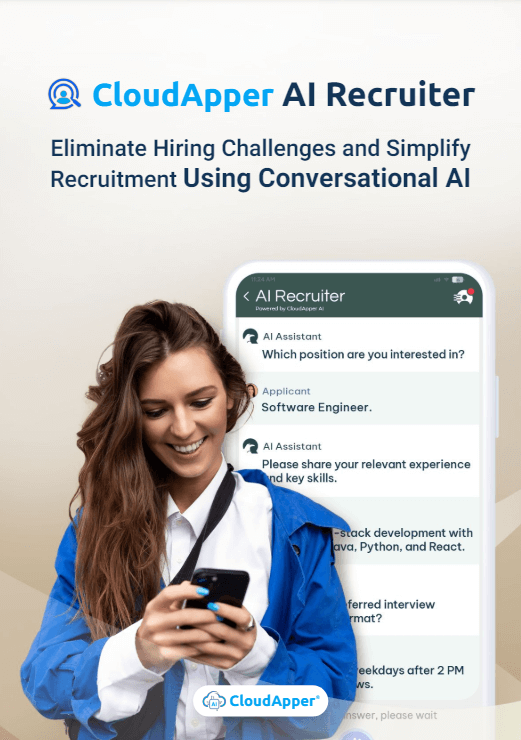
When candidates interact with structured screening questions, patterns emerge:
- How clearly they explain tradeoffs
- Whether they understand the role beyond buzzwords
- How they reason under mild constraints
- Where confidence is earned versus assumed
These are not trick questions. They are clarity questions.
Conversation reveals intent. It exposes gaps. It shows alignment or lack of it. And unlike resumes, it produces comparable data across candidates.
This is where many teams are rediscovering trust in early-stage hiring.

The Role of AI (And Where It Actually Helps)
Ironically, AI is both the cause of the resume problem and part of the solution.
Not as a decision-maker, but as a consistency engine.
Used well, AI can:
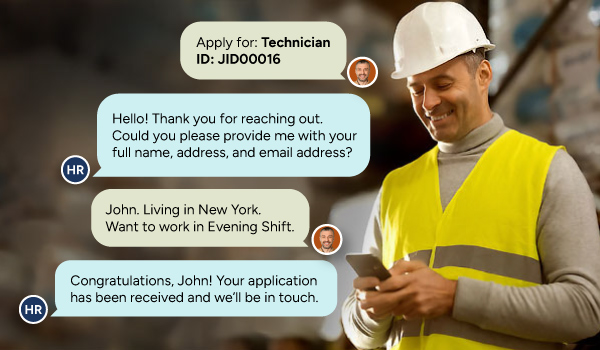
- Ask the same questions of every candidate
- Capture responses in a structured format
- Score based on predefined criteria
- Route qualified candidates forward without bias or fatigue
Used poorly, it simply accelerates resume-driven noise.
The difference isn’t the technology. It’s where AI is placed in the workflow and what it’s asked to evaluate.
This is why tools like CloudApper AI Recruiter are being used not to replace resumes, but to reduce their influence at the wrong stage. By focusing on structured screening and early qualification, they help teams move past resume perfection and back toward meaningful hiring signal.
The value isn’t automation for its own sake. It’s restoring confidence.

Why ATS-Centered Hiring Made This Worse
Applicant Tracking Systems were never designed to resolve ambiguity. They were designed to store, track, and report.
When resumes were strong signals, this worked. When resumes became noise, the ATS became a bottleneck for uncertainty.
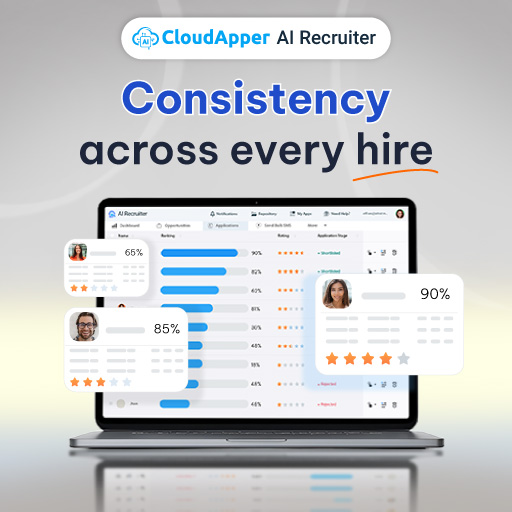
This led to a quiet but important architectural shift:
- AI handles intake and qualification
- The ATS remains the system of record
- Recruiters regain time for evaluation and judgment
Separating intake intelligence from record-keeping is not a trend. It’s a correction for high-volume hiring.
Candidates Know This Too (Even If They Don’t Say It)
Candidates are not unaware of this shift.
Many know their resumes look like everyone else’s. They over-optimize because they feel they have to. But they also respond better to processes that ask them to demonstrate thinking rather than polish.
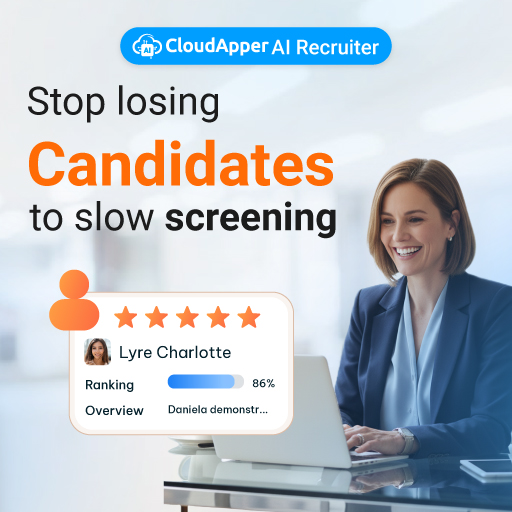
Clear questions feel fair. Consistent screening feels respectful. Predictable steps feel trustworthy.
When hiring relies less on resume theatrics and more on interaction, candidate experience improves alongside recruiter confidence.
What Still Works in a Perfect-Resume World
Hiring didn’t fail because standards dropped.
It failed because inputs stopped differentiating.
What still works is not chasing perfection, but designing for contrast:
- Contrast between candidates’ thinking
- Contrast in how problems are approached
- Contrast in judgment, not formatting
Resumes still have a place. Just not the one they used to occupy.
When every resume looks perfect, hiring doesn’t need more polish.
It needs better questions, clearer signals, and systems built for reality, not nostalgia.
That’s how hiring starts working again.

If this challenge feels familiar, it may be worth taking a moment to explore CloudApper AI Recruiter and see how teams are restoring signal without returning to resume-driven hiring.

What is CloudApper AI Platform?
CloudApper AI is an advanced platform that enables organizations to integrate AI into their existing enterprise systems effortlessly, without the need for technical expertise, costly development, or upgrading the underlying infrastructure. By transforming legacy systems into AI-capable solutions, CloudApper allows companies to harness the power of Generative AI quickly and efficiently. This approach has been successfully implemented with leading systems like UKG, Workday, Oracle, Paradox, Amazon AWS Bedrock and can be applied across various industries, helping businesses enhance productivity, automate processes, and gain deeper insights without the usual complexities. With CloudApper AI, you can start experiencing the transformative benefits of AI today. Learn More
CloudApper AI Solutions for HR


- Works with


- and more.








Similar Posts
How cNPS Reflects Your Recruitment and Employer Brand
The Recruitment-to-HRIS Gap: Why Your “System of Record” Should Start…