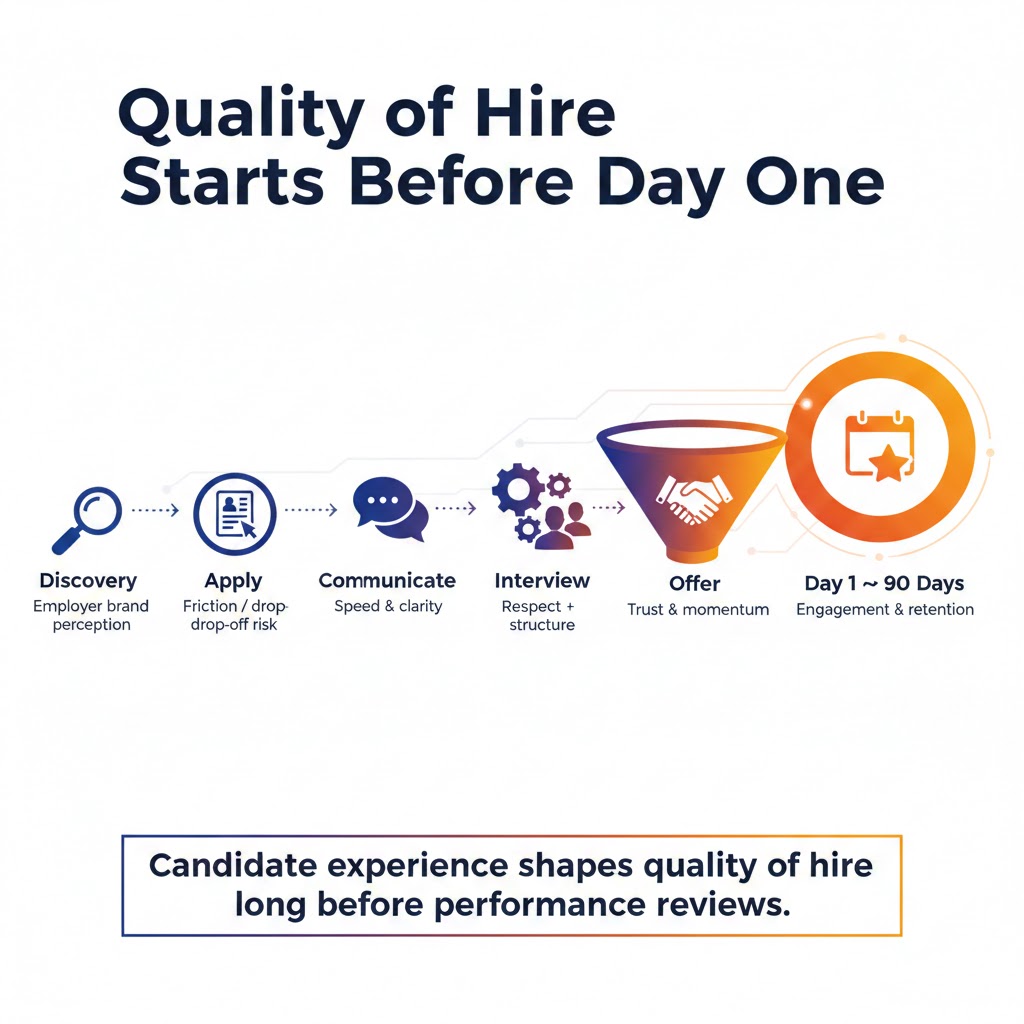
Quality of hire starts long before day one. Candidate experience—from application to offer—shapes who applies, who engages, and who stays. Learn how improving candidate experience with conversational AI reduces drop-off, strengthens your talent pool, and drives better hiring outcomes.


Table of Contents
For years, “quality of hire” was treated like a downstream HR KPI—something you measured after the employee started (performance ratings, retention, hiring manager satisfaction). But hiring teams are learning the hard way that quality of hire is also shaped upstream, long before day one, through the candidate experience.
Candidate experience is the sum of how it feels to discover a role, apply, communicate, interview, and receive a decision. And today, it’s becoming a leading indicator of long-term hiring outcomes—because it predicts who stays engaged, who accepts, who shows up ready to perform, and who quietly exits early.
Candidate experience is no longer “nice to have”—it’s a filter on your talent pool
The biggest reason candidate experience now matters to the quality of hire is simple: the best candidates don’t endure friction.
Research highlighted by SHRM notes that the drop-off rate for people who click “Apply” but never complete an application can be as high as 92%. That’s not just a conversion problem—it’s a quality problem. When your process is tedious, confusing, or slow, the candidates most likely to abandon are often the ones with options.
Even among teams that think their application is “fine,” data keeps pointing to major leakage. Recruitee’s global hiring insights report says more than 40% of applications are abandoned before submission. If nearly half of the interested people never make it past the form, quality-of-hire metrics become distorted—because you’re evaluating “quality” from a narrowed, self-selected pool (often the most desperate, not the best fit).
So candidate experience is becoming a front-end quality gate: it determines whether strong candidates even enter your funnel, and whether they stick around long enough for you to evaluate them properly.
Experience shapes the “psychological contract” that drives retention and performance
Quality-of-hire isn’t only about skill match. It’s also about expectations, trust, and momentum.
Candidates implicitly build beliefs during the process:
- “This company communicates clearly.”
- “They respect my time.”
- “They’re organized.”
- “They treat people fairly.”
Those beliefs become the early psychological contract. When the process includes long silences, confusing steps, repetitive data entry, or scheduling chaos, it sends a different message. And when reality doesn’t match expectations after the hire, early attrition rises. Even if you don’t tie every resignation directly to “candidate experience,” it’s often the first chapter in the employee’s story with you.
You can see how real this is when candidates talk about “the black hole” or “ghost jobs.” The Wall Street Journal reported that “ghost job” postings have become a meaningful issue, with as many as 18% to 22% of listings in 2024 reportedly never intended to be filled, citing hiring platform Greenhouse. Whether a specific role is real or not, the broader point stands: candidate trust is fragile, and broken trust affects who joins—and who stays.
Candidate experience directly impacts employer brand (and business outcomes)
Candidate experience is also brand experience. People don’t neatly separate “I applied there” from “I’m a customer” or “I’ll recommend them.”
LinkedIn shared a well-known case: Virgin Media calculated it was losing about £4.4 million (around $5.4 million) per year due to poor candidate experience—driven by rejected candidates who canceled subscriptions after the recruiting process.
That’s a financial example, but it also connects back to quality of hire:
- Strong brands attract stronger applicants.
- Strong applicants create stronger shortlists.
- Strong shortlists raise the ceiling on quality of hire.
When candidate experience damages reputation, it quietly lowers your talent ceiling over time.
Why conversational AI changes the equation
Candidate experience breaks most often at high-friction touchpoints:
- Long or confusing applications
- Slow response times
- No answers to basic questions
- Scheduling back-and-forth
- Lack of status updates
This is where conversational AI has become a practical advantage. Not because it’s trendy—but because it removes friction at scale, especially for high-volume hiring.
LinkedIn’s Future of Recruiting report (2024 edition) noted that only 27% of talent professionals said they were using or experimenting with generative AI at the time, while six in ten were optimistic about AI in recruiting. In other words: adoption is still early, but the direction is clear—teams are looking for ways to improve responsiveness and reduce manual bottlenecks without expanding headcount.
Conversational AI helps because it can:
- Engage candidates immediately (even nights/weekends)
- Answer FAQs consistently
- Guide applicants through next steps
- Collect missing info without forcing a restart
- Trigger timely updates that reduce anxiety and drop-off
And when you reduce drop-off, you don’t just hire faster—you hire from a better pool.
Candidate experience → better funnel health → better quality of hire
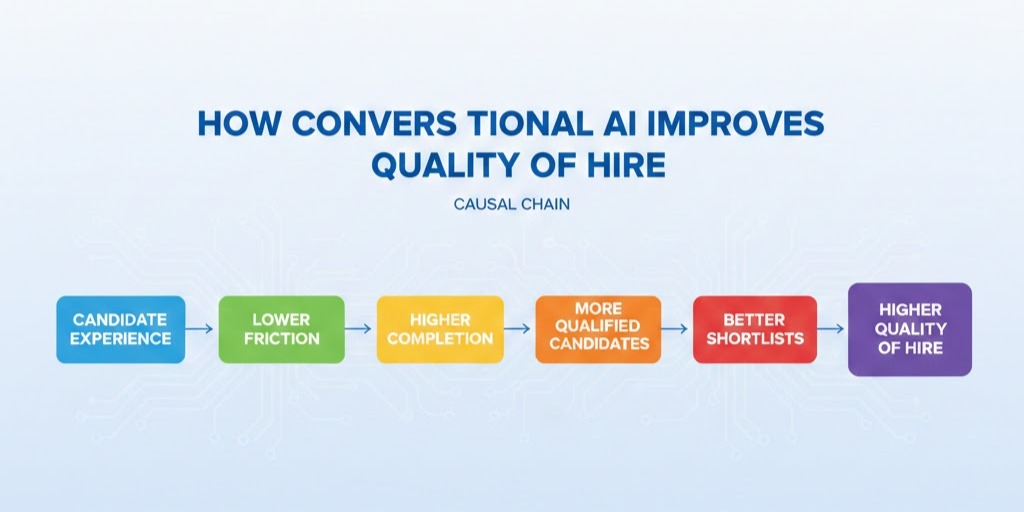
Here’s the causal chain hiring teams are starting to measure:
- Lower friction increases application completion
- Fewer people abandon.
- More qualified people finish.
- Faster communication improves conversion
- Candidates stay warm.
- Interview no-shows decline.
- Offer acceptance improves.
- More consistent evaluation improves decision quality
- Less “whoever responded fastest.”
- More structured comparisons.
- Better documentation for compliance.
- Better perception improves employer brand
- More referrals.
- Better inbound quality over time.
That’s why candidate experience is moving from a “soft” metric to a core quality-of-hire driver.
How CloudApper AI Recruiter supports this shift (without changing your entire stack)
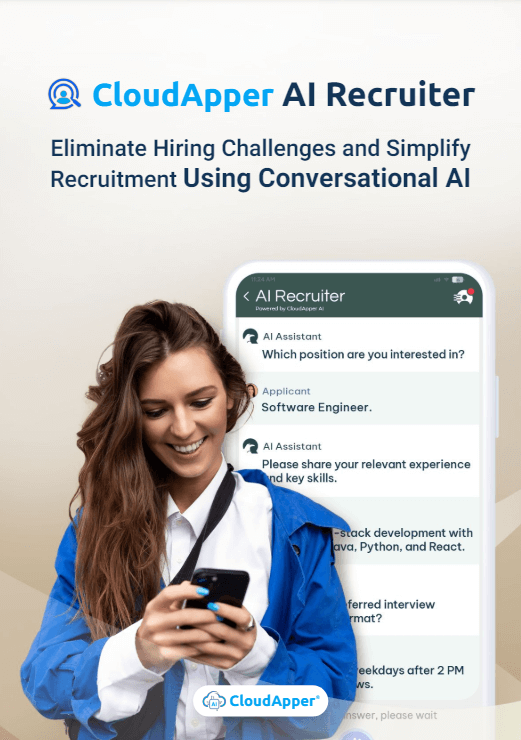
CloudApper AI Recruiter is built on the idea that candidate experience and quality of hire are linked—and that improving expertise requires more than a single automation feature. It uses multiple specialized AI agents that cover the full journey:
- Communication Agent to keep candidates informed through timely email/SMS updates and answers
- Scheduling Agent to eliminate calendar ping-pong by syncing calendars and handling reschedules
- Screening + Assessment Agents to score and rank candidates based on job fit, skills, and requirements
- Analytics Agent to track funnel metrics and identify where drop-off is happening
On the candidate side, the experience is designed to remove common friction points:
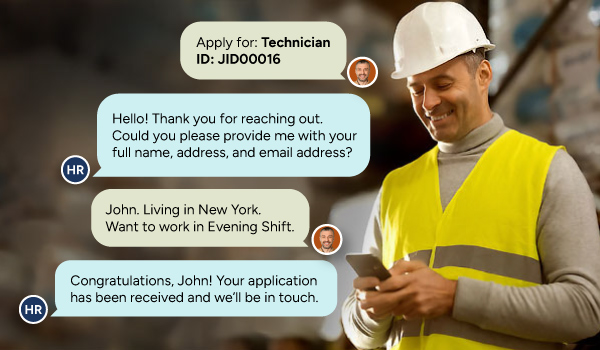
- Candidates can apply via QR code or text shortcode, which is especially useful for hourly and deskless hiring.
- A conversational AI chatbot guides applicants, answers questions, and collects information in a more natural flow.
On the hiring team side, the quality-of-hire impact comes from consistency:
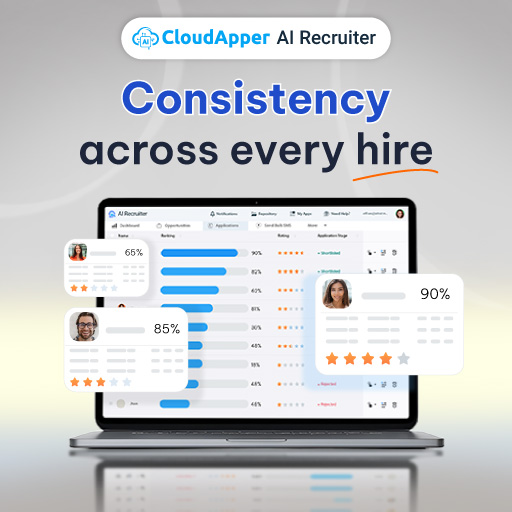
- Ranked shortlists based on structured scoring
- Candidate comparisons with notes and metrics that support transparent decisions
- Workflow customization via a no-code approach (so teams can fix friction without waiting on IT)
- Integration designed to work with existing ATS/HRIS systems, avoiding disruptive migrations
The goal isn’t “AI everywhere.” It’s removing the specific points where experience breaks—and where quality-of-hire quietly degrades because great candidates drop out.
What to measure if you want candidate experience to predict quality of hire
If you want candidate experience to function as a true quality-of-hire metric, track it like a funnel health dashboard:
- Apply-start-to-apply-complete rate (drop-off)
- Median time-to-first-response (minutes/hours, not days)
- Interview scheduling time (request → confirmed)
- Stage conversion rates (especially screen → interview → offer)
- Candidate sentiment (short post-interview pulse: “Was this process clear and respectful?”)
- Offer acceptance rate
- Early tenure signals (30/60/90-day retention; “would you rejoin?” survey)
When these move in the right direction, quality-of-hire usually follows—because you’re hiring from a stronger, more engaged pool.
Closing thought
Candidate experience is becoming a quality-of-hire metric because it determines who enters your funnel, who stays engaged, and who trusts you enough to join and commit. Conversational AI is gaining attention because it solves the parts of candidate experience that break most often: silence, friction, and delays.
If you want to see what that looks like in practice, CloudApper AI Recruiter is designed to improve the candidate journey end-to-end—screening, scoring, communication, and scheduling—so your funnel doesn’t leak your best candidates before you can even evaluate them.

What is CloudApper AI Platform?
CloudApper AI is an advanced platform that enables organizations to integrate AI into their existing enterprise systems effortlessly, without the need for technical expertise, costly development, or upgrading the underlying infrastructure. By transforming legacy systems into AI-capable solutions, CloudApper allows companies to harness the power of Generative AI quickly and efficiently. This approach has been successfully implemented with leading systems like UKG, Workday, Oracle, Paradox, Amazon AWS Bedrock and can be applied across various industries, helping businesses enhance productivity, automate processes, and gain deeper insights without the usual complexities. With CloudApper AI, you can start experiencing the transformative benefits of AI today. Learn More
CloudApper AI Solutions for HR

- Works with


- and more.








Similar Posts
How cNPS Reflects Your Recruitment and Employer Brand
The Recruitment-to-HRIS Gap: Why Your “System of Record” Should Start…