When candidates ghost after applying, it’s usually a speed and clarity problem, not a motivation problem. This guide breaks down the real reasons candidates disappear and shows practical fixes recruiters can apply now, from faster first-touch and proof-based screening to frictionless scheduling and consistent follow-ups.


Table of Contents
If candidates ghost after applying, it’s rarely because “people don’t want to work anymore.” In most cases, it’s a predictable reaction to uncertainty, friction, or slow follow-up in the hiring process. The good news is you can reduce ghosting fast when you treat the candidate journey like a real experience you’re intentionally designing, not a series of handoffs between tools and inboxes.
CloudApper AI Recruiter helps teams do exactly that by taking the slowest, most ghosting-prone parts of recruiting (screening, outreach, interview scheduling, reminders, and follow-ups) and running them continuously, so candidates don’t sit in silence. Instead of relying on recruiters to chase every step manually, CloudApper AI Recruiter uses specialized agents to screen, score, rank, communicate, and schedule in a coordinated flow, while still working alongside your existing ATS and HR systems.
What “Candidate Ghosting” Really Looks Like
In recruiting, “ghosting” is any point where the candidate stops responding or disappears without closing the loop. That can happen after they apply, after you message them, after they accept an interview invite, or even after a strong first interview when you think they’re “in.”
But the most expensive ghosting is the kind you can’t easily explain to hiring managers: applicants who looked interested, qualified, and engaged… until they weren’t.

There are two important truths here:
First, ghosting is often a timing problem, not a motivation problem. Candidates may still want the job, but they’re also juggling work, life, and other opportunities. If your process introduces delays, they fill the gap with the option that responds faster.
Second, some ghosting is “protective ghosting.” When candidates feel confused, judged, spammed, or stuck in a long process with no clear next step, disappearing is the easiest way to regain control.
Candidates Ghost After Applying: The Real Reasons It Happens
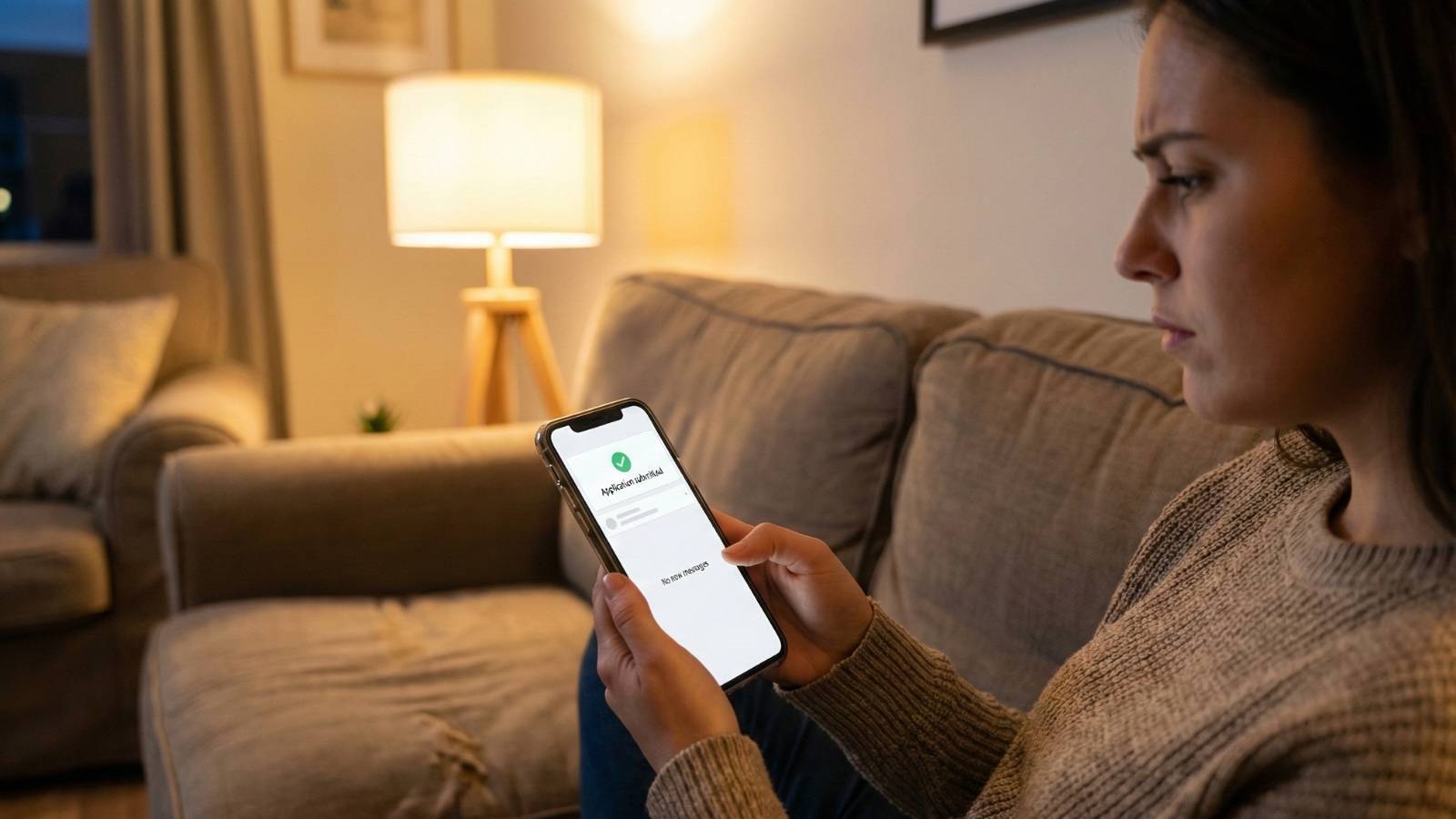
Most recruiting teams assume ghosting happens later, after interviews start. In reality, ghosting begins the moment a candidate hits “Submit,” because that’s when your process either builds confidence or creates doubt.
The Silence Gap: No Proof You Saw Them
The fastest way to lose someone is to let them wonder whether their application went anywhere. Even a well-written auto-confirmation doesn’t fully solve this if it’s vague.
Candidates want three things right away:
- Confirmation that their application was received
- A simple description of what happens next
- A realistic timeline for when they’ll hear back
When they don’t get that, they keep applying elsewhere. Then when you finally reach out, you’re competing with companies that already created momentum.
The “Too Much Work For Too Little Clarity” Problem
Candidates will tolerate effort when they see a clear payoff. They’ll tolerate much less effort when the role feels uncertain, the pay range isn’t clear, or the process looks like a black box.
Common friction points:
- Long applications that repeat what’s on the resume
- Mobile-unfriendly forms for hourly and frontline roles
- Required accounts, logins, and email verification loops
- “One more step” workflows that never seem to end
Even if they finish, that frustration carries forward. It increases drop-off when you ask them to complete assessments or schedule interviews.
Slow Speed-To-First-Touch
The time from application to first human (or human-like) response is one of the strongest predictors of drop-off. When response time stretches from hours into days, candidates don’t just lose interest. They emotionally move on.
This is especially true in high-volume roles where candidates apply in bursts and decide quickly. If your team can’t acknowledge, screen, and guide the next step fast, ghosting becomes the default outcome.
Confusing Scheduling And Back-And-Forth Email
Interview scheduling is a hidden ghosting factory.
A candidate agrees to interview, then:
- You offer times they can’t do
- They reply with alternatives
- Your calendar fills up
- The thread goes quiet
- They accept another role and stop responding
It’s not personal. It’s math. The longer the scheduling cycle, the higher the probability something else wins.
Candidates Don’t Trust The Process
Trust can break in subtle ways:
- The job description sounds generic or inflated
- The first messages feel templated and cold
- The process feels inconsistent (different questions, different standards)
- Candidates feel they’re being judged without a chance to show real skills
When trust drops, ghosting rises.
The Role Is Not What They Expected
Sometimes candidates apply quickly, then later reread the posting and realize it doesn’t fit their schedule, pay expectations, location, or career goals. If you wait too long to clarify basics, candidates exit silently.
This is why “faster screening” isn’t just about recruiter efficiency. It’s about giving candidates clarity early enough to stay engaged.
The Three Ghosting Windows You Should Measure
If you want to fix ghosting, measure it like an operational problem. Three time windows matter most:
- Application completion window (0–10 minutes)
This is where candidates drop because the application is tedious or confusing. - Post-apply window (0–48 hours)
This is where candidates lose confidence because they hear nothing, or next steps are unclear. - Interview coordination window (48 hours–7 days)
This is where candidates drop because scheduling and follow-ups drag, or communication feels fragmented.
If you only look at “no-shows,” you’re seeing the final symptom, not the earlier cause.
The Most Useful Operational Metrics
You don’t need a complicated dashboard to get started. Track these consistently:
- Time to first meaningful touch (confirmation + next step)
- Time to shortlist (how long until qualified candidates are identified)
- Scheduling cycle time (first outreach to confirmed slot)
- Follow-up latency (how long candidates wait after completing a step)
- Stage-specific drop-off (apply → screen → schedule → interview)
Once you see where candidates disappear, fixes become much more obvious.
How To Fix It When Candidates Ghost After Applying
You don’t “solve” ghosting with one message template. You solve it by removing uncertainty and delays across the journey. Here’s what works in real recruiting environments.
1) Send A Real Confirmation, Not A Generic Receipt
Your first message should do more than say “thanks.” It should sound like a process with a person behind it.
Include:
- What happens next (screening, shortlisting, scheduling)
- When they’ll hear back
- How to ask questions or update availability
This reduces anxiety and prevents candidates from treating your role like a lottery ticket.
2) Shorten The Application Path For Speed-Based Roles
For high-volume and frontline roles, long forms are a ghosting trigger. When candidates can apply quickly, you keep momentum while they’re motivated.
A conversational application flow (instead of a giant form) helps candidates move forward without feeling trapped in administrative work. QR-code or text-based entry points are especially useful when candidates are on mobile.
3) Screen Faster, But Keep It Proof-Based
Speed alone isn’t the goal. The goal is fast clarity.
When you can evaluate candidates quickly and consistently, you can:
- Move qualified people forward while they’re still available
- Filter out mismatches early (without wasting days)
- Reduce the “I applied and nothing happened” feeling
The strongest screening approach is contextual and proof-based. Instead of relying only on keyword matching, ask scenario-style questions that make candidates explain how they’d handle real situations. That reduces empty applications and increases serious engagement.
4) Keep Candidates Warm With Structured Touchpoints
Candidates don’t need constant texting. They need predictable progress.
Add touchpoints at moments where people typically disappear:
- After applying (next steps + timeline)
- After being shortlisted (what to expect, how scheduling works)
- The day before interviews (confirmations and reminders)
- After interviews (clear timeline and status updates)
This is also where automation helps. When updates depend on “someone remembering,” candidates will wait. When updates run as a system, candidates stay in the funnel.
5) Remove Scheduling Friction With Self-Scheduling And Rescheduling
Scheduling should feel like booking a haircut, not negotiating a treaty.
Self-scheduling and easy rescheduling reduce ghosting because:
- Candidates pick a time that works
- They don’t have to draft awkward emails
- They can adjust when life changes
- Reminders reduce no-shows without extra recruiter effort
This single shift can reclaim a surprising amount of lost pipeline.
6) Use “Micro-Commitments” Instead Of Big Asks
Candidates ghost when the next step feels heavy.
Replace big asks with smaller, simpler actions:
- “Answer 3 quick questions” instead of “complete this long assessment”
- “Pick a time” instead of “tell me your availability”
- “Reply YES to confirm” instead of “please confirm receipt”
Momentum is built on small yeses.
7) Don’t Fight AI Cheating By Making The Process Longer
When you add more steps to validate candidates, you can accidentally increase drop-off.
The better approach is targeted validation: scenario-based questions that verify real experience without dragging candidates through a lengthy process. The goal is to confirm authenticity while keeping the experience respectful and fast.
A Quick Anti-Ghosting Checklist You Can Run This Week
Use this once, then run it monthly:
- Does every applicant get a “what happens next” message instantly?
- Can a candidate apply comfortably from a phone in under five minutes?
- Are qualified candidates identified the same day for high-volume roles?
- Can candidates self-schedule without email back-and-forth?
- Do candidates receive reminders and easy reschedule options?
- Is there a clear follow-up timeline after each step?
- Do your screening questions verify real experience without feeling like busywork?
- Can recruiters see drop-off by stage and response time in one place?
If you can’t answer “yes” to most of these, ghosting isn’t a mystery. It’s the system.
Where CloudApper AI Recruiter Helps Reduce Drop-Off In Practice
When candidates ghost after applying, the biggest lever is usually speed and consistency. CloudApper AI Recruiter is built to keep the process moving by coordinating specialized agents across the moments where ghosting happens most.
Here’s what that looks like in real workflow terms:
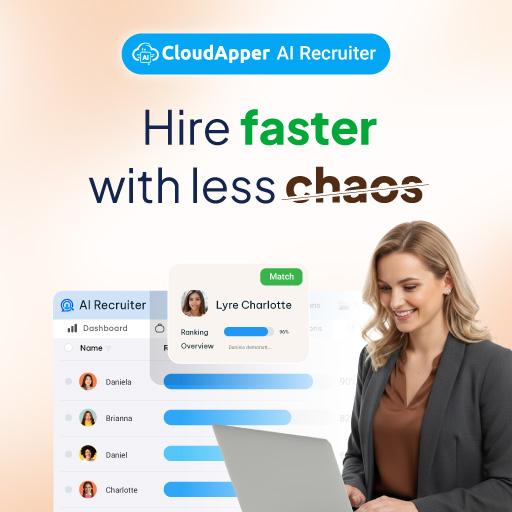
- Screening Agent screens, scores, and ranks resumes quickly, using contextual analysis rather than basic keyword matching.
- Assessment Agent uses scenario-based questions to evaluate how candidates think, including soft skills and consistency, making it harder to fake capability with generic answers or real-time tools.
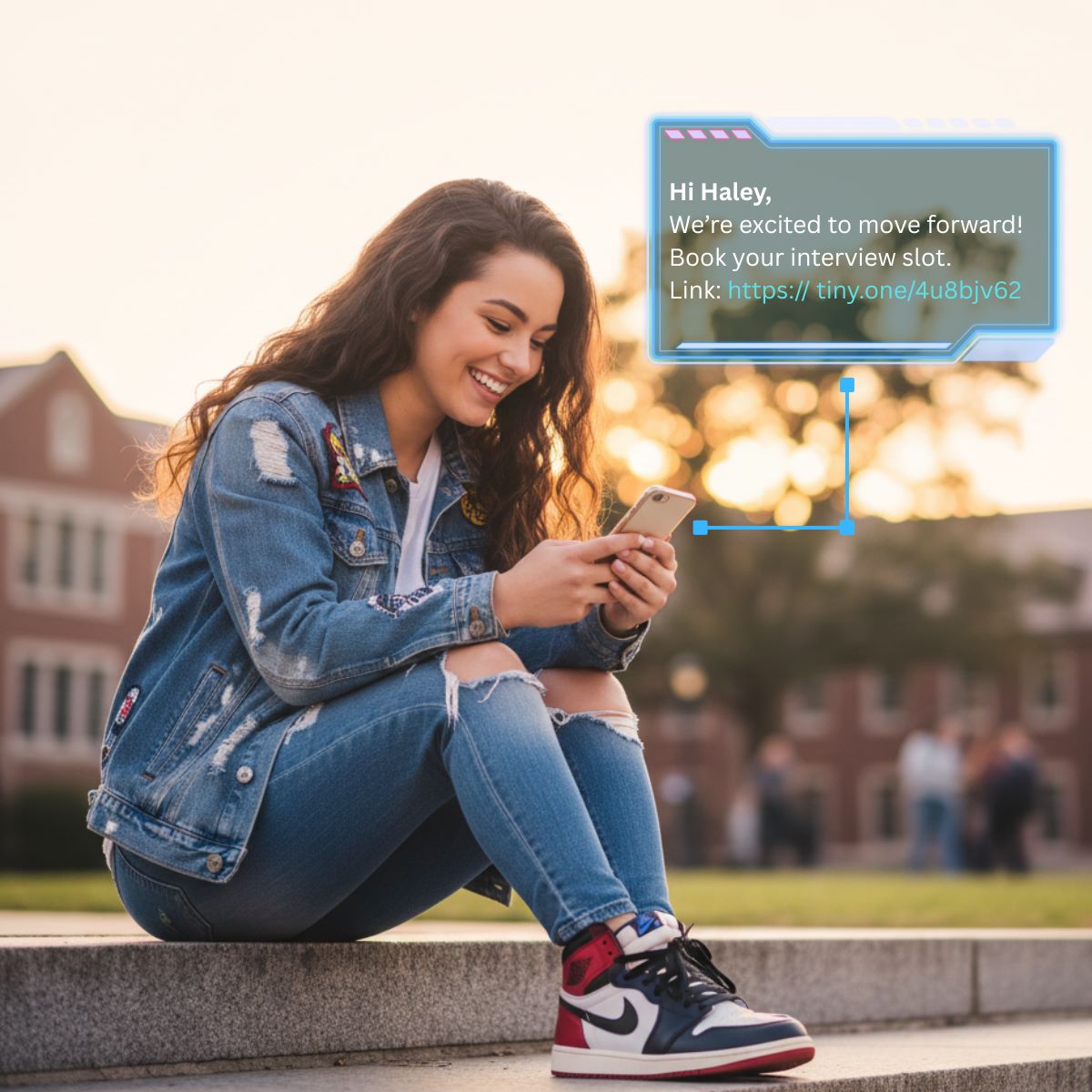
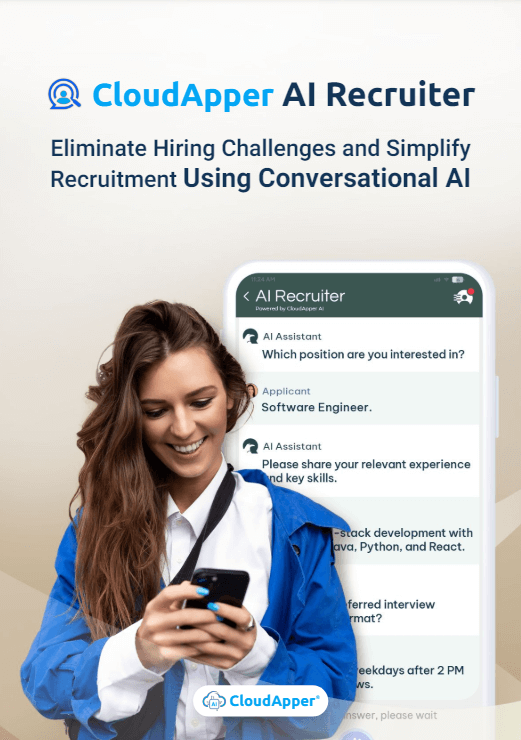
- Communication Agent handles outreach, status updates, reminders, and follow-ups across channels like SMS and email, so candidates aren’t left waiting.
- Scheduling Agent supports self-scheduled interviews, calendar coordination, invites, and rescheduling, removing the back-and-forth that causes drop-off.
- Analytics Agent provides recruiter dashboards and metrics so teams can see where drop-off happens and which steps need adjustment.
It also supports practical candidate-entry options like conversational applications, applying through a QR code, or texting a shortcode, which matters a lot in high-volume hiring. And importantly, it works alongside existing ATS, HRIS, and TA systems without forcing disruptive migrations.
FAQs Recruiters Ask About Ghosting
Why do candidates ghost after applying?
Usually because they don’t hear back quickly, the process feels unclear, or scheduling drags. Speed-to-first-touch and clear next steps are the fastest fixes.
How fast should you follow up after an application?
For high-volume roles, same-day follow-up is ideal. If that’s not possible, an immediate confirmation with a clear timeline reduces uncertainty and keeps candidates engaged.
Is candidate ghosting worse in hourly hiring?
Often, yes. Hourly candidates apply on mobile, decide quickly, and have multiple options. Any friction or delay increases drop-off.
Do more assessments reduce ghosting?
Not automatically. Longer processes can increase ghosting. Short, scenario-based questions that validate skills without adding heavy workload tend to work better.
How do you reduce interview no-shows?
Make scheduling easy, allow rescheduling without friction, and use reminders. No-shows often come from scheduling delays and forgotten appointments, not bad intent.
What’s the simplest way to start improving today?
Measure time-to-first-touch and scheduling cycle time. Then remove the biggest delay with automation and clearer candidate communication.
Closing Thought
If you’re seeing strong applicants disappear, don’t assume they “weren’t serious.” More often, the process made it easy to leave and hard to stay. Once you design for speed, clarity, and low-friction scheduling, you’ll see fewer stalls, fewer no-shows, and more hires who actually show up ready to start. And yes, when candidates ghost after applying, it’s fixable.
Explore CloudApper AI Recruiter

What is CloudApper AI Platform?
CloudApper AI is an advanced platform that enables organizations to integrate AI into their existing enterprise systems effortlessly, without the need for technical expertise, costly development, or upgrading the underlying infrastructure. By transforming legacy systems into AI-capable solutions, CloudApper allows companies to harness the power of Generative AI quickly and efficiently. This approach has been successfully implemented with leading systems like UKG, Workday, Oracle, Paradox, Amazon AWS Bedrock and can be applied across various industries, helping businesses enhance productivity, automate processes, and gain deeper insights without the usual complexities. With CloudApper AI, you can start experiencing the transformative benefits of AI today. Learn More
CloudApper AI Solutions for HR

- Works with


- and more.








Similar Posts
How cNPS Reflects Your Recruitment and Employer Brand
The Recruitment-to-HRIS Gap: Why Your “System of Record” Should Start…