Many teams rely on their Applicant Tracking System (ATS) to filter and decide candidates. This article explains why that was never its role — and how hiring works better when judgment moves upstream.


Table of Contents
For years, hiring teams treated their Applicant Tracking System as more than a database.
It became a gatekeeper. A filter. In some cases, an unspoken decision-maker.
That wasn’t the original intent.
An ATS was never designed to judge candidates. It was built to track them. And as hiring volume, automation, and AI-assisted applications surged, that distinction quietly became one of the biggest sources of friction in modern recruiting.
In 2026, more teams are realizing a simple truth: when an ATS is asked to decide who gets hired, hiring slows down, confidence drops, and trust erodes.
What the ATS Was Actually Built For
At its core, an ATS was designed to:
- Store applicant data
- Track candidates through defined stages
- Maintain audit trails for compliance
- Integrate with payroll, HRIS, and reporting systems
That’s infrastructure work. Important work. But not judgment work.
Early ATS platforms assumed resumes were meaningful signals. Recruiters reviewed them manually. The system’s job was to organize the flow.
That assumption no longer holds.
How the ATS Slowly Became a Decision Engine
As application volume increased, hiring teams leaned more heavily on ATS filters:
- Keyword matching
- Knockout questions
- Automated scoring
- Rigid workflows
At first, this felt efficient. Then resumes became optimized. Then AI entered the picture. Suddenly, filters that once reduced noise started amplifying it.
The ATS didn’t change. The inputs did.
When every resume looks qualified, an ATS can only do what it’s told: move candidates forward or block them based on static rules. That’s not evaluation. That’s automation without context.

Why ATS-Led Decisions Feel So Uncomfortable
Ask recruiters where hiring feels hardest today and the answer is consistent: early-stage confidence.
They aren’t unsure because they lack tools. They’re unsure because:
- Filters reject candidates they’d want to meet
- Shortlists feel arbitrary
- Hiring managers don’t trust early recommendations
- Candidates experience inconsistent outcomes
The system is doing exactly what it was configured to do. It just isn’t designed to interpret nuance, intent, or reasoning.
That’s not a flaw. It’s a mismatch of responsibility.
The Resume Problem Made This Worse
When resumes were imperfect, ATS rules had meaning. Gaps mattered. Language mattered. Structure mattered.
Now, with AI-assisted writing:
- Resumes are uniformly polished
- Keywords are optimized by default
- Formatting conveys little about capability
An ATS can’t tell the difference between genuine experience and well-generated language. It was never meant to.
Asking it to decide who gets hired in this environment creates false confidence on one end and missed opportunity on the other.

What Works Better: Separating Judgment From Record-Keeping
High-performing teams aren’t abandoning their ATS. They’re relieving it of the wrong job.
A clear pattern is emerging:
- AI and structured screening handle intake
- Conversations surface real signals
- Recruiters evaluate thinking and fit
- The ATS captures decisions, not makes them
In this model, the ATS returns to its rightful role: system of record.
Judgment moves upstream, closer to the candidate interaction. Records move downstream, where consistency and compliance matter most.

Why This Improves Trust Across the Board
When an ATS stops acting like a decision engine:
- Recruiters regain confidence in early stages
- Hiring managers understand why candidates advance
- Candidates experience clearer, fairer processes
- Compliance teams get cleaner documentation
Trust improves because decisions are explainable, not just automated.
This shift isn’t about replacing systems. It’s about aligning responsibilities with capabilities.
Where AI Fits (Without Taking Over)
AI is often blamed for turning hiring into a black box. In practice, the opposite is happening when it’s used correctly.
Used well, AI can:
- Ask consistent, job-relevant questions
- Capture responses in structured formats
- Score based on defined criteria
- Surface patterns humans can evaluate
Used poorly, it simply accelerates ATS-driven guesswork.
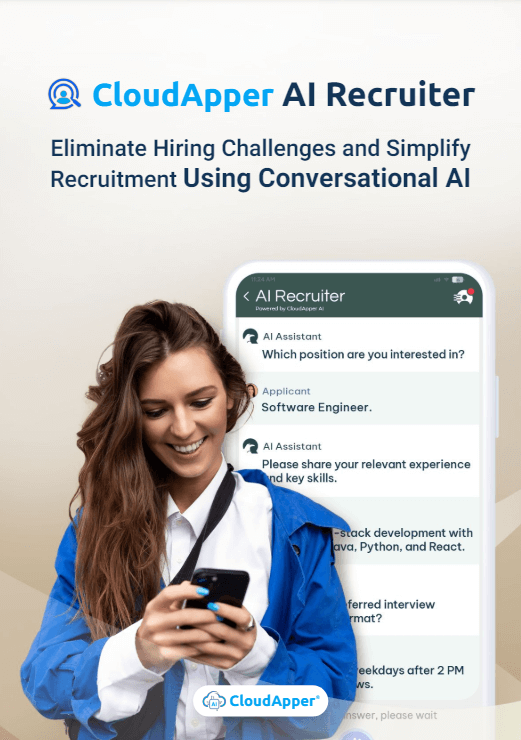
This is why solutions like CloudApper AI Recruiter are being used as an intelligent layer in front of the ATS, not a replacement for it. The ATS keeps its role as the source of truth, while screening and qualification happen where nuance still exists.
The value isn’t automation. It’s alignment.
The Quiet Shift Happening in 2026 Hiring
No one announced this change. It emerged from experience.
Recruiters noticed they trusted conversations more than filters.
Hiring managers trusted context more than scores.
Candidates trusted processes that asked real questions.
The ATS didn’t fail. It was simply asked to do something it was never built to do.
The Takeaway
Your ATS was never meant to decide who gets hired.
It was meant to:
- Record
- Track
- Report
- Protect
Decision-making belongs closer to people, context, and conversation.
When systems do the jobs they were designed for, hiring becomes clearer, fairer, and more human again.

If this shift resonates with how your hiring process is evolving, you may want to take a moment to explore CloudApper AI Recruiter and see how teams are separating judgment from record-keeping more effectively.

What is CloudApper AI Platform?
CloudApper AI is an advanced platform that enables organizations to integrate AI into their existing enterprise systems effortlessly, without the need for technical expertise, costly development, or upgrading the underlying infrastructure. By transforming legacy systems into AI-capable solutions, CloudApper allows companies to harness the power of Generative AI quickly and efficiently. This approach has been successfully implemented with leading systems like UKG, Workday, Oracle, Paradox, Amazon AWS Bedrock and can be applied across various industries, helping businesses enhance productivity, automate processes, and gain deeper insights without the usual complexities. With CloudApper AI, you can start experiencing the transformative benefits of AI today. Learn More
CloudApper AI Solutions for HR

- Works with


- and more.








Similar Posts
How cNPS Reflects Your Recruitment and Employer Brand
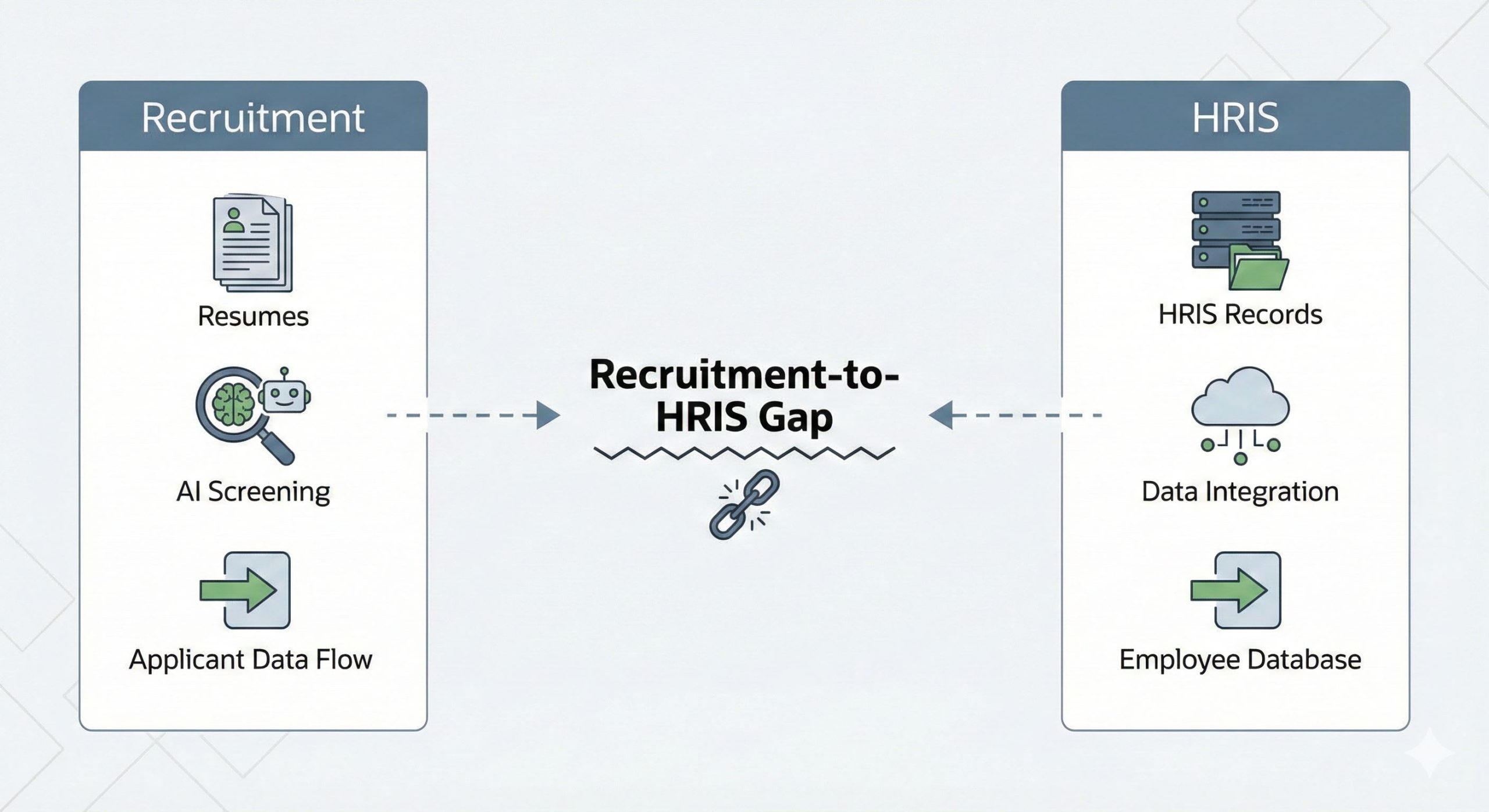
The Recruitment-to-HRIS Gap: Why Your “System of Record” Should Start…