Hiring Merchandisers and Stockers faster starts with asking the right questions. Discover 10 crucial interview questions that assess physical capability, reliability, tech skills, and attention to detail—plus learn how CloudApper AI Recruiter automates screening via SMS, engages candidates 24/7, and reduces time-to-hire by 68% for retail operations.
Table of Contents
- TL;DR
- Why These Questions Matter for Merchandisers & Stockers in Retail
- Top 10 Crucial Merchandiser & Stocker Interview Questions (With Sample Strong Answers)
- How CloudApper AI Recruiter Makes Hiring Merchandisers & Stockers Effortless
- Stop Losing Time to No-Shows and Poor-Fit Hires
- Frequently Asked Questions About Merchandiser & Stocker Interview Questions
TL;DR
Hiring Merchandisers and Stockers is challenging with 65-75% turnover rates, 75% candidate drop-off, 30-40 day time-to-fill averages, and $1,500+ cost-per-hire. This guide provides 10 essential interview questions covering physical capability, inventory technology experience, merchandising quality, problem-solving, time management, reliability/attendance, independent work ability, focus on repetitive tasks, workload judgment, and motivation—with sample strong answers for each.
Hiring Merchandisers and Stockers has become one of the most frustrating challenges in retail operations. These essential roles—responsible for maintaining inventory flow, ensuring shelves stay full, and creating appealing product displays—are experiencing unprecedented turnover rates averaging 65-75% annually according to recent retail workforce studies. The problem is compounded by a severe labor shortage: retail organizations report that merchandising and stocking positions take an average of 30-40 days to fill, with cost-per-hire exceeding $1,500 when factoring in advertising, screening time, training, and lost productivity from understaffed operations.

But here’s the crisis that’s truly crippling retail hiring: extreme candidate drop-off and no-shows. Industry data reveals that approximately 75% of applicants for merchandising and stocking positions either abandon the application process or fail to show up for scheduled interviews. Why? Because traditional hiring processes—delayed responses to applications, phone tag for scheduling, complicated multi-step applications—don’t work for hourly workers who are often applying to multiple retailers simultaneously and accepting the first offer they receive.
The role itself has also evolved significantly. Today’s Merchandisers and Stockers aren’t just moving boxes—they’re using handheld scanning devices, mobile inventory apps, planogram software, and working across omnichannel fulfillment scenarios including picking online orders from store inventory. They need physical capability, attention to detail, tech comfort, and understanding of retail merchandising principles that impact sales performance.
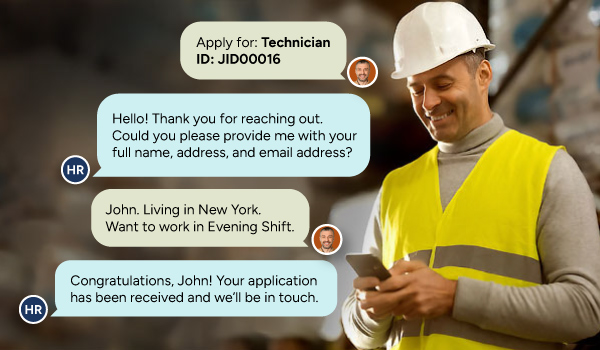
Enter CloudApper AI Recruiter: our conversational AI chatbot that revolutionizes merchandising and stocking hiring. It engages candidates instantly via SMS or web chat—critical for hourly workers who check texts but may not monitor email regularly—conducts intelligent screening interviews 24/7, assesses physical capability and reliability indicators, and eliminates up to 90% of manual screening work while removing unconscious bias. Whether someone applies at 11 PM after their current shift or Sunday morning during their job search, our AI responds immediately and keeps them engaged.
In this guide, we’ll give you the exact interview questions you need to identify reliable, capable Merchandisers and Stockers who’ll show up consistently and perform quality work. Then we’ll show you how CloudApper AI Recruiter handles the heavy lifting, transforming your hiring timeline from weeks to days while dramatically reducing no-shows.
Why These Questions Matter for Merchandisers & Stockers in Retail
The Merchandiser and Stocker roles have transformed from simple manual labor positions to tech-enabled, detail-oriented jobs that directly impact sales performance and customer satisfaction. Today’s merchandising professionals are operating sophisticated inventory management systems, executing precise planograms, maintaining compliance with safety protocols, coordinating with automated replenishment systems, and often serving as the backbone of omnichannel fulfillment operations.
They’re using RF scanners and mobile devices to track inventory accuracy, following detailed merchandising guidelines that influence purchase behavior, working overnight or early morning shifts with minimal supervision, handling heavy lifting safely, and maintaining the presentation standards that keep customers coming back. In grocery retail, they’re also managing strict FIFO (first-in, first-out) rotation for perishables and ensuring proper product placement.
Old-school questions like “Can you lift 50 pounds?” or “Are you available nights and weekends?” barely scratch the surface. You need to assess reliability and attendance history, attention to detail and quality orientation, physical capability and safety awareness, comfort with technology and learning systems, ability to work independently with minimal supervision, understanding of merchandising principles, and problem-solving when things don’t go as planned.
With turnover rates consistently topping 65% and with empty shelves directly impacting sales (industry research shows that out-of-stock situations drive 30-40% of shoppers to competitors), asking the right questions upfront isn’t optional—it’s business-critical. A reliable, detail-oriented merchandiser who shows up consistently is invaluable; a poor hire who calls out frequently or performs sloppy work costs you far more than the hourly wage. These questions will help you identify candidates who’ll be dependable, quality-focused team members.
Top 10 Crucial Merchandiser & Stocker Interview Questions (With Sample Strong Answers)
1. Tell me about your experience with physically demanding work. How do you handle long shifts involving standing, lifting, bending, and repetitive motions?
Why ask this?
Physical capability and realistic understanding of job demands are essential. This reveals whether candidates know what they’re signing up for and have strategies to sustain the work.
Sample Strong Answer:
“I’ve worked in physically demanding jobs for the past three years—warehouse work and stocking at my previous retail job. I’m comfortable lifting 50+ pounds, being on my feet for 8-hour shifts, and doing repetitive tasks like unloading trucks or building displays. I stay in decent shape, which helps, and I’ve learned to use proper lifting techniques to avoid injury—bending at the knees, not the back, and asking for help with awkward or really heavy items. I also wear good supportive shoes and stay hydrated during shifts. I actually prefer physical work over sitting at a desk all day. I understand this job is demanding, and I’m prepared for that.”
2. Describe your experience with inventory systems, handheld scanners, or retail technology. How comfortable are you learning new systems?
Why ask this?
Technology is integral to modern merchandising. This assesses current skills and learning agility for new tools.
Sample Strong Answer:
“In my last retail job, I used handheld RF scanners daily to check inventory levels, locate products in the backroom, and process shipments. I also used the store’s inventory management system to research product locations and quantities. When they introduced a new system, I attended the training and practiced until I felt confident. I’m not intimidated by technology—I see it as making the job more efficient. I’m good at following instructions and asking questions when I’m unsure, and I pick up new systems pretty quickly. I understand that accuracy in these systems is important because everyone relies on that data.”
3. Walk me through how you would stock a section or build a display. What details matter most to you?
Why ask this?
This reveals understanding of merchandising principles, attention to detail, and quality orientation beyond just “putting stuff on shelves.”
Sample Strong Answer:
“First, I’d make sure I have the right products and understand the planogram or instructions for how it should look. I’d start by facing and organizing what’s already there, pulling older product forward and checking expiration dates if it’s food. Then I’d stock new product from the back, making sure labels face forward, items are neat and aligned, and everything looks full and appealing. I’d check for damaged packaging and remove anything that shouldn’t be on the floor. I also pay attention to signage—making sure prices are correct and promotional signs are in the right spots. The goal is making it easy for customers to shop and making everything look attractive because good merchandising drives sales. I’d also make sure I’m following safety rules, not blocking aisles or creating hazards.”
4. Tell me about a time when you noticed a problem—maybe a safety issue, inventory discrepancy, or merchandising error—and what you did about it.
Why ask this?
Initiative, problem-solving, and communication separate good employees from great ones. This tests observational skills and accountability.
Sample Strong Answer:
“I was stocking the dairy section and noticed several cartons of milk that were already expired—they’d been pushed to the back and missed during rotation. I immediately pulled them all, quarantined them in the back with a note, and let my supervisor know so they could be properly disposed of. I also checked the rest of the section more carefully and found a few more near-expiration items that needed rotating forward. My manager appreciated that I caught it before customers did, and it reminded me why FIFO rotation is so important. I think part of doing this job well is staying alert and speaking up when you see something that’s not right, even if it means extra work.”
5. How do you prioritize your work when you have multiple tasks—like stocking several sections, processing shipments, and maintaining displays—all needing attention?
Why ask this?
Time management and judgment are essential when working independently. This reveals organizational thinking and decision-making.
Sample Strong Answer:
“I’d start by understanding what’s most urgent. For example, if there’s a shipment that needs processing before a certain time, that’s priority. If certain sections are completely empty and it’s peak shopping hours, those need attention before sections that are just running low. I also consider what’s most efficient—if I’m already in the back unloading a truck, I might process related tasks while I’m there rather than making multiple trips. I’d communicate with my supervisor or team lead if I’m unsure about priorities. I also stay flexible because priorities can shift—if a customer needs help or there’s a spill, that becomes the immediate priority. The key is being organized, thinking ahead, and staying in communication with the team.”
6. Describe your attendance and reliability at previous jobs. How do you handle situations when you’re sick or have an emergency?
Why ask this?
Attendance is the #1 predictor of success in these roles. This question assesses reliability and responsibility directly.
Sample Strong Answer:
“Attendance is really important to me because I know the team counts on everyone showing up. At my last job, I had perfect attendance for over six months and only called out twice in two years—once for the flu when I was genuinely too sick to work safely, and once for a family emergency. When I do need to call out, I always call as early as possible—not text, actually call—so they have maximum time to adjust. I also try to find coverage when I can. I understand that merchandising and stocking teams run lean, and if one person doesn’t show, it makes everyone else’s job harder. My reliability is something I take pride in.”
7. Tell me about a time you had to work independently with minimal supervision. How did you stay productive and accountable?
Why ask this?
Many merchandising shifts—especially overnight or early morning—involve working independently. This tests self-motivation and accountability.
Sample Strong Answer:
“In my last job, I often worked the overnight stocking shift from 10 PM to 6 AM with just one other person in a large store. We had a clear list of what needed to be completed, and I held myself accountable to getting it done. I’d break the work into chunks, stay focused, and keep moving efficiently. I didn’t need someone standing over me to stay productive—I knew what success looked like and I made sure we hit it. At the end of the shift, I’d report what was completed and flag anything that still needed attention. I actually like the independence because you can work at your own pace without distractions, and there’s satisfaction in seeing what you accomplished when you’re done.”
8. How do you maintain focus and quality when doing repetitive tasks for hours at a time?
Why ask this?
Merchandising involves sustained repetitive work. This reveals work ethic, mental approach, and ability to maintain standards.
Sample Strong Answer:
“I stay focused by setting small goals—like ‘I’ll finish this pallet before my break’ or ‘I’ll get this entire aisle done this hour.’ Breaking it into chunks makes it feel less monotonous. I also remind myself that even though the work is repetitive, it matters—sloppy stocking means products fall over, customers can’t find things, or we get inventory errors. I take pride in doing quality work even on boring tasks. I also use the time to think or listen to music if that’s allowed. Honestly, I don’t mind repetitive work—I find it kind of meditative, and I like jobs where I can see tangible results by the end of my shift.”
9. What would you do if you couldn’t finish your assigned work in your scheduled shift?
Why ask this?
This tests judgment, communication, accountability, and understanding of teamwork versus individual responsibility.
Sample Strong Answer:
“First, I’d make sure I’m working as efficiently as possible and not wasting time. If I realize I’m not going to finish, I’d communicate that to my supervisor or team lead as early as possible so they’re not surprised. I’d prioritize the most important items—like making sure high-traffic areas are stocked—and document what’s left so the next shift knows where to pick up. I’d also try to understand why I didn’t finish—was it unrealistic expectations, did something come up that slowed me down, or could I have worked more efficiently? I’d be willing to stay late if needed and if that’s an option, but I’d definitely communicate rather than just leaving work undone without telling anyone.”
10. Why are you interested in a merchandising or stocking position, and what makes you a good fit for this role?
Why ask this?
This reveals motivation, self-awareness, and whether they have realistic expectations about the job—critical for retention in high-turnover roles.
Sample Strong Answer:
“I’m interested because I like physical work, I’m reliable, and I enjoy seeing immediate results from my efforts. I’m not looking for a glamorous job—I’m looking for steady work where I can contribute, earn a paycheck, and potentially grow. I think I’m a good fit because I have relevant experience, I understand what the job requires, I’m physically capable, I learn quickly, and most importantly, I show up. I know these roles have high turnover because people don’t realize how demanding they are or they’re not reliable, but that’s not me. I take pride in doing my job well, even if it’s behind the scenes. I also get along well with teams and can work independently. I’m looking for an employer who’ll treat me fairly, and I’ll give you consistent, quality work in return.”
How CloudApper AI Recruiter Makes Hiring Merchandisers & Stockers Effortless
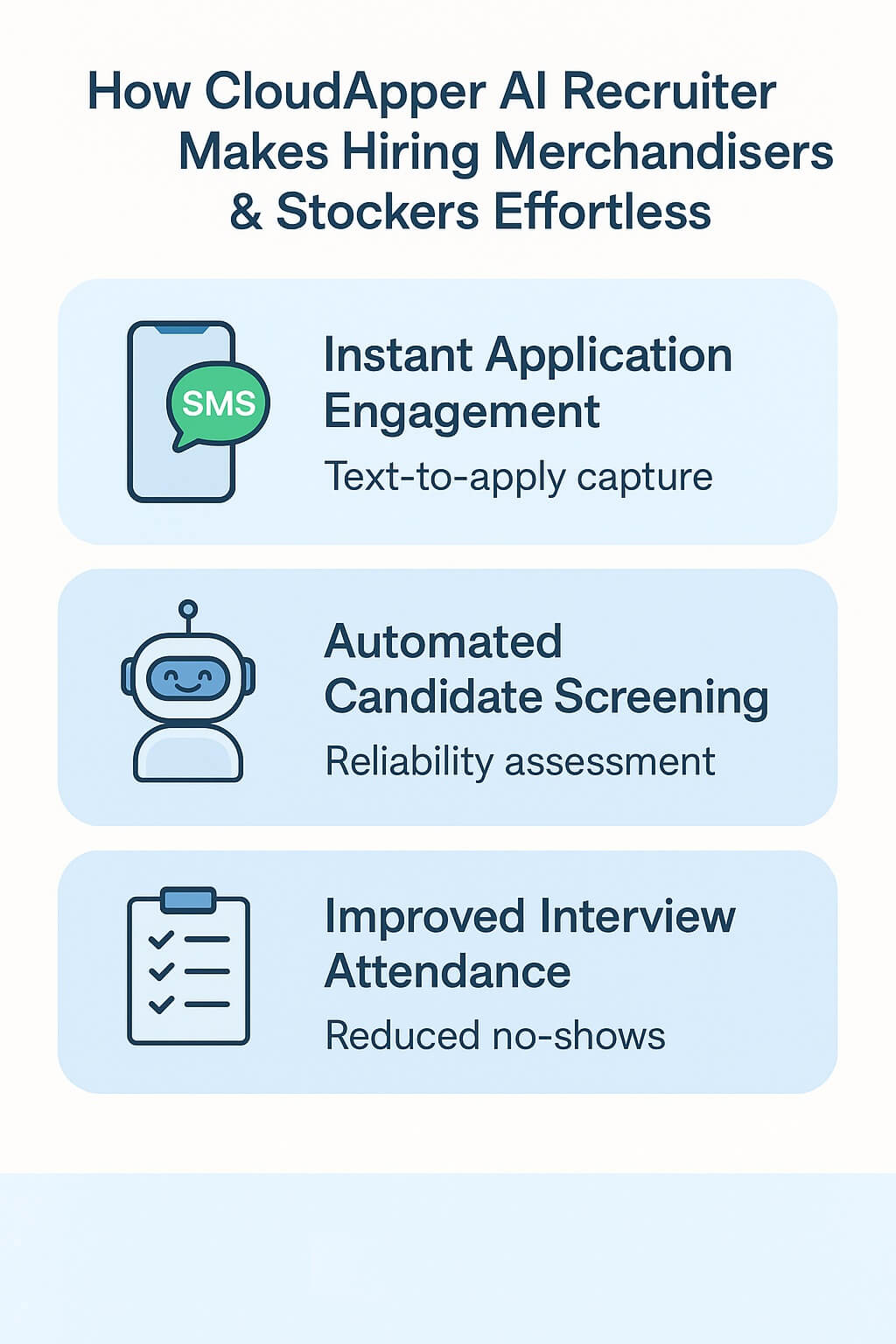
Now imagine transforming your merchandising and stocking hiring from a constant scramble—posting jobs repeatedly, drowning in applications, experiencing massive no-shows—into a streamlined, automated process that identifies reliable candidates quickly while dramatically reducing wasted interview time. That’s exactly what CloudApper AI Recruiter delivers for retail organizations hiring frontline operations teams.
Here’s the harsh reality of traditional merchandiser and stocker hiring: You post positions and receive dozens or hundreds of applications, but manually screening them is time-consuming and tells you almost nothing about reliability or work ethic. You call candidates to schedule interviews, but reach only a fraction because they’re working or their voicemail is full. You schedule 10 interviews and 4-5 don’t show up. You hire someone who seems fine, and they work three shifts then ghost. You’re constantly in crisis hiring mode, pulling managers off operational responsibilities to interview, and your existing team is burning out covering for open positions.
CloudApper eliminates these inefficiencies while providing better predictive assessment than traditional methods.
How It Works:
The moment a candidate applies—through your careers site, Indeed, a “Text STOCK to [number]” campaign on job boards, or even QR codes in your store windows—CloudApper’s conversational AI chatbot engages them instantly via SMS or web chat. This immediate engagement is critical: research shows that candidates who receive immediate response are 3x more likely to complete the hiring process than those who wait even 24 hours.
The AI conducts an intelligent screening conversation immediately, asking customized questions like those above—assessing physical capability understanding, reliability indicators, technology comfort, work ethic, schedule availability, and realistic job expectations. It can present scenario-based questions: “You’re assigned to stock frozen foods, dairy, and build an end-cap display in a 6-hour shift. How would you prioritize this work?”
Key Features That Transform Merchandiser & Stocker Hiring:
- Instant SMS Engagement & Screening: CloudApper reaches candidates on their phones within seconds—whether they apply at 10 PM after their current job or 6 AM while job searching. This immediate response captures interest before candidates move on to other opportunities, dramatically reducing drop-off.
- Physical Capability & Job Expectations Assessment: The AI clearly communicates job demands—lifting requirements, shift hours, physical nature of work—and assesses candidates’ realistic understanding and capability before you waste interview time on people who’ll quit after one shift.
- Reliability Indicator Screening: CloudApper asks about attendance history, transportation reliability, childcare arrangements, and other factors that predict show-up rates. Candidates with poor reliability indicators are filtered out early, so you’re only interviewing people likely to be dependable.
- Schedule Availability Pre-Qualification: The AI automatically screens for availability across required shifts—overnight, early morning, weekends, holidays—and only advances candidates whose schedules match your needs, eliminating the frustration of interviewing people who can’t work when you need them.
- Automated Interview Scheduling with SMS Reminders: Once candidates pass screening, the AI offers interview slots from your calendar with automatic reminders sent via SMS 24 hours before, 2 hours before, and 30 minutes before—reducing no-shows by over 55% compared to email-only communication.
- High-Volume Hiring Support: When you need to hire 10, 20, or 50+ merchandisers for seasonal ramps or new store openings, CloudApper scales effortlessly—screening hundreds of applicants simultaneously while maintaining consistent quality assessment and keeping candidates engaged.
- Real-Time Pipeline Visibility: Your team sees exactly how many candidates are at each stage—applied, screened, qualified, scheduled, interviewed, offered—enabling better workforce planning and eliminating the guesswork from high-volume hiring.
Real-World Impact:
A grocery chain with 150+ stores implemented CloudApper AI Recruiter for their overnight stocker and merchandiser hiring and reduced average time-to-hire from 35 days to just 11 days. By engaging candidates via SMS immediately, pre-screening for reliability and schedule fit, and sending automated interview reminders, they cut recruiter administrative time by 72% and reduced interview no-shows from 48% to just 18%. Most significantly, their 30-day retention improved by 26% because better screening led to better-fit hires who understood job expectations upfront.
Their Director of Store Operations shared: “We were spending countless hours interviewing people who either didn’t show up or quit after a few shifts because they didn’t realize how physical the work was. CloudApper changed everything. The AI screens for realistic expectations and reliability indicators before we invest interview time. Now we’re interviewing fewer candidates but hiring better people who actually stick around. It’s saved us thousands of hours and dramatically improved our operational stability.”
Another regional retailer used CloudApper to hire 200+ seasonal merchandisers across 80 stores in just five weeks—something that previously required temporary recruiting staff and still left stores understaffed during critical holiday periods. The AI handled it seamlessly while maintaining consistent screening standards across all locations.
Ready to transform your merchandising hiring? Explore CloudApper AI Recruiter here and see how retailers are building more reliable operations teams faster than ever before.
Stop Losing Time to No-Shows and Poor-Fit Hires
In merchandising and stocking recruitment, speed and screening quality determine success. The challenge isn’t attracting applicants—it’s identifying reliable candidates quickly, keeping them engaged through the hiring process, and reducing the massive waste of time caused by no-shows and quick turnover from poor-fit hires.
CloudApper AI Recruiter solves both problems. It engages candidates instantly when interest is highest, screens thoroughly for reliability and fit before you invest interview time, and maintains engagement through automated communication that reduces no-shows by over half.
Your stores deserve fully-staffed merchandising teams who keep shelves full and displays attractive. Your store managers deserve to focus on operations instead of constantly interviewing replacements. And your HR team deserves technology that eliminates repetitive screening tasks while delivering better hiring outcomes.
Book a demo today at cloudapper.ai/ai-recruiter and see how our AI can start screening merchandiser and stocker candidates within 48 hours. Let us show you how retailers nationwide are solving the merchandising hiring crisis—one automated conversation at a time.
What’s your biggest challenge when hiring Merchandisers or Stockers? Drop a comment below—our team would love to hear from you and share proven strategies that are working for retail operations facing similar hiring challenges.
Frequently Asked Questions About Merchandiser & Stocker Interview Questions
Q1: What are the most important Merchandiser and Stocker interview questions to ask?
A: The most important Merchandiser and Stocker interview questions assess physical capability, reliability, attention to detail, and realistic job expectations. Key questions include asking about experience with physically demanding work and stamina strategies, comfort with inventory systems and technology, approach to stocking sections and building displays with quality focus, examples of noticing and solving problems, prioritization when handling multiple tasks, attendance history and reliability, ability to work independently with minimal supervision, maintaining focus during repetitive work, handling unfinished work situations, and motivation for the role. These questions reveal work ethic, dependability, and whether candidates understand the demanding nature of merchandising work.
Q2: How can AI help with hiring Merchandisers and Stockers in retail?
A: AI recruiting tools like CloudApper AI Recruiter dramatically improve merchandiser hiring through instant SMS engagement (critical for hourly workers), automated screening that assesses physical capability understanding and realistic job expectations, reliability indicator questions about attendance and transportation, schedule availability pre-qualification for nights/weekends/holidays, automated interview scheduling with multiple SMS reminders that reduce no-shows by 55%, high-volume hiring support for seasonal ramps, and real-time pipeline visibility. This reduces time-to-hire from 35 days to 11 days on average while improving 30-day retention by 26% through better screening and expectation-setting upfront.
Q3: What should I look for in a strong Merchandiser or Stocker candidate’s answers?
A: Strong merchandiser answers demonstrate realistic understanding of physical job demands, proven reliability and attendance history, attention to merchandising quality and detail (not just “putting stuff on shelves”), comfort learning inventory technology and systems, problem-solving initiative when noticing issues, time management and prioritization skills, ability to work independently and stay accountable, positive attitude toward repetitive work, communication when challenges arise, and intrinsic motivation beyond just needing any job. Look for candidates who acknowledge the work is demanding but explain why they’re suited for it and what strategies they use to sustain performance. Past attendance and reliability are the strongest predictors of future performance.
Q4: How long does it typically take to hire a Merchandiser or Stocker?
A: Traditional merchandiser and stocker hiring takes 30-40 days on average, but retail organizations using AI recruiting automation like CloudApper reduce this to 10-15 days. The biggest delays come from slow candidate engagement (candidates apply to multiple retailers and accept the first offer), manual resume screening that provides little predictive value, phone tag trying to schedule interviews, massive no-show rates (often 40-50%), and quick turnover from poor-fit hires requiring constant re-hiring. AI eliminates these bottlenecks through instant SMS engagement, automated screening for fit and reliability, and reminder systems that cut no-shows in half.
Q5: Why are no-show rates so high for Merchandiser and Stocker interviews?
A: No-show rates for merchandiser interviews often reach 40-50% due to several factors: candidates applying to multiple retailers simultaneously and accepting offers before your interview, lack of engagement between application and interview (candidates lose interest or forget), email-only communication that hourly workers don’t check regularly, insufficient pre-screening allowing poor-fit candidates to schedule interviews they don’t intend to attend, and candidates realizing after application that the job doesn’t fit their needs. CloudApper AI Recruiter reduces no-shows to under 20% through immediate SMS engagement, thorough pre-screening that sets realistic expectations, and automated SMS reminders at 24 hours, 2 hours, and 30 minutes before interviews.
Q6: Can CloudApper AI Recruiter handle high-volume seasonal merchandiser hiring?
A: Yes, CloudApper AI Recruiter is specifically designed to scale for high-volume hiring scenarios like seasonal merchandiser ramps, new store openings, or holiday staffing. The AI can screen hundreds of candidates simultaneously while maintaining consistent assessment quality—something impossible with manual screening. It engages all applicants instantly regardless of volume, screens for schedule availability and reliability indicators, prioritizes the most qualified candidates, and provides hiring teams with real-time visibility into pipeline status across all locations. Retailers have successfully used CloudApper to hire 200+ seasonal merchandisers in under six weeks across dozens of stores with minimal recruiter involvement. Learn more about high-volume hiring capabilities here.
Q7: What’s the biggest challenge in Merchandiser and Stocker recruitment right now?
A: The biggest challenges are extreme candidate drop-off (75% abandon the process), high interview no-show rates (40-50%), difficulty predicting reliability from resumes alone, severe turnover (65-75% annually) requiring constant re-hiring, competition for limited labor pools (candidates applying to multiple retailers), cost of poor-fit hires who quit after days or weeks, and the operational impact of understaffed merchandising teams (empty shelves drive customers to competitors). Traditional hiring processes can’t engage candidates quickly enough or screen effectively for reliability—the most critical success factor for these roles. Poor merchandising staffing directly impacts sales and customer satisfaction.
Q8: Does AI screening work for entry-level positions like Merchandisers and Stockers?
A: Yes—AI screening is particularly effective for high-volume, entry-level positions like merchandising and stocking roles. CloudApper AI asks straightforward questions about physical capability, past work experience, attendance reliability, schedule availability, and job expectations in a conversational, accessible way via SMS. The AI isn’t looking for complex technical skills—it’s identifying candidates who understand what the job requires, have demonstrated reliability in past roles, can work the needed schedule, and have realistic expectations about physical demands. This screening is actually more predictive than resume review for hourly positions because it focuses on behavioral indicators and job fit rather than credentials. The result is better-quality candidates reaching the interview stage and higher retention after hire.
More Interview Questions:
10 Crucial Interview Questions for Loss Prevention Officers in Retail (+ AI Recruiter Automation)
10 Crucial Interview Questions for Retail Sales Associates & Cashiers (+ AI Recruiter Automation)

What is CloudApper AI Platform?
CloudApper AI is an advanced platform that enables organizations to integrate AI into their existing enterprise systems effortlessly, without the need for technical expertise, costly development, or upgrading the underlying infrastructure. By transforming legacy systems into AI-capable solutions, CloudApper allows companies to harness the power of Generative AI quickly and efficiently. This approach has been successfully implemented with leading systems like UKG, Workday, Oracle, Paradox, Amazon AWS Bedrock and can be applied across various industries, helping businesses enhance productivity, automate processes, and gain deeper insights without the usual complexities. With CloudApper AI, you can start experiencing the transformative benefits of AI today. Learn More
- Useful Links:
- Agentic AI
- No-Code/Low-Code
- Custom Software
- HCM Personalization
- iPaaS
- FedRAMP
CloudApper AI Solutions for HR
- Works with








- and more.
Similar Posts

How to Assess Candidate Communication Skills Before the First Interview
How to Reduce Interview Rounds Without Lowering Your Hiring Standards