Facial recognition vs PINs is reshaping time clock authentication. Understand the risks, benefits, and trust factors HR leaders must consider when modernizing timekeeping.

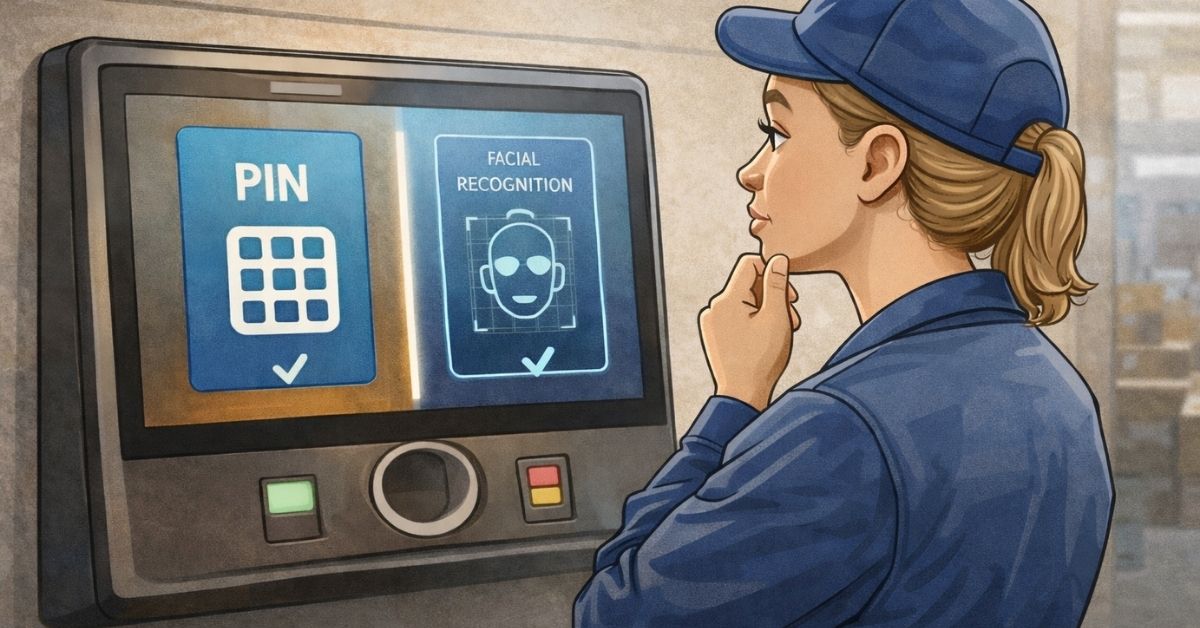
Table of Contents
- Why Authentication at the Time Clock Is Suddenly a Big Deal
- The Case for Facial Recognition in Timekeeping
- Why Facial Recognition Can Create Resistance on the Frontline
- PINs, Badges, and Other Alternatives Still Matter
- Why Choice Is More Important Than the Technology Itself
- How hrPad Supports Flexible Time Clock Authentication
- Rolling Out New Authentication the Right Way
- Compliance, Privacy, and Clear Boundaries
- Trust Is the Foundation of Accurate Timekeeping
Modern timekeeping is no longer just about recording hours. It is about accuracy, compliance, and fairness while still respecting the people behind every punch. As organizations modernize their workforce systems, time clock authentication has become a surprisingly sensitive topic. The debate around facial recognition vs PINs sits at the center of that shift.

HR leaders are under pressure to prevent time fraud and ensure accurate data. At the same time, employees want reassurance that new technology will not cross privacy boundaries or feel like surveillance. Getting this balance wrong can damage trust, slow adoption, and ultimately reduce data quality. Getting it right can strengthen compliance and improve the frontline experience.
Why Authentication at the Time Clock Is Suddenly a Big Deal
For years, time clock authentication was a background decision. Badge swipe, shared PIN, or manual entry was often enough. Today, expectations are different. Labor audits are stricter, compliance rules are more complex, and organizations operate with distributed, frontline-heavy workforces.
As a result, HR teams are rethinking how employees identify themselves at the clock. Modern timekeeping systems are expected to verify identity accurately while remaining fast and intuitive. This shift has brought facial recognition vs PINs into sharper focus, especially for organizations managing shared devices, multiple job roles, and high employee volume.
The Case for Facial Recognition in Timekeeping
Facial recognition is often positioned as the most advanced form of time clock authentication. From an operational perspective, it offers clear advantages. It can reduce buddy punching, remove the need to remember credentials, and speed up the punch process in busy environments.
In industries with strict compliance requirements or high turnover, facial recognition can provide confidence that the right person is clocking in at the right place. When implemented thoughtfully, it can improve accuracy and reduce manual corrections. These benefits explain why many organizations explore facial recognition as part of their modernization efforts.
Why Facial Recognition Can Create Resistance on the Frontline
Despite its advantages, facial recognition often triggers resistance among employees. The concern is rarely about the technology itself. It is about perception and trust. Many frontline workers worry about how biometric data will be stored, who can access it, and whether it could be used for monitoring beyond timekeeping.
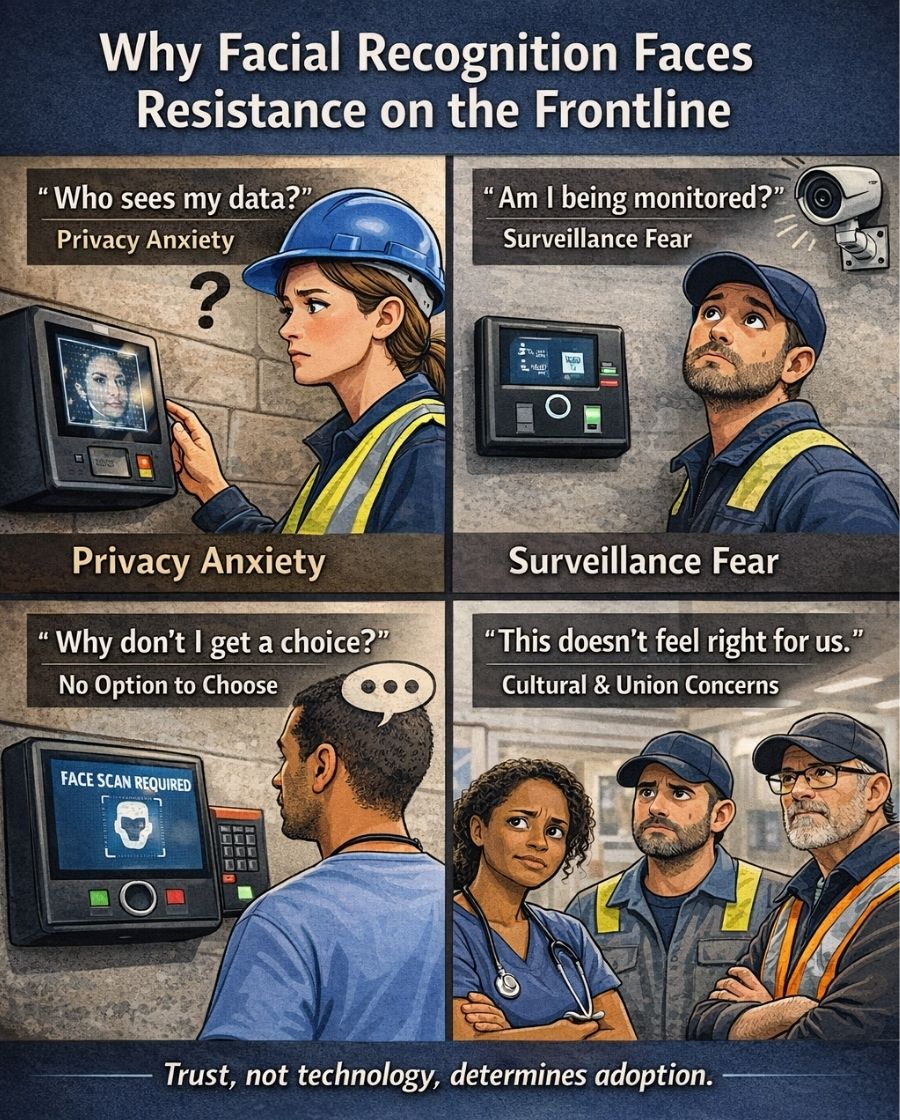
Union environments, public sector organizations, and culturally diverse workforces may be especially cautious. For these groups, mandatory facial recognition can feel intrusive, even if the intent is purely operational. In the facial recognition vs PINs discussion, this emotional response is just as important as technical capability.
PINs, Badges, and Other Alternatives Still Matter
PIN-based authentication remains widely accepted because it is familiar and easy to understand. Employees know how it works and what it does not do. Badges and QR codes offer similar comfort, particularly in shared-device environments.
While PINs may not fully eliminate time fraud on their own, they can be effective when paired with thoughtful workflows and clear accountability. In the context of facial recognition vs PINs, older methods are not outdated. They are often trusted, which makes them valuable in environments where employee acceptance is critical.
Why Choice Is More Important Than the Technology Itself
The most successful timekeeping strategies do not force a single authentication method on every employee. They recognize that different roles, locations, and cultures require different approaches. Offering choice reduces friction and builds confidence.
When employees feel respected, adoption increases. When adoption increases, data quality improves. In the facial recognition vs PINs debate, the real differentiator is flexibility, not which option sounds more advanced.
How hrPad Supports Flexible Time Clock Authentication
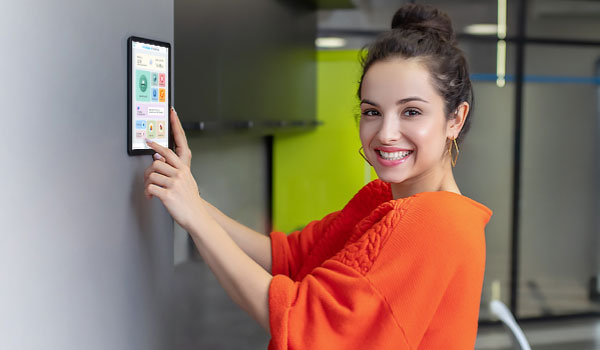
This is where solutions like CloudApper hrPad stand out. hrPad supports multiple time clock authentication options, including facial recognition, PINs, badges, and QR codes, allowing organizations to align technology with workforce comfort.
Rather than replacing core systems, hrPad extends them at the frontline. Verified time data flows cleanly back into platforms such as UKG without changing payroll logic. HR teams gain flexibility without sacrificing compliance or control.
Rolling Out New Authentication the Right Way
Successful modernization starts with transparency. Employees should understand why changes are being made and how their data will be used. Piloting new authentication methods with volunteers or specific locations helps build confidence before wider rollout.
Clear communication matters more than speed. When employees feel included in the decision, resistance decreases. Over time, usage patterns often reveal which method works best for each environment.
Compliance, Privacy, and Clear Boundaries
Regardless of the method chosen, organizations must set firm boundaries. Time clock authentication should exist solely to verify work time, not to track behavior. Data minimization, limited retention, and clear policies are essential.
In the facial recognition vs PINs conversation, trust is protected not by technology alone but by governance. Employees need to know what the system does and, just as importantly, what it does not do.
Trust Is the Foundation of Accurate Timekeeping
Accurate time data starts with employee buy-in. When people trust the system, they use it correctly. When they feel monitored or misunderstood, workarounds appear.
Modernizing timekeeping does not require choosing sides in the facial recognition vs PINs debate. It requires understanding your workforce, offering flexibility, and prioritizing trust. Organizations that approach authentication this way modernize faster, comply more easily, and create a better experience for everyone involved. Explore how hrPad gives you flexible time clock authentication without sacrificing employee trust.
What is CloudApper AI Platform?
CloudApper AI is an advanced platform that enables organizations to integrate AI into their existing enterprise systems effortlessly, without the need for technical expertise, costly development, or upgrading the underlying infrastructure. By transforming legacy systems into AI-capable solutions, CloudApper allows companies to harness the power of Generative AI quickly and efficiently. This approach has been successfully implemented with leading systems like UKG, Workday, Oracle, Paradox, Amazon AWS Bedrock and can be applied across various industries, helping businesses enhance productivity, automate processes, and gain deeper insights without the usual complexities. With CloudApper AI, you can start experiencing the transformative benefits of AI today. Learn More
- Useful Links:
- Agentic AI
- No-Code/Low-Code
- Custom Software
- HCM Personalization
- iPaaS
- FedRAMP
Brochure
CloudApper hrPad
Empower Frontline Employees with an AI-Powered Tablet/iPad Solution
Download Brochure
CloudApper AI Solutions for HR
- Works with








- and more.
Similar Posts
Certified Payroll Compliance: Why Davis-Bacon Failures Start at the Time…
Shift Swap Pay Rate Accuracy: Confirming Who Actually Worked Before…