Hourly labor shortages in the USA affect frontline roles first, exposing fragility in hiring systems built for abundant labor supply.
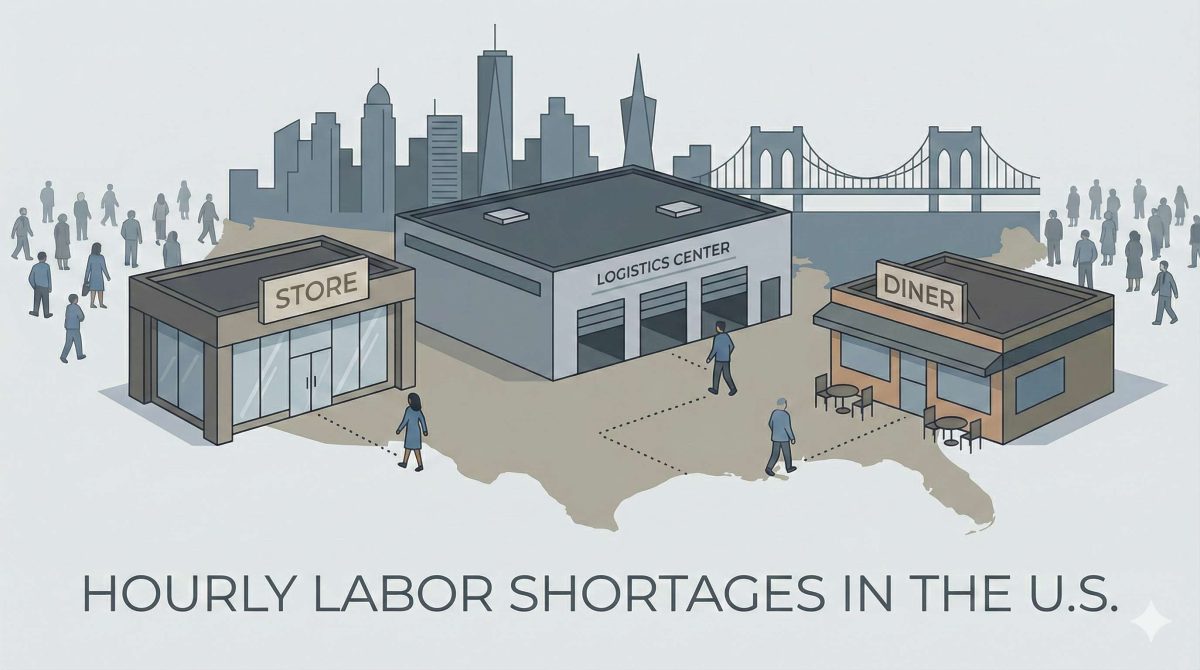
Table of Contents
- Hourly Labor Shortages in the USA Are Structural, Not Cyclical
- Why Immigrant Labor Matters More in Hourly and Frontline Roles
- How Immigrant Labor Reductions Narrow the Hourly Hiring Funnel
- Why Small and Mid-Sized Businesses Feel the Impact First
- Screening and Compliance Are the First Processes to Break
- Why Candidate Experience Suffers Most for Deskless Workers
- Where Hiring Teams Begin to Rethink Their Approach
- Why Hourly Labor Shortages in the USA Change Hiring Permanently
- How This Connects Back to High-Volume Hourly Hiring
- Explore more
Hourly labor shortages in the USA don’t appear suddenly. They surface first in frontline and deskless roles because those jobs depend more heavily on labor availability than almost any other segment of the workforce.
Retail associates, hospitality staff, warehouse workers, and other hourly employees are required to be physically present, work variable shifts, and onboard quickly. When labor supply tightens, these roles feel the pressure immediately—long before salaried or remote positions do.
Recent labor data and workforce reporting show that this pressure is not driven by demand alone. It is shaped by structural changes in who is available to work, where they can work, and how quickly employers can engage them.
Hourly Labor Shortages in the USA Are Structural, Not Cyclical
According to the U.S. Bureau of Labor Statistics, job openings in accommodation, food services, retail trade, and transportation consistently outpace available workers relative to other sectors. These industries also report some of the highest quit rates, reinforcing the fragility of the hourly labor market.
What makes hourly labor shortages in the USA especially acute is that these roles rely on a narrower labor pool. Unlike professional jobs, they cannot expand supply through remote work, longer hiring timelines, or relocation incentives.
When availability tightens, hiring friction doesn’t spread evenly—it concentrates.
Why Immigrant Labor Matters More in Hourly and Frontline Roles
Immigrant workers have historically made up a disproportionate share of the U.S. hourly workforce, particularly in service, hospitality, food processing, construction, and logistics roles.
Multiple analyses from government labor agencies and national newspapers have shown that when immigration slows or labor authorization pathways tighten, the effects are felt first in industries that depend on shift-based, location-bound work.

Reporting from outlets such as The Wall Street Journal and The New York Times has repeatedly highlighted how reduced immigration flows translate directly into fewer available workers for frontline roles—even when consumer demand remains strong.
This doesn’t mean immigrant labor reductions are the only cause of hourly labor shortages in the USA. But they act as a pressure multiplier. When a system already operating with thin margins loses part of its workforce supply, strain becomes visible fast.
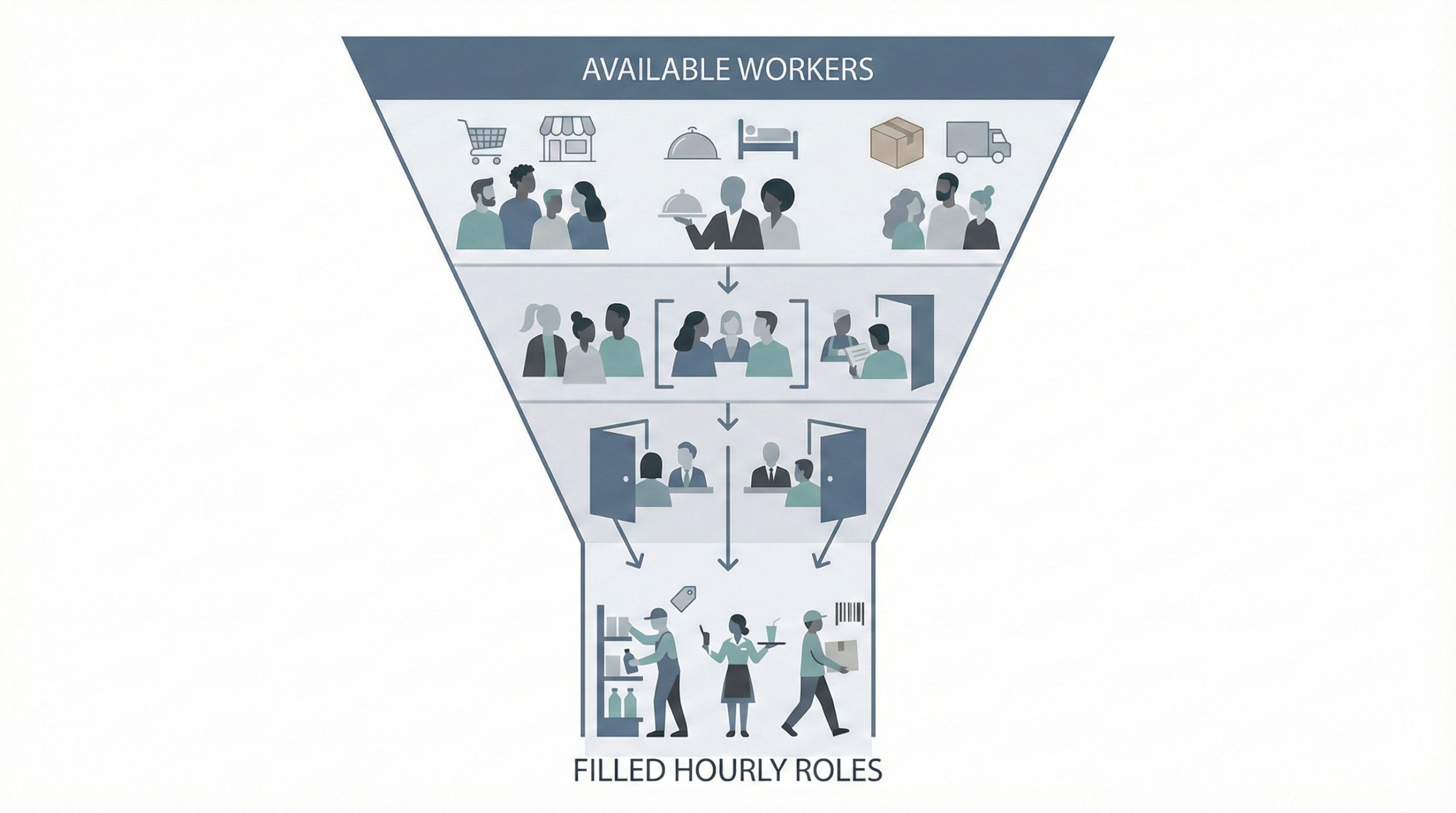
How Immigrant Labor Reductions Narrow the Hourly Hiring Funnel
In hourly hiring, the funnel is already tight.
When immigrant labor availability declines:
- Fewer candidates enter the top of the funnel
- Time-to-fill increases even for entry-level roles
- Recruiters lose flexibility to recover from drop-off
- Missed candidates are harder to replace
Data from the U.S. Department of Labor shows that industries with higher immigrant workforce participation experience sharper hiring slowdowns when labor supply tightens—even if job postings remain constant.
This is why hourly labor shortages in the USA feel sudden. The system doesn’t gradually slow down. It reaches a tipping point.
Hourly hiring feels the impact first because it
depends on labor availability more than any other workforce segment.
Hourly hiring feels the impact first because it
depends on labor availability more than any other workforce segment.
Why Small and Mid-Sized Businesses Feel the Impact First
Large employers can absorb labor shortages longer. They often have:
- Stronger brand recognition
- Multi-location flexibility
- Dedicated recruiting teams
- Larger candidate pipelines
Small and mid-sized businesses don’t have those buffers.
Local retailers, independent hospitality groups, and regional logistics operators depend on nearby labor pools. When those pools shrink, every inefficiency is exposed. Screening delays become visible. Hiring managers wait longer. Compliance documentation slips under pressure.
For SMBs, hourly labor shortages in the USA don’t just slow hiring—they threaten daily operations.
Screening and Compliance Are the First Processes to Break
When labor supply tightens, recruiters are forced to move faster with fewer options.
Government enforcement agencies have made it clear that compliance expectations do not ease during labor shortages. Fair hiring practices, documentation, and consistency are still required—even when teams are overwhelmed.
The problem is that many screening workflows were designed for higher applicant volume. When volume drops and urgency rises, those systems struggle to apply criteria consistently and maintain audit-ready records.
This is where hourly labor shortages quietly create risk. Not through intent, but through overload.
Why Candidate Experience Suffers Most for Deskless Workers
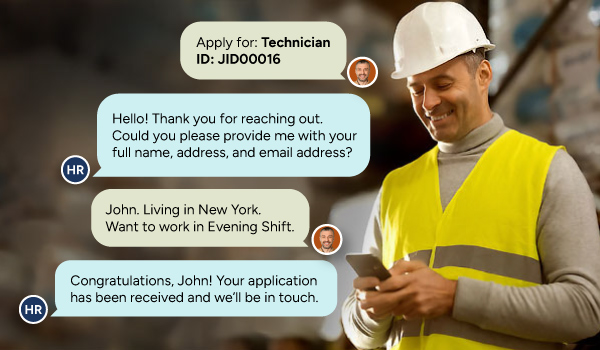
Hourly candidates are often deskless. They apply from phones, between shifts, or under time pressure. When responses are slow or processes feel complicated, they disengage quickly.
Newspaper reporting on frontline labor trends consistently points to the same issue: candidates aren’t rejecting jobs—they’re abandoning processes.
In a tight labor market, poor experience doesn’t just hurt employer brand. It directly reduces the already-limited supply of available workers.
Where Hiring Teams Begin to Rethink Their Approach
Only after these pressures compound do many organizations reassess how hiring work is distributed.
At this stage, the question shifts from “How do we hire faster?” to “How do we keep the process from breaking?”
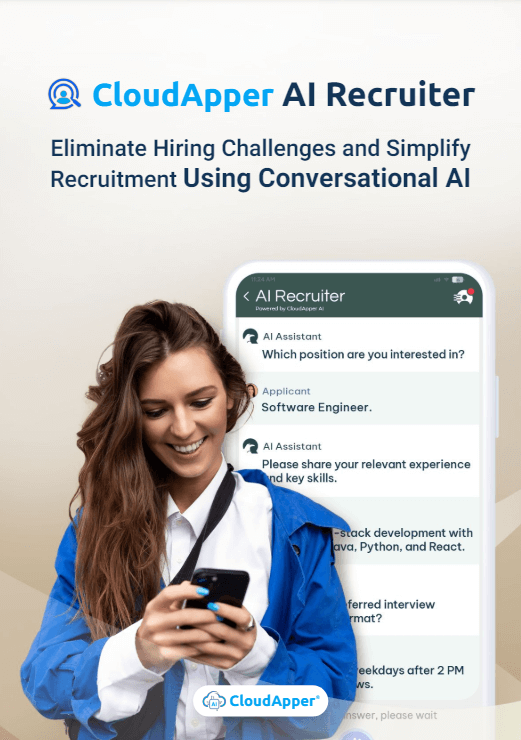
Some teams respond by standardizing early screening, improving engagement speed, and reducing manual workload. Others introduce AI-assisted recruiting platforms like CloudApper AI Recruiter—not to automate decisions, but to help screening at scale and candidate communication while keeping human oversight intact.
In this context, AI is not a shortcut. It’s a pressure valve.
Why Hourly Labor Shortages in the USA Change Hiring Permanently
Hourly labor shortages in the USA are not a temporary inconvenience. They reveal which hiring systems were built for resilience and which were only functioning because labor supply was abundant.
Immigrant labor reductions amplify this reality, but the underlying lesson is broader: hiring systems must operate effectively even when supply tightens and volume doesn’t slow down.
Organizations that adapt by strengthening screening consistency, transparency, and engagement will be better positioned to compete for hourly talent. Those that don’t will continue to experience breakdowns that feel unexpected—but aren’t.
How This Connects Back to High-Volume Hourly Hiring
Hourly labor shortages in the USA are one of the clearest signals explaining why high-volume hourly hiring breaks first.
They expose fragility in screening, compliance, and experience that already existed beneath the surface.
Understanding this dynamic is the first step toward building hiring systems that can withstand pressure—regardless of how tight the labor market becomes.
Explore more
Explore how scalable, human-led hiring systems can support high-volume hourly hiring without compromising compliance or candidate experience.

What is CloudApper AI Platform?
CloudApper AI is an advanced platform that enables organizations to integrate AI into their existing enterprise systems effortlessly, without the need for technical expertise, costly development, or upgrading the underlying infrastructure. By transforming legacy systems into AI-capable solutions, CloudApper allows companies to harness the power of Generative AI quickly and efficiently. This approach has been successfully implemented with leading systems like UKG, Workday, Oracle, Paradox, Amazon AWS Bedrock and can be applied across various industries, helping businesses enhance productivity, automate processes, and gain deeper insights without the usual complexities. With CloudApper AI, you can start experiencing the transformative benefits of AI today. Learn More
- Useful Links:
- Agentic AI
- No-Code/Low-Code
- Custom Software
- HCM Personalization
- iPaaS
- FedRAMP
CloudApper AI Solutions for HR


- Works with








- and more.
Similar Posts

How to Stop Losing Shortlisted Candidates During a Hiring Surge…
Recording Candidate Video Interviews in Illinois: Consent, Retention, and Deletion…