In an era of digital transformation, legacy systems remain vital yet challenging to integrate. CloudApper iPaaS offers REST API solutions, enabling seamless connectivity and innovation without disruptive overhauls, transforming legacy data into strategic assets for modern enterprises.
Table of Contents
- What Is REST API Integration for Legacy Systems and Why Does It Matter?
- The Biggest Challenges in REST API Integration for Legacy Systems
- How Does CloudApper iPaaS Simplify REST API Integration for Legacy Systems?
- What Are the Key Benefits of Using CloudApper iPaaS for REST API Integration for Legacy Systems?
- Common Pain Points Solved by REST API Integration for Legacy Systems with CloudApper iPaaS
- Real-World Examples of Successful REST API Integration for Legacy Systems
Have you ever wondered why so many enterprises are still tethered to outdated legacy systems in an era dominated by agile, cloud-native technologies? It’s a pressing industry trend: while digital transformation accelerates, legacy software remains a cornerstone for countless organizations, holding invaluable data yet struggling to integrate with modern tools. This disconnect not only hampers efficiency but also stifles innovation, leaving businesses vulnerable to competitors who leverage seamless connectivity. As an expert in enterprise integration, I’ve seen firsthand how strategic solutions like CloudApper iPaaS can turn this challenge into an opportunity, providing REST API integration for legacy systems that unlocks real potential without the need for disruptive overhauls.
What Is REST API Integration for Legacy Systems and Why Does It Matter?
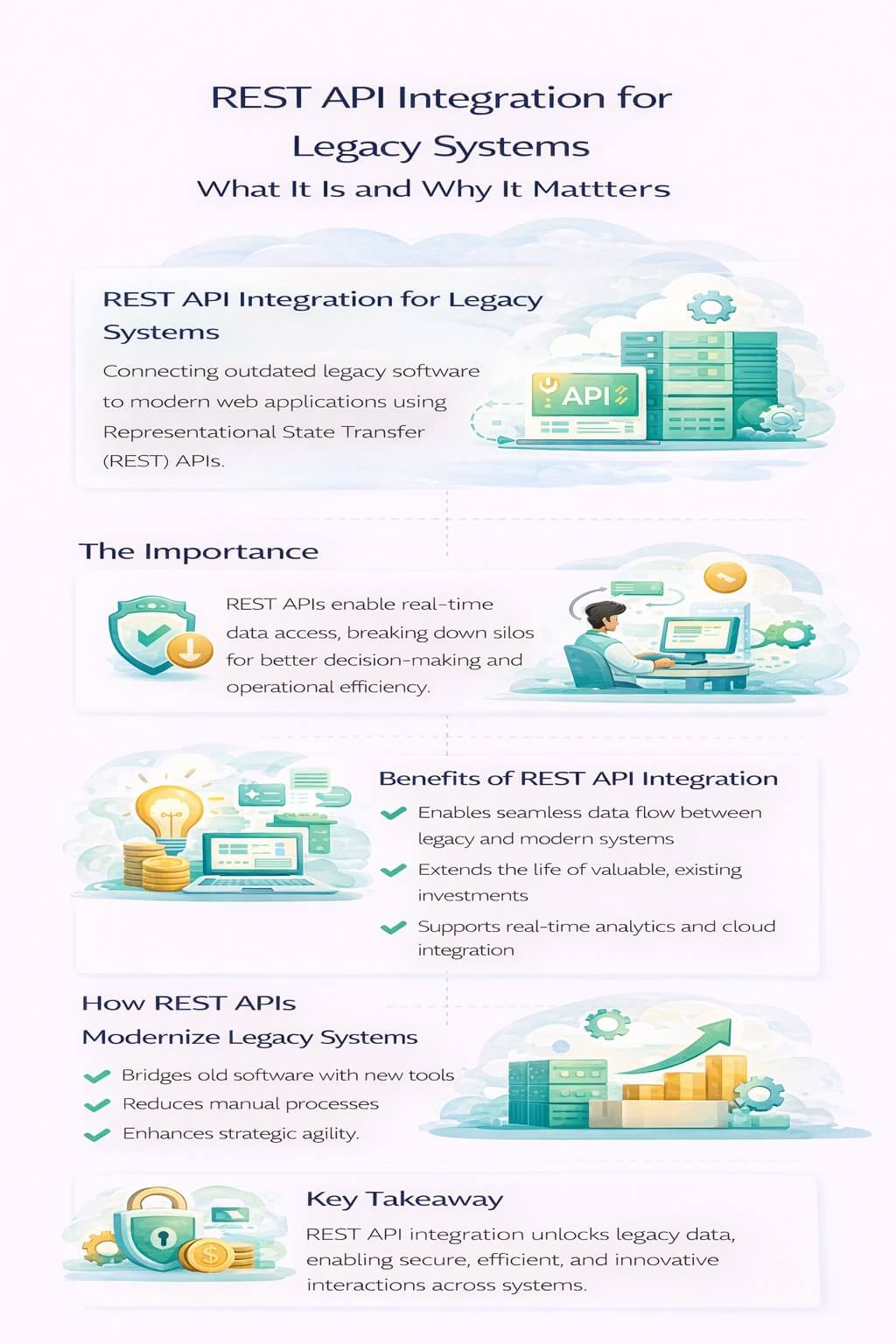
In the realm of enterprise IT, REST API integration for legacy systems refers to the process of enabling outdated software—often built on archaic architectures—to communicate effectively with contemporary applications via Representational State Transfer (REST) APIs. These APIs serve as the lingua franca of modern web services, allowing data to flow securely and efficiently between disparate systems. But why does this matter? Legacy systems, while robust in their core functions, create silos that isolate critical data, leading to manual processes, delayed decision-making, and increased operational costs. Industry trends show that enterprises ignoring this integration gap risk falling behind, as real-time data access becomes essential for everything from supply chain management to customer engagement.

From my perspective, the key insight here is that modernization isn’t about discarding the old; it’s about enhancing it. REST API integration for legacy systems empowers businesses to extract value from existing investments, transforming potential liabilities into assets. For instance, consider a financial institution with decades-old mainframe databases. Without integration, accessing this data for cloud-based analytics is cumbersome. By implementing a bridge like CloudApper iPaaS, organizations can expose legacy data through secure REST APIs, enabling seamless interactions with tools such as AI-driven analytics platforms. This not only streamlines operations but also fosters innovation, allowing teams to focus on strategic initiatives rather than firefighting integration issues.
The Biggest Challenges in REST API Integration for Legacy Systems
Navigating REST API integration for legacy systems is fraught with challenges that can derail even the most ambitious digital strategies. One primary obstacle is the inherent incompatibility: legacy software often lacks native support for RESTful architectures, relying instead on proprietary protocols or batch processing. This results in data silos where valuable information remains trapped, inaccessible to modern cloud applications. Security concerns exacerbate the issue; exposing legacy data to the web without robust safeguards invites risks like data breaches or compliance violations, especially under regulations like GDPR.
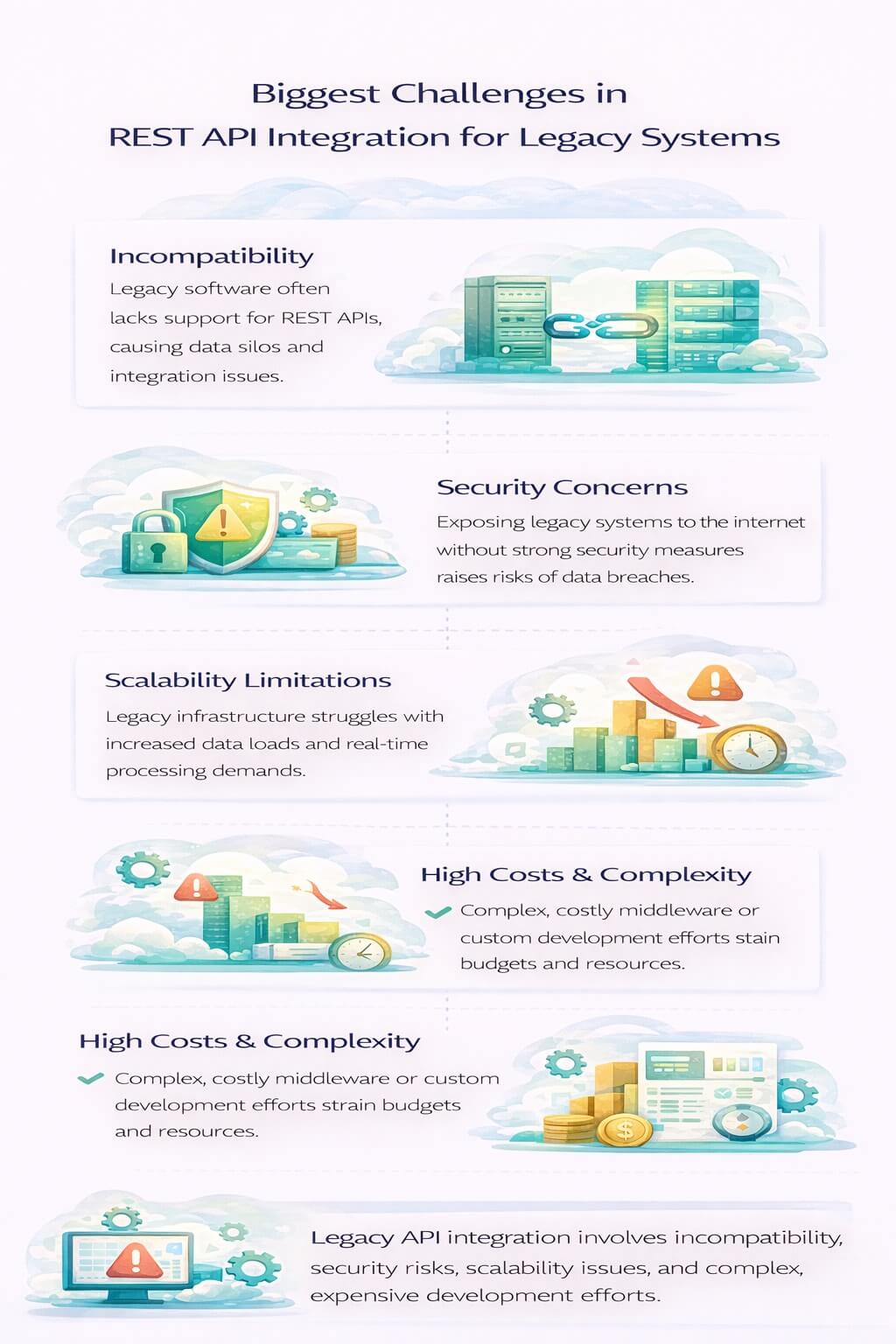
Another trend I’ve observed is the scalability dilemma. As businesses expand, legacy systems struggle to handle increased data volumes or real-time demands, leading to performance bottlenecks. Traditional approaches, such as custom middleware development, are not only expensive but also time-consuming, often requiring specialized skills that are in short supply. In my experience, these pain points manifest in real-world scenarios, like a healthcare provider unable to sync patient records from an old database to a cloud-based EHR system, resulting in delayed care and regulatory headaches. The authoritative view? These challenges represent an industry-wide call to action: enterprises must adopt flexible, cost-effective solutions to bridge the divide, ensuring legacy systems evolve alongside emerging technologies.
Thoughtful analysis reveals that the root cause often lies in a reluctance to invest in integration platforms early on. However, by addressing these hurdles proactively, businesses can achieve greater agility. For example, integrating AI automation into the mix can predict and mitigate issues before they arise, turning reactive maintenance into proactive optimization.
How Does CloudApper iPaaS Simplify REST API Integration for Legacy Systems?
Enter CloudApper iPaaS, a game-changing integration platform as a service that acts as a universal bridge for REST API integration for legacy systems. Designed with enterprise needs in mind, it wraps legacy data in secure REST APIs, eliminating the need for complete system replacements. This approach is particularly insightful for IT leaders seeking to modernize without disruption. CloudApper iPaaS excels in secure API connectivity, handling authentication and encryption to protect sensitive information during transfers.
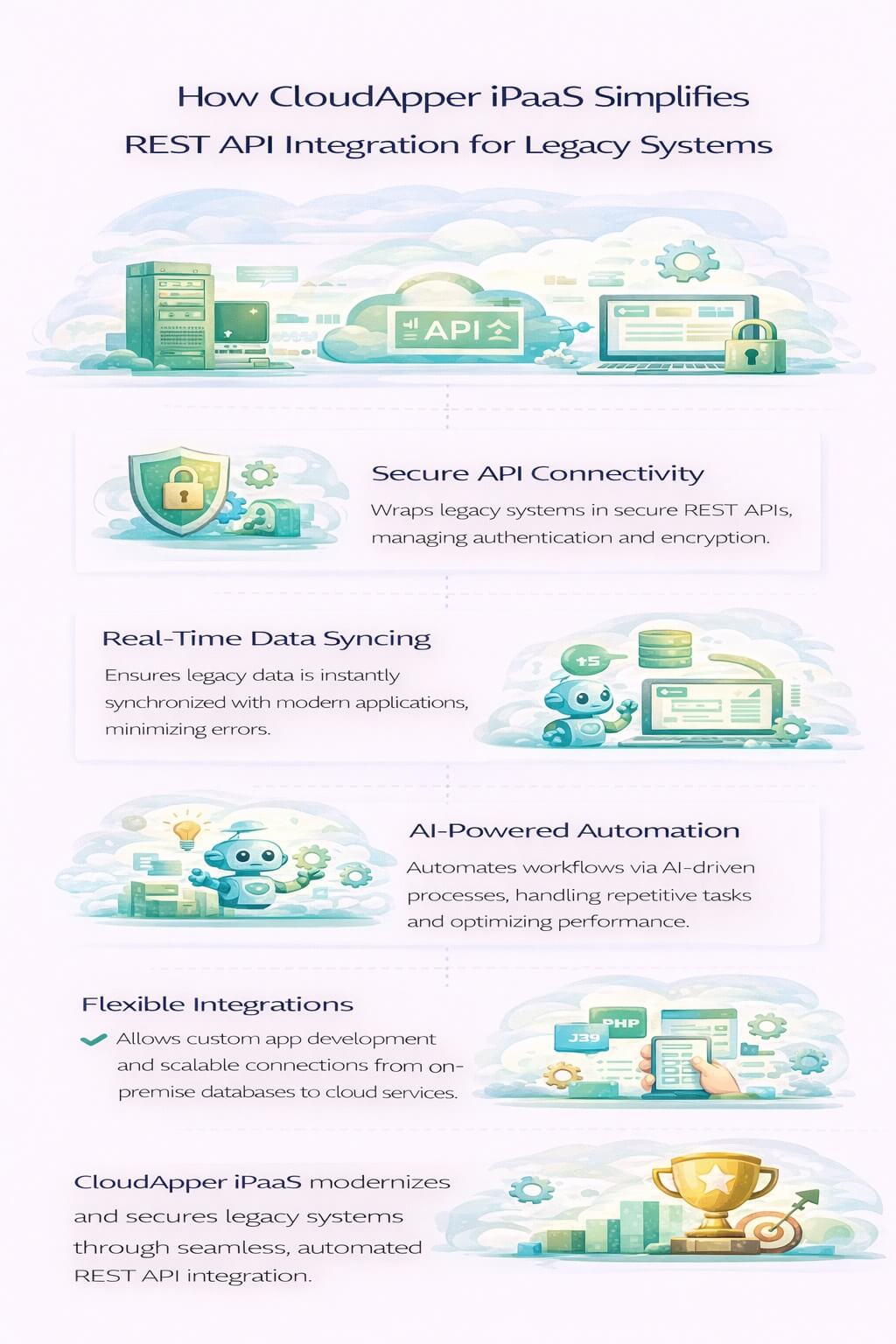
One standout feature is real-time data syncing, which ensures that updates from legacy systems are immediately reflected in modern tools, enhancing business intelligence. Imagine an e-commerce business where inventory levels from an outdated warehouse system sync instantly with a cloud-based sales platform—CloudApper iPaaS makes this a reality, reducing errors and improving responsiveness. Moreover, its AI-powered automation goes beyond basic connections; it intelligently orchestrates workflows, using machine learning to automate tasks like order fulfillment or anomaly detection.
For custom needs, CloudApper iPaaS offers tools for developing tailored web and mobile apps that leverage integrated data, providing user-friendly interfaces without extensive coding. Its scalable integrations adapt to growing enterprises, supporting everything from on-premise databases to cloud services. In practice, I’ve seen organizations like logistics firms use CloudApper iPaaS to connect legacy tracking systems with AI agents, enabling predictive routing that cuts delivery times significantly. This natural integration of CloudApper iPaaS into REST API strategies positions it as an essential tool for forward-thinking enterprises, delivering efficiency and innovation in equal measure.
What Are the Key Benefits of Using CloudApper iPaaS for REST API Integration for Legacy Systems?
The benefits of CloudApper iPaaS extend far beyond simple connectivity, offering a strategic edge in REST API integration for legacy systems. Cost-effectiveness is paramount; by avoiding full-scale digital transformations, businesses save substantial resources through its subscription model. Enhanced data accessibility means legacy information can feed into modern ecosystems, like integrating with Power BI for dynamic dashboards or Slack for instant notifications, thereby boosting decision-making.
Increased system longevity is another critical advantage—CloudApper iPaaS extends the viability of aging software by layering modern capabilities, allowing organizations to amortize investments over longer periods. From a competitive standpoint, the platform’s real-time analytics and AI automation turn data into actionable insights, enabling enterprises to outmaneuver rivals. Consider a retail chain that, after adopting CloudApper iPaaS, synchronized its vintage point-of-sale data with cloud inventory tools, slashing stockouts and elevating customer satisfaction. These benefits underscore an authoritative perspective: in an industry trending toward hybrid environments, solutions like CloudApper iPaaS are indispensable for maintaining relevance and driving growth.
Common Pain Points Solved by REST API Integration for Legacy Systems with CloudApper iPaaS
Enterprises grappling with REST API integration for legacy systems often encounter pain points that CloudApper iPaaS adeptly resolves. The elimination of expensive middleware is a prime example; instead of building custom bridges, CloudApper iPaaS provides a ready-to-deploy platform that saves time and reduces maintenance overhead. Workflow automation gaps are addressed through AI-driven processes, automating cross-system tasks to minimize manual errors and accelerate operations.
Data inaccessibility, a perennial issue, is overcome by making legacy data readily available via secure REST APIs for use in contemporary applications. For instance, a manufacturing company might use CloudApper iPaaS to feed production data from old systems into AI agents for predictive maintenance, preventing downtime. This solution-oriented approach highlights industry trends toward efficiency and innovation, where thoughtful integration not only solves immediate problems but also positions businesses for future challenges.
Real-World Examples of Successful REST API Integration for Legacy Systems
To illustrate the impact, let’s explore real-world examples where REST API integration for legacy systems, powered by CloudApper iPaaS, has driven transformation. In the manufacturing sector, a firm with a decades-old ERP system integrated it via CloudApper iPaaS to cloud analytics, achieving real-time supply chain visibility and reducing processing delays. Similarly, in healthcare, providers have used the platform to bridge legacy patient databases with modern telehealth apps, ensuring secure, compliant data flow that enhances care delivery.
These cases provide insightful examples of how CloudApper iPaaS fosters resilience. By analyzing such implementations, it’s clear that the platform’s flexibility—adapting to diverse needs—combined with its efficiency in streamlining workflows, embodies the values of innovation that modern enterprises crave.
As we’ve explored the transformative power of REST API integration for legacy systems, it’s evident that tools like CloudApper iPaaS are pivotal for overcoming industry challenges and seizing opportunities. Don’t let legacy constraints hold your enterprise back—take the first step toward seamless modernization. Visit the CloudApper website today to schedule a demo and discover how iPaaS can revolutionize your operations, delivering the efficiency and innovation your business deserves.

What is CloudApper AI Platform?
CloudApper AI is an advanced platform that enables organizations to integrate AI into their existing enterprise systems effortlessly, without the need for technical expertise, costly development, or upgrading the underlying infrastructure. By transforming legacy systems into AI-capable solutions, CloudApper allows companies to harness the power of Generative AI quickly and efficiently. This approach has been successfully implemented with leading systems like UKG, Workday, Oracle, Paradox, Amazon AWS Bedrock and can be applied across various industries, helping businesses enhance productivity, automate processes, and gain deeper insights without the usual complexities. With CloudApper AI, you can start experiencing the transformative benefits of AI today. Learn More
- Useful Links:
- Agentic AI
- No-Code/Low-Code
- Custom Software
- HCM Personalization
- iPaaS
- FedRAMP
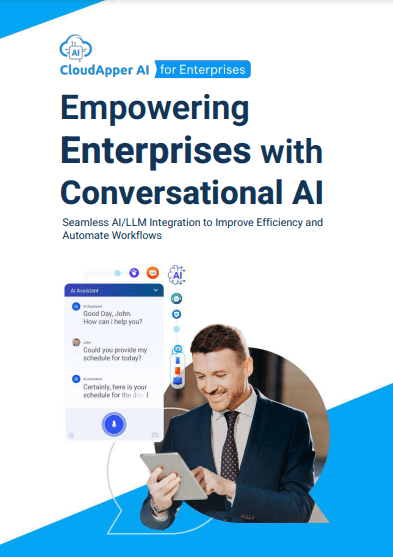
CloudApper AI Solutions

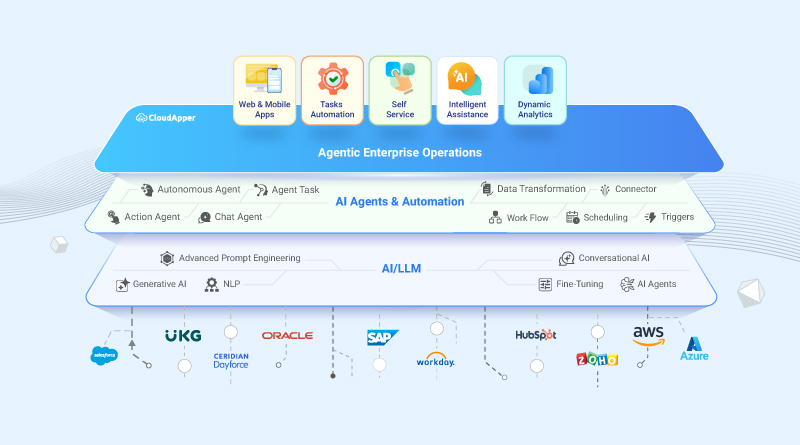
- Works with







- and more.
Similar Posts

Legacy Modernization Transition: The Compliance Gap That Opens When Both…

Outsourced Legacy Systems: Why Vendor Exit Costs More Than the…