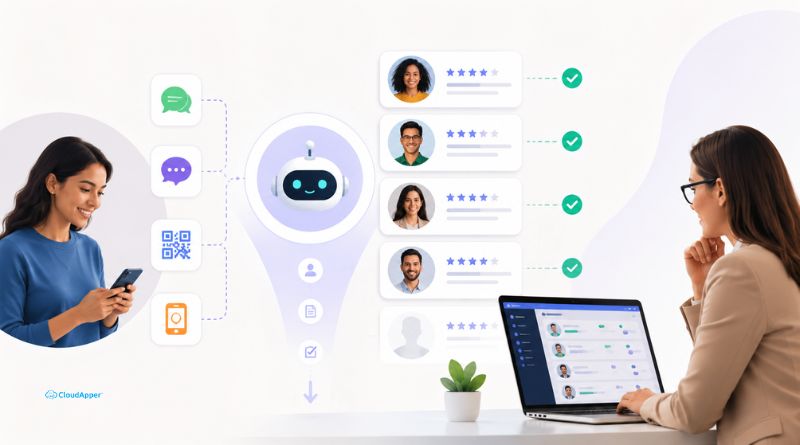
The Greenhouse Scorecard is a powerful tool for structured hiring, but manually reviewing hundreds of early-stage applications creates bottlenecks and calibration drift. Learn how automating your pre-screening process with AI feeds objective, real-time candidate scores directly into your ATS.
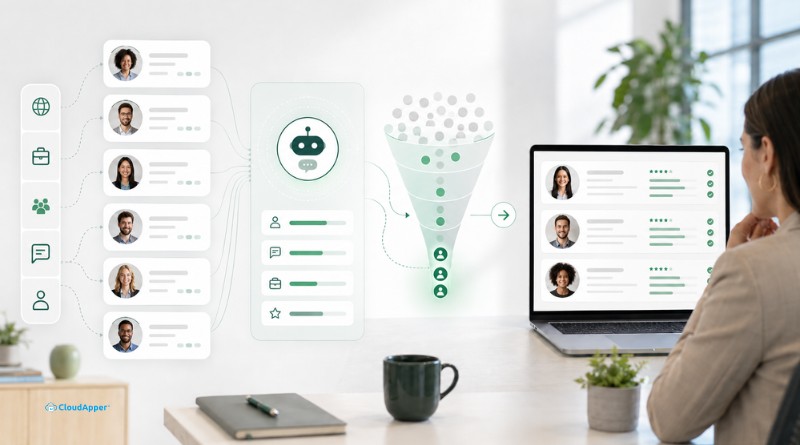
Table of Contents
- TL;DR:
- The Problem: The High-Volume Scorecard Bottleneck
- The Solution: An AI Pre-Screening Layer for Greenhouse
- Step-by-Step: How the Automated Candidate Scoring Works
Let’s be honest about why you chose Greenhouse. You wanted a hiring process built on data, not on how rested your recruiter is that morning. The Greenhouse Scorecard is good at forcing objectivity — your team evaluates candidates against the same specific criteria, every time. But that structure creates a real problem before you ever open a call.

When hundreds of applications come in for a single role, filling out Scorecards manually becomes a grind. Hours of resume reading and rating just to filter down to a workable list. CloudApper AI Recruiter for Greenhouse ATS takes that work off your team’s plate by handling early screening automatically.
TL;DR:
-
Manual screening breaks structure: High application volumes cause recruiter fatigue, leading to calibration drift and biased resume skimming.
-
AI-inflated resumes skew early reviews: Candidates use software to perfectly match job descriptions, creating “false positives” that waste recruiters’ time.
-
Conversational AI filters the noise: An AI chatbot engages applicants instantly, asking scenario-based questions to validate actual skills rather than just matching keywords.
-
Automated data sync: The AI objectively evaluates responses and pushes candidate scores directly into your Greenhouse ATS.
-
Faster time-to-hire: Recruiters log into Greenhouse to find a pre-ranked shortlist, eliminating manual data entry and getting to top talent faster.
The Problem: The High-Volume Scorecard Bottleneck
The Danger of Calibration Drift
Structured hiring depends on consistency, but human reviewers aren’t consistent across 300 resumes. Fatigue changes how people score. The candidate reviewed at 9 AM Monday gets a different evaluation than the one reviewed Friday afternoon — same resume, different mood, different result. When volume spikes, reviewers rush, and the structure you built starts to erode.
The Collapse of Consistency Under Volume
A big application surge puts your team in an uncomfortable position: review carefully and fall behind, or skim quickly and lose the objectivity that makes the Scorecard worth using. Skimming means relying on pattern recognition and instinct — which is exactly the thing structured hiring was supposed to fix.
The Rise of the AI-Optimized Resume
Candidates now use software that mirrors job descriptions almost exactly. Nearly every application looks like a match on paper. Your team spends real time grading what look like strong profiles, then finds out on the phone screen that the experience isn’t there. It’s a time sink at the stage where you can least afford it.
The Solution: An AI Pre-Screening Layer for Greenhouse
CloudApper AI Recruiter adds a pre-screening layer to your existing Greenhouse setup. It handles candidate capture, structured evaluation, and scoring before your team has to open a single resume, which is an absolute necessity in cases like high-volume hourly hiring. A set of coordinating AI agents runs the early stages, so only candidates who actually meet your criteria reach your recruiters.
Step-by-Step: How the Automated Candidate Scoring Works
Here is exactly how an applicant moves through the automated journey straight into your Greenhouse system.
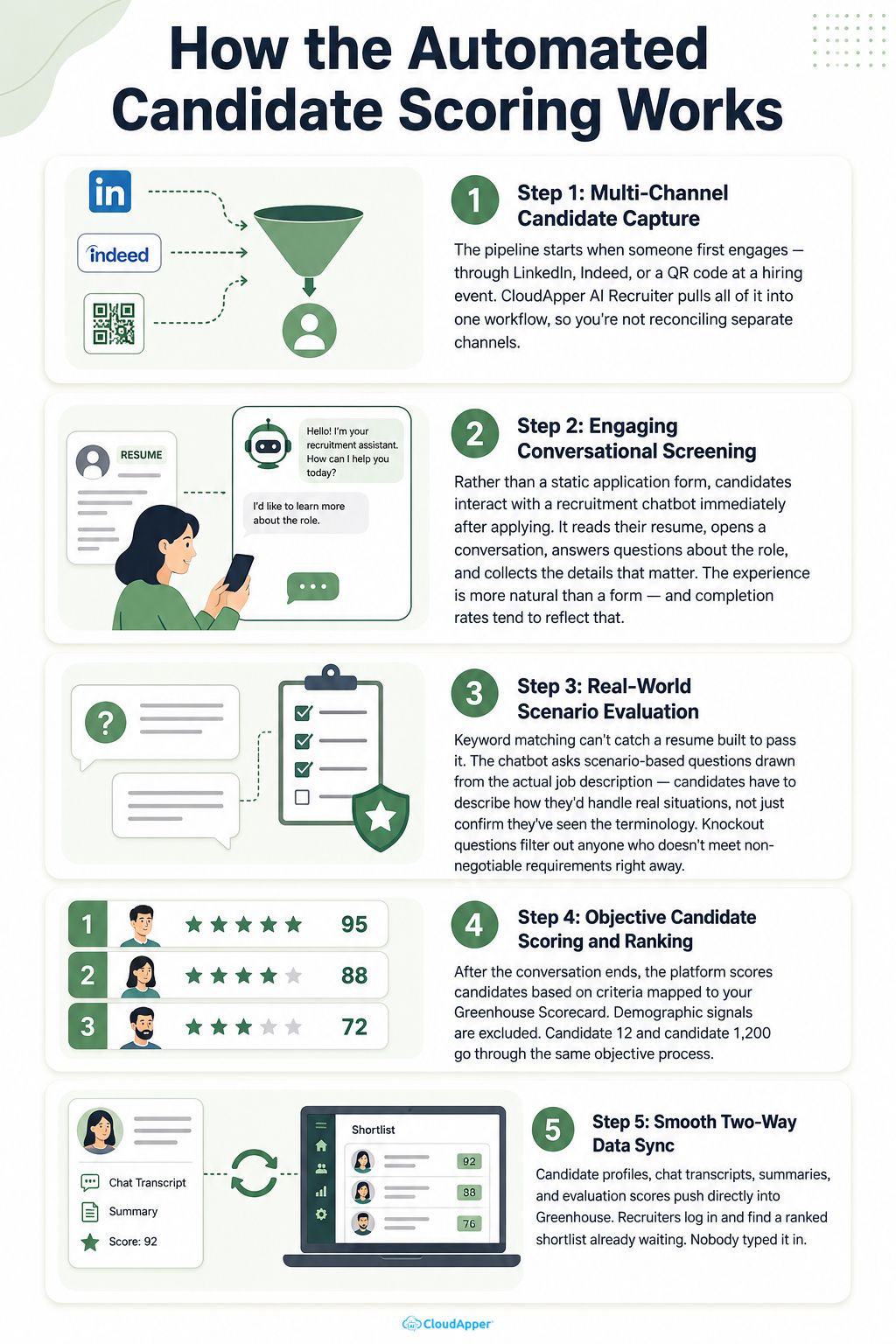
Step 1: Multi-Channel Candidate Capture
The pipeline starts when someone first engages — through LinkedIn, Indeed, or a QR code at a hiring event. CloudApper AI Recruiter pulls all of it into one workflow, so you’re not reconciling separate channels.
Step 2: Engaging Conversational Screening
Rather than a static application form, candidates interact with a recruitment chatbot immediately after applying. It reads their resume, opens a conversation, answers questions about the role, and collects the details that matter. The experience is more natural than a form — and completion rates tend to reflect that.
Step 3: Real-World Scenario Evaluation
Keyword matching can’t catch a resume built to pass it. The chatbot asks scenario-based questions drawn from the actual job description — candidates have to describe how they’d handle real situations, not just confirm they’ve seen the terminology. Knockout questions filter out anyone who doesn’t meet non-negotiable requirements right away.
Step 4: Objective Candidate Scoring and Ranking
After the conversation ends, the platform scores candidates based on criteria mapped to your Greenhouse Scorecard. Demographic signals are excluded. Candidate 12 and candidate 1,200 go through the same objective process.
Step 5: Smooth Two-Way Data Sync
Candidate profiles, chat transcripts, summaries, and evaluation scores push directly into Greenhouse. Recruiters log in and find a ranked shortlist already waiting. Nobody typed it in.
The Business Impact: Recruiting by the Numbers
Implementing CloudApper AI Recruiter for your existing Greenhouse ATS delivers clear, measurable improvements to your entire talent acquisition strategy. Here is how automating your early pipeline changes your day-to-day operations:
- Massive Reduction in Time-to-Hire: Cutting manual resume review out of early screening compresses that stage from days to minutes. Qualified candidates move forward before competitors have finished reading the same stack.
- Zero Shadow Data or Process Disruption: Recruiters stay in Greenhouse. Data flows in automatically, existing configurations stay put, and nothing in your reporting breaks.
- Elevated Recruiter Workflow and Strategy: When the administrative work is handled, recruiters spend their time on the things that actually require them — deeper interviews, relationship building, getting good candidates across the line.
Frequently Asked Questions
Does this replace our Greenhouse ATS?
No. CloudApper AI Recruiter is designed to enhance your existing setup, not replace it. It acts as an automated front-end layer that manages the initial capture and screening, then feeds that structured data directly into Greenhouse so your team never has to leave their primary system.
How does the AI calculate the Greenhouse Scorecard metrics?
Instead of just parsing a resume for keywords, the AI chatbot engages candidates in real-time, asking scenario-based questions drawn directly from your job descriptions. It evaluates their responses against your predefined criteria and seamlessly maps those objective scores to your Greenhouse Scorecard.
How do you prevent candidates from gaming the system with AI?
Today’s candidates use AI to optimize their resumes to pass standard ATS filters. By forcing candidates to answer specific, real-world scenario questions dynamically during the conversational screening phase, the platform validates their actual reasoning and experience before they ever reach a recruiter.
Will this disrupt our current hiring workflows or reporting?
Not at all. The automated pipeline pushes all candidate profiles, chat transcripts, AI summaries, and evaluation scores straight into Greenhouse. There is zero shadow data. Your recruiters simply log in and work from a prioritized shortlist without changing how they use the platform.
Conclusion
A structured hiring process only holds up if your team can apply it consistently at volume. Manual screening at scale breaks that consistency. CloudApper AI Recruiter handles the pre-screening layer so your Greenhouse Scorecard does what it was designed for: evaluating the right candidates, not just processing every application that comes in.
Contact us today to schedule a demo of CloudApper AI Recruiter for Greenhouse ATS.

What is CloudApper AI Platform?
CloudApper AI is an advanced platform that enables organizations to integrate AI into their existing enterprise systems effortlessly, without the need for technical expertise, costly development, or upgrading the underlying infrastructure. By transforming legacy systems into AI-capable solutions, CloudApper allows companies to harness the power of Generative AI quickly and efficiently. This approach has been successfully implemented with leading systems like UKG, Workday, Oracle, Paradox, Amazon AWS Bedrock and can be applied across various industries, helping businesses enhance productivity, automate processes, and gain deeper insights without the usual complexities. With CloudApper AI, you can start experiencing the transformative benefits of AI today. Learn More
- Useful Links:
- Agentic AI
- No-Code/Low-Code
- Custom Software
- WorkBridge
- iPaaS
- FedRAMP
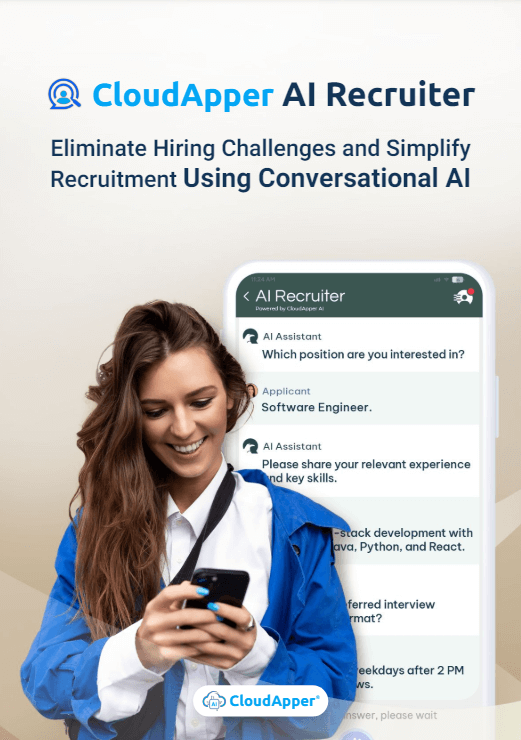
CloudApper AI Solutions for HR

- Works with







- and more.
Similar Posts

The Hidden Cost of Duplicate Candidate Records Across Your Hiring…
The 7-Second Resume Rule Is Killing High-Volume Hiring in Dayforce:…