Functional legacy systems accumulate off-budget compliance liability through security exceptions, compensating controls, and premium support contracts distributed across departments with no shared ledger. Here is what the cost of deferral actually looks like when someone counts it.

TL;DR
Functional legacy systems accumulate off-budget liability through compliance exceptions, compensating controls, and premium support contracts — costs distributed across departments with no shared ledger. The real cost of deferral compounds each year as regulatory frameworks update, AI integration gaps widen, and the CRO inherits exposure that was never on the budget agenda when it was being created. CloudApper’s governed modernization platform closes the compliance exception ledger rather than renewing it.
Table of Contents
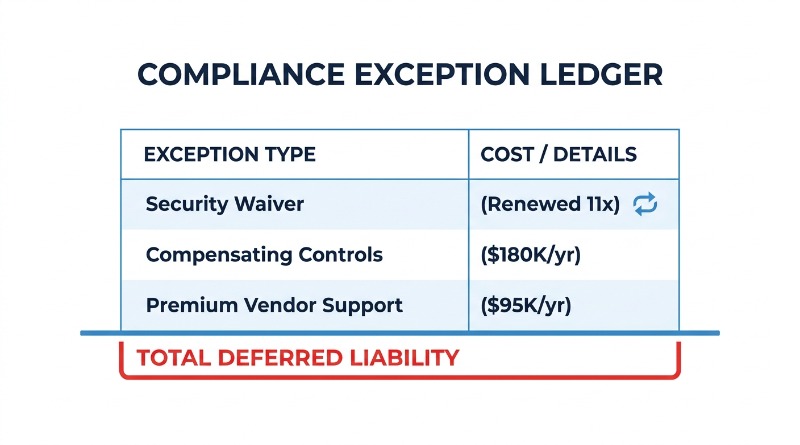
The entry was logged three years ago. A legacy billing application was granted a temporary security exception — MFA not enforced on batch job accounts, change log absent, vendor support expired. The ticket noted: planned for modernization within six months. The exception has been renewed eleven times.

That is not a compliance anomaly. That is a business model for deferral. And the cost of running it does not appear on any budget line the CFO reviews — which is precisely why it persists.
The Exception Log Is a Shadow Balance Sheet
A compliance exception is not a free pass. It is a liability that generates carrying costs every quarter it stays open: GRC staff time to renew it, security team hours to document compensating controls, vendor premium support to keep an end-of-life system on a support contract it officially left behind. Each renewal is an interest payment on a modernization decision someone declined to make.
Deloitte estimates technical debt absorbs 21 to 40 percent of total IT spending. Pegasystems research puts the average enterprise waste from inability to modernize at over $370 million per year. These numbers are real, but they rarely attach to a specific system in a specific organization’s budget — because the costs are distributed across five different cost centers that have no shared ledger. Security pays for the compensating controls. GRC pays for the exception management. Operations pays for the premium support contract. The modernization cost that would close the ledger never gets formally approved because no single line item is large enough to justify escalation.
Meanwhile, the system stays on the grid because it is working fine. CloudApper refers to this as the deferral trap — functional systems that accumulate off-budget liability precisely because they do not fail visibly enough to force a decision.
The Interest Rate on a Deferred Decision
Budget models for legacy systems almost never include the compounding cost of staying. They compare the cost of modernization against the cost of maintenance, as if maintenance were a fixed number. It is not. Every year a system stays unmodernized, its compliance exposure grows as regulatory frameworks update, its integration surface becomes more brittle as surrounding systems evolve, and its AI-readiness gap widens as the organization builds new automation workflows that cannot connect to it.
The AI automation dependency on legacy integration is rarely costed into modernization deferral models, yet it is the reason AI pilots stall in the fourth quarter of the year they were supposed to scale. The HIPAA compliance timeline that arrives before modernization does is another version of the same deferred decision arriving with a deadline attached. When those two pressures converge — a regulatory enforcement window and an AI initiative that cannot reach the legacy system — the deferral model collapses, and the organization pays premium rates on both the compliance response and the accelerated modernization.
Who Is Not in the Budget Meeting
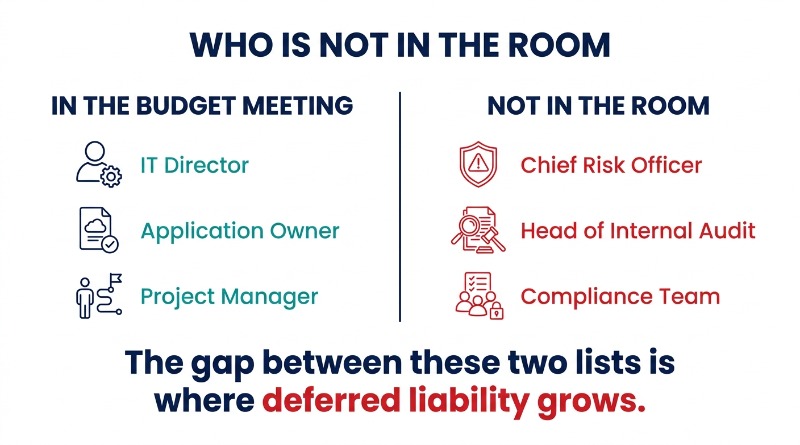
The Chief Risk Officer and the Head of Internal Audit are almost never in the application portfolio review when a legacy system gets approved for another year of operation. They attend the audit committee. They attend the risk register review. They do not attend the IT budget cycle where a system that generates twelve open compliance exceptions gets renewed because the modernization cost looks large and the system appears stable.
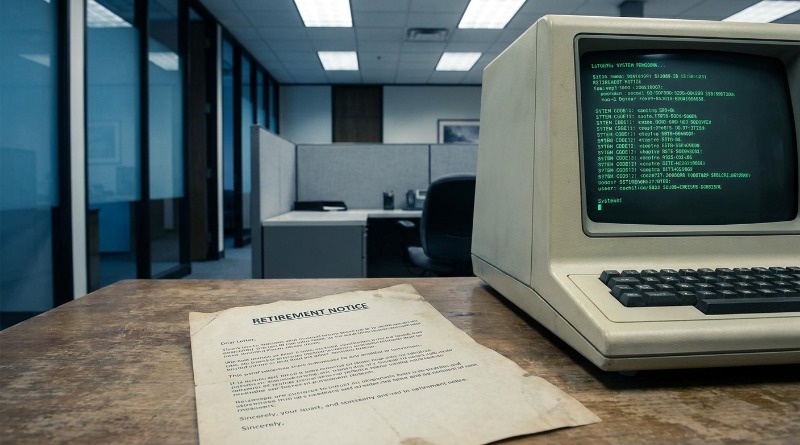
That is the structural gap. The person who owns the regulatory exposure of an open exception is not the person who approves the budget line that keeps the system running. When the last SME who maintains the system retires, or the modernization transition opens a compliance gap, the CRO’s office inherits a liability that was never on their agenda when it was being created.
CloudApper’s AI-driven modernization platform is built specifically for this transition point — replacing legacy applications with governed, HIPAA, SOC 2, and FIPS 140-2 certified enterprise applications that close the exception log rather than extending it. The platform does not require the legacy system to fail before the business case holds. It requires only that someone in the room can read the exception log and count the interest payments.
The system is working fine. The question is whether the organization can afford the bill that comes with it.
If your compliance exception log has entries that have outlasted the modernization timelines they were written to cover, CloudApper can help you close them — on a governed platform that does not generate new ones.

What is CloudApper AI Platform?
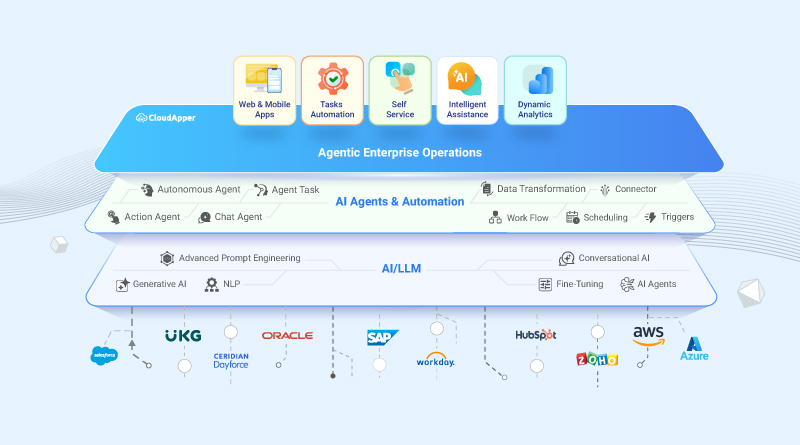
CloudApper AI is an advanced platform that enables organizations to integrate AI into their existing enterprise systems effortlessly, without the need for technical expertise, costly development, or upgrading the underlying infrastructure. By transforming legacy systems into AI-capable solutions, CloudApper allows companies to harness the power of Generative AI quickly and efficiently. This approach has been successfully implemented with leading systems like UKG, Workday, Oracle, Paradox, Amazon AWS Bedrock and can be applied across various industries, helping businesses enhance productivity, automate processes, and gain deeper insights without the usual complexities. With CloudApper AI, you can start experiencing the transformative benefits of AI today. Learn More
- Useful Links:
- Agentic AI
- No-Code/Low-Code
- Custom Software
- HCM Personalization
- iPaaS
- FedRAMP
CloudApper AI Solutions

- Works with







- and more.
Similar Posts
When Your Last COBOL Developer Retires, Who Owns the Risk?

When the HIPAA Compliance Deadline Arrives Before Your EHR Modernization…