- What is AI-ready workforce management?
- The four stages of AI workforce management maturity
- How to move your workforce management stack up a stage
- Why AI-ready workforce management matters now
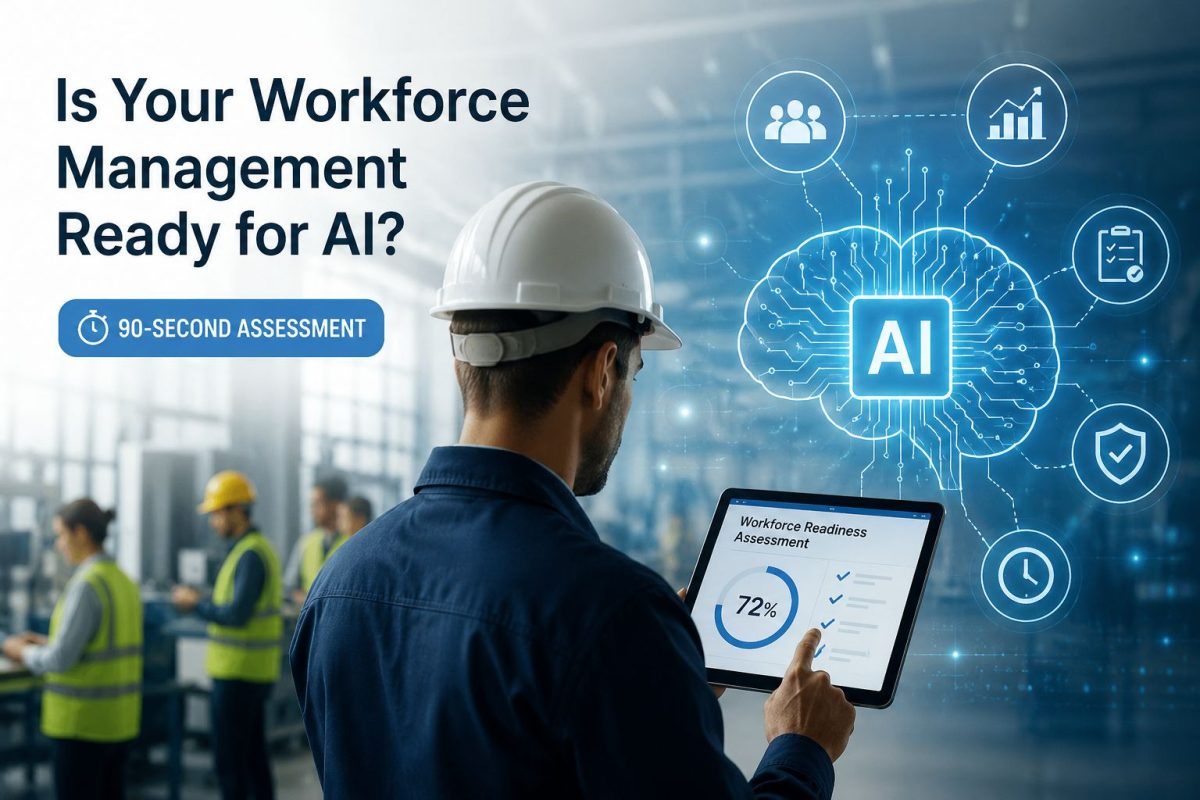
Most HR teams have digitized workforce management without making it AI-ready — and the two are not the same. Digitizing means your time, attendance, and scheduling data lives in software. AI-ready workforce management means that data is connected and clean enough for AI to forecast demand, build schedules, and flag risk automatically. This 90-second assessment scores where your stack sits today and shows you the highest-leverage next move.

What is AI-ready workforce management?
AI-ready workforce management is a time, attendance, and scheduling operation where data flows automatically between systems, exceptions are resolved by rules instead of people, and that clean, connected data can feed AI for forecasting, smart scheduling, and anomaly detection. A stack can be fully digital and still not be AI-ready because the data is siloed, manually corrected, or trapped inside a system of record built to store what happened, not to act on what happens next.
The four stages of AI workforce management maturity
The assessment maps your stack to one of four stages. Each describes what your systems can do on their own, and what still lands on your people.
1. Reactive and Exposed. Time is captured on paper or in spreadsheets, compliance is checked after the fact, and every gap your HCM cannot close becomes manual work. The cost shows up as payroll errors, buddy-punching, and labor-law exposure.
2. Digitized but Disconnected. You have gone digital, but time, scheduling, payroll, and your HCM do not talk to each other. People still bridge the gaps by re-keying data and fixing timecards every pay period.
3. Automated and Integrated. Data moves cleanly between systems and most routine work runs itself. You are ready to shift from automating the present to predicting what comes next.
4. AI-Ready and Adaptive. Your stack does the work, not just the record-keeping. AI forecasts demand, builds schedules, and flags anomalies before they become problems, so your team moves at the speed of its ambition.
How to move your workforce management stack up a stage
Progress rarely means ripping out your HCM. It means closing the gaps your HCM leaves open, usually in three moves: automate time capture so it flows straight into payroll; connect your systems into one flow so no one re-keys data; then layer AI onto that clean, connected foundation. The organizations that advance fastest add these capabilities in weeks, without custom development and without waiting on a vendor roadmap.
Why AI-ready workforce management matters now
Labor costs, compliance complexity, and frontline expectations are all rising at once. A workforce management operation that only records what happened forces managers to react. One that is AI-ready lets them anticipate: staffing to demand, catching compliance risk before it becomes a penalty, and freeing HR from the manual corrections that consume every pay period. The gap between the two compounds every quarter.
Frequently asked questions
What is an AI-ready HR or workforce management stack? It is a stack where workforce data is captured automatically, flows between systems without manual hand-offs, and is clean enough for AI to forecast, schedule, and detect anomalies. Digitization alone does not make a stack AI-ready.
How do I know if my HR stack is ready for AI? Assess it across data capture, system integration, compliance automation, and current AI usage. The assessment above scores those dimensions in about 90 seconds and returns a maturity stage with tailored next steps.
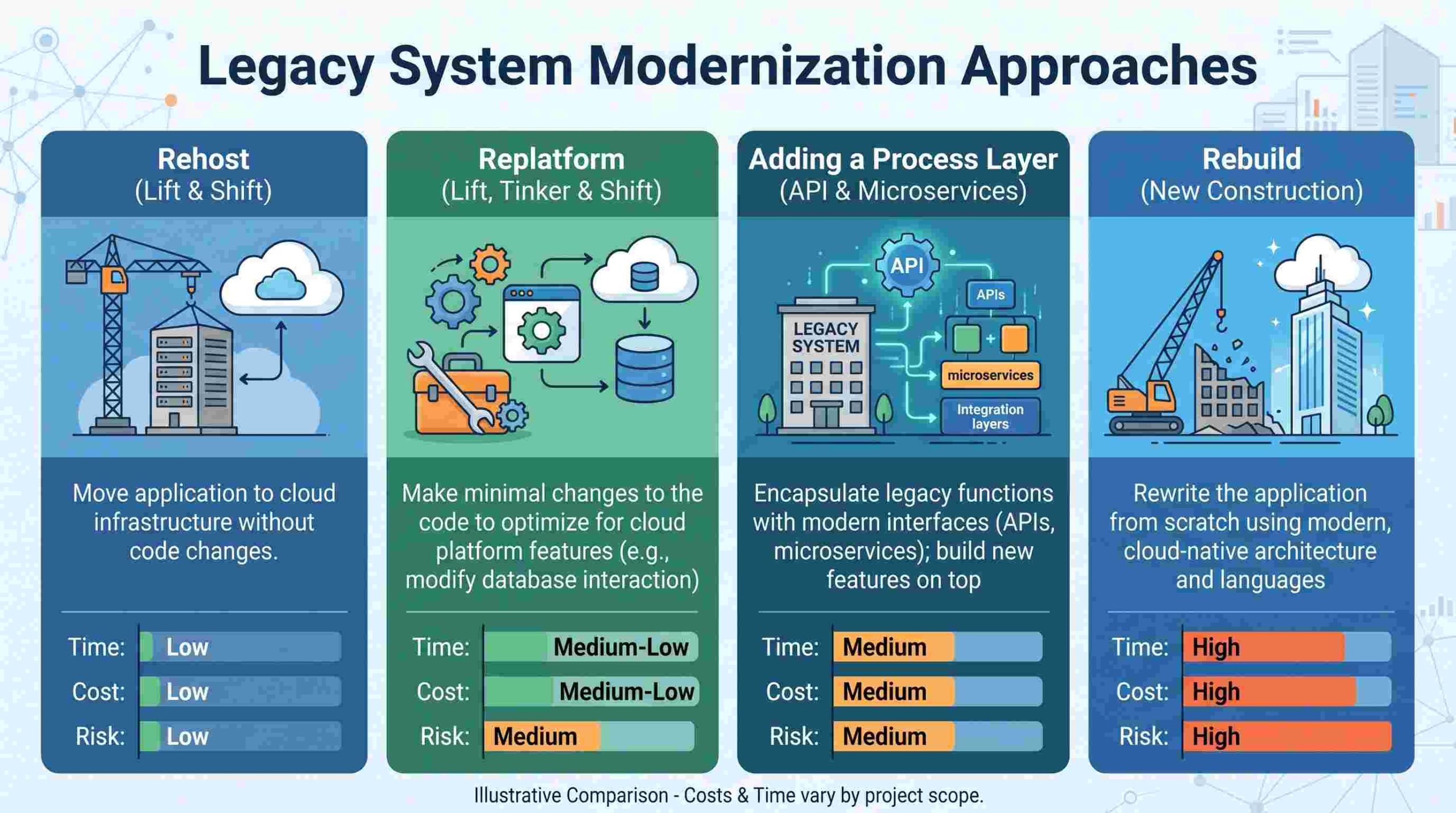
Do I need to replace my HCM to adopt AI workforce management? No. Most gaps can be closed by adding a process layer on top of your existing system of record, extending what it does without custom code or a vendor roadmap.
What is the difference between a digitized and an AI-ready workforce? Digitized means your data lives in software. AI-ready means that data is connected and clean enough for AI to act on it automatically.
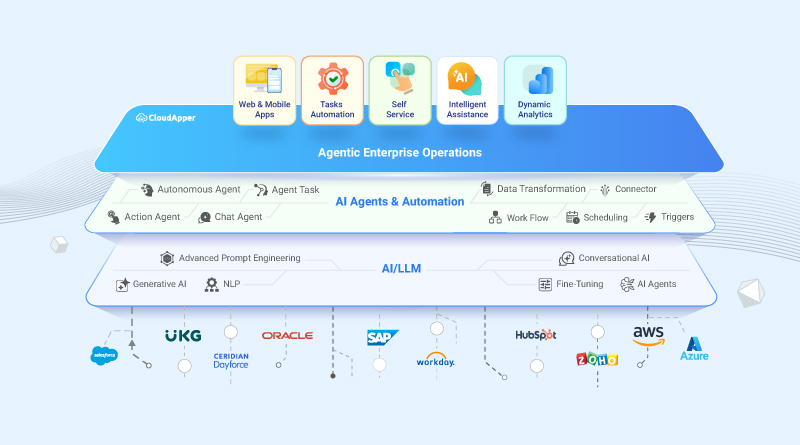
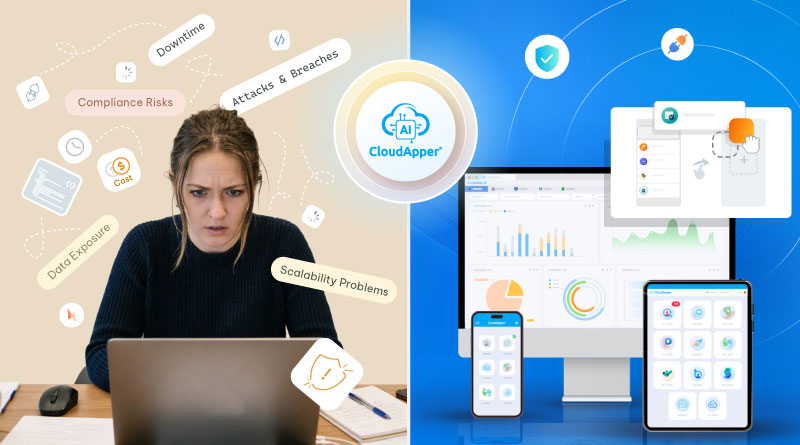
CloudApper is the process layer that closes the gaps enterprise software cannot, across HR, ERP, and CRM, on any platform, in weeks not quarters. For workforce management, that means AI-ready time, attendance, and scheduling without waiting on your vendor. Book a 15-minute walkthrough to see what your maturity stage makes possible.
What is CloudApper AI Platform?
CloudApper AI is an advanced platform that enables organizations to integrate AI into their existing enterprise systems effortlessly, without the need for technical expertise, costly development, or upgrading the underlying infrastructure. By transforming legacy systems into AI-capable solutions, CloudApper allows companies to harness the power of Generative AI quickly and efficiently. This approach has been successfully implemented with leading systems like UKG, Workday, Oracle, Paradox, Amazon AWS Bedrock and can be applied across various industries, helping businesses enhance productivity, automate processes, and gain deeper insights without the usual complexities. With CloudApper AI, you can start experiencing the transformative benefits of AI today. Learn More
- Useful Links:
- Agentic AI
- No-Code/Low-Code
- Custom Software
- HCM Personalization
- iPaaS
- FedRAMP