Traditional ATS filters reject a significant portion of qualified candidates through keyword mismatches. AI resume screening uses natural language processing to understand context and meaning, finding top talent in minutes instead of hours. Discover which approach works best for your team.

TL;DR
- Traditional ATS systems use keyword matching and rigid filters that eliminate resumes fast but miss context completely.
- AI resume screening uses natural language processing to read and understand resumes like a human would, just much faster.
- AI finds qualified candidates that keyword filters miss because it understands synonyms and context, not just exact matches.
- Screening time drops by up to 97% because AI processes hundreds of resumes in minutes instead of hours.
- AI helps you make fairer hiring decisions by focusing on skills and experience rather than arbitrary keyword choices.
- If you are dealing with high volume, tight deadlines, or diversity goals, AI resume screening is not just better, it is necessary.
Table of Contents
- How ATS Filtering Works
- How AI Screens Resumes
- AI Resume Screening vs ATS: The Complete Comparison
- Can ATS Miss Qualified Candidates?
- Does AI Resume Screening Reduce Bias?
- Is AI Resume Screening Legal?
- The Real Cost of Relying on ATS Filters Alone
- The ROI of Implementing AI Resume Screening
- Conclusion: Time to See It in Action
I’ve spent the last few months talking to recruiters and Talent Acquisition Leaders like you. And honestly? Almost every conversation starts the same way.
“We’re drowning in resumes.”

“Our ATS keeps rejecting good candidates.”
“Everyone’s talking about AI recruiters, but I don’t know if I should leave my ATS behind.”
“I know there’s better technology out there, but I don’t know if it’s worth the switch.”
Sound familiar?
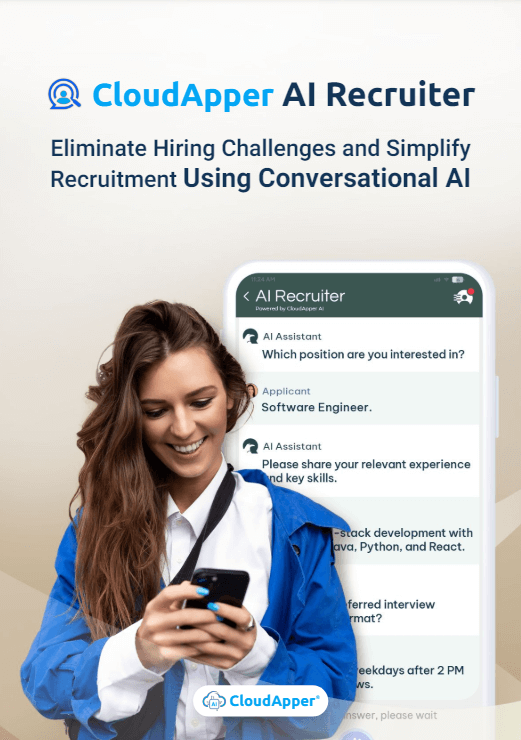
You’re not alone. Hundreds of recruiters are stuck in this exact spot. You’ve invested in your current ATS, but great candidates keep slipping through and you’re spending hours on work that should be automated. That’s why I wrote this guide to help you understand the real difference between traditional ATS filters and AI resume screening tools like CloudApper AI Recruiter. Let’s break it all down.
How ATS Filtering Works
Let’s start with what you already know. Your ATS has been the backbone of your recruiting process for years. It collects applications, stores candidate data, and helps you stay organized. That’s the good part.
But when it comes to actually screening resumes? Most ATS platforms rely on something called boolean logic. Think of it like a very picky librarian who only looks at exact words.
You set up filters. “Must have 5 years of experience.” “Must include the keyword ‘project management.'” “Must have a degree in Computer Science.” The ATS scans every resume and kicks out anything that doesn’t match your exact criteria.
Here’s the problem. Resumes aren’t standardized. One candidate writes “led cross-functional teams.” Another writes “managed projects across departments.” They mean the same thing. But your ATS doesn’t know that. It only sees that one resume has your keyword and one doesn’t.
So what happens? The ATS rejects the second candidate. Even if they’re more qualified. Even if they’re perfect for the role.
This isn’t a bug. It’s just how traditional ATS resume screening works. It’s rules-based. It’s literal. And it can’t think.
How AI Screens Resumes
AI resume screening works completely differently. Instead of looking for exact keyword matches, it actually reads the resume. Let me explain what that means.
When you upload a resume to an AI resume screening software, it doesn’t just scan for words. It uses something called natural language processing. This technology understands context, synonyms, and meaning. It can also detect fake resumes through real-life scenario-based questions.
So when one candidate says “managed teams” and another says “led groups,” the AI knows these are similar. When someone describes their experience in a different way than your job description, the AI can still connect the dots.
But it goes deeper than that. AI looks at the entire resume as a whole. It considers:
- The relevance of past roles to your job requirements
- The progression of someone’s career
- How their skills match what you actually need (not just what keywords you listed)
- Whether their experience level makes sense for the role
Then it scores each candidate. Not pass/fail. Not in or out. It ranks everyone so you can see who’s the strongest match at the top and work your way down.
The best part? Automated resume screening software learns. The more you use it, the better it gets at understanding what makes a good candidate for your specific roles.
Read my full guide on how AI resume screening works to learn more about it.
AI Resume Screening vs ATS: The Complete Comparison
Let’s put them side by side. Here’s what actually matters when you’re trying to fill roles quickly with great people.
| Feature | Traditional ATS Filters | AI Resume Screening |
| Screening Method | Keyword matching and boolean filters | Natural language processing and semantic understanding |
| Understanding Context | Can’t recognize synonyms or similar phrases | Understands meaning and context across different wordings |
| Handling Non-Standard Resumes | Rejects resumes with different formatting or wording | Adapts to various resume styles and formats |
| Time to Screen 100 Resumes | 30+ minutes (setting filters + reviewing results) | 2-3 minutes (automatic scoring and ranking) |
| Candidate Ranking | Binary (pass/fail) | Scored and ranked by fit quality |
| Bias Potential | High (relies on subjective keyword choices) | Lower (focuses on skills and qualifications) |
| Adaptability | Static rules that need manual updates | Learns and improves over time |
| Qualified Candidates Missed | Candidates rejected due to keyword mismatches | Minimal (captures semantically similar qualifications) |
| Integration Capability | Standalone system | Works on top of existing ATS |
Look at that last row again. AI resume screening doesn’t replace your ATS. It works with it. You keep all your candidate data, your workflows, your integrations. You just add intelligence to the screening part.
You have seen the side-by-side difference. Now see how this comparison plays out with your own roles and real resumes.
Can ATS Miss Qualified Candidates?
Yes. And it happens more than you think. Why does this happen?
Formatting issues: Your ATS can’t read a creatively formatted resume. Someone uses a two-column layout? Rejected. Someone puts their skills in a sidebar? Rejected. The information is right there, but the ATS can’t parse it.
Keyword gaps: A candidate has the exact experience you need, but they describe it differently. They say “customer success” instead of “account management.” They say “led initiatives” instead of “project management.” Your filters miss them completely.
Career changers: Someone spent 10 years in a related field and has transferable skills. But because their job titles don’t match your keywords, they’re automatically filtered out. You never even see their application.
Skills-based candidates: You have someone who learned skills through bootcamps, online courses, or hands-on experience. But your ATS is filtering for degrees and certifications. You miss them.
AI resume screening fixes this. It reads the whole resume. It understands context. It sees the skills and experience that actually matter, even when they’re described in unexpected ways.
Does AI Resume Screening Reduce Bias?
This is complicated, so let me be straight with you.
AI can reduce bias. But only if it’s built correctly.
Traditional ATS filtering is biased by design. You’re the one choosing the keywords and requirements. And whether you mean to or not, those choices reflect biases. When you require “5 years at a Fortune 500 company,” you’re filtering out talented people who worked at startups or smaller companies. When you filter for specific universities, you’re filtering based on socioeconomic background.
AI resume screening has the potential to be much fairer. Here’s why.
It focuses on skills: Good AI systems evaluate what someone can actually do, not where they went to school or which brand names are on their resume. It looks at the substance of their experience.
It removes demographic indicators: AI doesn’t see names, photos, or addresses when it’s scoring candidates. It can’t make assumptions based on those things. It just reads the qualifications.
It’s consistent: You might review 50 resumes and get tired. Your standards might shift. AI applies the exact same criteria to every single candidate.
But here’s the catch. AI learns from data. If you train it on your past hiring decisions, and those decisions were biased, the AI will learn that bias. That’s why tools like CloudApper AI Recruiter are built with bias reduction as a core feature. The AI is designed to focus on job-relevant qualifications while actively minimizing both human bias and algorithmic bias.
If fair hiring really matters to you, the best next step is to watch how bias-reduced screening works on your actual candidates.
Is AI Resume Screening Legal?
Yes, AI resume screening is legal. But you need to use it responsibly.
Let’s clear up the confusion. Some recruiters worry that using AI puts them at legal risk. They’ve heard about algorithmic discrimination lawsuits and they’re nervous.
The Equal Employment Opportunity Commission (EEOC) has made it clear: you’re responsible for your hiring outcomes, whether you use AI or not. If your screening process has a disparate impact on protected groups, that’s a problem. It doesn’t matter if a human or an algorithm is doing the screening.
So the question isn’t “Is AI legal?” The question is “Does your AI screening process produce fair outcomes?”
This is actually where AI has an advantage over traditional methods. With ATS filters, it’s hard to audit your own bias. You set up some keywords years ago. You’ve tweaked them over time. Do they accidentally discriminate? You might not even know.
With AI resume screening software, you can measure outcomes. You can see if certain groups are being filtered out at higher rates. You can adjust the system. You have visibility.
The Real Cost of Relying on ATS Filters Alone
Let’s talk about what it’s actually costing you to stick with traditional ATS resume screening.
I’m not talking about the subscription fee. I’m talking about the hidden costs that add up every single day.
You’re losing qualified candidates: When your ATS filters out three-quarters of qualified applicants, those people don’t just disappear. They go work for your competitors. You’re literally handing talent to other companies because your screening can’t recognize their qualifications.
You’re wasting recruiter time: Your team spends hours manually reviewing resumes that shouldn’t have made it past screening, and they never see resumes that should have. An AI Recruiting tool that has an AI resume screening feature like CloudApper AI Recruiter would handle this in minutes, freeing your recruiters to actually talk to candidates instead of playing keyword detective.
You’re slower than your competition: In the time it takes your team to manually screen and rank 100 candidates, companies using automated resume screening software have already interviewed their top picks. By the time you reach out, the best candidates have already accepted other offers.
Let’s put actual numbers to this. Say you’re hiring for 10 roles this quarter. Each role gets 150 applications. That’s 1,500 resumes.
With traditional ATS filtering: Your team spends approximately 30 hours just on initial screening. That’s a full work week. And you’re still missing great candidates because of keyword gaps.
With AI resume screening: The same 1,500 resumes get screened, scored, and ranked in under an hour. Your team reviews the top candidates immediately and starts interviewing the same day.
The time difference alone is worth thousands of dollars. But it’s not just about time.
You’re risking compliance issues. Every biased keyword filter is a potential lawsuit waiting to happen. When you filter for “top-tier university” or “5 years at a recognized company,” you’re creating disparate impact. You might not even realize it until you’re facing an EEOC complaint.
You’re damaging your employer brand. Candidates talk. When qualified people apply to your jobs and get auto-rejected without explanation, they leave reviews. They tell their networks. “Don’t bother applying there. Their system just rejects everyone.”
AI resume screening doesn’t just save time and find better candidates. It protects you from these hidden costs that most recruiters don’t see until it’s too late.
The ROI of Implementing AI Resume Screening
Let’s talk numbers. Because at some point, someone in your organization is going to ask: “What’s this actually worth?”
Here’s how to think about the return on investment for AI resume screening software.
Time Savings
Your recruiters spend an average of 23 hours per week screening resumes. AI resume screening reduces that to about 2 hours per week. That’s 21 hours back per recruiter, per week.
At $40 per hour (salary plus benefits), that’s $40,000 per year in recovered time per recruiter. For a team of three, that’s $120,000 annually. And that time gets redirected to activities that actually drive hires: conducting interviews and building candidate relationships.
Learn more about it from my guide on 5 ways AI reduce the time to hire.
Better Hires, Faster Fills
Traditional ATS filters miss many of qualified candidates. You’re choosing from a limited pool. AI resume screening gives you access to the full talent pool, which means better quality hires. Even one better hire per quarter saves tens of thousands in turnover costs.
The Bottom Line
Let’s be conservative. A small recruiting team (3 people) hiring for 30 roles per year could see:
- Time savings: $120,000 per year
- Faster fills: $270,000 per year in productivity gained
- Better quality hires: $60,000+ in reduced turnover costs
- Improved offer acceptance: $25,000 in recruiting costs saved
That’s nearly $500,000 in annual value. Most automated resume screening software costs a fraction of that. The ROI is often 10x or more in the first year alone.
The real question isn’t whether you can afford to implement AI resume screening. It’s whether you can afford not to.
Conclusion: Time to See It in Action
Look, you’ve read this whole guide. You understand the difference between keyword matching and actual AI resume screening. You know the limitations of traditional ATS filters. You’ve seen the data.
But reading about it and seeing it work are two different things.
You already know keyword filters are holding you back. The only question now is when you want to start screening resumes with real intelligence.

What is CloudApper AI Platform?
CloudApper AI is an advanced platform that enables organizations to integrate AI into their existing enterprise systems effortlessly, without the need for technical expertise, costly development, or upgrading the underlying infrastructure. By transforming legacy systems into AI-capable solutions, CloudApper allows companies to harness the power of Generative AI quickly and efficiently. This approach has been successfully implemented with leading systems like UKG, Workday, Oracle, Paradox, Amazon AWS Bedrock and can be applied across various industries, helping businesses enhance productivity, automate processes, and gain deeper insights without the usual complexities. With CloudApper AI, you can start experiencing the transformative benefits of AI today. Learn More
- Useful Links:
- Agentic AI
- No-Code/Low-Code
- Custom Software
- HCM Personalization
- iPaaS
- FedRAMP
CloudApper AI Solutions for HR


- Works with







- and more.
Similar Posts

How to Assess Candidate Communication Skills Before the First Interview

How to Reduce Interview Rounds Without Lowering Your Hiring Standards