Regional teams often screen the same job title against different unwritten standards. This article looks at why candidate selection across regional hiring teams drifts apart, and how AI Recruiter ties one configured rubric to the requisition template itself.

TL;DR
Regional hiring teams often screen candidates for the same job title against different unwritten standards, and the gap usually goes unnoticed until an audit or a promotion dispute forces a comparison. CloudApper AI Recruiter ties one configured scoring rubric to the requisition template itself, so every region and business unit evaluates candidates against identical criteria, keeping candidate selection across regional hiring teams consistent instead of dependent on which team happens to be hiring.
Table of Contents
- Why Candidate Selection Drifts From Region to Region
- Why Inconsistent Screening Stays Hidden Until Someone Compares Notes
- Standardizing Candidate Selection at the Requisition Template, Not the Regional Team
- Where Regional Flexibility Still Fits Inside a Standardized Rubric
- Verifying Candidate Selection Consistency Instead of Assuming It
- Frequently Asked Questions
- Does a Standardized Rubric Remove Local Hiring Input From Regional Teams?
- How Does a Configured Rubric Differ From a Written Company Hiring Policy?
- Does Standardizing Candidate Selection Require Rebuilding Requisition Templates From Scratch?
Two candidates apply for the same job title at the same company, one in one region and one in another, and get evaluated against two different unwritten bars. Nobody builds the gap on purpose. The gap forms because each regional team brings its own screening judgment to the same requisition, with no shared standard tying their decisions together. The gap usually stays invisible until an audit, a promotion dispute, or a candidate comparing notes with someone hired in another region forces a side-by-side look. Standardizing candidate selection across regional hiring teams is exactly what CloudApper AI Recruiter is built to do.
Why Candidate Selection Drifts From Region to Region
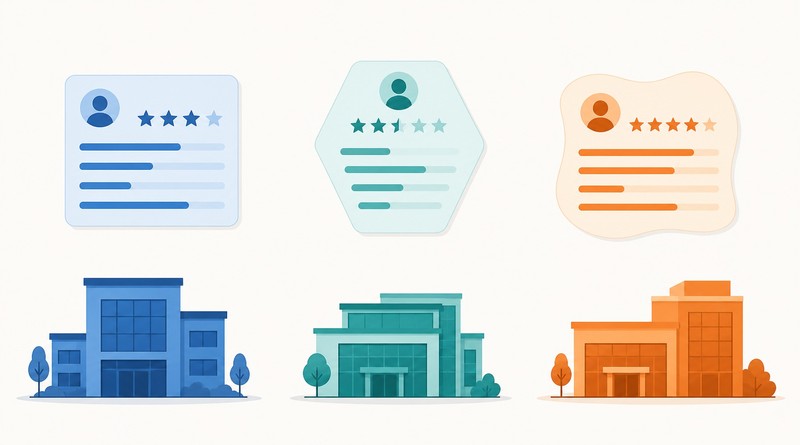

Without a shared rubric, each region ends up scoring the same job title against a different standard.
Without a shared rubric, a regional team calibrates screening against local instinct, past hires, or whatever the previous recruiter happened to prioritize. None of that criteria gets written down or handed off between teams, so “strong candidate” ends up meaning something different in each location. One region might weight direct experience heavily, while another weights a certification the first region barely considers. Running decentralized recruiting teams works fine operationally, but without a portable standard, the same job title gets screened against a different bar in every location running it. The gap shows up even at companies already running blind resume screening automation, since standardizing the first pass does not guarantee scoring stays consistent downstream.
Why Inconsistent Screening Stays Hidden Until Someone Compares Notes
No single system shows scores across regions side by side, so the pattern surfaces reactively instead of by design. An internal audit turns up two candidates hired at the same level with visibly different qualifications behind them. A promotion dispute reveals that one region’s screening bar sat lower than another’s for the identical role. A regional leader asks why their team’s pass rate looks nothing like a peer region’s, and nobody has a ready answer. Recruiting analytics and funnel data can flag a pass-rate anomaly, but only once someone already suspects a gap exists and knows where to look for it. The same disconnect shows up in how regions balance AI recommendations against human judgment with no shared standard tying their decisions together.
Standardizing Candidate Selection at the Requisition Template, Not the Regional Team
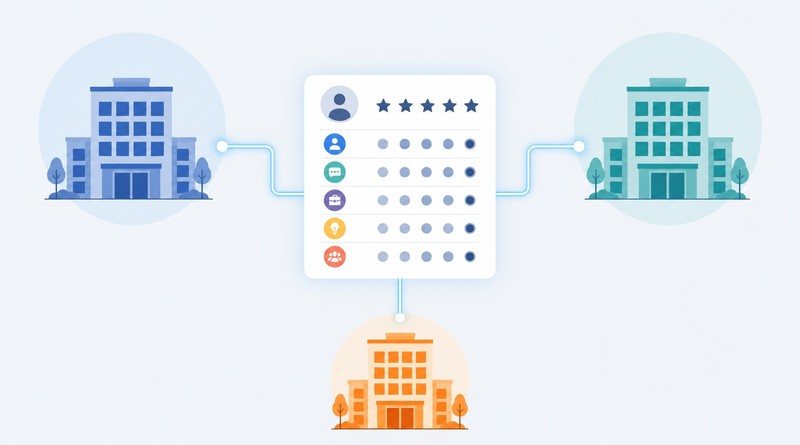
Tying one configured rubric to the requisition template keeps every region scoring against the same standard.
CloudApper AI Recruiter ties one configured scoring rubric to the requisition template itself, so every region and business unit screening against a given template inherits the identical set of weighted criteria automatically. A standardized hiring rubric configured once at the template level travels with the role, not with whichever team happens to be filling it. Recruiters in different regions still run their own screening conversations, but every one of them scores the same skills, experience, and requirements the same way, because the rubric comes from the requisition template rather than from local judgment.
Where Regional Flexibility Still Fits Inside a Standardized Rubric
A standardized rubric does not strip out every local consideration a region legitimately needs. Language requirements, shift patterns, and site-specific certifications can still flex within a defined, limited set of parameters, while the core evaluation criteria for the role stay fixed across every location. Enterprise scoring standardization means the weighted skills and experience requirements stay constant company-wide, not that every regional nuance gets erased. The distinction matters for reducing bias in hiring decisions too: a fixed core rubric with clearly scoped regional parameters is a different setup from leaving every region’s judgment fully open to interpretation. That scoped flexibility is also central to bias-free candidate scoring: the core criteria stay fixed and fair, while the parameters allowed to flex stay clearly limited.
Verifying Candidate Selection Consistency Instead of Assuming It
Once every region scores against the same rubric, a CHRO or Recruiting Operations Manager can compare scoring patterns across regions and business units directly, catching drift early instead of finding out at an audit. Recruiting metrics you don’t have to wait on a BI team for turn regional hiring consistency from an assumption into something a recruiting leader can check on demand. That visibility, paired with candidate ranking that stays consistent across every requisition, is what keeps candidate selection across regional hiring teams aligned as a company scales into new regions and business units. One company closed a similar hiring gap with AI Recruiter only after comparing outcomes across teams instead of assuming consistency. CloudApper AI Recruiter is built to hold that alignment in place as headcount and hiring volume grow.
Want to see how this approach would work across your own regional hiring teams? Contact us and we’ll walk through it with you.
Frequently Asked Questions
Does a Standardized Rubric Remove Local Hiring Input From Regional Teams?
No. Language requirements, shift patterns, and site-specific certifications can still flex within a defined set of parameters. The core evaluation criteria for the role stay fixed, so recruiters keep local flexibility without losing a consistent scoring standard.
How Does a Configured Rubric Differ From a Written Company Hiring Policy?
A written policy sits in a document that recruiters may or may not reference during screening. A configured rubric applies automatically at the point of scoring, so consistency does not depend on every recruiter remembering or following a written guideline.
Does Standardizing Candidate Selection Require Rebuilding Requisition Templates From Scratch?
No. The rubric is configured on the existing requisition template, and every region drawing from that template inherits the same criteria without any additional rebuild.

What is CloudApper AI Platform?
CloudApper AI is an advanced platform that enables organizations to integrate AI into their existing enterprise systems effortlessly, without the need for technical expertise, costly development, or upgrading the underlying infrastructure. By transforming legacy systems into AI-capable solutions, CloudApper allows companies to harness the power of Generative AI quickly and efficiently. This approach has been successfully implemented with leading systems like UKG, Workday, Oracle, Paradox, Amazon AWS Bedrock and can be applied across various industries, helping businesses enhance productivity, automate processes, and gain deeper insights without the usual complexities. With CloudApper AI, you can start experiencing the transformative benefits of AI today. Learn More
- Useful Links:
- Agentic AI
- No-Code/Low-Code
- Custom Software
- HCM Personalization
- iPaaS
- FedRAMP
CloudApper AI Solutions for HR


- Works with








- and more.
Similar Posts

How to Close the Gap Between Screening Scores and What…

How to Stop Screening Rules From Auto-Rejecting Candidates With Employment…