High-volume hiring teams are struggling as application inflation drives a surge of AI-generated applications that overwhelm ATS systems and slow down screening. This article explains why inflated volume hurts recruiters most, how keyword-based automation fails at scale, and what hiring leaders can do to restore signal, engagement, and hiring quality.


Table of Contents
High-volume hiring has always been demanding, but the pressure recruiters face today is different in both scale and intensity. The rapid rise of candidate-side AI tools has made it effortless to generate resumes and submit applications in bulk, accelerating what many teams now describe as application inflation. Instead of struggling to attract applicants, recruiters are overwhelmed by volume, much of it low-quality or only loosely connected to the role. The result is a hiring funnel crowded with noise, where real candidates are harder to see and slower to reach.
To cope with this shift, many organizations are reassessing how applications are screened and how early engagement happens. CloudApper AI Recruiter is increasingly being used as part of that reassessment, not to replace recruiters but to help restore order to hiring workflows strained by excessive volume. The emphasis is moving away from passive filtering and toward systems that actively engage candidates and surface meaningful signals earlier in the process.
Why Applicant Volume is Accelerating Now
The surge in applications did not happen by accident. Candidate-facing AI has lowered the cost of applying to nearly zero. Job seekers can now generate tailored resumes, rewrite experience summaries, and submit hundreds of applications in a single afternoon. From the candidate’s perspective, this feels like efficiency and opportunity. From the recruiter’s perspective, it creates a distorted funnel where volume no longer reflects intent or fit.
High-volume hiring environments feel this impact more sharply than most. Frontline, hourly, and enterprise roles already attract large applicant pools. When AI amplifies that volume, small inefficiencies quickly become operational bottlenecks. Recruiters are asked to process more applications with the same tools and timelines, leading to backlogs, delayed responses, and growing frustration on both sides of the hiring process. For many organizations, application inflation is no longer a temporary spike but a structural shift that is redefining how high-volume hiring must operate.
How Application Inflation Overwhelms High-Volume Hiring Systems
Traditional applicant tracking systems were not designed for this reality. Most rely on keyword-based screening to reduce volume quickly. In an inflated environment, those filters become blunt instruments. AI-generated resumes are often optimized for keywords, meaning they pass automated screens without necessarily reflecting real experience or capability.
This creates a paradox. Hiring teams invest in automation to move faster, yet screening slows down because the “shortlist” is still too large and less reliable. Recruiters must manually review more profiles, not fewer, to confirm whether candidates are genuine. Over time, this leads to recruiter overload and burnout, especially in teams responsible for continuous, high-throughput hiring.

The downstream effects are just as serious. Qualified candidates wait longer for responses or drop out entirely. Hiring managers lose confidence in applicant quality. Metrics like time-to-hire and candidate satisfaction deteriorate, even as application counts continue to rise.

Why Application Inflation Hits High-Volume Hiring Harder Than Other Models
In specialized or executive hiring, recruiters can afford to invest time upfront with each candidate. High-volume hiring does not have that luxury. Speed and consistency are essential, and even small delays can disrupt staffing plans. When inflated application volume enters this environment, the impact compounds quickly.
Every additional low-quality application consumes time across multiple steps: screening, follow-up, scheduling, and communication. When those steps slow down, candidates disengage. High-volume hiring teams often see increased drop-off not because candidates lack interest, but because the process feels unresponsive or opaque. The very automation meant to improve efficiency becomes a source of friction.
This is why faster resume scanning alone does not solve the problem. Processing more resumes per hour does not help if the underlying signal is weak. Hiring teams need better ways to differentiate real candidates from automated noise before volume overwhelms the system.
Moving Beyond Keywords Toward Verification-First Screening
As a response, many organizations are rethinking what early screening should accomplish. Instead of asking whether a resume contains the right terms, they are asking whether a candidate can demonstrate relevant understanding. Verification-first screening shifts the burden from claims to proof, encouraging candidates to engage more thoughtfully.
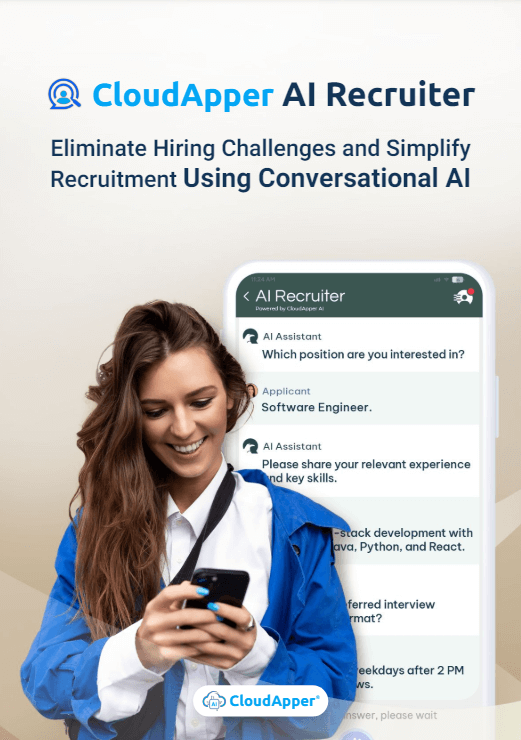
Conversational screening is a key part of this shift. By interacting with candidates through structured, scenario-based questions, recruiters gain insight into how applicants think and communicate. This approach naturally filters out mass-generated applications, which struggle to respond convincingly to contextual prompts.
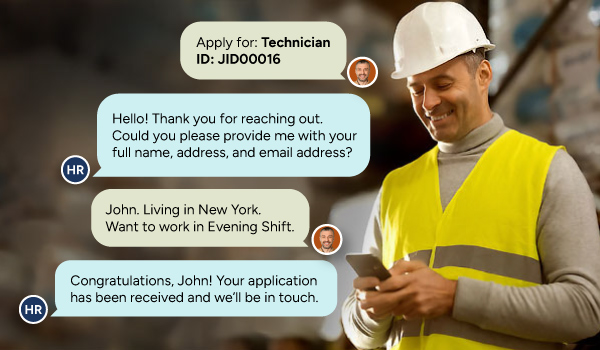
Technology plays a supporting role here. Systems that can instantly screen, score, and rank candidates while also engaging them in conversation help reduce waiting time and maintain momentum. When scheduling, reminders, and follow-ups happen automatically, candidates stay engaged and recruiters regain time to focus on evaluation rather than coordination.
Addressing AI-Assisted Resumes and Interviews
Another challenge intensified by inflated volume is AI-assisted misrepresentation. Resumes may look polished but lack substance. Pre-screening answers may sound confident without reflecting real experience. In interviews, real-time AI tools can assist candidates in responding, further complicating assessment.
To counter this, some hiring teams are adopting deeper contextual analysis. Scenario-based questions require candidates to explain decisions, describe trade-offs, and reflect on past behavior. These responses are harder to fabricate and easier to evaluate for consistency. By focusing on how candidates think rather than what they say, recruiters gain more reliable signals earlier in the process.
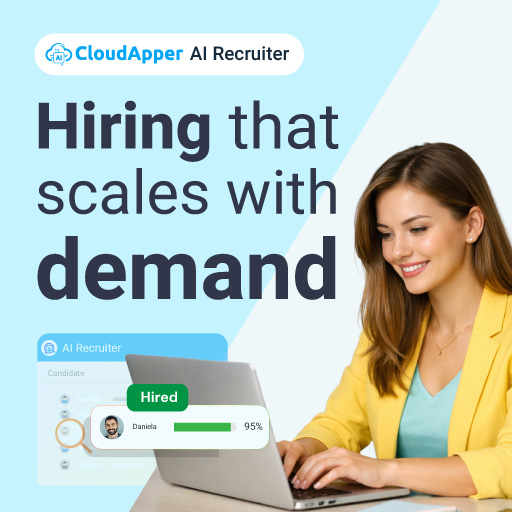
This approach does not eliminate AI from hiring. It acknowledges its presence and adapts accordingly. The goal is not to punish candidates for using tools, but to ensure that hiring decisions are based on genuine capability and fit.

Hiring Becomes More Intentional, Not More Restrictive
There is a misconception that adding verification steps makes hiring unnecessarily difficult. In practice, many candidates welcome clarity and responsiveness. When expectations are clear and engagement is timely, serious applicants are more likely to stay in the process. Noise decreases, and attention shifts toward candidates who are genuinely interested and qualified.
For recruiters, this restores confidence in the funnel. Instead of reacting to volume, teams can manage it proactively. The process becomes more rigorous, but also more humane. Recruiters spend less time chasing signals and more time having meaningful conversations.
Seen this way, application inflation is not just a problem to be solved. It is a catalyst forcing the industry to modernize assumptions about screening, automation, and candidate engagement.
What High-Volume Hiring Leaders Should Focus on Next
For HR and talent acquisition leaders, the path forward starts with recognizing that volume alone is no longer a useful metric. The priority must shift to signal quality and engagement speed. Systems should be evaluated not by how many applications they process, but by how effectively they surface real candidates and keep them moving.
This requires a combination of technology and intent. Tools must support conversational, scenario-based screening at scale. Processes must be designed to reduce waiting time and ambiguity. And recruiters must be empowered to apply judgment earlier, supported by automation that enhances rather than replaces their role.
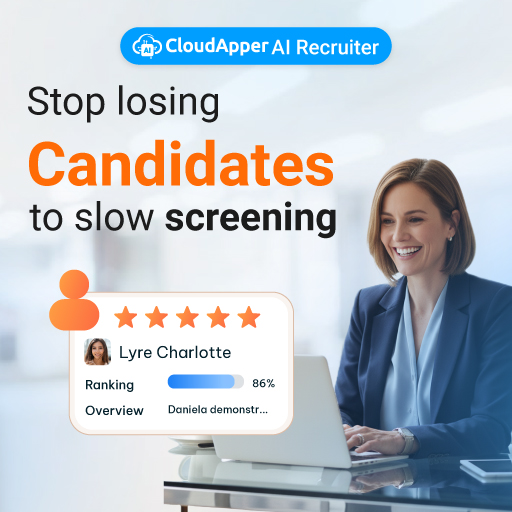
As candidate-side AI continues to evolve, the pressure on hiring systems will only increase. Organizations that adapt now will be better positioned to handle future waves of volume without sacrificing quality or trust.
Explore CloudApper AI Recruiter

What is CloudApper AI Platform?
CloudApper AI is an advanced platform that enables organizations to integrate AI into their existing enterprise systems effortlessly, without the need for technical expertise, costly development, or upgrading the underlying infrastructure. By transforming legacy systems into AI-capable solutions, CloudApper allows companies to harness the power of Generative AI quickly and efficiently. This approach has been successfully implemented with leading systems like UKG, Workday, Oracle, Paradox, Amazon AWS Bedrock and can be applied across various industries, helping businesses enhance productivity, automate processes, and gain deeper insights without the usual complexities. With CloudApper AI, you can start experiencing the transformative benefits of AI today. Learn More
CloudApper AI Solutions for HR


- Works with


- and more.








Similar Posts
How cNPS Reflects Your Recruitment and Employer Brand
The Recruitment-to-HRIS Gap: Why Your “System of Record” Should Start…