Need to screen resumes 10x faster without lowering quality? Learn how CloudApper AI Recruiter instantly screens, scores, and ranks candidates, then uses scenario-based questions to validate real experience and keep top applicants moving with automated scheduling and follow-ups.


Table of Contents
If you’re trying to screen resumes 10x faster, you’re probably feeling the same tension every recruiter feels: speed matters, yet rushing creates bad shortlists, messy handoffs, and awkward “how did this person get through?” conversations. The goal is not to skim harder. It’s to build a screening process that moves fast because the work is structured, consistent, and mostly handled before a human ever opens the resume.
CloudApper AI Recruiter was built for exactly that kind of speed-with-control workflow. It uses multiple specialized agents to screen, score, communicate, and schedule so recruiters spend time on decisions, not on sorting, chasing, and calendar back-and-forth.
Why Resume Screening Gets Slow in the First Place
Most teams don’t lose time because they can’t read resumes quickly. They lose time because screening is rarely “just reading.” It’s the hidden work around the reading:
First, resumes arrive in waves. You might get 60 applications for one role, then 600 for the next. Even when the role is clear, comparing candidates fairly across that volume is hard.
Next, your criteria often lives in too many places. The job description says one thing. The hiring manager emphasizes something else. The interview team quietly changes priorities after the first few interviews. That inconsistency forces recruiters to keep re-evaluating what “qualified” means.
Then comes the administrative drag. Someone needs to acknowledge candidates, ask clarifying questions, schedule screens, and send reminders. When these steps are manual, the process slows down and candidates disengage.
What AI Recruiter Automates, and Why It Speeds Up Screening
CloudApper AI Recruiter is designed to remove the slowest pieces of screening by splitting the workload across agents that each do one job well. It includes a Screening Agent that analyzes resumes and identifies top talent, an Assessment Agent that scores fit, a Communication Agent that manages outreach and updates, and a Scheduling Agent that coordinates interviews.
That division matters because “faster screening” is not one task. It’s a chain:
- Intake and understanding (what’s in the resume, beyond keywords)
- Scoring and ranking (who is most aligned, and why)
- Candidate engagement (keeping qualified people from going cold)
- Scheduling (turning interest into confirmed interviews)
When screening, assessment, communication, and scheduling run together, teams can screen resumes 10x faster without cutting corners.

The Screening Shift: From Keyword Hunting to Contextual Understanding
Traditional screening often starts with keyword matching: specific tools, exact job titles, or a certain number of years. That can work for simple roles, but it breaks down fast when resumes are written differently, when people have adjacent experience, or when candidates over-optimize language.
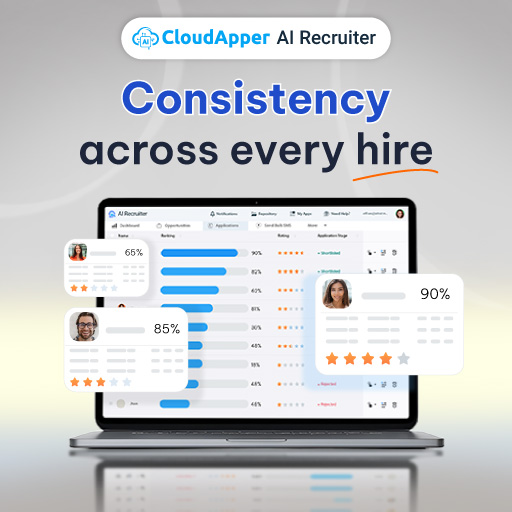
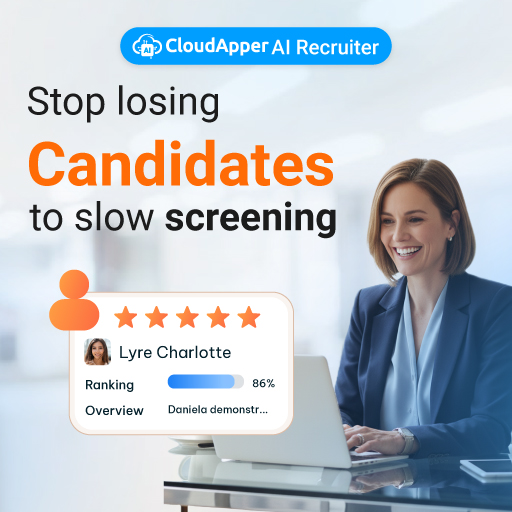
AI Recruiter goes beyond basic filtering by analyzing and ranking resumes quickly, then presenting recruiters with top-fit candidates to review. That’s important because ranking is where time usually disappears. Recruiters don’t just need a “yes/no.” They need a prioritized shortlist that can hold up in a calibration meeting.
AI Recruiter can instantly screen, score, and rank resumes in seconds, prioritize candidates based on fit, and flag red flags fast. It can also handle common resume formats such as PDF and Word, along with LinkedIn-style uploads, so your intake step doesn’t become a formatting problem.
What It Takes to Screen Resumes 10x Faster Without Lowering Quality
The fastest screening teams do three things consistently:
They define what “good” looks like in a way the system can apply. They keep the screening process structured so every candidate is evaluated the same way. And they validate questionable claims early, before interviews.
AI Recruiter supports this by using deep contextual analysis rather than simple keyword matching, then verifying claims through personalized, scenario-based questions during pre-screening. That kind of approach is useful because it’s designed to verify real skill, not just polished resumes. When resumes look perfect but feel vague, structured scenarios force real details to surface.
Faster Does Not Mean “Less Thorough” When Pre-Screening is Automated
One reason “faster screening” can backfire is that teams cut the wrong steps. They remove validation, skip clarifying questions, or push uncertainty to the interview panel. That simply relocates the work and increases misalignment later.
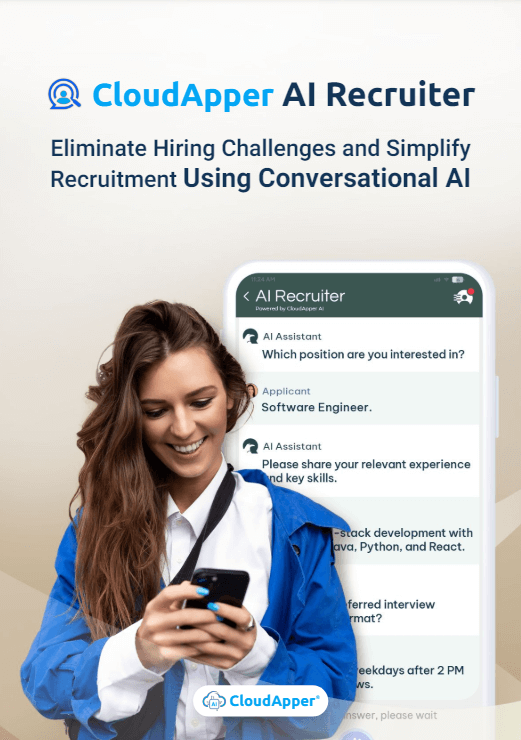
AI Recruiter keeps validation early through automated, tailored questioning. It can ask candidates to prove experience with real-life examples, then use scenario-driven assessments to evaluate problem-solving, soft skills, and answer consistency. In practical terms, that means candidates can prove claims before you invest interviewer time.
This is also where screening becomes more resilient to modern noise, like AI-written resumes and copy-paste interview answers. Scenario-driven prompts are harder to fake because they require specifics, trade-offs, and situational reasoning rather than rehearsed lines.

Preventing Candidate Drop-Off is Part of “Faster Screening”
If a qualified candidate waits too long, your screening speed becomes irrelevant because the candidate is already gone.
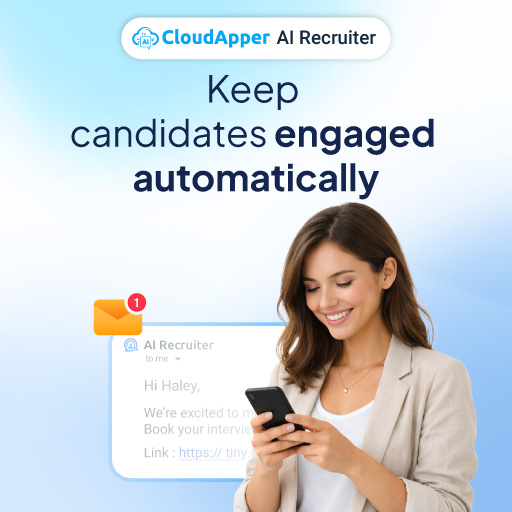
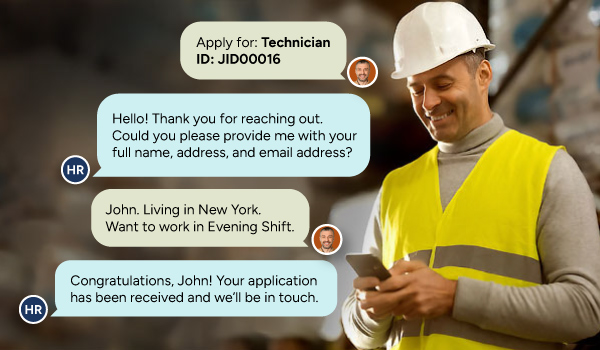
AI Recruiter connects speed to preventing drop-off by automating screening, interview scheduling, and communication so candidates stay engaged. It also supports conversational recruiting to reduce friction tied to long, tedious application steps, helping keep more qualified candidates in your funnel.
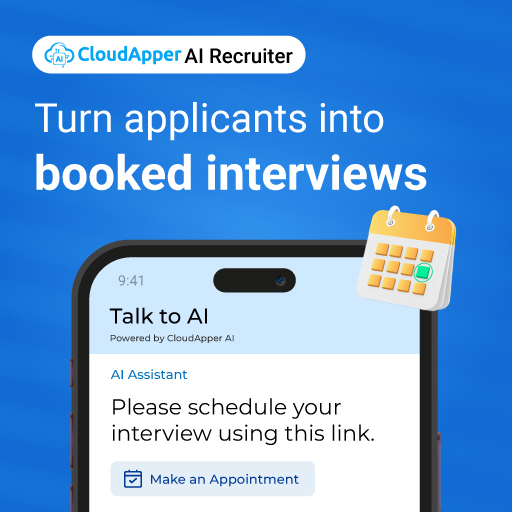
AI Recruiter can run outreach and updates through email and SMS, and it can trigger scheduling automatically for candidates who meet thresholds. That way, interview coordination does not turn into slow back-and-forth. Teams that screen resumes 10x faster also keep candidates warmer because the next step happens while interest is still high.
A Practical Workflow to Implement in a Week
You don’t need to redesign everything to start seeing speed gains. The simplest way is to automate the earliest steps and tighten the decision points.
Here’s one workflow pattern that maps cleanly to how AI Recruiter operates (screening, assessment, communication, scheduling):
- Define a role scorecard: must-haves, nice-to-haves, and deal-breakers, aligned with the hiring manager.
- Turn must-haves into structured screening criteria so candidates can be scored and ranked immediately.
- Add scenario-based questions for any “easy to inflate” claims (leadership scope, project ownership, quota performance, compliance exposure).
- Set thresholds: who gets auto-invited to schedule, who gets clarification questions, and who is politely closed out.
- Automate candidate updates and reminders so qualified candidates keep moving without waiting on manual follow-ups.
This is where many teams feel the “10x” effect. Not because humans suddenly read faster, but because humans stop doing work that software can complete instantly and consistently.
Integration and Adoption: Speed Without Disruption
A common concern is whether adding a new screening layer forces a migration or workflow rebuild. AI Recruiter integrates with existing ATS, HRIS, and talent acquisition systems without forcing messy migrations or disruptions.
That matters for North American recruiting teams because most organizations already have an ATS motion they can’t pause. The best automation fits into what exists, then removes friction step-by-step.
What “10x Faster” Looks Like in Real Recruiting Terms
Speed claims only matter if they translate into operational outcomes you can measure. AI Recruiter compresses the timeline across steps like screening, scheduling, and engagement, replacing hours of manual effort with seconds or minutes of automated action.
In day-to-day terms, the biggest improvements usually show up as:
- Shorter time from application to first response (often the difference between keeping and losing candidates)
- Smaller recruiter workload per requisition because ranking is automated
- Fewer stalled candidates because scheduling and reminders run automatically
- Better shortlist quality because candidates validate claims through structured scenarios before interviews
The real win is that faster screening becomes repeatable. It doesn’t depend on one heroic recruiter powering through an inbox.

Quick FAQs for Recruiters and HR Leaders
What does AI Recruiter actually do first when a resume comes in?
AI Recruiter can instantly screen and score resumes, rank candidates, and flag red flags quickly so recruiters start with a prioritized view rather than a raw pile.
How does it help with candidate engagement?
AI Recruiter can automate outreach and run always-on updates through email and SMS, plus send confirmations, reminders, and status messages to keep candidates warm while your team focuses elsewhere.
Can it reduce scheduling delays?
AI Recruiter includes automated scheduling and coordination, and it can send an instant scheduling link to candidates who pass screening thresholds with automatic notifications.
How does it deal with inflated or AI-written resumes?
AI Recruiter uses deep contextual analysis and tailored, scenario-based questions to validate experience and evaluate consistency, focusing on how candidates think and whether their examples hold up.
Do we have to replace our ATS to use it?
AI Recruiter can integrate with existing ATS and HRIS environments so you can add automation without a rip-and-replace project.
Closing Thought
The best way to screen resumes 10x faster is to stop treating screening like a single manual task and start treating it like a system: instant understanding, consistent scoring, early validation, and continuous engagement. When that system runs automatically, recruiters get their time back and hiring managers get better shortlists sooner.
Explore CloudApper AI Recruiter

What is CloudApper AI Platform?
CloudApper AI is an advanced platform that enables organizations to integrate AI into their existing enterprise systems effortlessly, without the need for technical expertise, costly development, or upgrading the underlying infrastructure. By transforming legacy systems into AI-capable solutions, CloudApper allows companies to harness the power of Generative AI quickly and efficiently. This approach has been successfully implemented with leading systems like UKG, Workday, Oracle, Paradox, Amazon AWS Bedrock and can be applied across various industries, helping businesses enhance productivity, automate processes, and gain deeper insights without the usual complexities. With CloudApper AI, you can start experiencing the transformative benefits of AI today. Learn More
CloudApper AI Solutions for HR

- Works with


- and more.







Similar Posts
How cNPS Reflects Your Recruitment and Employer Brand
The Recruitment-to-HRIS Gap: Why Your “System of Record” Should Start…