Remote recruitment introduces delays, drop-off, and coordination challenges. This article explains why remote hiring feels harder, how AI improves screening, scheduling, and engagement, and how CloudApper AI Recruiter helps teams hire faster without losing the human side of recruiting today.


TL;DR
- Discover how AI is transforming remote recruitment by streamlining processes and enhancing candidate experiences.
- Learn how tools like CloudApper AI Recruiter can reduce costs and time, allowing HR teams to focus on strategic decisions.
- Explore the benefits of AI-driven insights for closing skill gaps and improving workforce readiness.
- Embrace seamless integration with existing HR systems for continuous improvement in recruitment strategies.
- Ready to revolutionize your recruitment process? Contact Us to learn more about CloudApper AI Recruiter and transform your talent acquisition strategy today.
Table of Contents
Remote recruitment sounds simple on paper. You post a job, candidates apply from anywhere, and interviews happen over video. In reality, it rarely feels that smooth. If you are responsible for hiring remote roles, you have likely dealt with slow screening, unresponsive candidates, and interview scheduling that stretches far longer than it should.
The problem is not effort. It’s the process. Remote recruitment introduces friction at every step, especially when teams rely on the same hiring methods they used for in-office roles. When distance removes informal signals and face-to-face interaction, small inefficiencies quickly become major delays.
This is where tools like CloudApper AI Recruiter come into the picture. Instead of adding another system to manage, it helps you automate the parts of remote recruitment that slow you down while keeping recruiters involved where judgment matters. In this article, you will learn why remote recruitment feels harder than expected, what challenges consistently get in the way, and how AI can help you hire faster without losing the human side of recruiting.
What Makes Remote Recruitment Different From Traditional Hiring
Remote recruitment changes how both candidates and recruiters behave. The same hiring process that works well in an office setting often breaks down when everything moves online. Before looking at solutions, it helps to clearly understand what is different about recruiting in a remote environment and why those differences matter.
-
You lose informal signals that help with early judgment
In in-person hiring, small interactions provide useful context. Casual conversations, body language, and how someone carries themselves on site all influence early impressions. In remote recruitment, those cues disappear, so you rely more on written responses, structured interviews, and digital communication to evaluate fit. -
Application volume increases, but signal quality often drops
Remote roles attract candidates from a much wider geographic pool. While this expands reach, it also means more applicants apply quickly with minimal intent. Screening becomes more difficult because volume rises while relevance does not always follow. -
Candidate commitment is harder to maintain remotely
Remote candidates often apply to multiple roles at once and move on quickly if the process feels slow or unclear. Delays between steps increase drop-off, even among qualified candidates who initially showed interest. -
Time zones slow down coordination and decision-making
Scheduling interviews across regions adds friction. Simple tasks like confirming availability turn into long email threads. When competitors move faster, even small delays can cost you strong candidates. -
Digital-first experiences amplify process gaps
In remote recruitment, every weakness in communication, screening, or scheduling is more visible. There is less room to recover from unclear instructions or missed follow-ups because there is no in-person touchpoint to smooth things over.
These factors explain why remote recruitment challenges persist even for experienced hiring teams. The process itself needs to adjust to the environment instead of assuming that distance will not change how candidates and recruiters interact.
The Most Common Remote Recruitment Challenges Teams Face
Too Many Applications, Too Little Signal
Remote roles often receive far more applications than local positions. Many candidates apply without fully reading the job description. You end up reviewing resumes that do not match the role.
When screening stays manual, your team spends hours filtering candidates who were never a fit. This slows down progress for strong applicants who might already be considering other offers.
Slow Screening and Long Hiring Cycles
Remote hiring exposes inefficiencies that were easier to hide before. Resume reviews pile up. Initial screenings get delayed. Follow-ups fall behind.
Candidates notice. When responses take days instead of hours, interest fades. You lose qualified people not because they lacked skills, but because the process moved too slowly.
Poor Candidate Experience in Virtual Hiring
Many remote recruitment processes still rely on long application forms and disconnected communication. Candidates submit information and hear nothing back for days.
Without timely updates, candidates assume they are no longer being considered. Drop-off increases. Recruiters then spend more time re-opening roles and restarting searches.
Scheduling Across Time Zones
Scheduling interviews should be simple. In remote hiring, it often becomes a back-and-forth exchange of emails. Time zone confusion leads to missed calls and rescheduling.
This frustrates candidates and recruiters alike. Over time, scheduling becomes a hidden source of burnout for hiring teams.
How AI Changes the Remote Recruitment Process
AI does not replace recruiters. It supports them by handling repetitive steps that slow everything down. In remote recruitment, those steps add up quickly.
AI helps you gather candidate information consistently, screen responses faster, and move candidates forward without delays. It creates structure where remote hiring often feels scattered.
The goal is not automation for its own sake. The goal is to reduce friction so recruiters can focus on conversations, evaluations, and decisions that require human judgment.
When used correctly, AI recruitment tools for remote teams make the process feel more responsive and more personal, not less.
Where an AI Recruiter Makes the Biggest Impact in Remote Recruitment
Once AI is introduced into the remote recruitment process, its value becomes clear at specific points in the workflow. These are the stages where manual effort, delays, and miscommunication tend to slow teams down the most. Rather than changing how recruiters make decisions, an AI recruiter strengthens these moments so candidates move forward faster and recruiters stay focused on meaningful interactions.
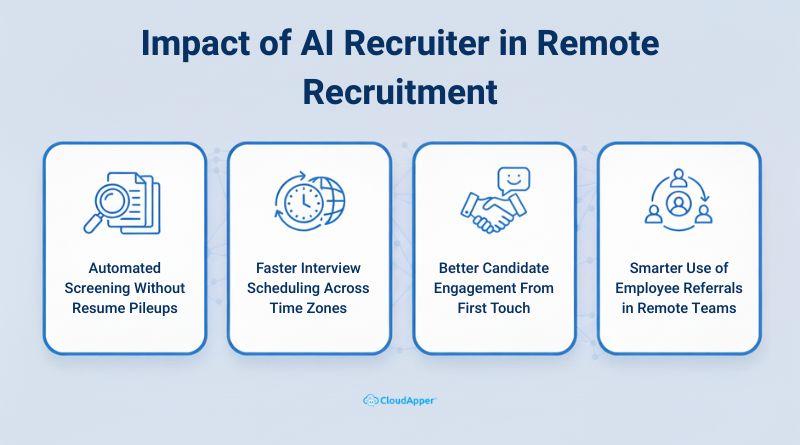
Automated Screening Without Resume Pileups
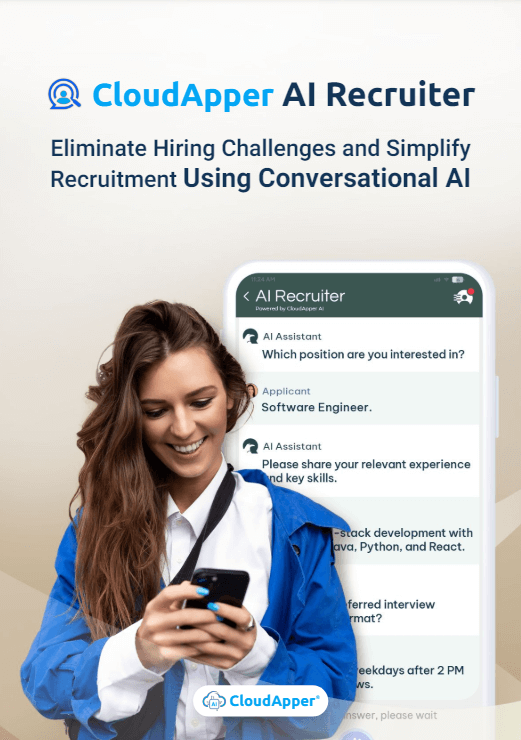
An AI recruiter for remote recruitment can screen candidates through conversational interactions instead of static forms. Candidates answer relevant questions upfront, and the system evaluates responses consistently.
This approach reduces resume overload. You spend less time guessing from keywords and more time reviewing candidates who already meet core requirements.
Faster Interview Scheduling Across Time Zones
Scheduling is one of the most overlooked remote recruitment challenges. AI can automate availability matching and interview booking.
Candidates choose time slots that work for them. Recruiters avoid long email threads. Interviews happen sooner, which keeps momentum strong.
Better Candidate Engagement From First Touch
Remote candidates expect quick, clear communication. AI-driven conversational applications meet that expectation.
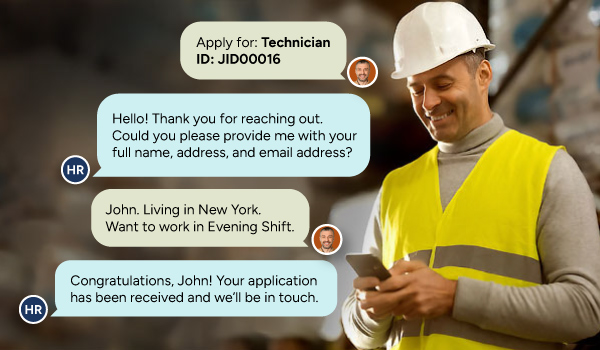
Instead of filling out long forms, candidates engage in short, guided conversations. They receive immediate responses and next steps. This reduces drop-off and improves overall experience.
Smarter Use of Employee Referrals in Remote Teams
Referrals remain valuable in remote recruitment, but managing them manually is difficult. AI can capture referrals digitally and screen them quickly.
This helps you identify candidates who align with your team culture while maintaining speed and consistency.
If these pain points sound familiar in your remote hiring process, it may be time to remove the manual steps that slow candidates down.
How CloudApper AI Recruiter Supports Remote Recruitment at Scale
CloudApper AI Recruiter is designed to fit into how you already hire remotely. Instead of forcing you to redesign your process, it strengthens the parts of remote recruitment that usually slow teams down or break under volume.
Conversational Screening That Works for Remote Candidates
In remote recruitment, first impressions often happen through forms and emails. That creates friction early in the process. CloudApper AI Recruiter replaces long application forms with short, guided conversations that feel natural to candidates.
Candidates answer role-relevant questions in real time, using text or chat-style interactions. You get consistent screening data upfront, and candidates know where they stand without waiting days for a response. This reduces drop-off while giving you clearer signal earlier in the process.
Faster Scheduling Across Time Zones Without Back-and-Forth
Interview scheduling becomes a major bottleneck in remote hiring, especially when candidates and recruiters are spread across regions. CloudApper AI Recruiter removes the manual coordination that usually comes with this step.
The system helps manage availability and scheduling automatically, so candidates can select interview times that work for them. Recruiters spend less time emailing calendars and more time preparing for meaningful conversations. The result is shorter hiring cycles and fewer missed interviews.
Seamless Integration With Existing ATS and HR Systems
Remote recruitment often fails when tools do not talk to each other. Recruiters end up tracking candidates across emails, spreadsheets, and multiple platforms. CloudApper AI Recruiter avoids that problem by integrating with the systems you already use.
Candidate data flows into your ATS or HR platform without manual re-entry. Recruiters keep visibility into progress, and nothing gets lost between stages. This consistency matters more as hiring volume increases.
Consistency as You Scale Remote Hiring
One of the hardest parts of remote recruitment is maintaining consistency as demand changes. Hiring one remote role feels manageable. Hiring ten at once often does not.
CloudApper AI Recruiter helps you apply the same screening logic, communication flow, and scheduling process across roles and teams. Whether you are filling a single position or scaling across departments, the experience remains structured and predictable for both recruiters and candidates.
Final Thoughts: Making Remote Recruitment Work Without the Chaos
Remote recruitment does not have to feel overwhelming. Most of the frustration comes from processes that were never designed for virtual hiring.
When you remove delays, reduce manual effort, and improve communication, remote hiring becomes more manageable. AI plays a practical role in making that happen.
If you want remote recruitment to feel faster, clearer, and more consistent without adding more work for recruiters, the right AI support can make that possible.
Reduce Time-to-Hire by 97% with AI for Talent Acquisition
Recruit skilled, culturally fit, and diverse candidates with CloudApper’s state-of-the-art AI resume screening, automated interview scheduling, and offer letter generation.
Learn more | Download BrochureFrequently Asked Questions About Remote Recruitment
-
What is remote recruitment?
Remote recruitment is the process of sourcing, screening, and hiring candidates who work outside a central office using digital tools, virtual interviews, and online workflows.
-
How is remote recruitment different from remote hiring?
Remote recruitment focuses on the end-to-end hiring process, while remote hiring is often used to describe filling remote roles more generally.
-
Why does remote recruitment take longer than expected?
Delays usually come from manual screening, slow communication, and scheduling challenges across time zones.
-
How can AI improve remote recruitment?
AI helps automate screening, scheduling, and early communication so candidates move faster through the process without losing recruiter involvement.
-
Is AI recruitment suitable for distributed teams?
Yes. AI recruitment tools work well for distributed teams by creating consistent, scalable processes across locations and roles.
What is CloudApper AI Platform?
CloudApper AI is an advanced platform that enables organizations to integrate AI into their existing enterprise systems effortlessly, without the need for technical expertise, costly development, or upgrading the underlying infrastructure. By transforming legacy systems into AI-capable solutions, CloudApper allows companies to harness the power of Generative AI quickly and efficiently. This approach has been successfully implemented with leading systems like UKG, Workday, Oracle, Paradox, Amazon AWS Bedrock and can be applied across various industries, helping businesses enhance productivity, automate processes, and gain deeper insights without the usual complexities. With CloudApper AI, you can start experiencing the transformative benefits of AI today. Learn More
CloudApper AI Solutions for HR

- Works with


- and more.







Similar Posts
How cNPS Reflects Your Recruitment and Employer Brand
The Recruitment-to-HRIS Gap: Why Your “System of Record” Should Start…