AI job application noise is flooding hiring pipelines as personal AI agents mass-apply at machine speed. More applications no longer mean better candidates—just more noise recruiters must cut through.


Table of Contents
AI job application noise has become one of the biggest hidden threats in modern hiring. Recruiters are not just seeing more applications. They are seeing a fundamental shift in who or what is applying. Behind the scenes, personal AI agents are submitting applications nonstop, transforming hiring pipelines into high-volume, low-signal systems.
This is no longer about candidates using AI to improve resumes. It is driven by autonomous systems that search, tailor, and submit applications without human involvement. As a result, hiring teams are drowning in volume while struggling to identify real, qualified candidates.
What Is Driving AI Job Application Noise
LinkedIn now processes more than 11,000 job applications per minute, reflecting a sharp increase in automated submissions. These applications are often generated by personal AI agents programmed to apply broadly, not thoughtfully.
These systems work continuously. They scan job boards, customize resumes for each role, and submit applications at a scale no human could match. When applying becomes instant and automated, volume explodes by design. AI job application is the predictable outcome of frictionless automation.
How AI Job Application Noise Breaks Hiring Pipelines
Hiring pipelines were never built for machine-level participation. AI job application noise introduces several cascading failures.
Application volume increases dramatically, but candidate quality declines. Recruiters must review hundreds of applications to find a single viable hire. ATS platforms slow down or crash under excessive load. Compliance risk grows because every application, even automated ones, must be handled consistently.
Most damaging of all, genuine candidates are buried. High-intent applicants who carefully consider roles lose visibility, creating frustration on both sides of the hiring process.
Daniel Chait describes this dynamic as a self-reinforcing loop: candidates use more AI to break through filters, employers deploy stronger filters, and candidates respond with even more automation. AI job application noise accelerates with every cycle.
Recruiter Burnout and the Collapse of Hiring Signal
AI job application noise has shifted recruiter work away from human judgment and toward triage. Instead of engaging with candidates, recruiters spend time filtering out machine-generated submissions.
Nolan Church warns that AI-generated application content will reach unprecedented levels. When every resume looks optimized, keyword matching becomes meaningless. The hiring signal collapses, and recruiters lose confidence in their own pipelines.
This erosion of trust is pushing some employers to abandon public job postings entirely, relying instead on referrals, private talent pools, and direct sourcing.
Why Application Volume Is Now a Misleading Metric
For years, application volume was treated as a sign of employer brand strength. AI job application noise has made that metric obsolete.
High volume no longer indicates interest, fit, or intent. It simply reflects how easy it is for AI agents to apply. Organizations that continue to optimize for volume risk rewarding noise instead of talent.
Forward-thinking employers are shifting toward systems that evaluate substance, skills, and responsiveness rather than raw application count.
How CloudApper AI Recruiter Reduces AI Job Application Noise
This is where CloudApper AI Recruiter changes the equation.
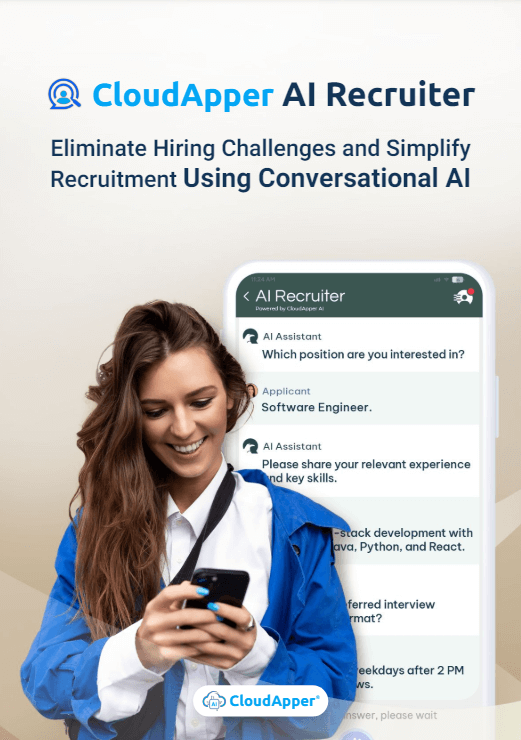
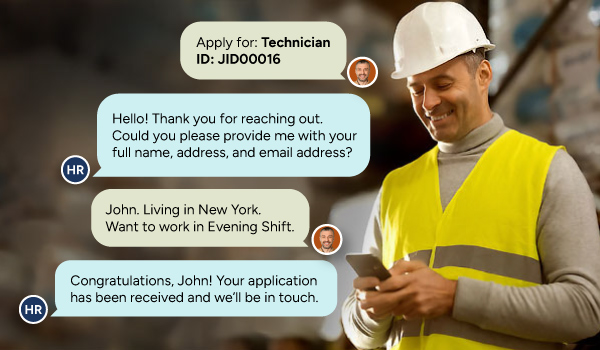
Instead of passively ingesting every application, CloudApper AI Recruiter introduces an intelligent, conversational layer before candidates enter the core ATS. It evaluates intent, availability, skills, and job fit through dynamic interactions rather than static resumes.
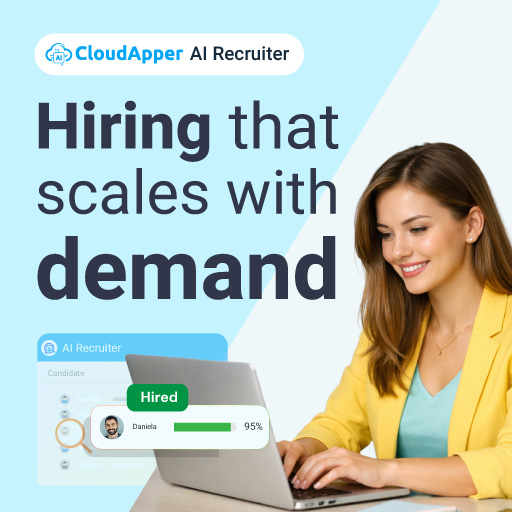
By filtering AI job application noise upstream, CloudApper AI Recruiter ensures recruiters see fewer but higher-quality candidates. It integrates seamlessly with existing ATS platforms like UKG Pro Recruiting, adding intelligence without disrupting established workflows.
Organizations using CloudApper AI Recruiter have significantly reduced screening time while improving candidate experience. Recruiters spend less time sorting noise and more time engaging with real people.
What Job Seekers Must Understand
For candidates, mass-application strategies powered by AI are becoming less effective. As detection improves, automated submissions are increasingly filtered out or deprioritized.
Differentiation now comes from work samples, portfolios, short video introductions, and human relationships built before applying. Referrals and proactive outreach bypass AI job application noise entirely and signal real intent to employers.
Ironically, the more AI dominates application volume, the more valuable authentic human effort becomes.
The Bottom Line
AI job application is not a temporary trend. It is a structural shift in how hiring pipelines operate. Personal AI agents will continue to flood systems, and volume will keep rising.
Organizations that adapt by prioritizing signal over scale will regain control. Those that rely on outdated metrics and manual screening will fall further behind.
CloudApper AI Recruiter offers a practical path forward, helping employers cut through AI job applications and reconnect hiring with human potential rather than automated volume.
Reduce Time-to-Hire by 97% with AI for Talent Acquisition
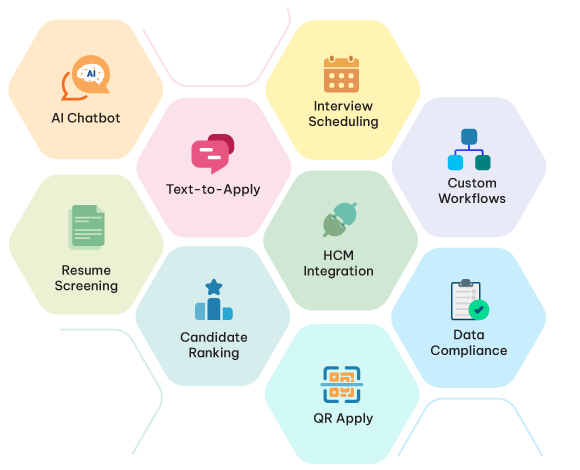
Recruit skilled, culturally fit, and diverse candidates with CloudApper’s state-of-the-art AI resume screening, automated interview scheduling, and offer letter generation.
Learn more | Download BrochureFrequently Asked Questions
What is AI job application noise?
AI job application noise refers to the surge of low-intent, automated, AI-generated job applications submitted at scale—often by personal AI agents. This creates high volume but low signal in hiring pipelines, making it harder for recruiters to identify qualified candidates.
How do personal AI agents create AI job application noise?
Personal AI agents can scan job boards continuously, generate tailored resumes and answers, and submit applications automatically. Because they can apply to many roles per day without human effort, they rapidly increase application volume and contribute to AI job application noise.
Why is AI job application noise a problem for recruiters?
AI job application noise overwhelms recruiters with repetitive, keyword-optimized applications. This slows down screening, increases burnout, and makes it easier for genuine candidates to get buried—especially when recruiters must triage hundreds of similar-looking submissions.
Does AI job application noise affect ATS performance?
Yes. When application volume spikes, ATS workflows can slow down due to heavier processing, more duplicates, and higher screening workload. Even when systems don’t “crash,” AI job application noise often creates operational bottlenecks that delay hiring decisions.
How can employers reduce AI job application noise without hurting real candidates?
Employers can reduce AI job application noise by adding intent-based screening, skills-focused qualification questions, and structured workflows that reward authentic responses. The goal is to filter for substance and fit rather than relying only on keyword matching.
How does CloudApper AI Recruiter help with AI job application noise?
CloudApper AI Recruiter helps reduce AI job application noise by adding a conversational screening layer that evaluates candidate intent, role fit, and key qualifications early in the process. It can integrate with existing ATS platforms (including UKG Pro Recruiting) so recruiters spend less time sorting noise and more time engaging real candidates. :contentReference[oaicite:0]{index=0}
Will “pay to apply” become common because of AI job application noise?
Some employers have explored “pay to apply” as a deterrent for automated spam. However, many organizations prefer approaches that preserve access and fairness—like better screening, structured application steps, and smarter qualification filters—rather than introducing fees.
How can job seekers stand out when AI job application noise is high?
When AI job application noise is high, job seekers can stand out by focusing on fewer, higher-fit roles, using work samples or portfolios, and building relationships before applying. Referrals, direct outreach, and proof of skills often cut through the noise more effectively than mass-applying.
How can recruiters adapt to AI job application noise?
Recruiters can adapt by shifting effort from processing applications to identifying real signals: proactive sourcing, structured screening, and faster engagement with qualified candidates. Tools that help validate fit and intent early can reduce time spent on AI job application noise.
Is AI job application noise temporary or a long-term shift?
AI job application noise is likely a long-term shift because automation continues to reduce the cost of applying. Hiring processes will increasingly prioritize structured evaluation, intent signals, and skills validation to keep pipelines healthy.

What is CloudApper AI Platform?
CloudApper AI is an advanced platform that enables organizations to integrate AI into their existing enterprise systems effortlessly, without the need for technical expertise, costly development, or upgrading the underlying infrastructure. By transforming legacy systems into AI-capable solutions, CloudApper allows companies to harness the power of Generative AI quickly and efficiently. This approach has been successfully implemented with leading systems like UKG, Workday, Oracle, Paradox, Amazon AWS Bedrock and can be applied across various industries, helping businesses enhance productivity, automate processes, and gain deeper insights without the usual complexities. With CloudApper AI, you can start experiencing the transformative benefits of AI today. Learn More
CloudApper AI Solutions for HR


- Works with


- and more.








Similar Posts
How cNPS Reflects Your Recruitment and Employer Brand
The Recruitment-to-HRIS Gap: Why Your “System of Record” Should Start…