Hiring Loss Prevention Officers has become increasingly critical—and challenging—for retail organizations. Retail shrink continues to climb, with the National Retail Federation reporting that total retail losses from theft, fraud, and errors exceeded $112 billion annually, representing nearly 1.6% of sales. Yet finding qualified Loss Prevention professionals to combat these losses is harder than ever. The average time-to-hire for Loss Prevention Officers now exceeds 50 days, with cost-per-hire approaching $5,000 when factoring in background checks, certification verification, training, and the specialized nature of the role.
The talent shortage is acute. Experienced Loss Prevention professionals are in high demand across retail, and many organizations are competing for a limited pool of candidates with the right mix of security knowledge, investigative skills, technology proficiency, and customer service orientation. Meanwhile, the role itself has evolved dramatically—today’s LP Officers need expertise with advanced surveillance systems, data analytics platforms, point-of-sale exception reporting, organized retail crime (ORC) investigation, and de-escalation techniques that weren’t emphasized even five years ago.

But here’s the critical bottleneck: finding candidates with the right balance of security expertise and retail sensibility. Loss Prevention requires a unique skill set—vigilance and investigative thinking combined with customer service awareness and the ability to work collaboratively with store teams. Traditional hiring processes struggle to assess this balance effectively, often resulting in hires who are too aggressive (creating negative customer experiences) or too passive (missing theft indicators).
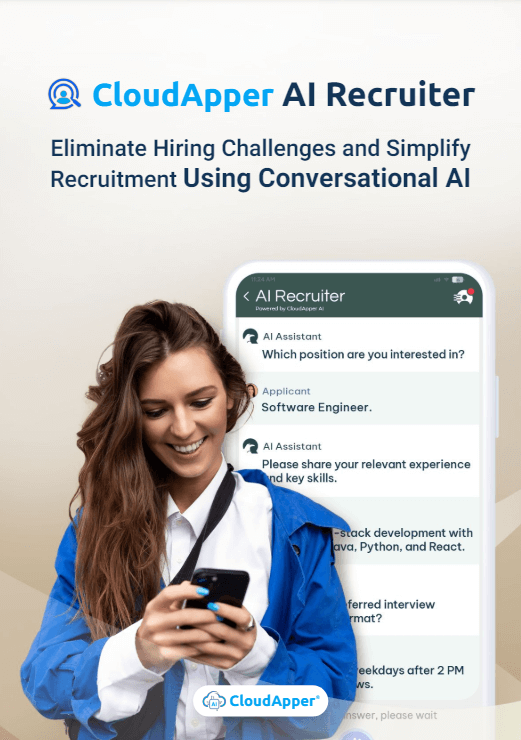
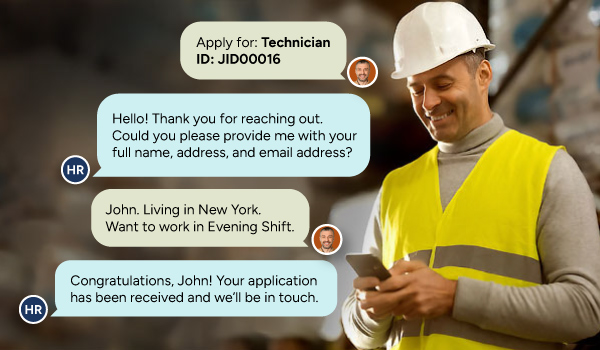
Enter CloudApper AI Recruiter: our conversational AI chatbot that revolutionizes Loss Prevention hiring. It engages candidates instantly via SMS or web chat, conducts intelligent screening interviews 24/7 that assess both security competencies and retail fit, evaluates scenario-based judgment calls, and eliminates up to 90% of manual screening work while removing unconscious bias. Whether a candidate is currently employed in LP and exploring opportunities discreetly or actively job-searching, our AI provides confidential, convenient engagement at any hour.
In this guide, we’ll give you the exact interview questions you need to identify exceptional Loss Prevention Officers who’ll protect your assets while maintaining positive customer experiences. Then we’ll show you how CloudApper AI Recruiter handles the heavy lifting, transforming your hiring timeline from months to weeks.
Why These Questions Matter for Loss Prevention Officers in Retail
The Loss Prevention Officer role has transformed from “security guard watching cameras” to strategic asset protection professional. Today’s LP Officers are analyzing data to identify theft patterns, investigating complex organized retail crime rings, utilizing sophisticated surveillance and exception-based reporting systems, conducting legal and compliant apprehensions, training store associates on shrink reduction, coordinating with law enforcement, and serving as subject matter experts on safety and security—all while maintaining awareness that overly aggressive LP tactics can create liability and damage customer experience.
They’re navigating a complex landscape where external theft, internal theft, administrative errors, and vendor fraud all contribute to shrink. They’re using POS data analytics, RFID technology, AI-powered video analytics, and exception reporting to identify patterns. They’re managing legal requirements around apprehensions, evidence preservation, and privacy. And they’re balancing the need to be vigilant against theft with the imperative to avoid profiling, false accusations, or creating an atmosphere of suspicion that alienates honest customers and employees.
Old-school questions like “Why do you want to work in security?” barely scratch the surface. You need to assess investigative thinking and pattern recognition, judgment in high-pressure situations, knowledge of legal apprehension standards, technology proficiency with LP systems, ability to build rapport with store teams, de-escalation and conflict resolution skills, understanding of organized retail crime, and balance between vigilance and customer service orientation.
With retail shrink directly impacting profitability, and with poor LP hires potentially creating legal liability through improper apprehensions or discrimination, asking the right questions upfront isn’t optional—it’s business-critical. An effective Loss Prevention Officer can save your organization hundreds of thousands in prevented losses; a poor hire can create lawsuits, damage your reputation, and fail to protect assets. These questions will help you identify candidates who possess the investigative skills, sound judgment, and professional approach to succeed in modern retail Loss Prevention.
Top 10 Crucial Loss Prevention Officer Interview Questions (With Sample Strong Answers)
1. Describe your experience with retail theft investigation. Walk me through a case from suspicion to resolution.
Why ask this?
This reveals investigative methodology, attention to detail, understanding of legal requirements, and ability to build cases systematically—core competencies for LP professionals.
Sample Strong Answer:
“In my previous role, I noticed unusual return patterns for high-value electronics—always without receipts, different associates processing them, but similar timeframes. I started documenting each incident with transaction details, reviewing surveillance footage, and using our exception reporting to identify patterns. I discovered an associate was processing fraudulent returns for merchandise that was never purchased, pocketing the refunds. I built the case methodically over two weeks—documenting dates, amounts, video evidence, and POS data. Once I had sufficient evidence, I reported to my LP manager and we conducted an interview with the associate, following company protocol. The associate admitted to the theft, and we recovered approximately $8,000. The key was patience, thorough documentation, and following proper procedures to ensure everything was legally sound and company policy-compliant.”
2. How do you balance being vigilant about theft prevention with maintaining a positive shopping environment and avoiding profiling or discrimination?
Why ask this?
This tests judgment, awareness of legal and ethical boundaries, customer service orientation, and ability to navigate the tension between security and hospitality.
Sample Strong Answer:
“This is one of the most important aspects of effective Loss Prevention. I’m vigilant about behaviors and indicators—concealment, surveillance awareness, leaving and re-entering, unusual shopping patterns—not about demographics. I never make assumptions based on someone’s appearance, age, race, or how they’re dressed. My approach is to provide excellent customer service to everyone while staying observant. If I see suspicious behavior, I document it objectively and continue monitoring. I only approach when I have clear elements of apprehension met: saw them select merchandise, saw concealment, maintained observation, never lost sight, and they passed the last point of sale without paying. I also train store associates on customer service approaches that naturally deter theft—greeting everyone, staying engaged—rather than creating an atmosphere of suspicion. The goal is protecting assets while ensuring every honest customer feels welcome.”
3. Tell me about your experience with surveillance systems, POS exception reporting, and other Loss Prevention technology.
Why ask this?
Modern LP is technology-driven. This assesses technical proficiency and adaptability to evolving tools.
Sample Strong Answer:
“I’m very comfortable with LP technology. I’ve worked with various camera systems including PTZ cameras and DVR/NVR systems—I can navigate footage efficiently, create clips, and export evidence. I’m experienced with exception-based reporting that flags unusual transactions like high discounts, voids, no-sales, and refunds without receipts. I review these reports daily to identify patterns that might indicate internal theft or policy violations. I’ve also used EAS systems and RFID technology, and I stay current on new tools like AI-powered video analytics that can flag suspicious behaviors automatically. I see technology as force multiplication—it helps me be in multiple places at once and identify patterns I might miss manually. But I also understand technology is a tool, not a replacement for human judgment and investigation.”
4. Describe a situation where you had to make a split-second decision in a potentially dangerous or confrontational situation. What was your thought process?
Why ask this?
LP Officers face high-pressure situations requiring sound judgment and safety awareness. This reveals decision-making under stress and prioritization of safety.
Sample Strong Answer:
“I was conducting surveillance on a suspected shoplifter when he became aware he was being watched and ran for the exit with merchandise. I had to decide instantly whether to pursue. My training kicked in—I assessed the risk. It was high-value merchandise but not worth physical confrontation or a potential liability if he got injured during a chase. I let him go, immediately documented everything I observed including his description and vehicle information, and contacted law enforcement with the details. We later identified him through license plate information and recovered multiple similar incidents. I learned that the merchandise isn’t worth anyone’s safety—mine, the suspect’s, or customers’. My responsibility is to build cases and work with law enforcement, not to be a hero. That incident reinforced the importance of knowing when to engage and when to observe and report.”
5. How do you build relationships with store management and associates to create a culture of shrink awareness?
Why ask this?
Effective LP requires collaboration. This tests interpersonal skills, training ability, and understanding that LP isn’t a solo function.
Sample Strong Answer:
“I see my role as a partner to store operations, not a police officer making everyone uncomfortable. I build relationships by being visible, approachable, and helpful. I attend store meetings, share shrink results and trends without blaming, and recognize associates who demonstrate good awareness. I conduct regular training on topics like return fraud indicators, organized retail crime awareness, and proper procedures. When I identify internal theft, I handle it professionally and discreetly. I also show that I’m there to support them—if there’s a safety concern or difficult customer situation, I’m available to assist. When store teams see LP as a resource rather than an adversary, they’re more likely to share information and stay engaged in shrink reduction. Collaboration is essential because I can’t be everywhere, but hundreds of eyes on the floor can be.”
6. What do you know about organized retail crime (ORC), and how would you identify and respond to potential ORC activity?
Why ask this?
ORC is a growing threat. This assesses knowledge of sophisticated theft operations and ability to recognize patterns beyond opportunistic shoplifting.
Sample Strong Answer:
“Organized retail crime involves professional thieves stealing merchandise for resale, often in large quantities and targeting specific high-value items. Indicators include multiple suspects working together, filling bags or carts with identical items, hitting multiple stores in a region, targeting specific brands or items that resell well online, and demonstrating sophisticated concealment methods or use of tools like detachers. If I suspected ORC activity, I’d document everything—dates, times, descriptions, vehicles, merchandise targeted—and immediately share information with our regional LP team and law enforcement. I’d also coordinate with other retailers in the area since ORC groups typically hit multiple stores. I’d review surveillance carefully for patterns and work with our LP investigations team to build intelligence. ORC requires a coordinated response beyond individual store-level LP because these are professional operations, often with connections to larger criminal networks.”
7. Walk me through the proper steps for a legal and compliant apprehension.
Why ask this?
Legal compliance is non-negotiable. This tests knowledge of apprehension standards and understanding of liability risks.
Sample Strong Answer:
“A proper apprehension requires meeting specific elements every time to minimize legal risk. First, I must have personal observation of the suspect selecting merchandise. Second, I must see them conceal or carry it in a manner inconsistent with shopping. Third, I must maintain continuous observation—if I lose sight, I cannot apprehend because I don’t know what happened during that gap. Fourth, they must pass all points of sale without paying. Fifth, I must exit the store to confirm intent to steal. Only when all five elements are met do I make an approach. During the approach, I identify myself clearly, remain professional and calm, and request they return inside to discuss the merchandise. I never physically restrain unless absolutely necessary for safety, and I immediately involve law enforcement. I document everything thoroughly and preserve all evidence properly. Cutting corners or making assumptions can result in false arrest claims, so I’m meticulous about following proper procedures every single time.”
8. How do you handle internal theft investigations, especially when they involve popular or long-tenured employees?
Why ask this?
Internal theft is often more damaging than external theft. This reveals professionalism, objectivity, and ability to navigate sensitive situations.
Sample Strong Answer:
“Internal theft is particularly challenging because it involves people you work with, but I maintain complete objectivity and professionalism. I investigate based on evidence and indicators, not personal relationships or assumptions about who would or wouldn’t steal. If exception reports or surveillance suggest employee theft, I conduct a thorough investigation—gathering documentation, reviewing video, analyzing patterns—before drawing conclusions. I never confront someone without solid evidence. When I do have sufficient proof, I follow company protocol for conducting interviews, usually involving HR and management. I remain respectful and professional throughout because my job is to present facts, not to judge or humiliate. Internal investigations require discretion, confidentiality, and strict adherence to policy because wrongful accusations can have serious legal and morale implications. Regardless of someone’s tenure or popularity, if they’re stealing, they need to be held accountable—but always through proper channels.”
9. Describe your experience with emergency response situations—medical emergencies, fires, active threats, or other critical incidents.
Why ask this?
LP Officers are often the most trained responders in stores for emergencies. This assesses preparedness and crisis management ability.
Sample Strong Answer:
“I’ve been first responder to several emergency situations. I’m certified in CPR and First Aid, and I’ve assisted with medical emergencies including a customer having a seizure and another experiencing chest pain. In both cases, I stayed calm, called 911 immediately, provided what assistance I could safely, cleared the area, and coordinated with arriving paramedics. I’ve also responded to fire alarms—conducting evacuations according to protocol and coordinating with fire department. I’ve completed active shooter training and understand lockdown procedures. In any emergency, my priorities are always: ensure safety of customers and employees first, contact emergency services immediately, follow established protocols, and document everything afterward. I see emergency preparedness as a key LP responsibility because we’re often the most security-focused presence in the building. I also conduct training with store teams on emergency procedures so everyone knows what to do.”
10. Why are you interested in Loss Prevention, and what do you find most rewarding about this work?
Why ask this?
This reveals motivation, passion for the field, and cultural fit—important for retention in a demanding role.
Sample Strong Answer:
“I’m drawn to Loss Prevention because it combines investigative work, problem-solving, and strategic thinking with tangible business impact. I enjoy the challenge of identifying patterns, building cases, and knowing that my work directly protects the company’s profitability. What’s most rewarding is when I can stop a significant loss—whether that’s apprehending someone stealing thousands of dollars of merchandise or uncovering internal fraud that’s been happening for months. I also appreciate the variety—no two days are the same, and I’m constantly learning about new theft methods and technologies to combat them. I take pride in being professional and thorough, building strong cases that hold up legally, and maintaining the balance between vigilance and customer service. Ultimately, I see LP as a career, not just a job, and I’m committed to continuous learning and staying current with industry best practices.”
How CloudApper AI Recruiter Makes Hiring Loss Prevention Officers Effortless
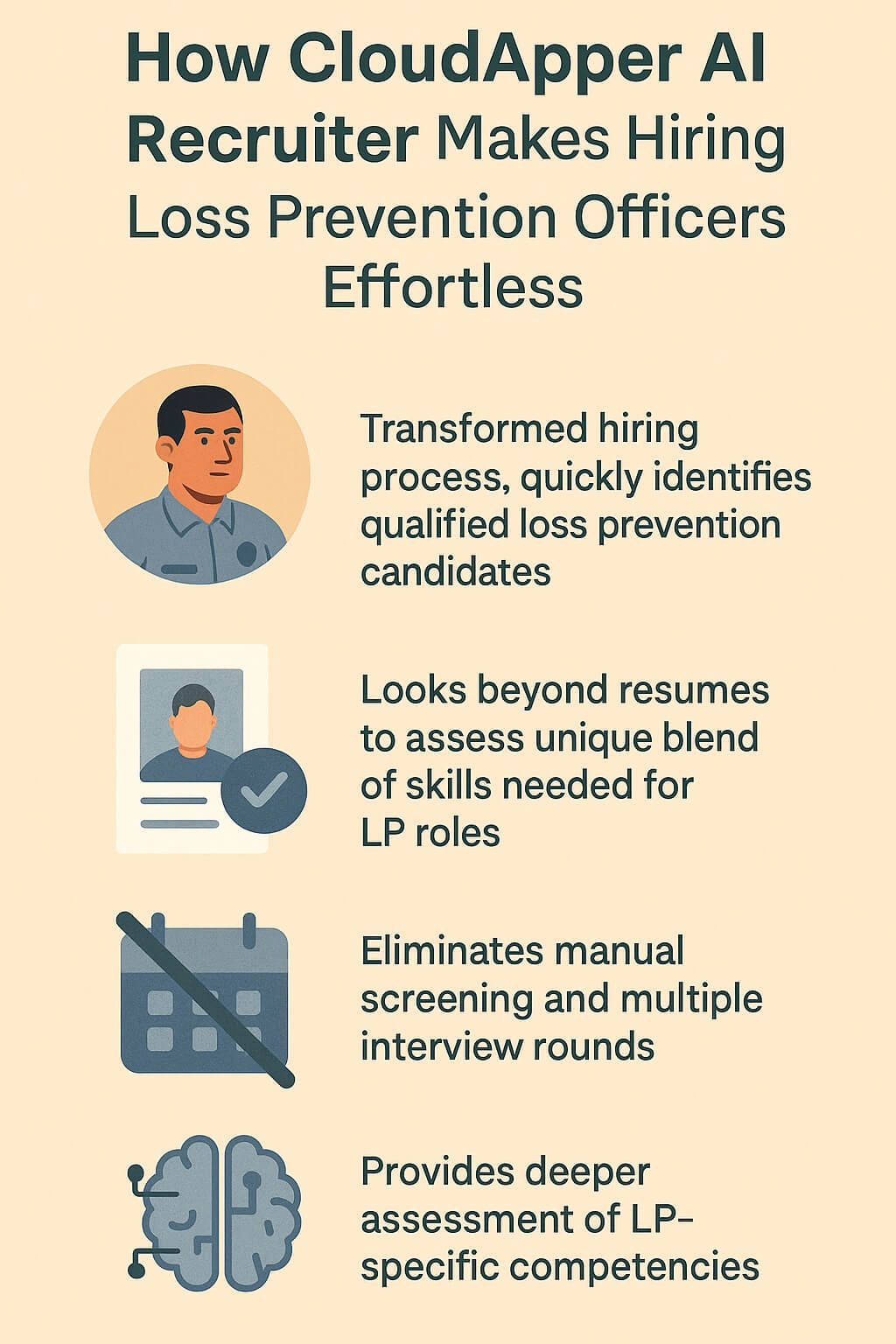
Now imagine transforming your Loss Prevention hiring from a lengthy, specialized search into a streamlined, intelligent process that identifies qualified security professionals quickly while assessing the unique blend of skills LP roles require. That’s precisely what CloudApper AI Recruiter delivers for retail organizations building asset protection teams.
Here’s the reality of traditional LP hiring: You need candidates with specific security or law enforcement backgrounds, but you’re competing with other retailers, private security firms, and law enforcement agencies for limited talent. You manually screen resumes looking for relevant experience, but resumes don’t reveal judgment, professionalism, or the critical balance between vigilance and customer service orientation. You conduct multiple interview rounds over weeks, and strong candidates—often currently employed in LP and exploring opportunities discreetly—accept other offers before you move through your process.
CloudApper eliminates these inefficiencies while providing deeper assessment of LP-specific competencies.
How It Works:
CloudApper’s conversational AI chatbot engages LP candidates instantly—whether they apply through your careers site, Indeed, LinkedIn, or via SMS to a text-to-apply number. For Loss Prevention roles, the AI conducts sophisticated screening that assesses both technical qualifications and critical soft skills.
The AI asks customized questions like those above—evaluating investigative experience, legal knowledge of apprehensions, technology proficiency with surveillance and exception reporting systems, judgment in high-pressure situations, ability to build store relationships, and understanding of organized retail crime. It can present complex scenarios: “You observe someone concealing merchandise, but then you lose visual contact for 30 seconds. Do you proceed with an apprehension? Why or why not?”
Key Features That Transform Loss Prevention Hiring:
- 24/7 Confidential Screening for Currently-Employed Candidates: Many strong LP candidates are currently employed and exploring opportunities discreetly. CloudApper’s SMS-based engagement allows them to complete screening interviews at their convenience—after their shifts or during breaks—maintaining confidentiality while keeping them engaged in your process.
- Scenario-Based Judgment Assessment: The AI presents realistic Loss Prevention scenarios requiring candidates to demonstrate legal knowledge, safety prioritization, judgment under pressure, and understanding of proper procedures. Responses are evaluated for decision-making quality, compliance awareness, and professional approach.
- Certification & Background Verification Coordination: CloudApper automatically verifies LP certifications (LPC, CFI, etc.), prior law enforcement or security experience, willingness to undergo background checks, and availability for required shifts—eliminating weeks of manual coordination and phone tag.
- Legal & Compliance Knowledge Testing: The AI can assess candidates’ understanding of apprehension elements, shopkeeper’s privilege, liability risks, evidence handling, and interview techniques—ensuring baseline knowledge before you invest interview time.
- Technology Proficiency Screening: CloudApper asks about specific surveillance platforms, POS exception reporting systems, case management software, and other LP technologies, matching candidates with relevant technical experience to your technology stack.
- Cultural Fit Assessment for Retail Environment: The AI evaluates whether candidates understand the balance between asset protection and customer service, their approach to building store relationships, and their philosophy on creating security without creating an atmosphere of suspicion—critical soft skills often missed in resume screening.
- Seamless Integration with Background Check Providers: Once candidates pass initial screening, CloudApper coordinates background checks, drug screening, and reference verification automatically, keeping candidates engaged through the process and reducing time-to-hire.
Real-World Impact:
A national department store chain with 300+ locations implemented CloudApper AI Recruiter for their Loss Prevention hiring and reduced average time-to-hire from 62 days to just 24 days. By engaging candidates instantly, conducting thorough LP-specific screening 24/7, and presenting hiring managers with pre-assessed candidates who’d demonstrated both technical knowledge and sound judgment, they cut recruiter workload by 58% while improving quality-of-hire metrics.
Their VP of Asset Protection shared: “Finding LP professionals with the right mix of security expertise and retail sensibility was our biggest challenge. CloudApper’s AI asks scenario-based questions that reveal how candidates think—not just what’s on their resume. We’re now interviewing far fewer candidates but hiring better-quality LP Officers who understand both asset protection and customer experience. Our shrink results have improved because we’re hiring more thoughtfully, and we’re doing it in half the time.”
Another specialty retailer used CloudApper to fill 15 LP positions across their expansion markets in under 60 days—something that previously took six months and required agency recruiter support. The AI screened hundreds of applicants, identified those with relevant experience and proper judgment, and maintained consistent assessment standards across all locations.
Ready to transform your Loss Prevention hiring? Explore CloudApper AI Recruiter here and see how retail organizations are building stronger asset protection teams faster and more effectively than ever before.
Stop Losing LP Talent to Slow Hiring Processes
In Loss Prevention recruitment, speed and assessment quality both matter. The best LP professionals—those with proven investigative skills, sound judgment, technology proficiency, and professional demeanor—are hired within 3-4 weeks of beginning their search. If your hiring process involves delayed responses, multiple interview rounds stretched over months, and limited ability to assess LP-specific competencies until late-stage interviews, you’re consistently losing top security talent to organizations that move faster and screen more effectively.
CloudApper AI Recruiter gives you both advantages. It engages candidates instantly when interest is highest, conducts thorough LP-specific screening that reveals judgment and competency, and presents you with qualified candidates who’ve already demonstrated the critical thinking and professionalism you need—all before your first interview.
Your stores deserve Loss Prevention professionals who protect assets while maintaining positive customer experiences. Your asset protection leadership deserves pre-screened candidates worth their interview time. And your talent acquisition team deserves technology that eliminates repetitive screening while delivering superior hiring outcomes.
Book a demo today and see how our AI can start screening Loss Prevention candidates within 48 hours. Let us show you how leading retailers are transforming their LP hiring—one intelligent conversation at a time.
What’s your biggest challenge when hiring Loss Prevention Officers? Drop a comment below—our team would love to hear from you and share proven strategies that are working for retail asset protection teams facing similar hiring challenges.
More Interview Questions:
10 Crucial Interview Questions for Merchandisers & Stockers in Retail (+ AI Recruiter Automation)
10 Crucial Interview Questions for Retail Sales Associates & Cashiers (+ AI Recruiter Automation)

What is CloudApper AI Platform?
CloudApper AI is an advanced platform that enables organizations to integrate AI into their existing enterprise systems effortlessly, without the need for technical expertise, costly development, or upgrading the underlying infrastructure. By transforming legacy systems into AI-capable solutions, CloudApper allows companies to harness the power of Generative AI quickly and efficiently. This approach has been successfully implemented with leading systems like UKG, Workday, Oracle, Paradox, Amazon AWS Bedrock and can be applied across various industries, helping businesses enhance productivity, automate processes, and gain deeper insights without the usual complexities. With CloudApper AI, you can start experiencing the transformative benefits of AI today. Learn More
- Useful Links:
- Agentic AI
- No-Code/Low-Code
- Custom Software
- HCM Personalization
- iPaaS
- FedRAMP