cNPS reveals how candidates truly experience your recruitment process and how that experience shapes your employer brand. Here’s why it matters and how to act on it.
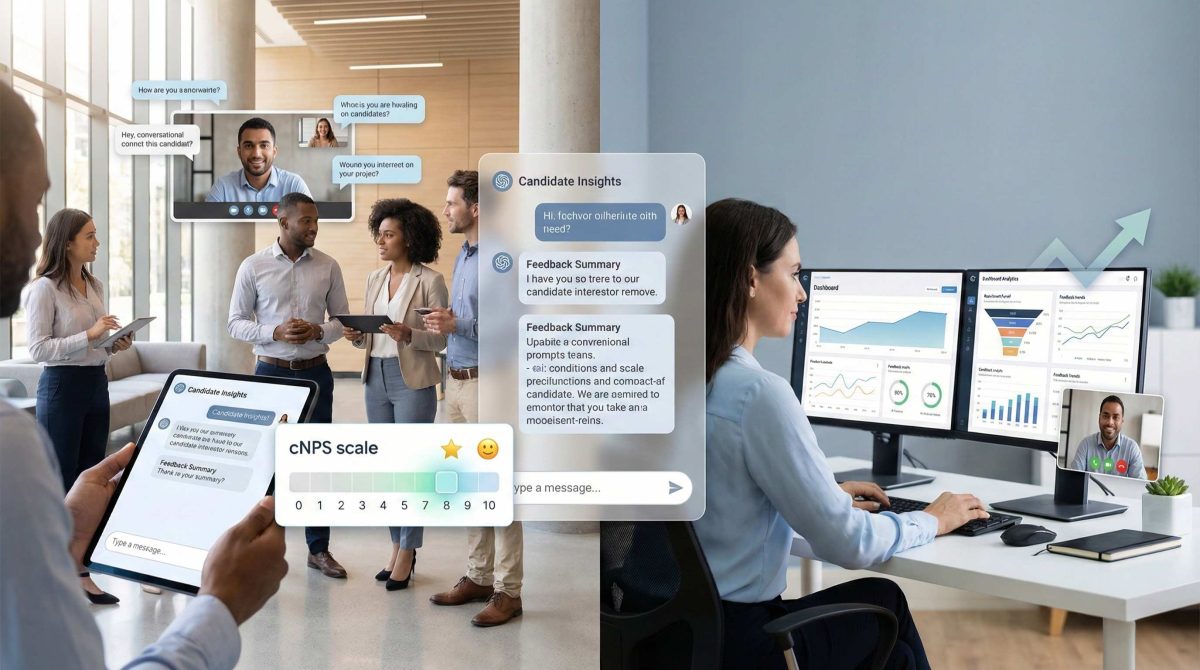
Table of Contents
- What cNPS Really Measures in Recruitment
- Why Candidate Experience Directly Impacts Employer Brand
- cNPS as a Core Recruitment Metric, Not a Side Survey
- Where Recruitment Experience Breaks Down and cNPS Reveals It
- How Employer Branding Metrics Have Evolved
- Turning cNPS Feedback into Actionable Insights
- Why Integrated cNPS Collection Matters More Than the Score
- How Conversational AI and Human-in-the-Loop Improve cNPS
- How CloudApper Helps Improve cNPS and Employer Brand
- cNPS as a Leading Indicator of Employer Brand Health
- FAQs
Employer branding is no longer shaped only by career pages or Glassdoor reviews. It’s built in every interaction a candidate has with your hiring process. From how easy it is to apply, to how clearly you communicate, to how rejections are handled, each moment influences how candidates perceive your brand. This is where cNPS becomes critical. Short for Candidate Net Promoter Score and measures how likely candidates are to recommend your organization based on their recruitment experience. More than just a recruitment metric, cNPS acts as a direct signal of candidate experience quality and employer brand strength, revealing where hiring processes create trust or friction long before an offer is accepted.
What cNPS Really Measures in Recruitment
At its core, cNPS answers a simple question: would a candidate recommend applying to your company based on their experience? But what it actually measures goes much deeper. cNPS reflects how candidates perceive communication clarity, process fairness, responsiveness, and respect throughout the hiring journey. It captures emotional responses that traditional recruitment metrics miss.

Time-to-hire may tell you how fast you move. Offer acceptance rate may tell you how attractive your compensation is. cNPS tells you how candidates feel about being part of your process, even when they are not hired. That emotional perception is what shapes employer brand in the market.
Why Candidate Experience Directly Impacts Employer Brand
Candidates talk. They share experiences with peers, in professional networks, and across public platforms. A negative experience does not stay isolated to one rejected applicant. It influences future applicants, referrals, and even customers. In contrast, a respectful and transparent hiring experience can turn rejected candidates into advocates.
This is why candidate experience and employer brand are inseparable. Employer brand is not just what organizations say about themselves. It is what candidates experience and repeat. cNPS provides a measurable way to understand whether recruitment processes are strengthening or weakening that brand.
cNPS as a Core Recruitment Metric, Not a Side Survey
Many organizations still treat cNPS as a secondary survey or a quarterly pulse check. That approach limits its value. cNPS works best when it is treated as a core recruitment metric, reviewed alongside time-to-hire, quality-of-hire, and funnel conversion rates.
When tracked consistently, cNPS helps teams identify patterns. A drop in cNPS at the interview stage may point to interviewer inconsistency. Low scores after rejection may highlight poor communication or delayed feedback. Used this way, cNPS becomes an early warning system for recruitment experience breakdowns.
Where Recruitment Experience Breaks Down and cNPS Reveals It
Recruitment experience typically breaks down in predictable areas. Candidates disengage when communication is slow, expectations are unclear, or processes feel impersonal. These issues often go unnoticed internally because recruiters focus on operational efficiency rather than perception.
cNPS reveals these blind spots. A declining score does not just indicate dissatisfaction. It highlights exactly where candidates feel friction. Without structured feedback tied to recruitment stages, these insights are easy to miss until employer brand damage is already done.
How Employer Branding Metrics Have Evolved
Employer branding metrics have evolved beyond awareness and perception surveys. Modern employer branding is increasingly data-driven and experience-based. Metrics like cNPS reflect real interactions rather than marketing narratives. This shift matters because candidates trust experiences more than messaging.
Organizations that rely solely on branding campaigns without monitoring recruitment experience risk creating a gap between promise and reality. cNPS helps close that gap by grounding employer brand performance in actual candidate feedback.
Turning cNPS Feedback into Actionable Insights
Collecting cNPS data alone does not improve recruitment. The value comes from context. Feedback needs to be tied to roles, recruiters, hiring stages, and outcomes. Without that connection, teams see a score but lack direction.
Actionable cNPS insights require automation and integration. Feedback should be captured at the right moments, without adding manual work for recruiters or friction for candidates. This is often where traditional survey tools fall short.
Why Integrated cNPS Collection Matters More Than the Score
The biggest challenge with cNPS is not understanding its importance. It is operationalizing it. When feedback tools operate separately from ATS and HR systems, data becomes fragmented. Recruiters lose visibility, and insights arrive too late to influence behavior.
Integrated cNPS collection ensures that candidate feedback flows directly into existing recruitment systems. This allows teams to analyze sentiment alongside hiring data, respond faster, and continuously improve candidate experience without adding administrative burden.
Negative experiences matter: 72% of job seekers share negative experiences online, and 55% avoid employers after reading bad reviews — underscoring why measuring and acting on cNPS is critical for employer brand integrity. – EddySoftware
How Conversational AI and Human-in-the-Loop Improve cNPS
One of the biggest drivers of cNPS is how responsive and human the recruitment experience feels. Candidates expect timely answers, clarity, and acknowledgment, especially during high-anxiety moments like application submission, interviews, or rejections. Conversational AI helps meet this expectation by enabling real-time, two-way communication throughout the candidate journey.
At the same time, fully automated interactions are not enough on their own. High cNPS depends on knowing when to escalate from automation to a real human. A human-in-the-loop model ensures that complex questions, sensitive feedback, or decision points are handled by recruiters when empathy and judgment matter most. This balance between conversational AI and human involvement prevents candidates from feeling ignored or trapped in automated workflows, which is a common cause of negative recruitment experiences.
How CloudApper Helps Improve cNPS and Employer Brand
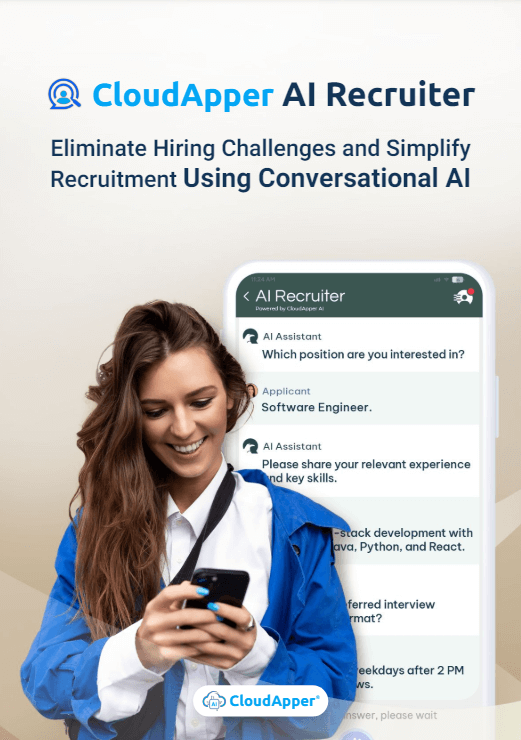
CloudApper addresses both sides of the cNPS challenge by combining conversational AI with a built-in human-in-the-loop approach. Its chatbot and conversational AI capabilities engage candidates throughout the hiring process by answering questions, guiding applications, and collecting feedback in a natural, low-friction way. Because these interactions are embedded directly into existing ATS and HR systems, candidate feedback is captured in context, not as an afterthought.
When conversations require nuance or intervention, recruiters remain part of the loop. This ensures candidates receive timely human responses where needed, while routine interactions remain automated. The result is a recruitment experience that feels responsive without overwhelming recruiters, and measurable without becoming manual.
By integrating conversational AI, real human oversight, and cNPS collection into a single workflow, CloudApper helps organizations improve candidate experience while strengthening employer brand credibility. Candidates feel heard, recruiters gain actionable insight, and employer branding becomes grounded in real experience rather than perception.
cNPS as a Leading Indicator of Employer Brand Health
cNPS is more than a recruitment metric. It is a leading indicator of employer brand health. Organizations that measure it consistently, interpret it correctly, and integrate it into their recruitment operations are better positioned to attract, engage, and retain talent.
As employer branding becomes increasingly experience-driven, the ability to measure and improve candidate sentiment will separate strong talent organizations from the rest. cNPS, when captured and used effectively, turns candidate experience into a measurable advantage rather than a guessing game.
FAQs
Quick answers to the most common questions HR and Talent Acquisition teams ask about cNPS, candidate experience, and employer branding.
What is cNPS in recruitment?
cNPS (Candidate Net Promoter Score) measures how likely candidates are to recommend applying to your company based on their recruitment experience. It’s calculated by subtracting the percentage of detractors (scores 0–6) from promoters (scores 9–10). Passives (scores 7–8) are not included in the final score.
Why does cNPS matter for employer branding?
Employer brand is shaped by what candidates experience—not what companies claim. A strong cNPS signals a positive, respectful process that encourages referrals and repeat applications. A weak cNPS often reveals friction that harms reputation and lowers future applicant quality.
What is a “good” cNPS score?
A “good” cNPS varies by industry, role type, and hiring stage, but positive scores generally indicate a healthy candidate experience. The most effective approach is to benchmark your own cNPS over time and compare scores by role family, location, recruiter, and stage to pinpoint where experience breaks down.
When should you send a cNPS survey?
The best timing is immediately after meaningful milestones—when the experience is still fresh. Common touchpoints include after application completion, after an interview round, and after a final decision. Many teams tailor prompts based on whether the candidate was advanced, rejected, or hired.
What are the biggest drivers of low cNPS?
Low cNPS is most often driven by slow or unclear communication, repetitive or lengthy applications, poor interview coordination, and weak rejection handling. Candidates rate experiences lower when they feel ignored, uninformed, or treated like a transaction.
How is cNPS different from candidate satisfaction?
Candidate satisfaction asks whether someone was “happy” with the process. cNPS measures advocacy—whether they would recommend applying to others. That recommendation focus ties cNPS more directly to employer brand and future talent attraction.
Why do many cNPS programs fail to drive change?
Many programs fail because feedback is collected in disconnected tools and reviewed too late. Without integration into the ATS and segmentation by role and stage, teams can’t identify the exact source of friction. The score becomes a static report instead of a continuous improvement loop.
How can conversational AI improve cNPS without losing the human touch?
Conversational AI improves responsiveness by answering common questions, guiding candidates through steps, and collecting feedback with minimal friction. The key is a human-in-the-loop approach—allowing recruiters to step in for sensitive situations, exceptions, or high-value candidates—so the experience stays fast and human.
How can CloudApper help measure and improve cNPS?
CloudApper automates cNPS collection within existing recruitment workflows using conversational AI to gather feedback at the right moments and link it directly to roles, stages, and outcomes. With built-in human-in-the-loop support, recruiters can intervene when needed—improving candidate experience and employer brand without adding manual survey work.
Curious how this works in real hiring flows? Book a quick walkthrough and see how CloudApper improves cNPS in practice.

What is CloudApper AI Platform?
CloudApper AI is an advanced platform that enables organizations to integrate AI into their existing enterprise systems effortlessly, without the need for technical expertise, costly development, or upgrading the underlying infrastructure. By transforming legacy systems into AI-capable solutions, CloudApper allows companies to harness the power of Generative AI quickly and efficiently. This approach has been successfully implemented with leading systems like UKG, Workday, Oracle, Paradox, Amazon AWS Bedrock and can be applied across various industries, helping businesses enhance productivity, automate processes, and gain deeper insights without the usual complexities. With CloudApper AI, you can start experiencing the transformative benefits of AI today. Learn More
- Useful Links:
- Agentic AI
- No-Code/Low-Code
- Custom Software
- HCM Personalization
- iPaaS
- FedRAMP
CloudApper AI Solutions for HR

- Works with







- and more.
Similar Posts

Verify Required Certifications and Licenses Without Slowing Down Screening
How to Standardize Candidate Selection Across Regional Hiring Teams